European Medieval Swords
Frequently Asked Questions
What is a medieval sword?
A medieval sword usually refers to a European sword style associated with the Middle Ages, but the term covers more than one exact design. Depending on the period and region, it may refer to an arming sword, longsword, bastard sword, greatsword, claymore, or knight-style sword. Most medieval swords have straight blades and crossguards, but their length, grip size, weight, and intended handling can vary a lot. For buyers, the key is to look beyond the general word “medieval” and check the exact type. A one-handed arming sword, a two-handed longsword, and a hand-and-a-half bastard sword will all feel different in display, handling, and collection value.
What are medieval swords called?
Medieval swords can be called by many names, including arming sword, knight sword, longsword, bastard sword, hand-and-a-half sword, greatsword, claymore, and two-handed sword. These names are not always used perfectly, especially in modern shopping, movies, games, and fantasy settings. For example, “longsword” usually refers to a European sword with a longer grip for two-handed use, while an arming sword is typically a one-handed knightly sword. A bastard sword or hand-and-a-half sword sits between the two in many modern descriptions. When buying, use the product photos and specifications—overall length, blade length, grip length, weight, and scabbard details—to understand what you are getting.
What is the difference between a longsword and an arming sword?
A longsword and an arming sword are both classic European sword types, but they are not the same. An arming sword is usually a one-handed sword, often associated with knights using a shield or buckler. A longsword typically has a longer grip and is designed for two-handed use, although exact historical definitions can vary. For a first-time buyer, an arming sword may feel easier to display and handle because it is shorter and simpler. A longsword has more presence and is popular with HEMA fans and medieval sword collectors, but it also needs more room and more careful handling. Choose based on your space, purpose, and comfort level.
Is a medieval sword full tang?
Yes. TrueKatana swords are made with full tang construction, and that is an important detail for medieval sword buyers. Full tang means the blade material continues securely through the handle area instead of being attached only at the front. For European medieval swords such as longswords and bastard swords, this matters because the sword may be longer and heavier than many decorative pieces. A full tang sword generally feels more solid and trustworthy in the hand. Even so, buyers should still check the product page for blade steel, overall length, weight, edge sharpness, grip material, scabbard details, and intended use before purchase.
What is the difference between a bastard sword and a longsword?
The terms bastard sword and longsword are often used loosely, which is why buyers get confused. In many modern listings, a bastard sword means a hand-and-a-half sword: longer than a typical one-handed arming sword, but not as large as a greatsword. A longsword usually refers to a two-handed European sword, especially one associated with late medieval and Renaissance fencing traditions. In real historical terminology, the boundaries are not always clean. For shopping, focus less on the name and more on the physical specs. If the grip fits two hands and the blade has a medieval straight double-edged profile, it may be marketed as either a bastard sword or a longsword.
Are medieval swords legal in the US?
Medieval swords are generally sold as collectibles, display pieces, or historical replicas, but legal rules can vary by state, city, and situation. Owning a sword at home is different from carrying it in public. Some locations restrict fixed blades, long blades, concealed carry, public carry, or weapons in schools, government buildings, public events, and private venues. Before buying or carrying a medieval sword, check your state and local laws. TrueKatana swords should be treated as collectibles or display items unless the product page clearly says otherwise. Never assume a sword is legal everywhere, and never carry one for self-defense or intimidation.
Can I bring a medieval sword to a convention?
A metal medieval sword is usually not a safe choice for conventions unless the event clearly allows it. Many conventions have strict prop weapon policies and may ban metal weapons, sharp edges, realistic blades, or heavy props. Anime Expo, for example, directs cosplayers to its Prop/Replica Weapon Policy and states that prop weapons cannot contain metal components, with only limited exceptions. If you want a sword for cosplay, a foam, plastic, or clearly fake prop is usually safer and more likely to pass inspection. Keep real or metal medieval swords for home display, collection, private photography, or approved historical settings rather than public convention floors.
How heavy is a medieval sword?
A medieval sword was usually much lighter than many people imagine. Most normal-sized medieval swords were not giant, clumsy pieces of metal. Many historical single-handed and hand-and-a-half swords fall roughly around 2.5 to 3.5 pounds, while larger longswords or two-handed swords may be heavier depending on the design. Weight also depends on blade length, width, pommel size, grip length, and point of balance. For buyers, the number on the scale is only part of the story. A well-balanced sword can feel easier to handle than a poorly balanced sword that weighs the same. Before ordering, always check the product page for the exact weight, overall length, and blade length.
How sharp were medieval swords?
Medieval swords were sharp, but not always in the same way people imagine modern razor-sharp knives. Their edges had to balance cutting ability with durability. A sword made only for a razor-thin edge could be damaged more easily when striking armor, shields, bone, or another weapon. Different medieval swords also had different blade shapes and purposes. Some were better for cutting, while others were designed with stiffer points for thrusting into gaps in armor. Surviving original swords often have corroded or damaged edges, so it is difficult to know the exact sharpness of every historical sword. For modern buyers, sharpness varies by product, so check the listing or contact support before purchase.
Where to buy medieval swords?
You can buy medieval swords from specialty sword retailers, historical weapon shops, martial arts suppliers, and trusted online sword stores. The key is to avoid choosing only by the lowest price or the most dramatic photo. A good medieval sword listing should clearly show the sword type, blade steel, full tang construction, overall length, weight, grip material, scabbard details, edge sharpness, and intended use. TrueKatana offers handmade European medieval swords, including longswords and bastard swords, with full tang construction, product specifications, Free US Shipping, and a 30-day satisfaction guarantee. Before buying, decide whether you want the sword for display, collection, gift-giving, photography, or approved training use.
How long is a medieval sword?
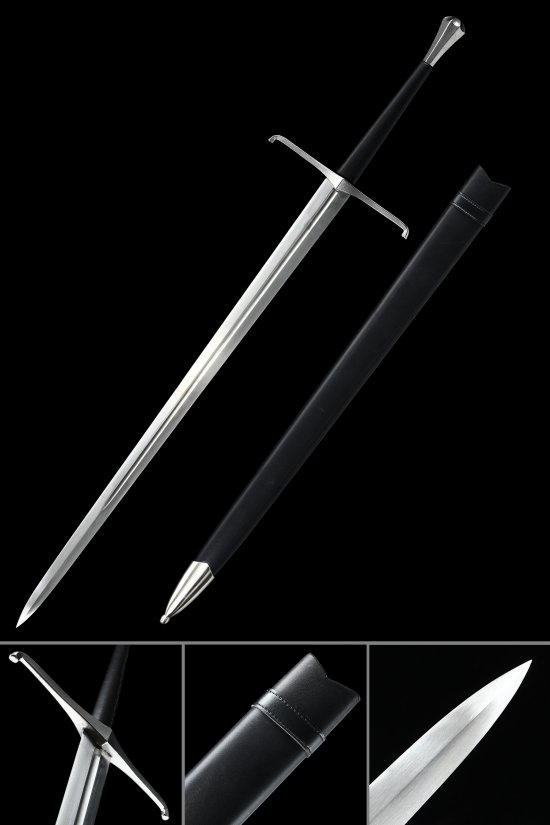
The length of a medieval sword depends on the type. A one-handed arming sword is usually shorter and easier to display, while a longsword or bastard sword is longer and often designed for two-handed or hand-and-a-half use. Many longswords are roughly 39 to 55 inches overall, with blade lengths often around 31 to 43 inches, though real examples and modern reproductions vary. Greatswords and claymores can be even larger. For buyers, the exact product dimensions matter more than the general category name. Always check overall length, blade length, grip length, and weight before ordering, especially if you plan to display the sword on a wall or inside a cabinet.
How much does a medieval sword cost?
The cost of a medieval sword depends on what kind of sword you want. A simple decorative sword can be much cheaper, while a better handmade or functional-style medieval sword usually costs more because of the steel, full tang construction, fittings, scabbard, balance, and finish. As a general market reference, entry-level functional swords are often discussed in the $100–$300+ range, while higher-end pieces can go much higher depending on the maker and materials. TrueKatana’s European Medieval Swords collection focuses on handmade longswords and bastard swords made with materials such as carbon steel and manganese steel, with Free US Shipping and a 30-day satisfaction guarantee. Always compare the product specs, not just the price.
How to use a medieval sword?
A medieval sword should be used with training, space, and safety in mind. If you are interested in learning real sword handling, the best starting point is a qualified HEMA club or instructor, not a sharp collectible sword at home. Historical European Martial Arts training usually uses approved trainers, blunt steel swords, synthetic swords, or feders, depending on the school and activity. A sharp medieval sword from a collector’s shop is better treated as a display or collection piece unless the product page clearly states otherwise. Do not swing it around indoors, use it for sparring, or test it without proper instruction and protective conditions. For most buyers, safe handling means keeping it clean, sheathed, displayed securely, and away from children or crowded spaces.
What did medieval swords look like?
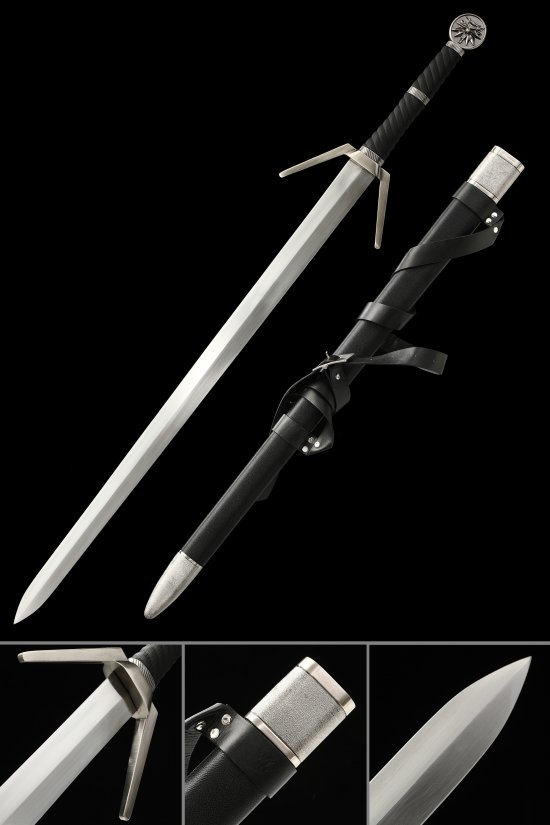
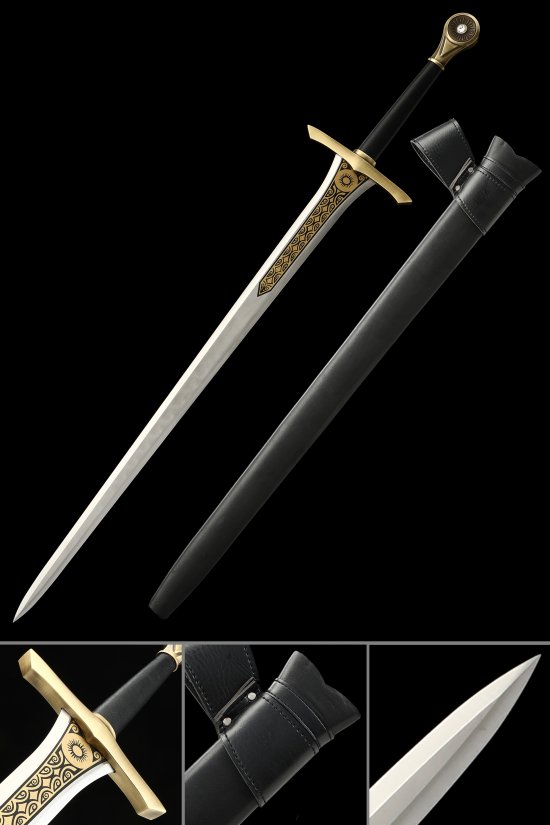
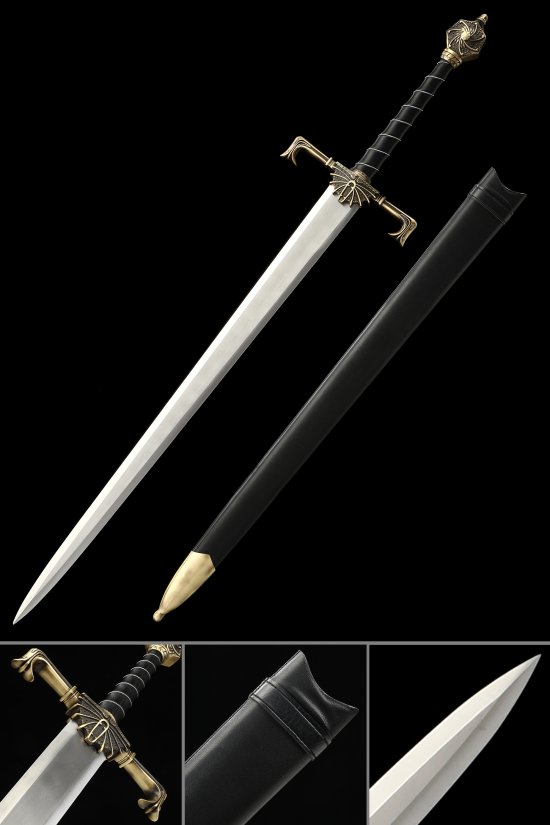
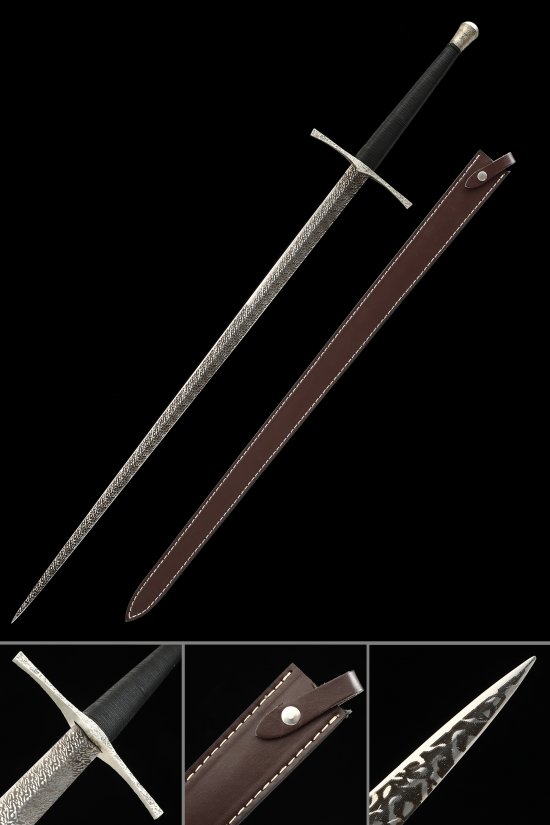
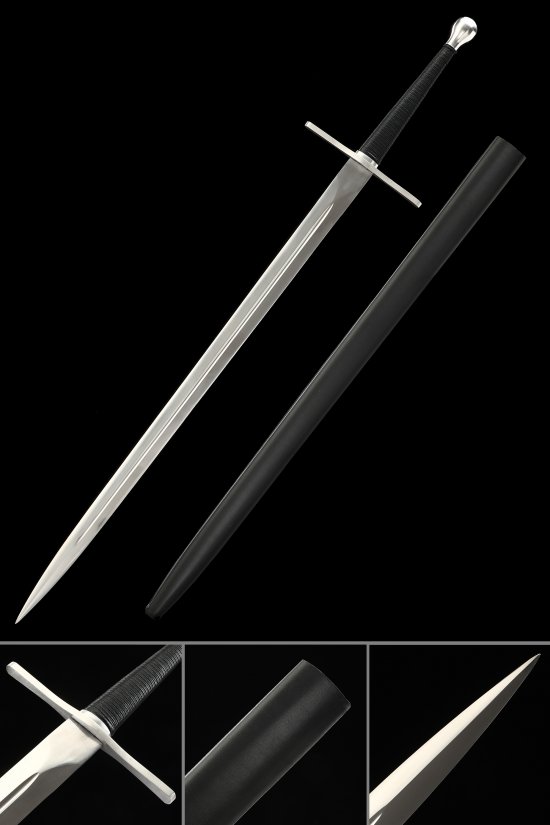
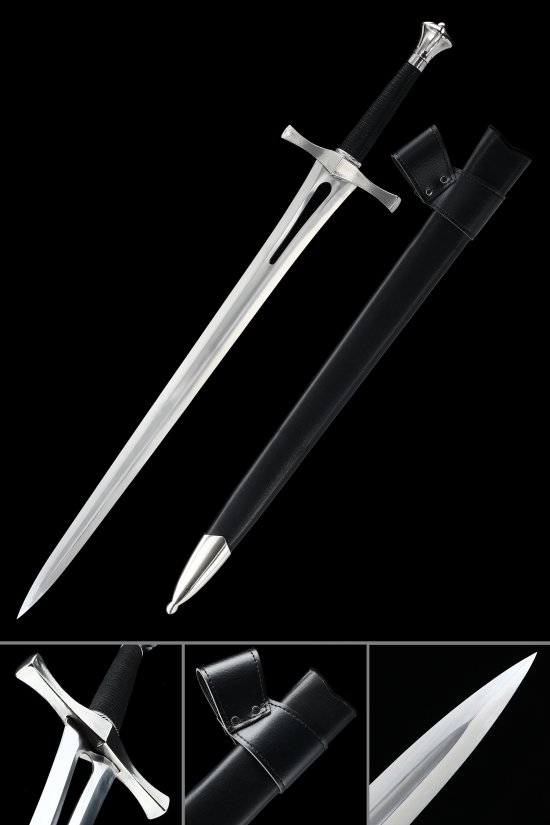
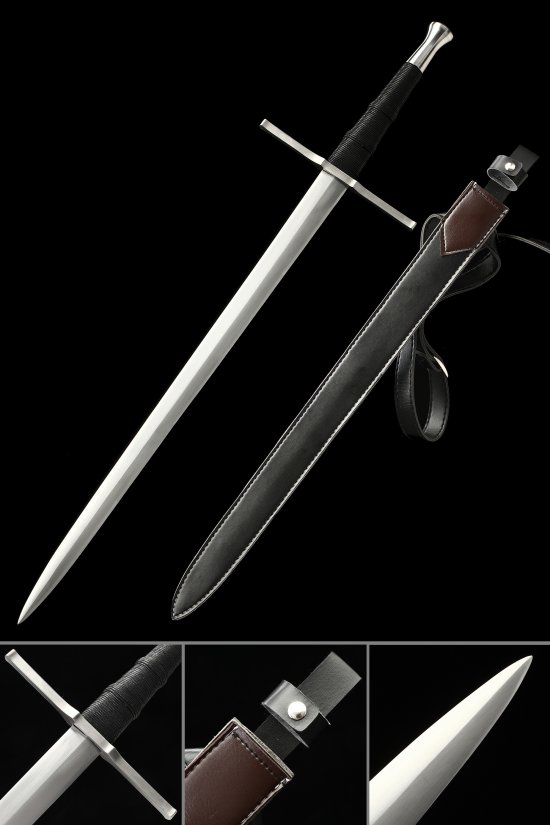
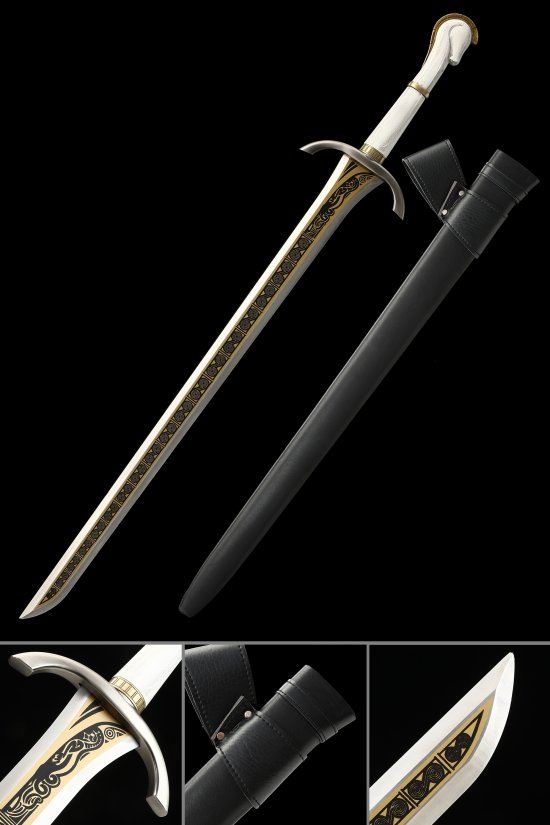
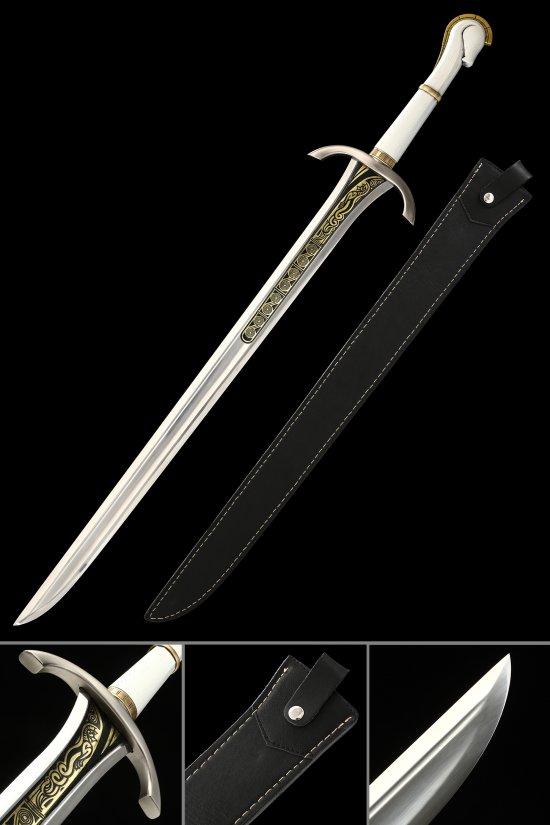
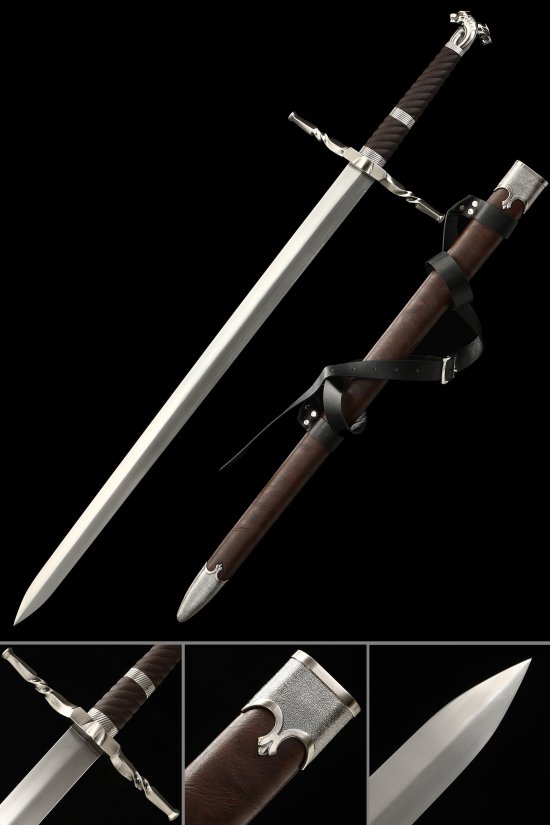
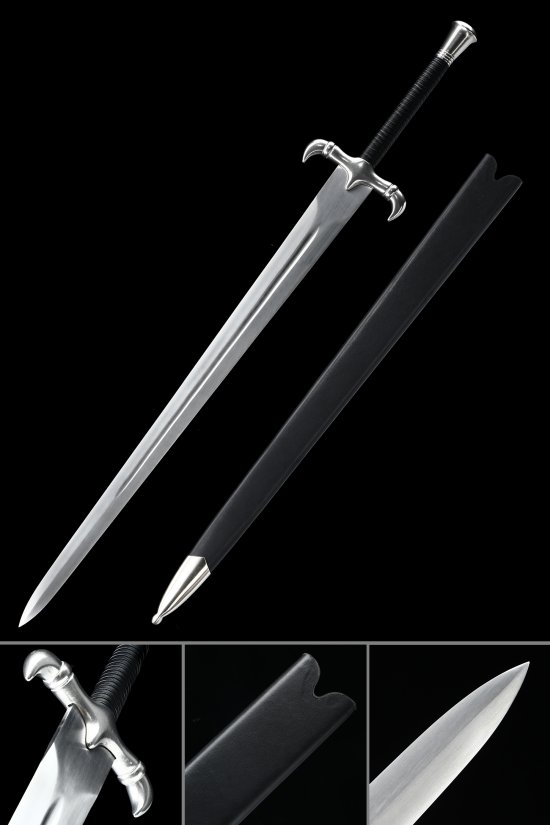
Medieval swords usually had a straight blade, a crossguard, a grip, and a pommel. Many classic knightly swords were double-edged with a one-handed cruciform hilt, while later longswords often had longer grips for two-handed use. The exact look changed by period and region. An arming sword may look compact and knightly, a longsword looks longer and more balanced for two hands, and a bastard sword often sits between the two. Some blades were broad and cutting-focused, while others became more tapered and thrust-oriented as armor changed. On TrueKatana, the European Medieval Swords collection mainly includes handmade longsword and bastard sword styles, giving buyers that classic Western medieval silhouette.
Customer Reviews
Fit and finish looks great. Delivery was quick and easy. Description was pretty accurate but for those who need to know, this is an arming sword (short blade, single handed) but it looks exactly as advertised. Highly recommend this site
Handmade Medieval Longsword Full Tang
Verified Purchase
The design of the sword is absolutely beautiful, an incredible part of my collection. Sword is a bit heavy as I thought it would be, and I thought it may be too short when the package arrived but those fears and worries were erased when I saw and held it. Love it!
Medieval Knight Bastard Sword Stainless Steel Blade
Verified Purchase
All look to be of great quality as always. Only problem have ever had was shipping handling. Has nothing to do with what i bought. Buy even with that the company fixed all the problem. Thanks Eddie
Handmade Medieval Longsword 1090 Carbon Steel Blade
Verified Purchase
Finally, I received my 4-sets of high quality sword from True Katana and i am so impressed with the degree of excellence and craftmanship. Every now and then my blade collections getting progressively increasing extent. Sooner or later i will reorder several different designs. HIGHLY RECOMMENDED TRUE KATANA 100% LEGIT
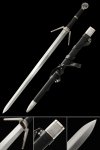
Hand Forged Medieval European Sword Manganese Steel Blade
Verified Purchase

An Absolute beauty, amazing work, I love it so much.
Hand Forged Medieval European Sword Manganese Steel Blade
Verified Purchase