Everything You Should Know Before Buying a Wooden Katana
What Is a Wooden Katana and How Is It Different from a Bokken
The terms "wooden katana," "bokken," and "bokutō" describe essentially the same object — a hardwood training sword shaped to replicate the profile, length, and approximate weight of a steel katana — but the terminology carries subtle distinctions worth understanding before you buy. Bokken (木剣) and bokutō (木刀) are the formal Japanese terms, with bokken being the more commonly used form in Western martial arts communities and bokutō being the standard term inside Japan. Both translate literally to "wooden sword," with the distinction being which kanji is used for "sword" — ken (剣), which originally referred to a double-edged Chinese sword, versus tō (刀), which specifically means a single-edged curved blade. Since Japanese katana are single-edged, bokutō is technically the more precise term, but in practice the two are used interchangeably in every major martial art context. The phrase "wooden katana" is the most intuitive translation for English-speaking buyers and is widely used in product descriptions, training guides, and equipment discussions. The practical design goal of any wooden katana is the same regardless of terminology: to replicate the physical experience of a steel katana as closely as possible — same length, similar weight and balance distribution, the same tsuka (handle) and blade silhouette — so that the skills, habits, and muscle memory developed during wooden sword training transfer directly to live blade practice. The standard bokken dimensions follow established conventions: a full-size katana-format wooden sword is typically 101 to 104 cm overall, with a blade section of approximately 75 to 81 cm and a handle of 25 to 27 cm. Shorter formats exist to replicate the wakizashi (shoto bokken at approximately 55 to 60 cm) and the tantō, and specialized heavy versions called suburitō are intentionally heavier than standard bokken to build strength alongside technique. The TrueKatana wooden katana collection covers all of these formats, with hardwood selection and profile geometry matched to each sword's intended application — whether that's daily dojo practice, kata development, paired drills, or display on a sword stand in a dedicated martial arts space.
Wood Types: Oak, Hickory, and Why the Grain Matters
The choice of wood in a bokken is not an aesthetic decision — it's a structural one that directly determines how the sword performs under training stress, how long it lasts, and whether it's appropriate for the type of practice you intend. The most commonly used and most recommended wood for standard training bokken is Japanese white oak (shirakashi), which has been the material of choice for serious dojo-grade bokken since the Meiji period and remains the standard for high-quality practice swords today. White oak has a tight, straight grain structure, good impact resistance, moderate density that provides appropriate weight without being excessively heavy, and enough flexibility to absorb the shock of contact without catastrophic splitting — all qualities that matter enormously when two wooden swords are in direct contact during paired drills. Japanese red oak (akagashi) is slightly lighter and less dense than white oak, making it a good choice for practitioners who prefer a more responsive, lighter practice sword, particularly for kata and form work where speed and movement quality are the priorities over impact absorption. Hickory wood is the primary North American alternative to Japanese oak, with a particularly good combination of hardness, impact resistance, and flexibility that has made it a proven substitute in markets where Japanese oak is difficult to source. It tends to be slightly heavier than oak and is particularly well suited for contact work and heavy practice. Exotic hardwoods — jatoba (Brazilian cherrywood), purpleheart, ipe, lignum vitae, and ebony — produce bokken that are noticeably heavier and harder than oak, valuable for strength-focused solo suburi practice but generally too heavy and brittle for regular paired practice where repeated hard contact creates fracture risk in dense, less flexible wood. The most important structural characteristic in any bokken regardless of wood species is grain alignment: the wood grain should run parallel to the length of the sword, not crossing it at an angle, because cross-grain creates weak points where the wood can split under impact stress. This is the primary quality differentiator between well-made training bokken and cheap mass-produced alternatives that use whatever wood grain orientation happens to fall out of the blank. For collectors who want a wooden katana for display rather than training, carved decorative pieces in various wood species with lacquered finishes and detailed handle wrapping provide excellent visual quality alongside the appropriate Japanese sword proportions. The full range of wooden katana and related samurai sword accessories at TrueKatana covers both training and display applications.
How Wooden Katanas Are Used in Martial Arts Training
The wooden katana occupies a specific and indispensable role in Japanese sword martial arts that neither a steel katana nor a bamboo shinai can replace — and understanding what it does and doesn't do in training helps practitioners and buyers make better decisions about which type to prioritize. In the progression of Japanese sword study, the wooden katana typically comes first: before a student handles any steel blade, they develop the foundational skills of grip, posture, footwork, distance (maai), and basic cutting mechanics entirely with a bokken. This phase can last months to years depending on the discipline and the instructor's assessment, and the wooden sword is not simply a placeholder for the real thing but a genuinely different training experience with its own pedagogical value. Suburi — solo cutting exercises performed in the air — are the most basic and foundational use of the bokken, developing the shoulder flexibility, back engagement, arm mechanics, and wrist control that correct cutting technique requires. Kata practice with a wooden katana allows practitioners to perform codified sequences of techniques at full speed and with full commitment that would be genuinely unsafe with live steel. Kumitachi — paired partner practice with two bokken in contact — is the use case that most demands proper wood quality: the swords strike each other directly and repeatedly, which is why grain quality, wood species, and overall construction determine whether a bokken survives regular paired work or fails prematurely. Tachi dori drills use one partner with a bokken against an unarmed partner, developing the disarming techniques that appear across Aikido, Kenjutsu, and other Japanese sword arts. In Iaido specifically, specially designed bokken with a wooden saya allow students to practice the drawing, cutting, and re-sheathing sequences of iai technique without live blades. Even advanced practitioners in disciplines that regularly use steel swords return to the bokken for specific training purposes — the veteran instructor using a bokken during a paired kata with a student who carries a live blade, for example, is a common dojo arrangement across Japanese sword schools. The TrueKatana wooden katana range includes models appropriate for each of these training contexts, from standard oak bokken for daily dojo use through suburitō for strength training, alongside the steel katana collection that represents the next stage in a practitioner's development.
Standard Bokken vs. Suburitō: Choosing the Right Format
The two most commonly purchased wooden katana formats in the TrueKatana collection serve fundamentally different training purposes, and choosing between them correctly — or understanding when you need both — matters significantly for the quality of your practice. A standard bokken replicates the approximate proportions and weight of a real katana: a full-size version runs approximately 101 to 104 cm overall, weighs roughly 450 to 600 grams depending on wood species, and is designed to feel as close as possible to a steel practice sword in terms of balance, handling, and movement through cutting arcs. This is the all-purpose training tool appropriate for kata, paired drills, kumitachi, solo suburi, and virtually any other training application where the goal is developing technique that transfers to live blade handling. The balance point sits in the appropriate position for developing correct cutting mechanics, and the weight is light enough to allow high-repetition training without premature fatigue. A suburitō is intentionally different: it's thicker, heavier — typically 700 to 1,000 grams or more for oak versions, and considerably heavier in exotic hardwoods like ebony — and explicitly designed for strength and conditioning work rather than technique development. The extra weight amplifies the muscular demand of every swing, building the shoulder, core, and forearm strength that generates power in a real sword cut. Because suburitō are so heavy and lack the balance distribution of a standard bokken, they are unsuitable for paired practice or kata — using one in contact with another sword creates excessive impact force and breakage risk — and are exclusively solo training tools. Many serious practitioners own both: a standard oak bokken for regular technique-focused training and a suburitō for dedicated strength conditioning sessions. The historical precedent for this combination is well established — Miyamoto Musashi, arguably the most famous Japanese swordsman in history, famously used a bokken made from a boat oar (essentially a makeshift suburitō in terms of weight and awkwardness) in his legendary duel with Sasaki Kojiro, prevailing through superiority of technique over Sasaki's technically excellent but comparatively lighter nodachi. The TrueKatana collection covers both formats alongside the full range of live-blade samurai swords for practitioners planning their complete training equipment setup.
Wooden Katana for Display: Decorative Carved Pieces and Collection
Not every buyer of a wooden katana intends to train with it — a significant portion of the wooden katana market consists of collectors, martial arts fans, and interior decorators who want the aesthetic of a Japanese sword in a format that's more accessible, lighter, and lower-maintenance than a carbon steel blade. Display-grade wooden katanas occupy a distinct product category from training bokken: they prioritize visual accuracy, surface finishing quality, and decorative detail over the grain integrity and impact resistance that dojo training demands. A well-made display wooden katana will have lacquered or oil-finished surfaces that highlight the wood's natural grain, carved or wrapped handles in traditional Japanese style with properly proportioned tsuka and tsuba, a painted or lacquered blade section that mimics the polished appearance of a steel sword, and a matching wooden saya in coordinating finish. Some decorative wooden katanas include elaborate carving — dragon motifs on the blade, intricate tsuba designs, or anime character references — that give them collector appeal beyond the standard bokken format. For collectors who display alongside real steel swords, a high-quality decorative wooden katana provides a visual reference that can fill a position in a multi-sword display arrangement without the maintenance requirements of a carbon steel blade. Wooden katanas are also significantly more approachable for households with young martial arts enthusiasts: the absence of a steel edge makes handling less consequential while still providing an authentic shape and weight experience for children learning basic kata movements. For display specifically, the mounting requirements are the same as for a steel sword: a single-tier sword stand at desk or shelf height, or a horizontal wall bracket at eye level, both work effectively and show the full length and profile of the wooden sword. The TrueKatana wooden katana collection includes both training-grade and display-grade options, with clear product descriptions indicating which category each model is optimized for.
Wooden Katana vs. Steel Katana: When to Use Each
One of the most common questions from martial arts beginners and from gift buyers trying to determine what someone needs is whether to buy a wooden katana or a steel one — and the correct answer depends entirely on the buyer's context, skill level, and intended use rather than on which is objectively better. For beginners entering Japanese sword martial arts, the standard progression in virtually every school and discipline begins with a wooden bokken: the absence of a live edge removes the most dangerous variable from the learning environment, allowing the instructor to focus on correcting technique rather than managing safety risk, and allowing the student to practice with full commitment and intensity without the physical consequences of an error. Most sword schools explicitly require students to reach a specific level of technique proficiency — determined by instructor assessment rather than any fixed timeline — before introducing even a blunt practice steel sword (iaitō), let alone a live-edged katana. Using a wooden sword for months or years at the beginning of one's training is not a shortcut or a compromise — it's the correct pedagogical sequence, and instructors who rush students to steel before wooden sword fundamentals are solid are doing those students a disservice. For practitioners who are beyond the beginner stage and training in Iaido specifically, a wooden bokken with a saya allows the drawing and re-sheathing mechanics of iai to be practiced safely and repeatedly — developing the muscle memory of the draw sequence before it's executed with steel. For collectors whose interest is primarily display and occasional handling rather than active martial arts practice, a decorative wooden katana provides an appropriate and low-maintenance alternative to a carbon steel blade, particularly in households where steel swords require careful management. For practitioners who are ready for steel — whose instructor has confirmed their technique is at the appropriate level — the TrueKatana carbon steel katana collection provides the full range of functional options for the next stage of training development, from entry-level 1060 carbon steel through T10 and Damascus for advanced practitioners.

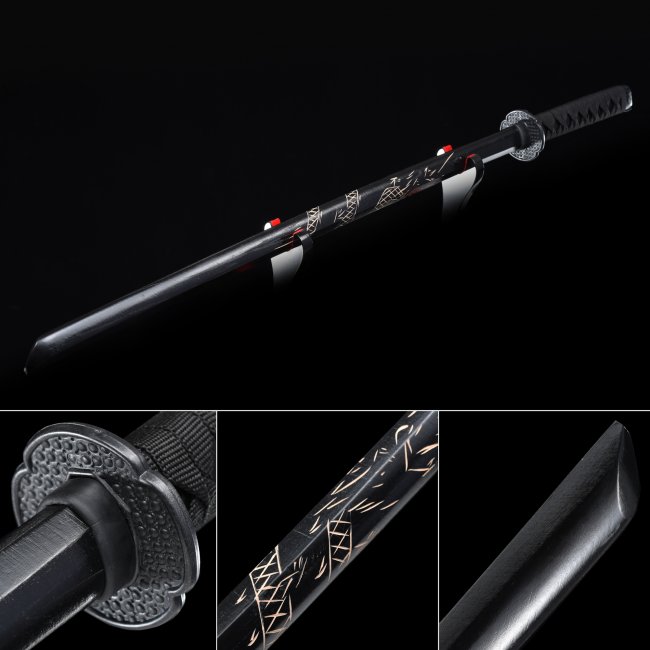
 Handmade Black Wooden Kendo Stick Kendo Bokken Iaido Practice Daito Sparring Training Katana Swords
Verified Purchase
Handmade Black Wooden Kendo Stick Kendo Bokken Iaido Practice Daito Sparring Training Katana Swords
Verified Purchase
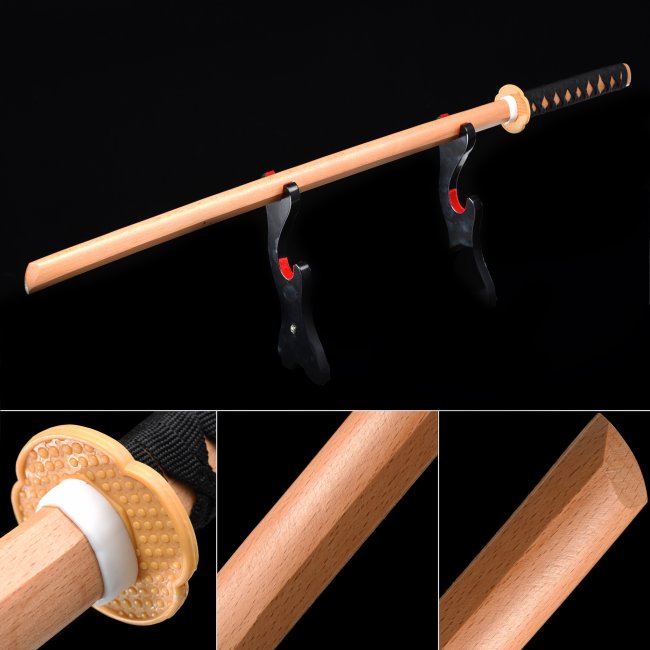
 Handmade Natural Wooden Kendo Stick Bokken Iaido Practice Daito Sparring Training Katana Swords
Verified Purchase
Handmade Natural Wooden Kendo Stick Bokken Iaido Practice Daito Sparring Training Katana Swords
Verified Purchase