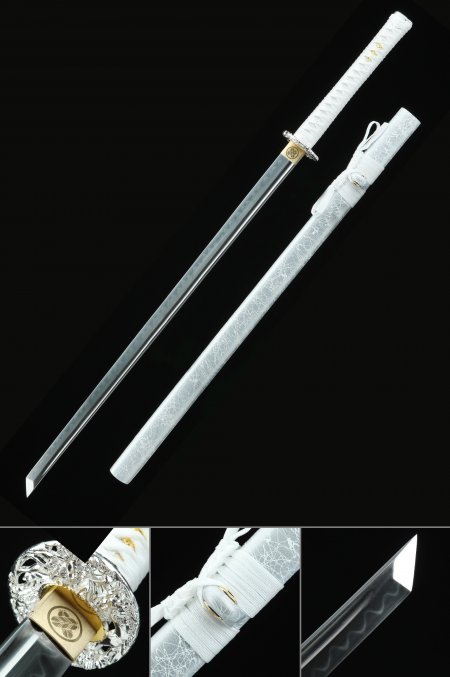
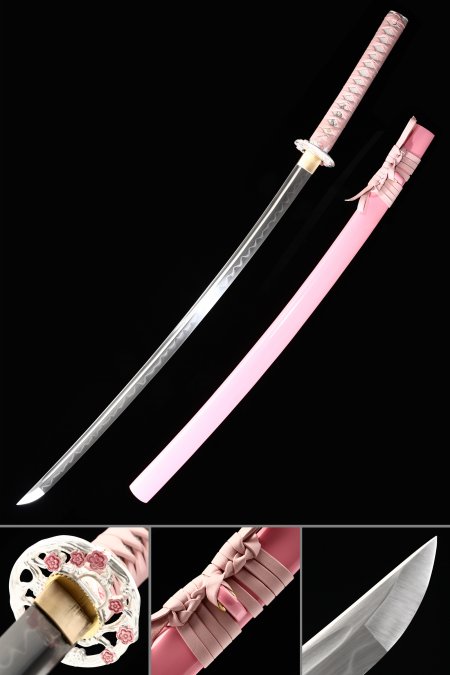
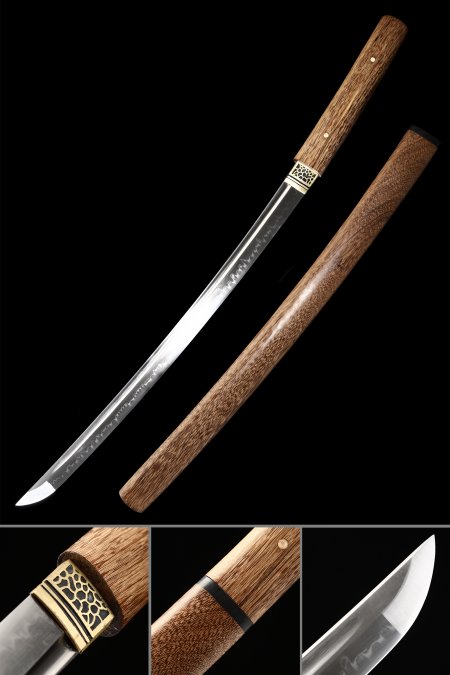
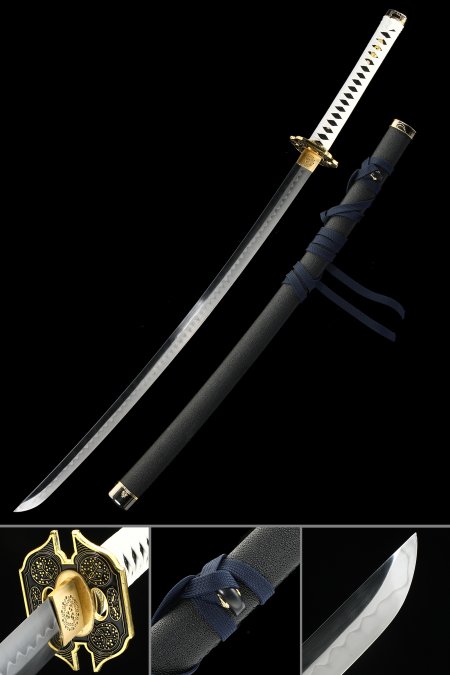
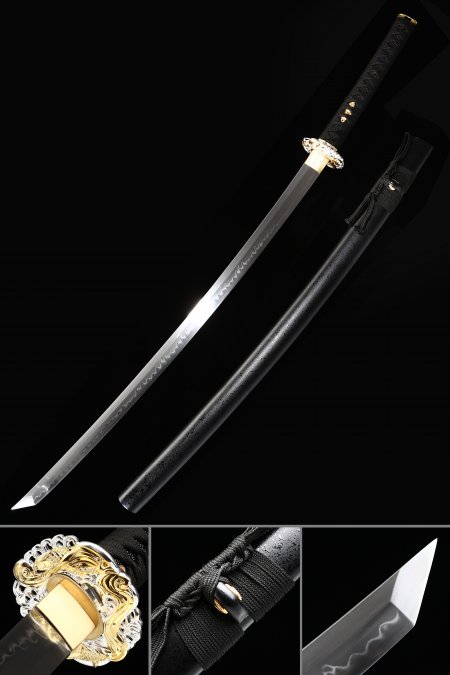
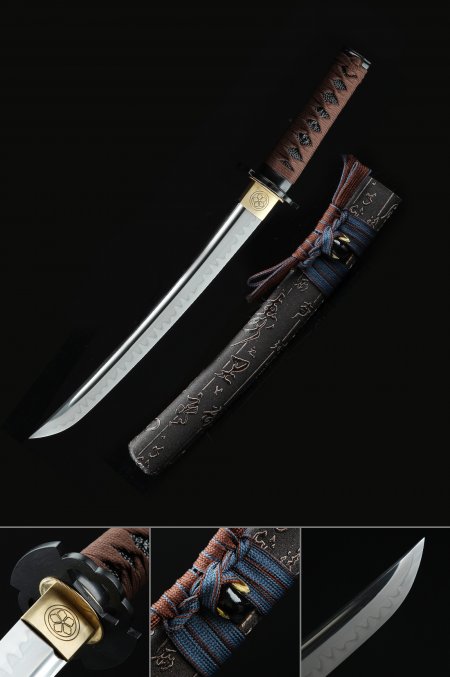
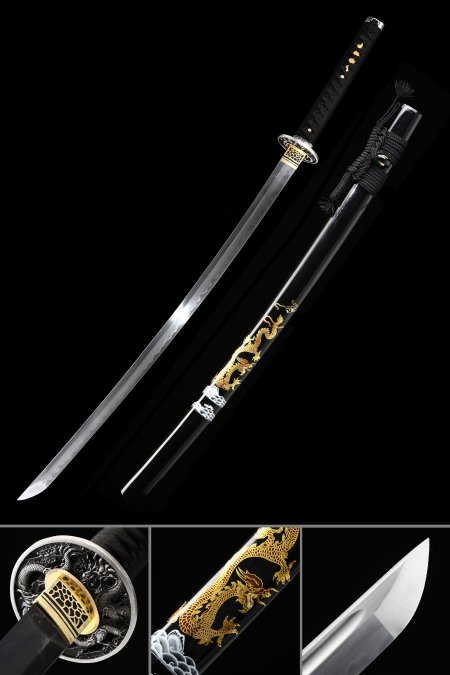
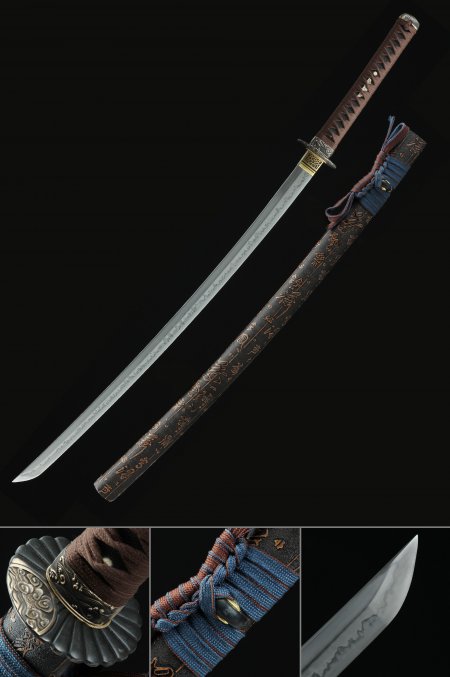
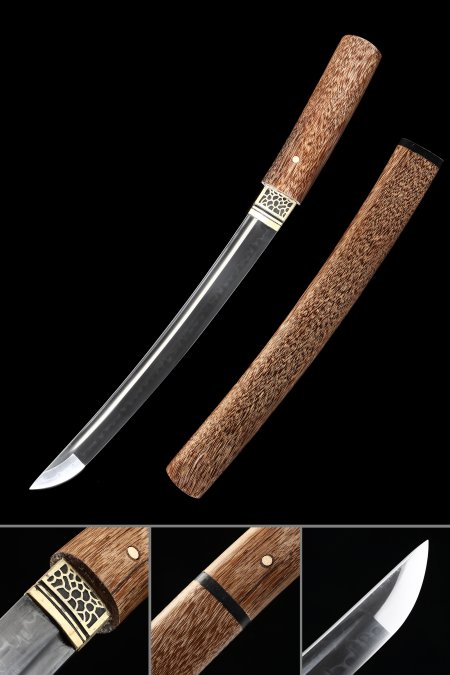
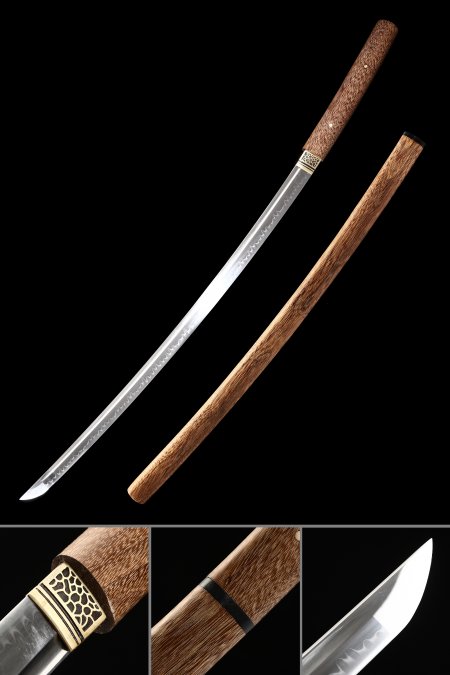
Clay tempering (tsuchioki) is a differential hardening technique with roots in feudal-era Japanese swordsmithing. Before the blade is heated for quenching, the smith applies a mixture of clay, ash, and charite powder along the spine and body of the blade in a thicker layer, while leaving the edge area thinly coated or exposed. When the heated blade is plunged into water, the thinly coated edge cools rapidly and becomes extremely hard (martensite), while the thicker-clad spine cools more slowly and remains softer and more flexible (pearlite). The visible boundary between these two crystalline structures is the hamon. Because the clay is applied by hand and varies in thickness and pattern, every hamon is unique. On T10 steel, the tungsten content helps produce a particularly crisp and well-defined hamon that stands out after final polishing — making these pieces especially valued among collectors who prioritize metallurgical authenticity.