Why does full tang construction matter on a Nodachi?
Updated Feb 2026
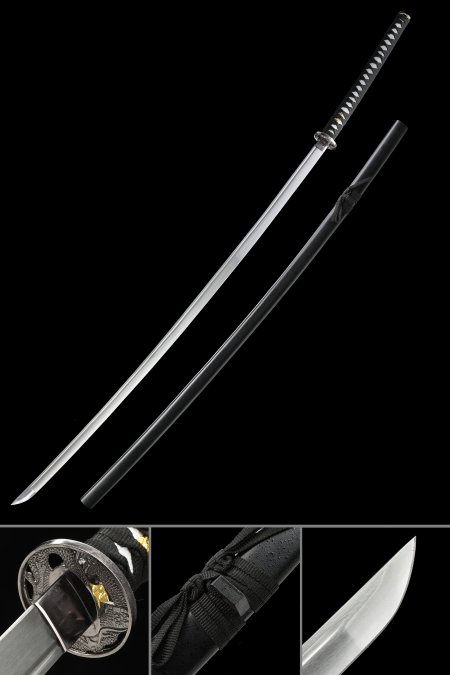
Full tang means the steel extends in one continuous piece from the blade tip through the entire length of the handle, secured by mekugi pins through the tsuka. On a standard-length katana this is already important, but on a Nodachi — where the overall length can exceed five feet — it becomes critical for structural soundness. A rat-tail or partial tang on a blade this size creates a stress concentration point where the steel narrows, which can lead to loosening or failure over time even in a display setting. Full tang construction distributes weight more evenly along the entire sword, giving it a balanced feel and ensuring the tsuka remains firmly seated against the habaki and tsuba for decades of display without developing wobble.