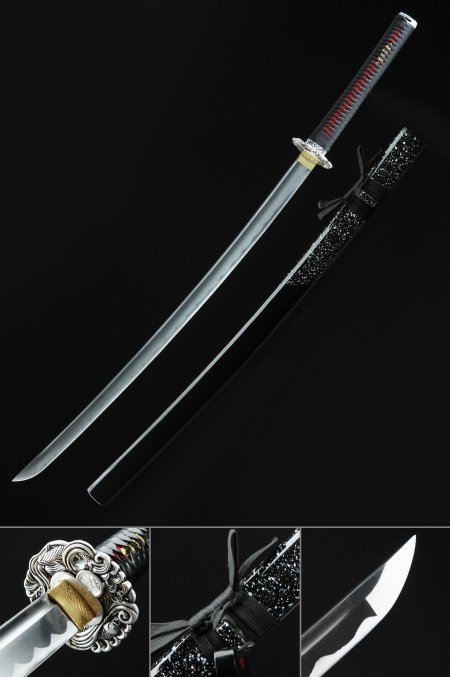
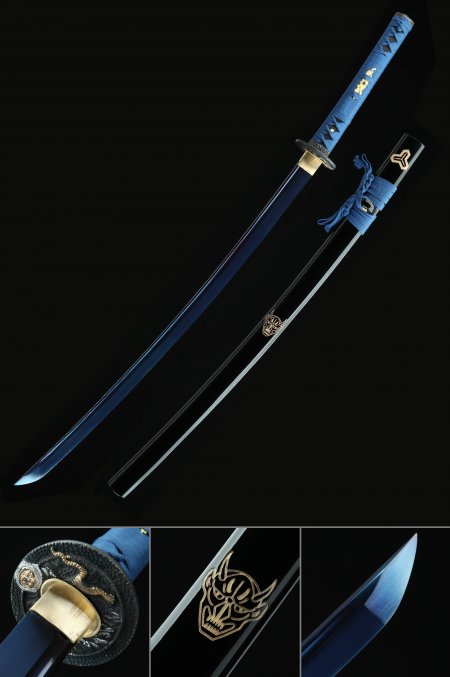
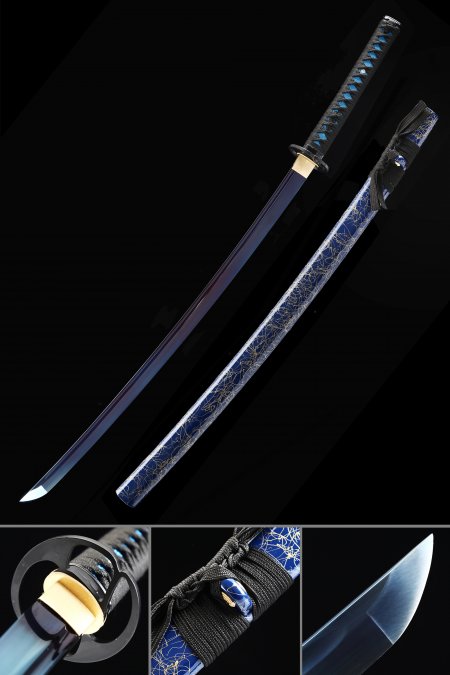
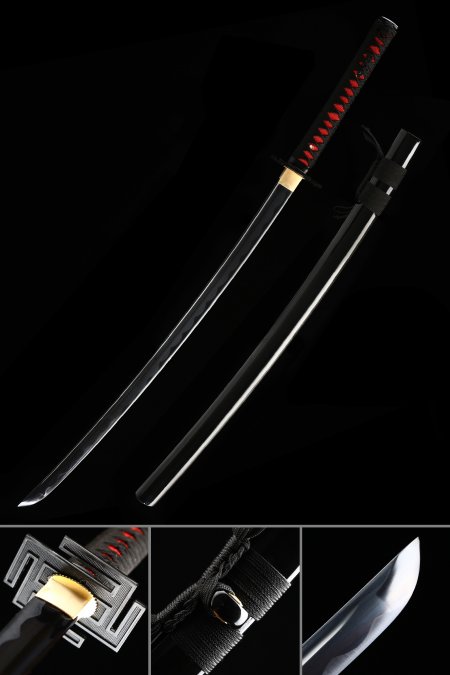
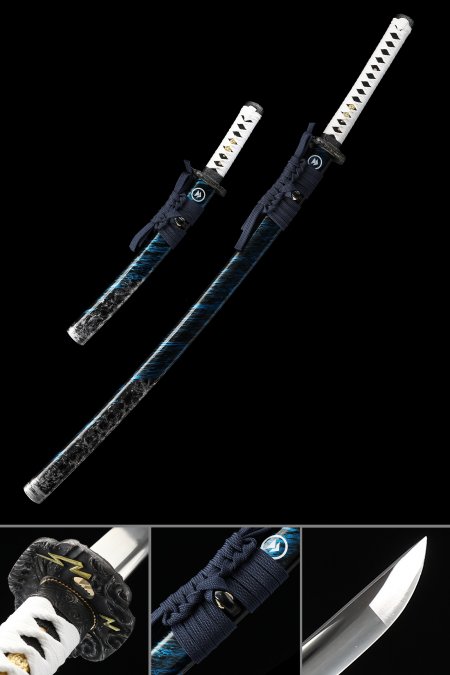
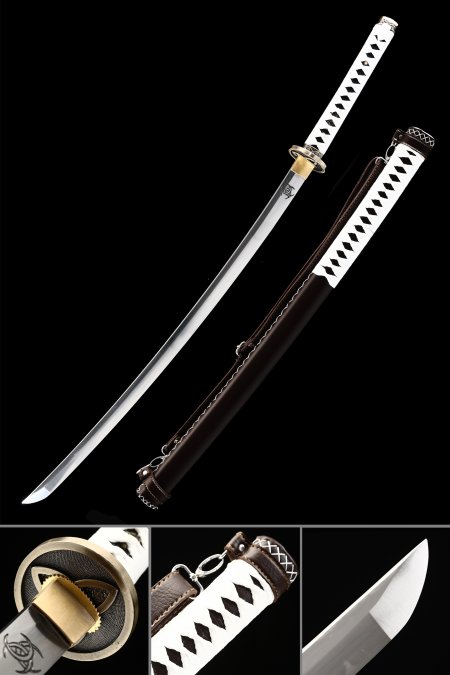
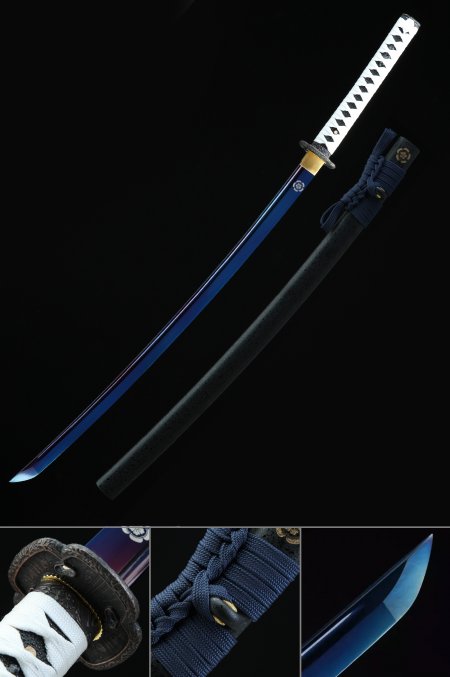
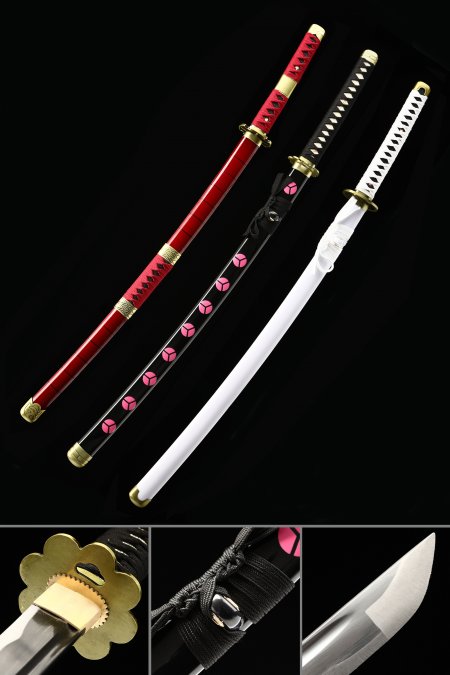
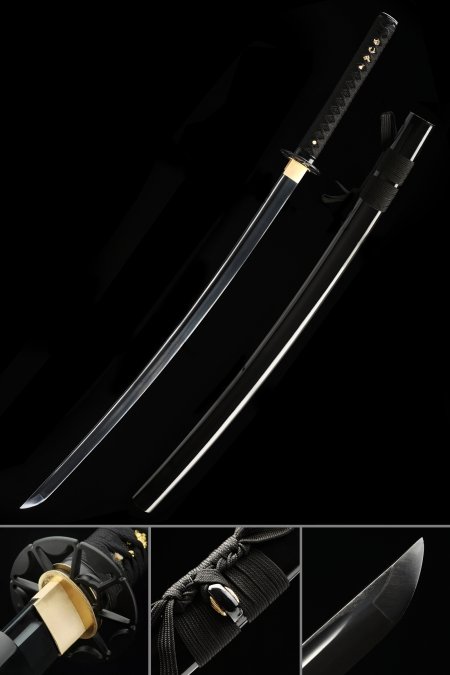
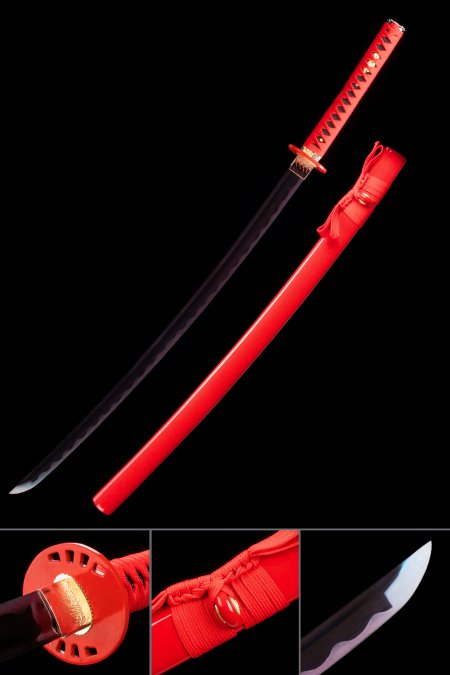
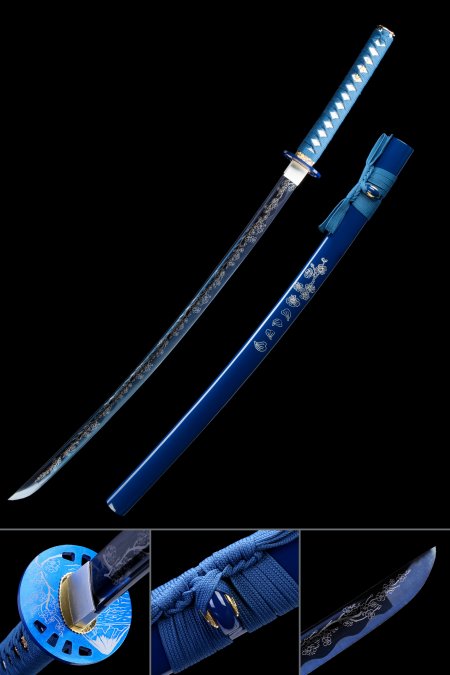
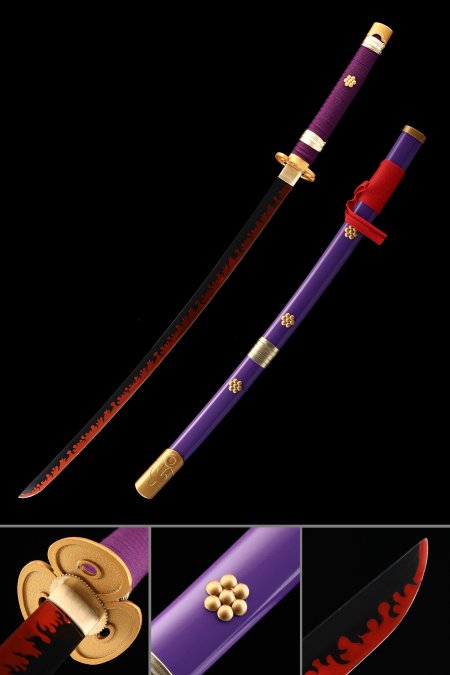
The defining difference is geometry. A chokuto has a completely straight blade with no curve from tang to tip, while a katana carries a gradual curvature — called sori — that develops through differential clay tempering during the forging process. Historically, the chokuto predates the curved katana in Japanese blade development, representing an earlier continental-influenced design. For collectors, this means the chokuto's profile reads as more austere and linear, which makes it particularly effective as a display piece where clean architectural form is the priority. The straight silhouette also means the entire blade length is visible from the front, making surface treatments like blue etching and lightning engraving fully legible from a distance.