How does clay-tempering affect a Bleach replica sword?
Updated Mar 2026
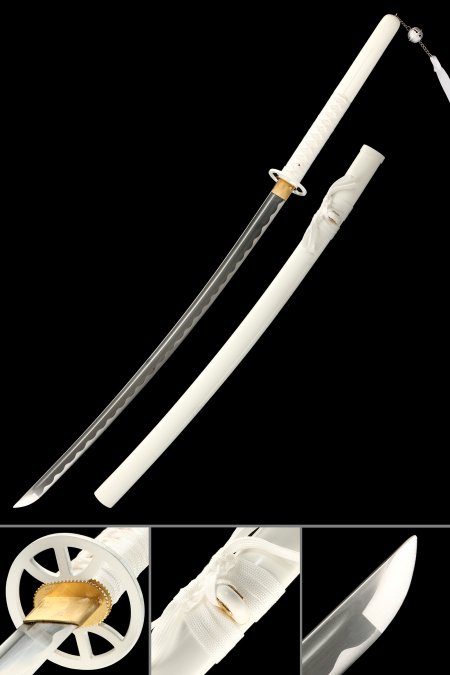
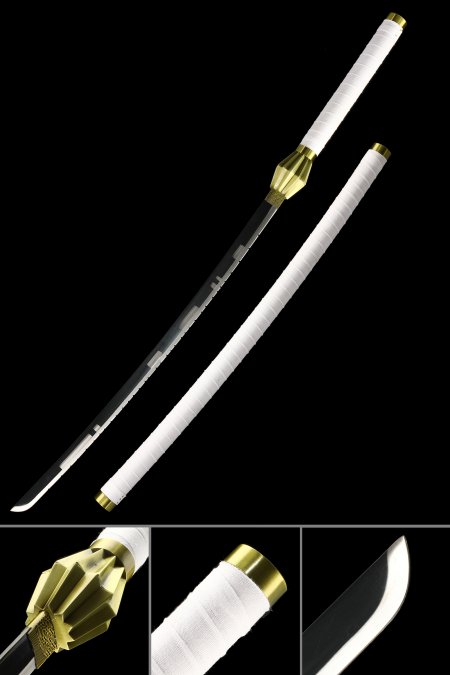
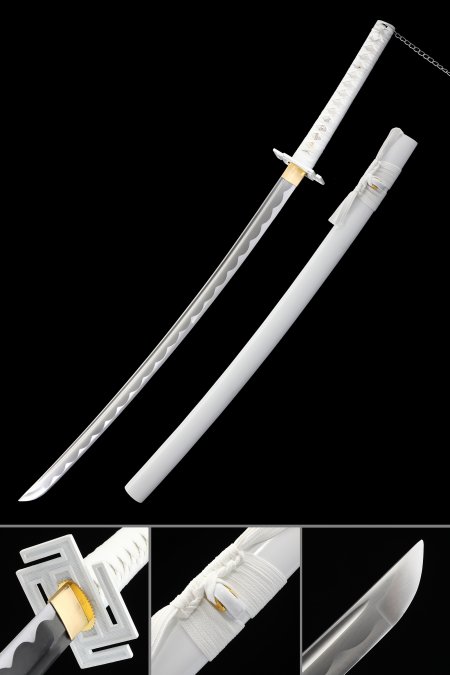
Clay-tempering, known as tsuchioki in traditional bladesmithing, involves applying a thick layer of refractory clay to the spine of the blade before the final quench. Because the clay insulates the spine and allows it to cool more slowly than the edge, the two sections develop different hardness levels — a harder edge and a softer, more resilient spine. The visible result is the hamon, the wavy or undulating temper line that appears along the boundary between the two zones. On the Sode no Shirayuki and Nozarashi replicas, this detail is authentic rather than acid-etched or ground in, meaning it reflects an actual metallurgical difference in the steel. For collectors, a real hamon is one of the clearest indicators that a blade was finished with genuine craftsmanship rather than surface decoration.