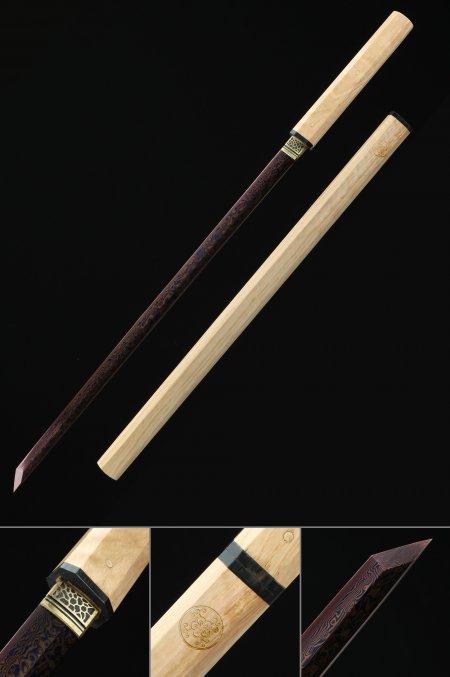
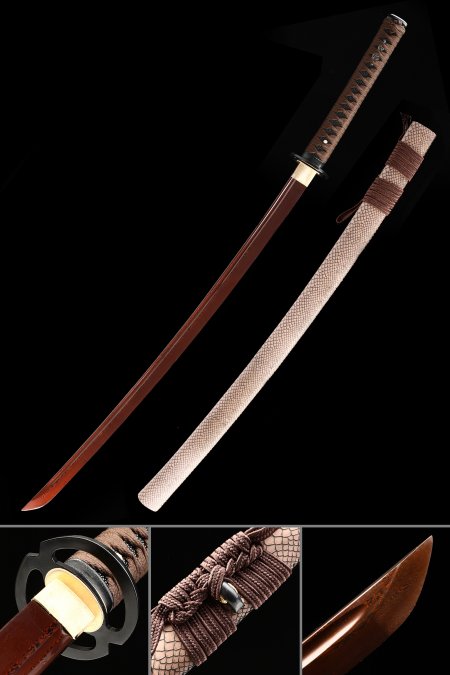
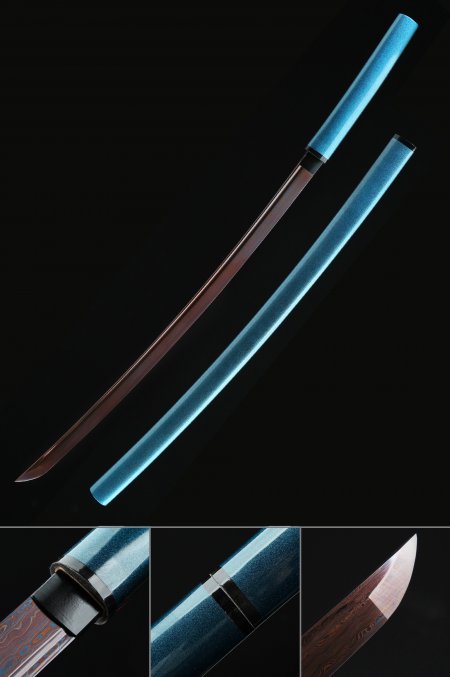
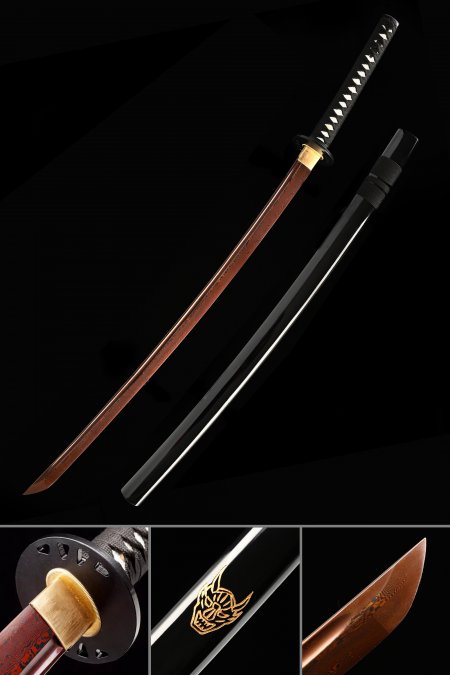
How does T10 clay tempered steel differ from 1095 or Damascus?
Updated Mar 2026
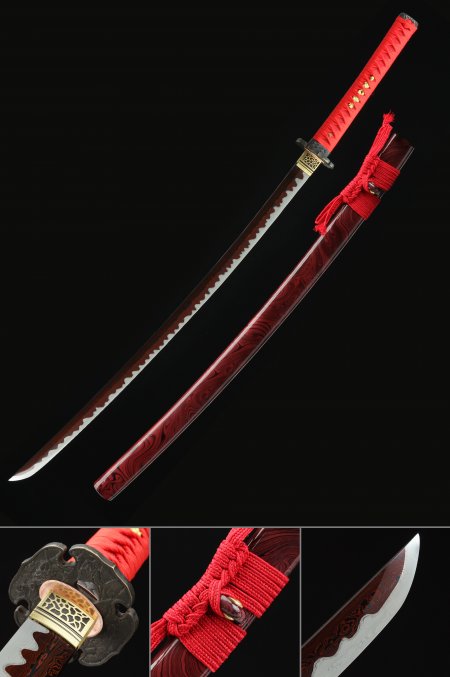
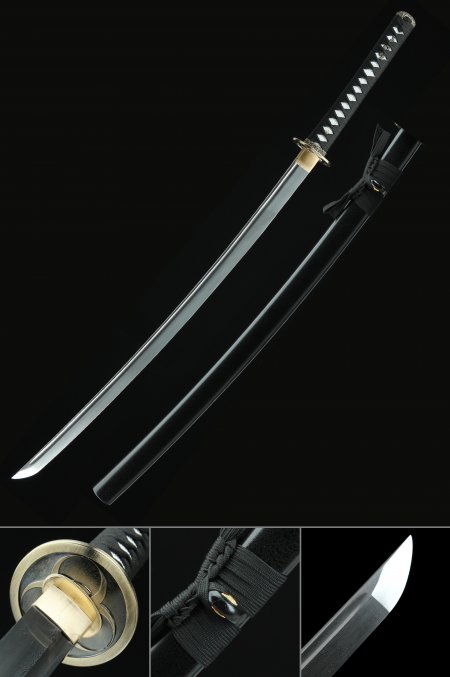
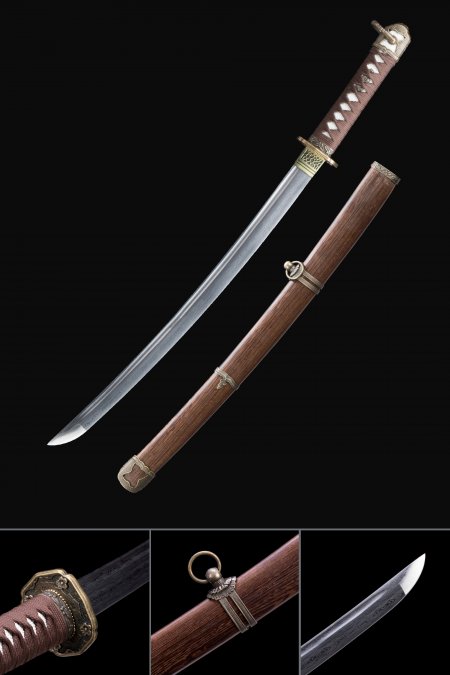
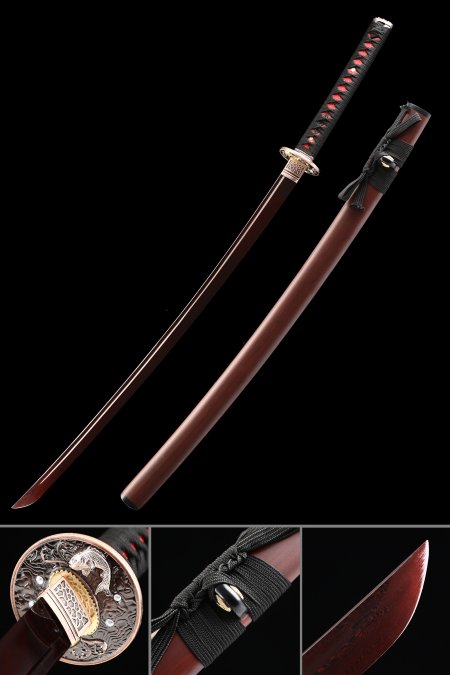
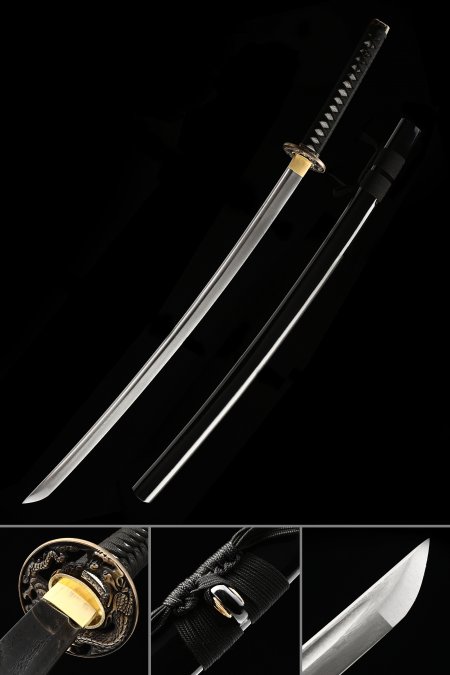
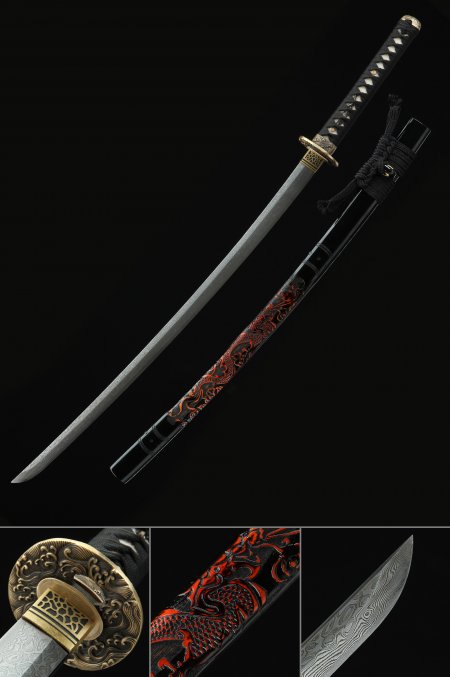
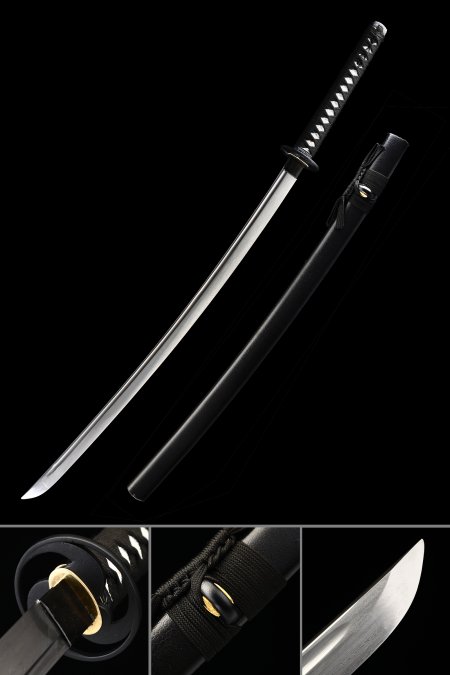
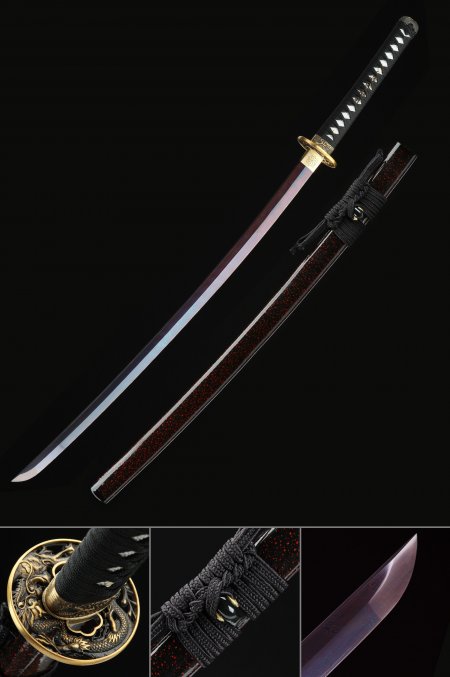
T10 tool steel contains a small percentage of tungsten added to its high-carbon composition, which refines the grain structure and improves wear resistance. When clay tempered, T10 develops a genuine hamon — the visible temper line running along the blade — through differential hardening. The spine remains relatively tough while the edge zone hardens significantly. By comparison, 1095 carbon steel is a simpler high-carbon alloy that produces reliable hardness and a clean finish, though its hamon (when present) tends to be less dramatic without specialized tempering. Damascus steel differs entirely in construction: it is created by forge-folding multiple steel layers, producing the flowing grain patterns prized for their visual complexity. Each steel type offers a distinct display character — T10 for authentic hamon detail, Damascus for surface artistry, and 1095 for classic simplicity.