How does a real clay-tempered hamon differ from an acid-etched one?
Updated Mar 2026
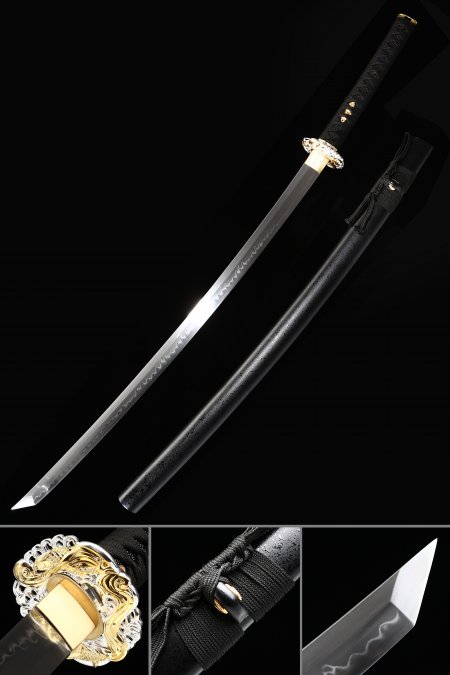
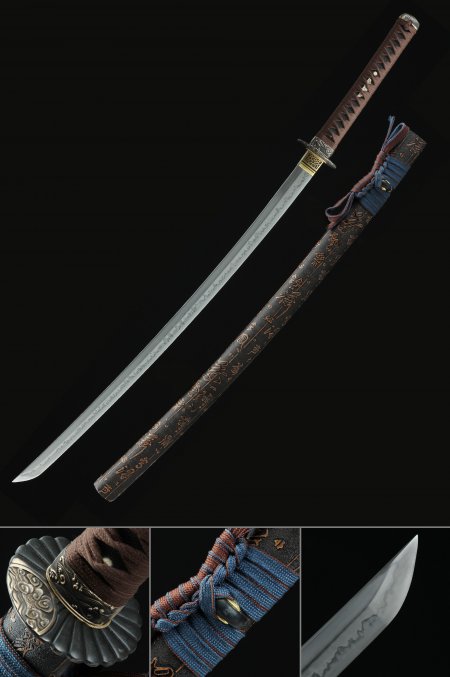
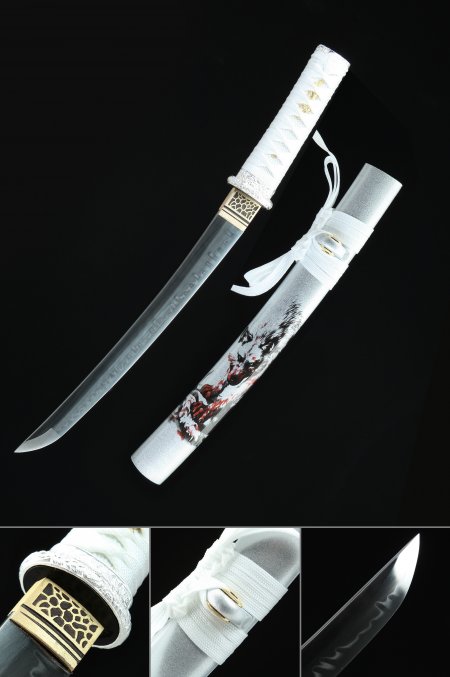
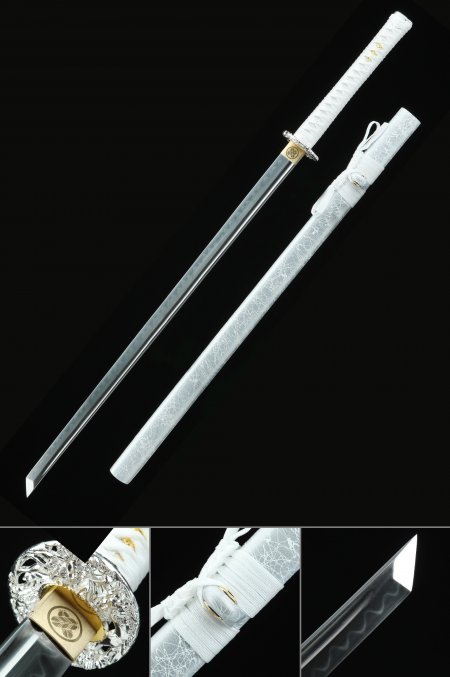
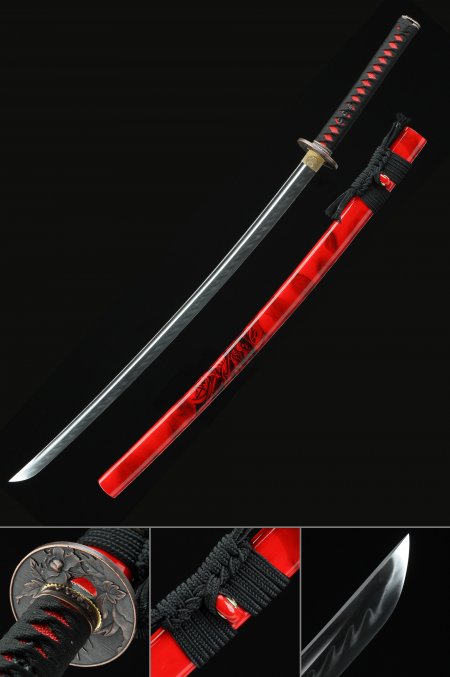
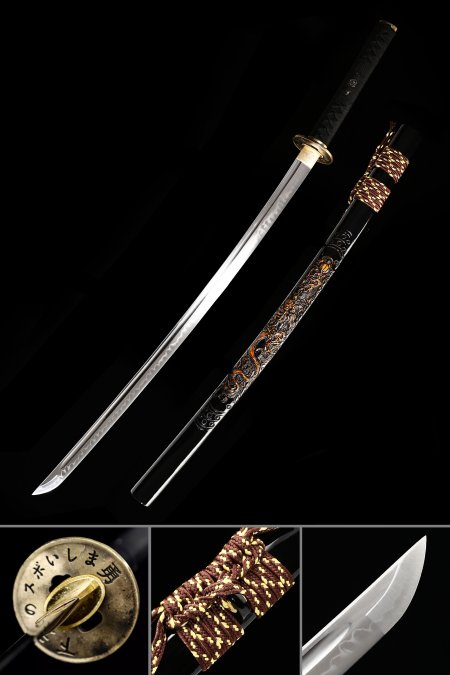
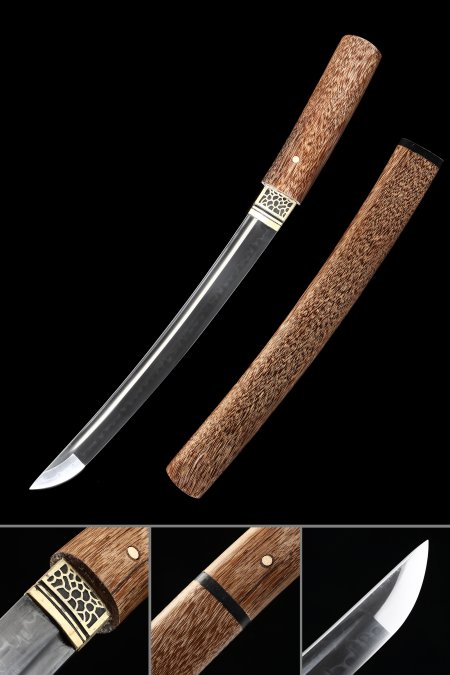
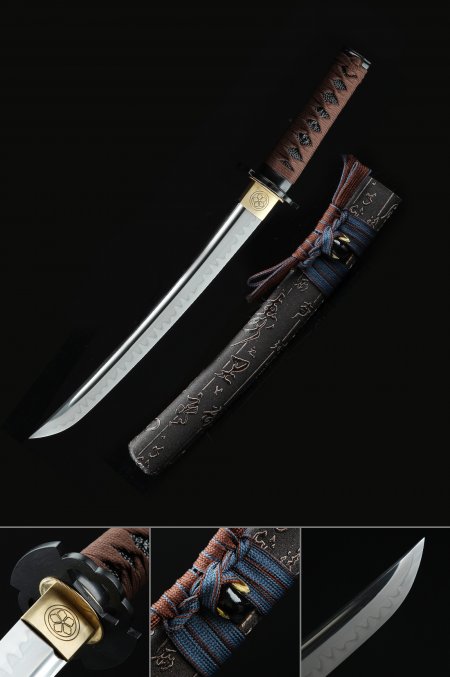
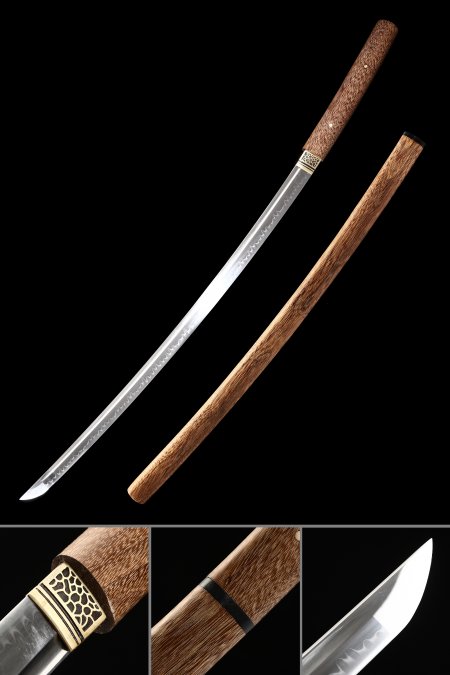
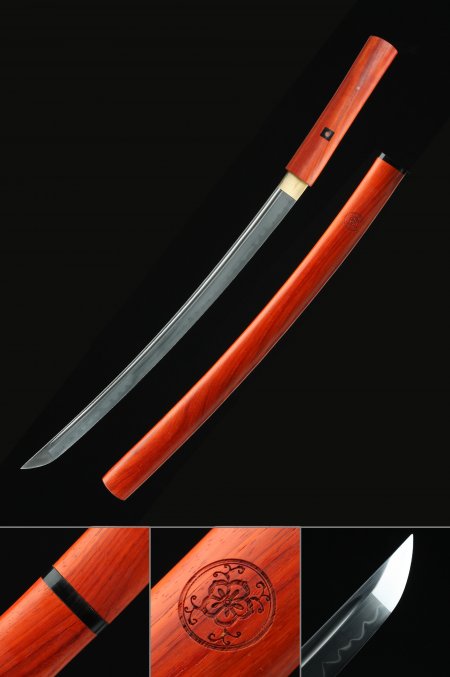
This is one of the most important distinctions a tanto collector can learn. An acid-etched hamon is produced chemically after the blade is finished — a resist is applied, acid cuts the pattern into the surface, and the result is a consistent, often overly crisp line that looks decorative but carries no structural significance. A real clay-tempered hamon, found on the T10 steel pieces in this collection, forms during the actual heat treatment process: clay is applied to the spine before quenching, creating differential cooling rates that harden the edge more aggressively than the spine. The resulting boundary line — the hamon — shows natural activity including nie (small martensitic crystals), nioi (a misty activity band), and subtle irregularities that no acid process can replicate. Under raking light, a genuine hamon glows with depth; an etched one looks flat by comparison.