How is a real hamon different from a painted or etched one?
Updated Feb 2026
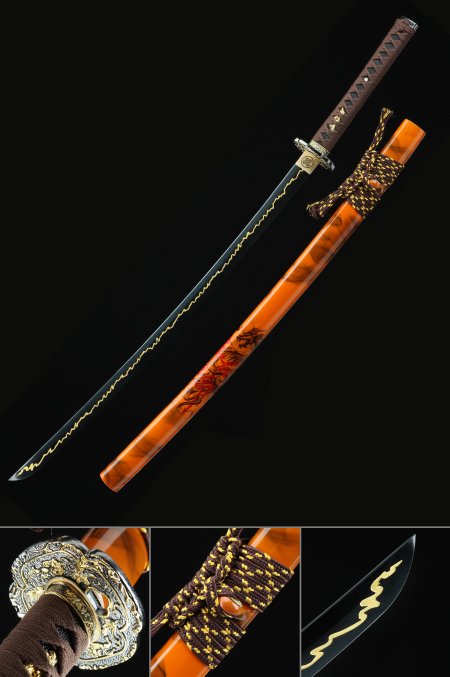
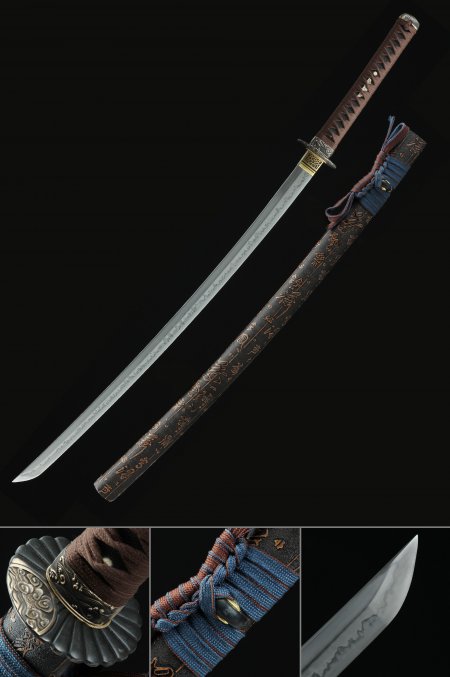
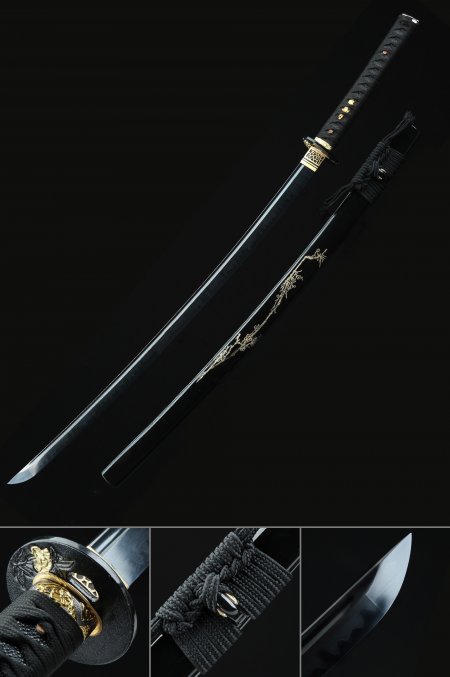
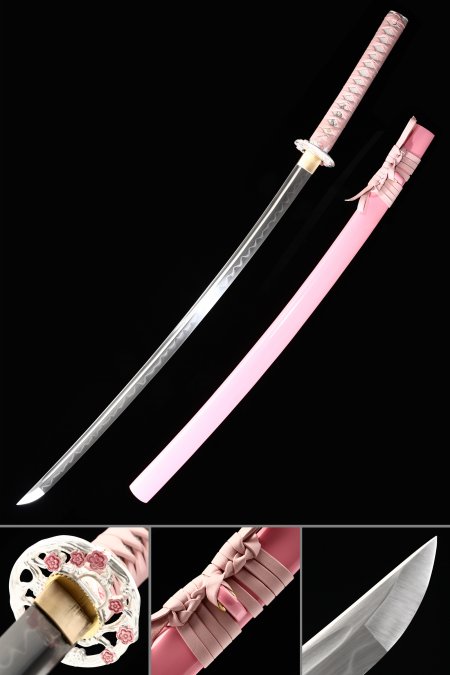
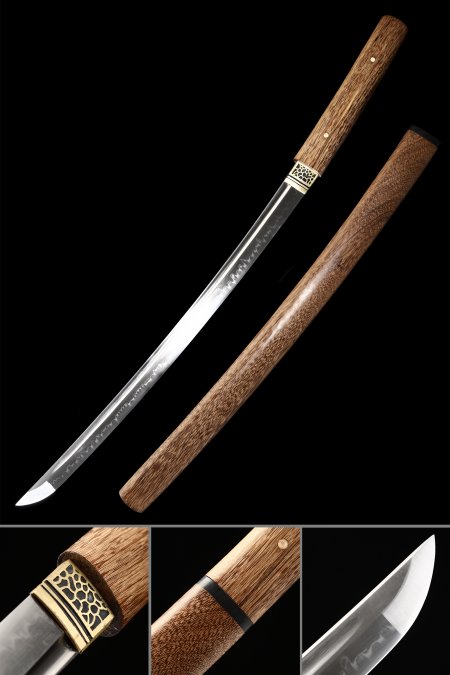
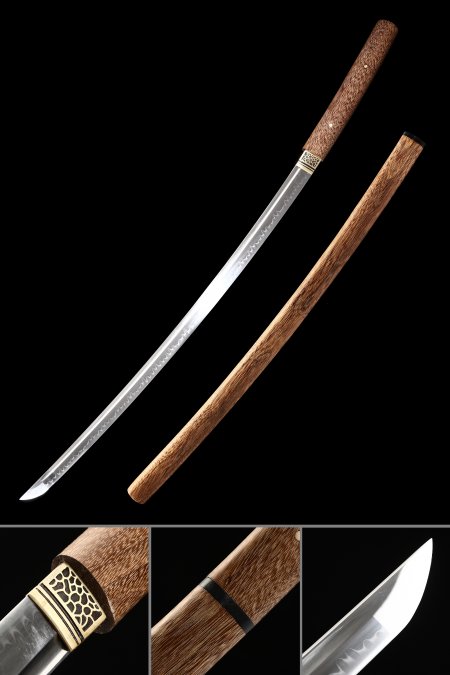
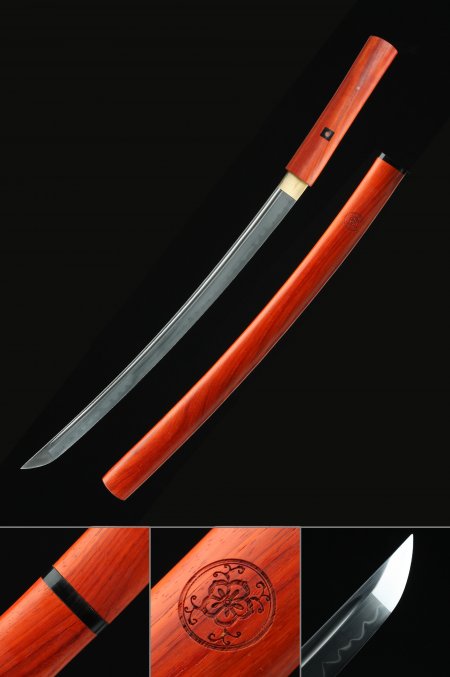
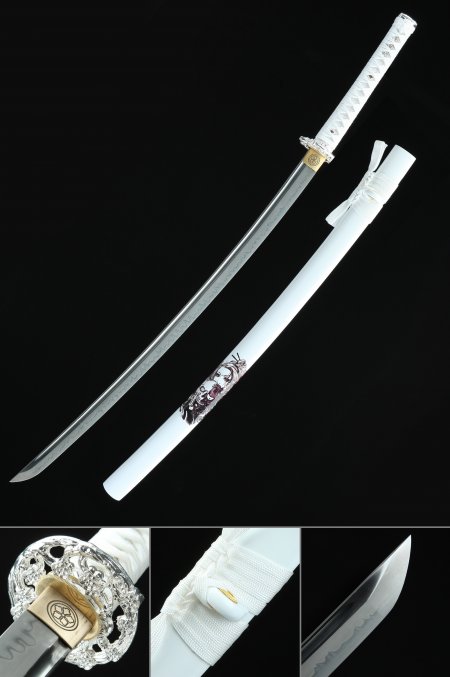
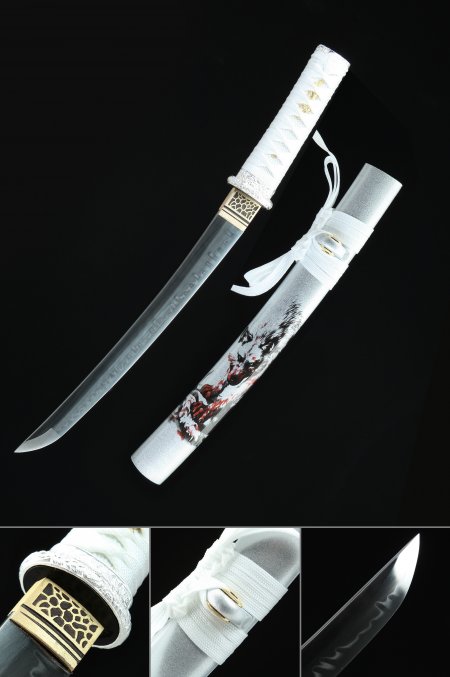
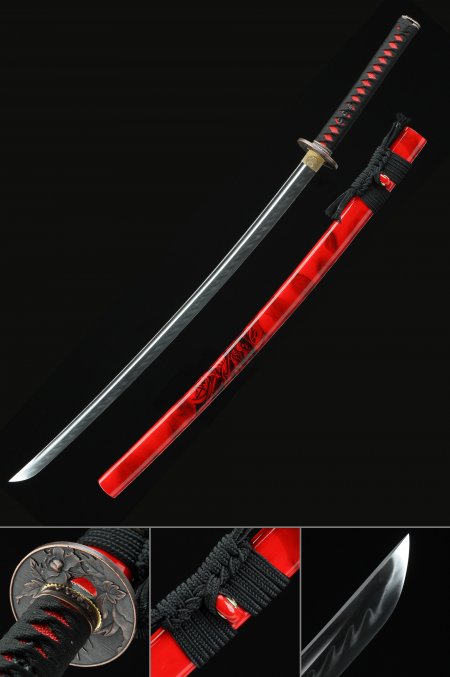
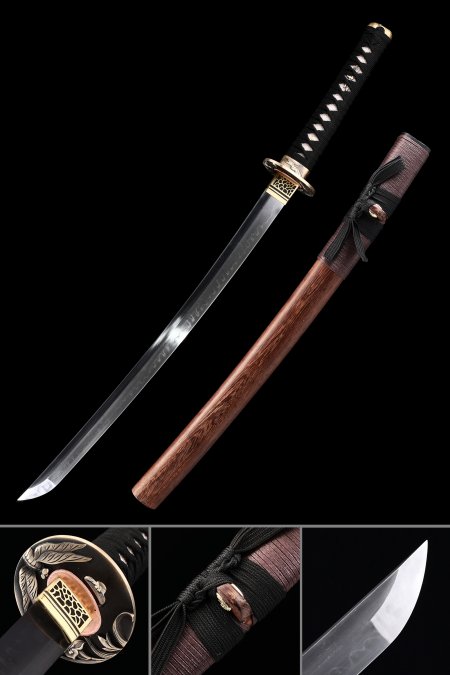
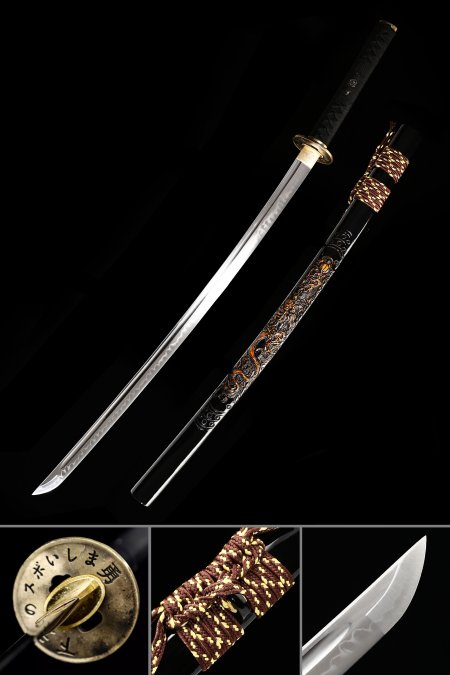
A real hamon is the direct result of differential heat treatment, specifically clay tempering. Before quenching, a swordsmith applies a layer of refractory clay along the spine of the blade, leaving the edge area exposed. During the quench, the unprotected edge cools rapidly and converts to martensite — a harder crystalline structure — while the clay-insulated spine cools slowly and remains softer. The visible boundary between these two zones is the hamon. Its shape (straight, wavy, cloudy) depends on how the clay was applied and the quenching medium used. A painted or acid-etched hamon, by contrast, is purely cosmetic — applied after the blade is already finished with no underlying metallurgical difference. On T10 clay-tempered pieces in this collection, the hamon is genuine and will appear slightly different under different lighting angles, which is a key authentication signal for knowledgeable collectors.