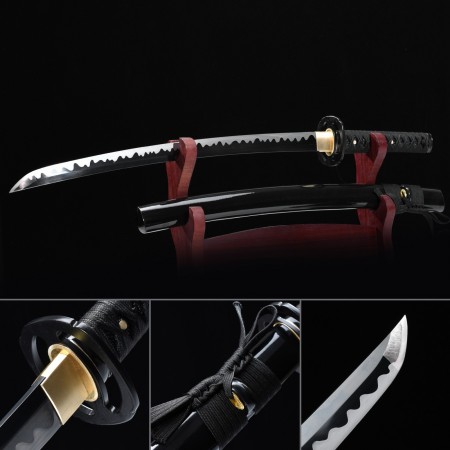
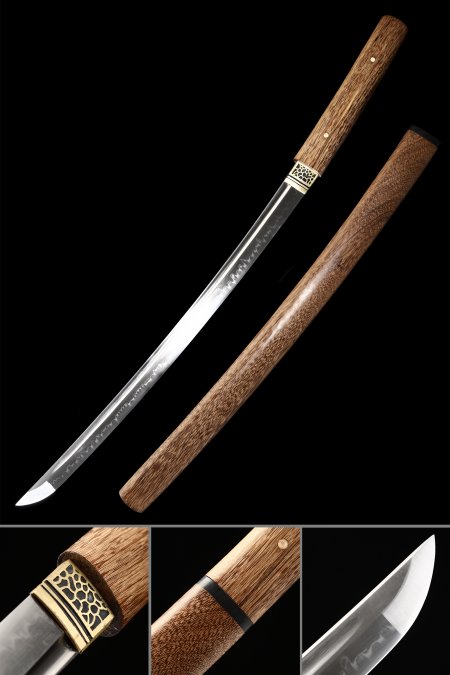
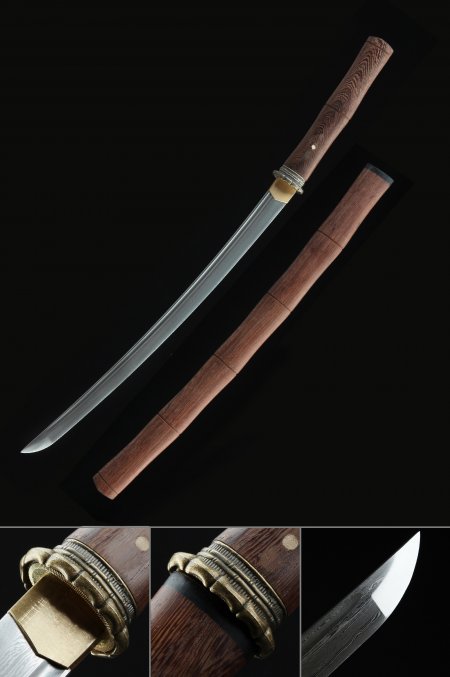
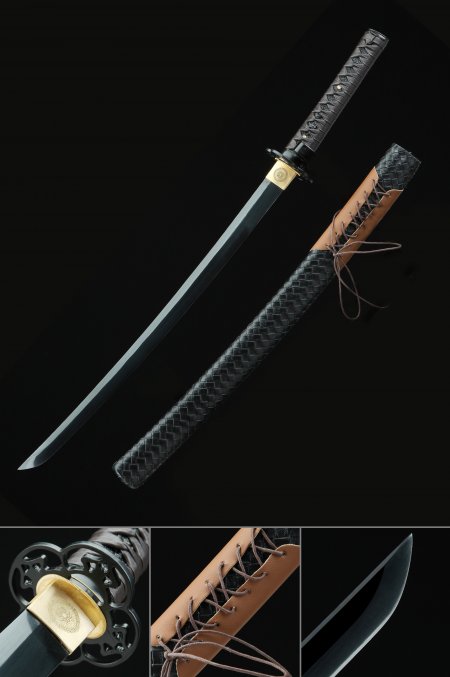
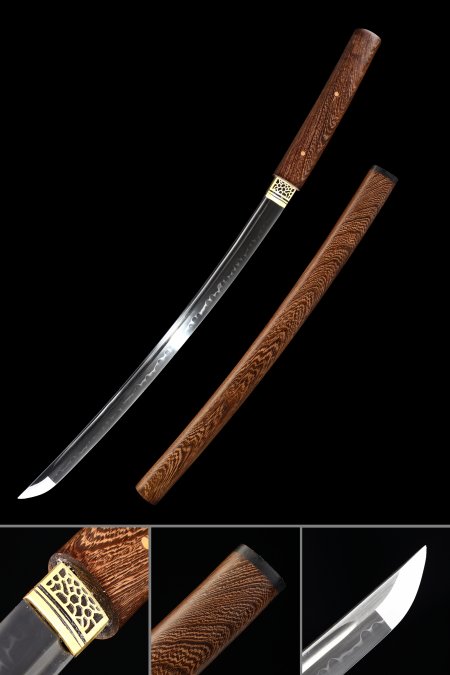
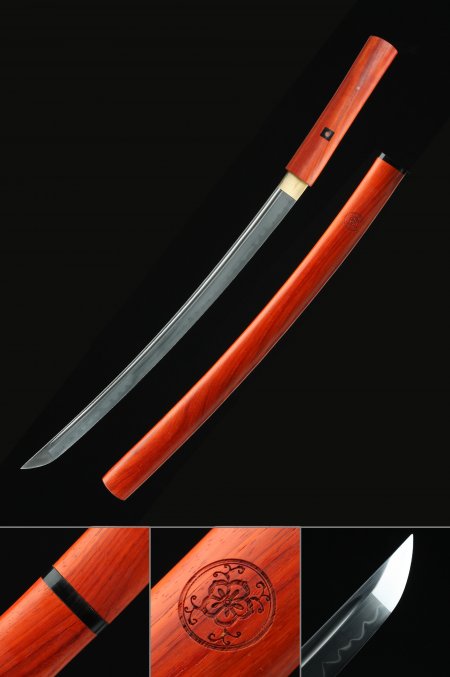
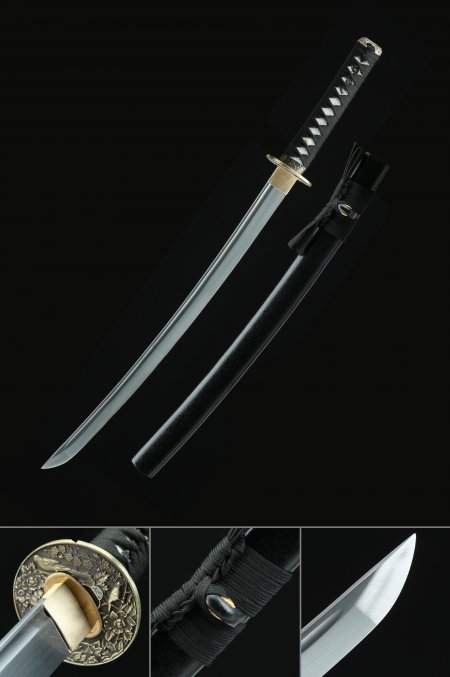
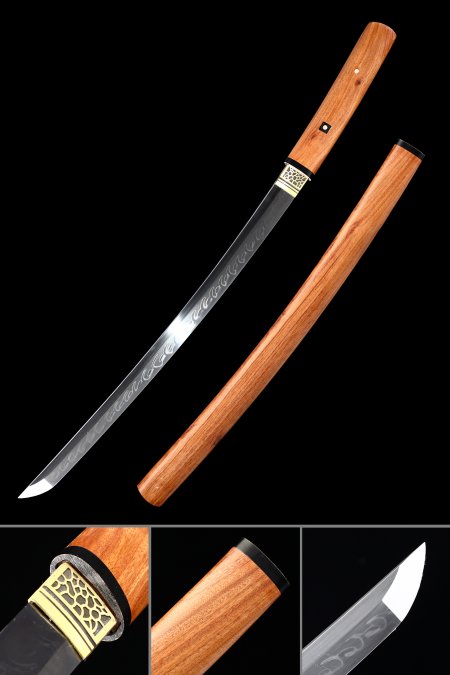
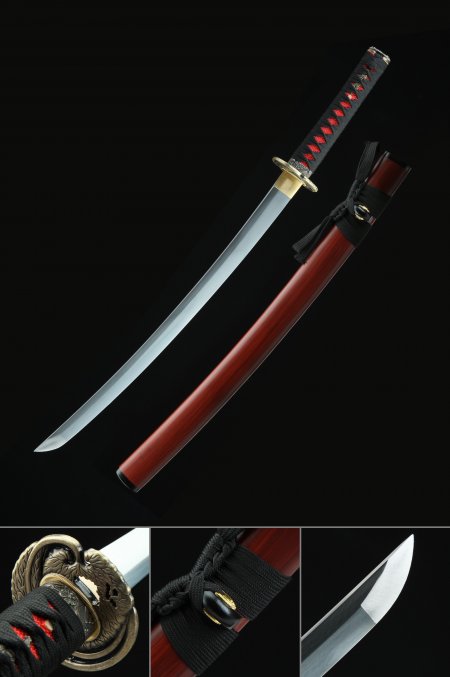
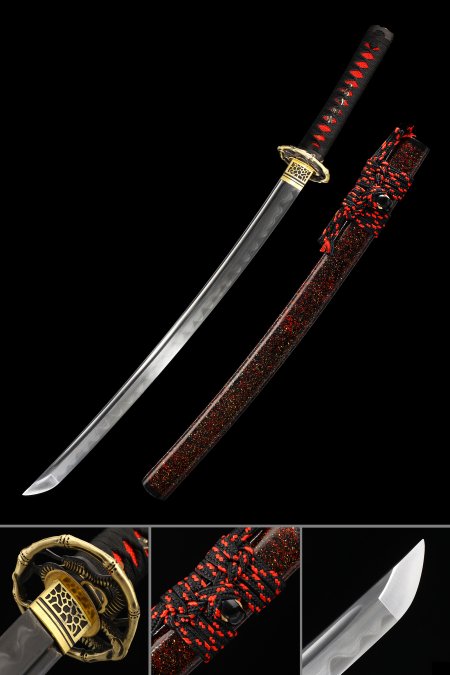
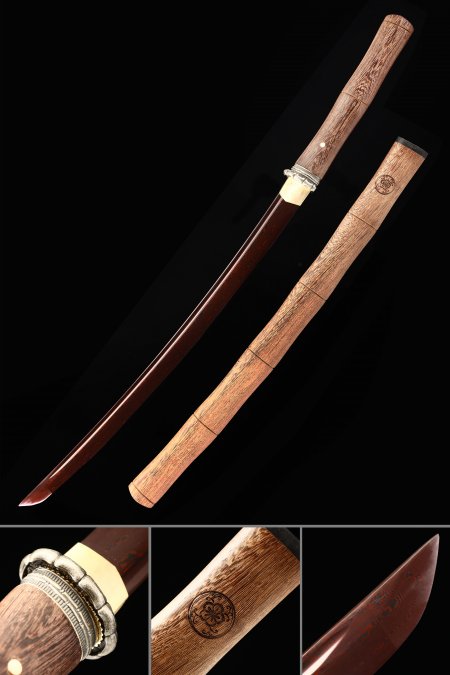
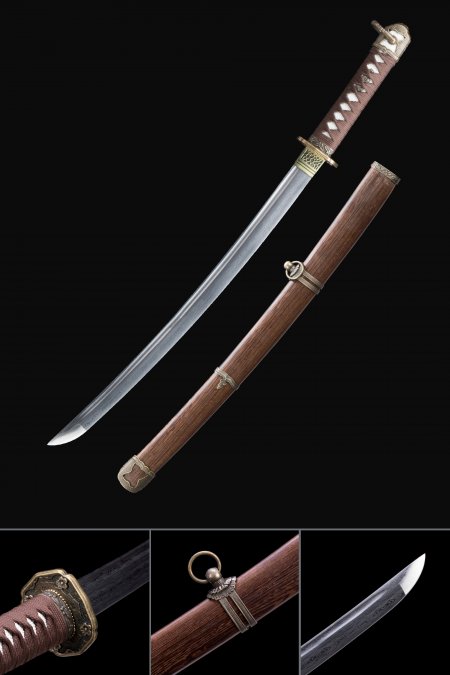
How does a ninjato differ from a traditional katana in design?
Updated Feb 2026
The most immediate difference is the blade geometry. A katana features a pronounced curve (sori) designed for drawing cuts, while a ninjato has a straight blade with a squared or chisel-shaped tip known as a kissaki. The tsuba on a ninjato is typically a simple square shape rather than the round or lobed guards common on katana. Overall length tends to be shorter as well, usually closer to wakizashi proportions. These design choices give the ninjato a distinctly utilitarian, minimalist profile that stands out in any sword collection and makes for an eye-catching contrast when displayed alongside curved Japanese blades.