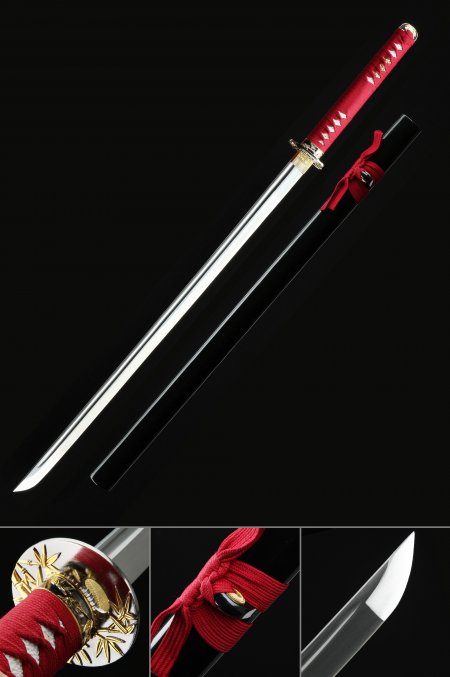
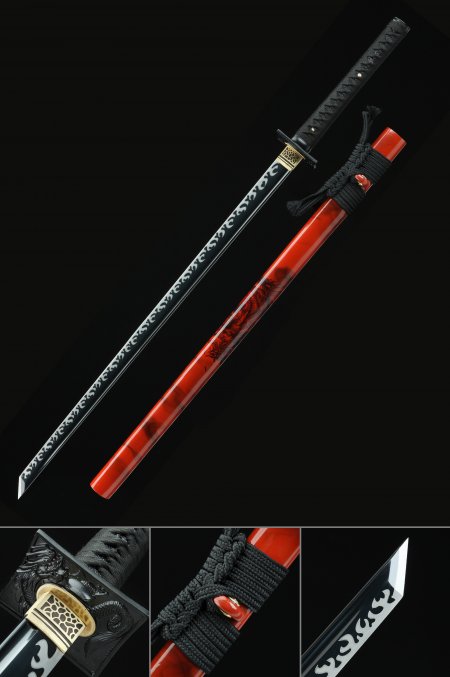
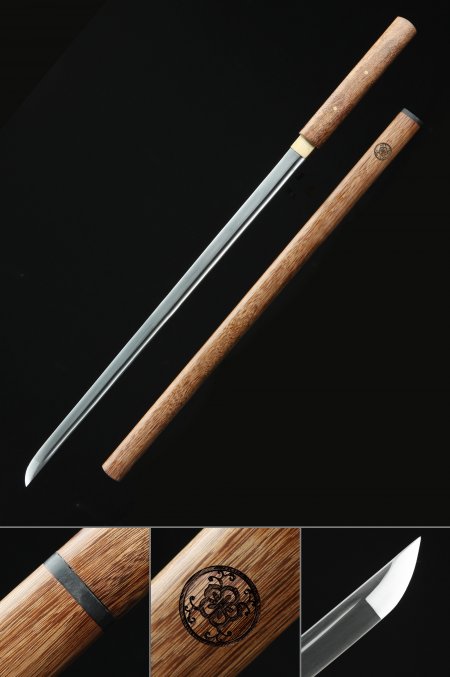
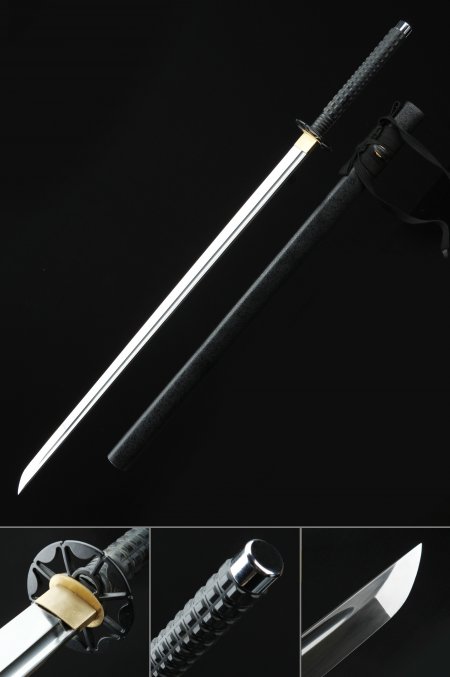
What makes a hamon on a ninjato "real" versus decorative?
Updated Feb 2026
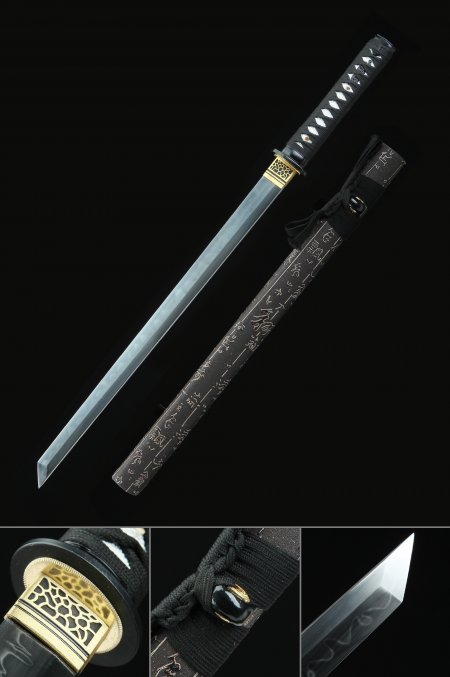
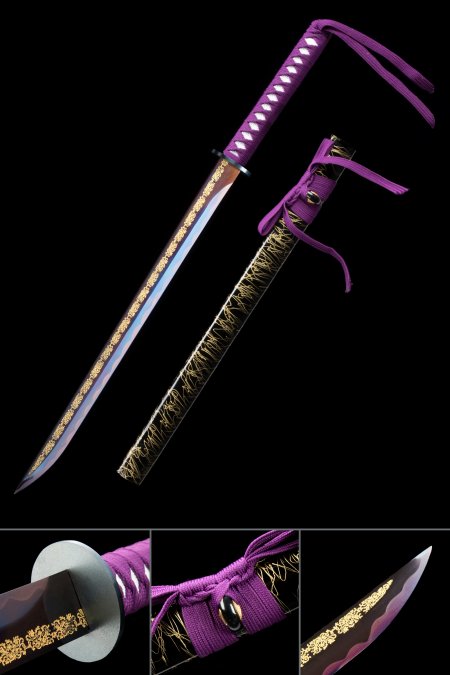
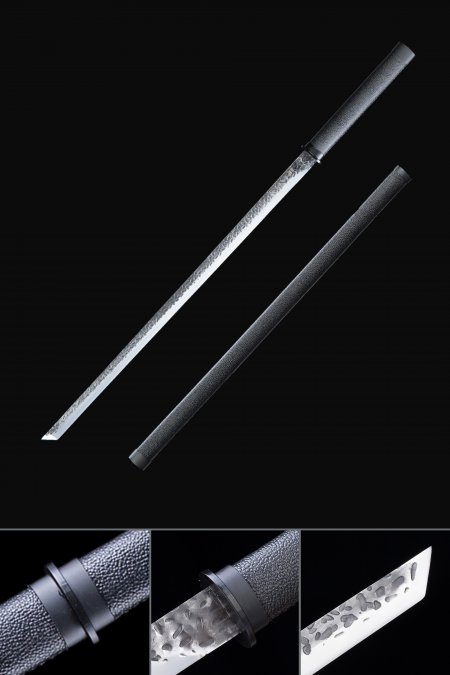
A real hamon is a structural feature created during the heat-treatment stage of forging. The smith applies clay of varying thickness along the blade before quenching it in water or oil. Steel beneath the thin clay cools rapidly and transforms into hard martensite, while steel under the thick clay cools slowly and remains as tougher pearlite. The visible line between these two grain structures is the authentic hamon. A decorative hamon, by contrast, is etched or acid-washed onto a uniformly hardened blade after forging. You can distinguish the two by examining the line under magnification: a real hamon displays nioi and nie — tiny crystalline particles that shimmer along the boundary — while an etched line appears flat and uniform. Real hamon blades also exhibit a measurable hardness difference between edge and spine, typically ranging from around HRC 58–60 at the edge down to HRC 38–42 at the spine.