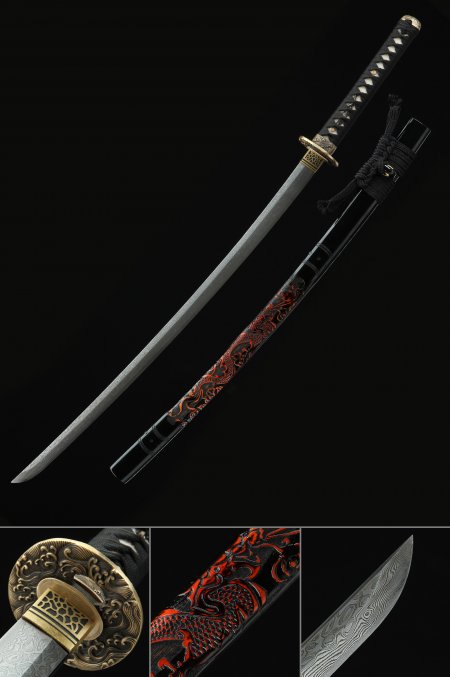
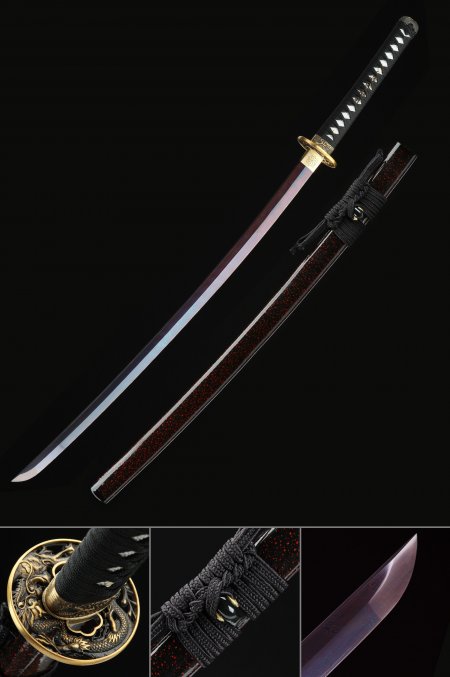
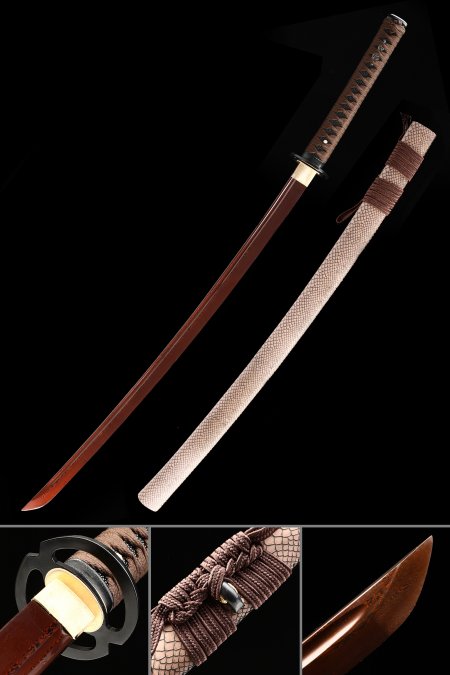
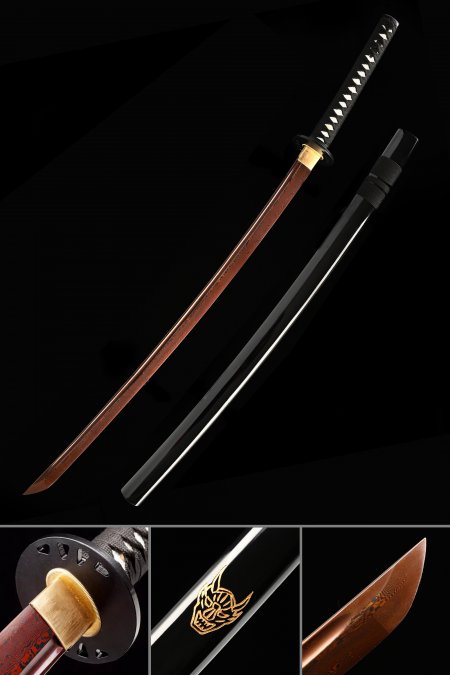
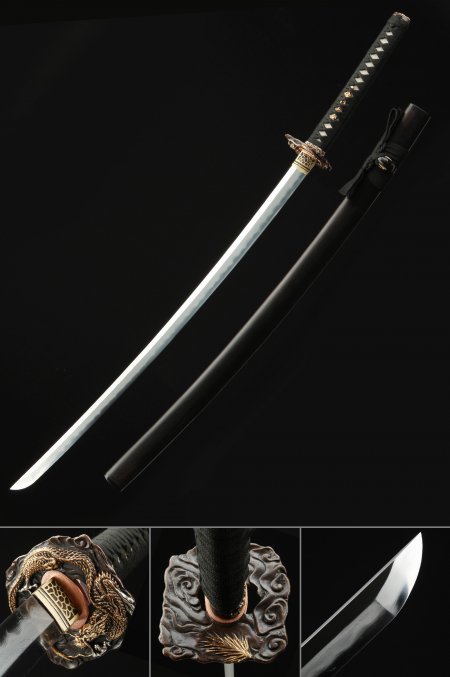
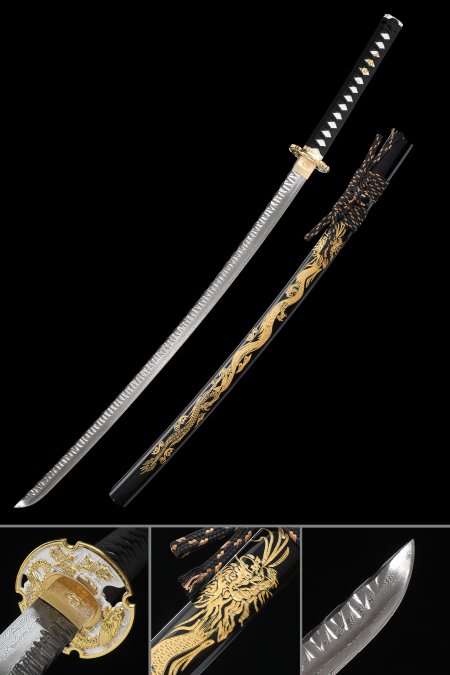
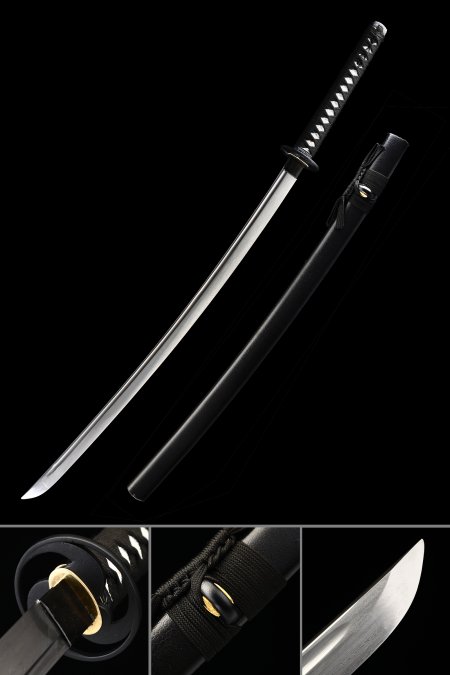
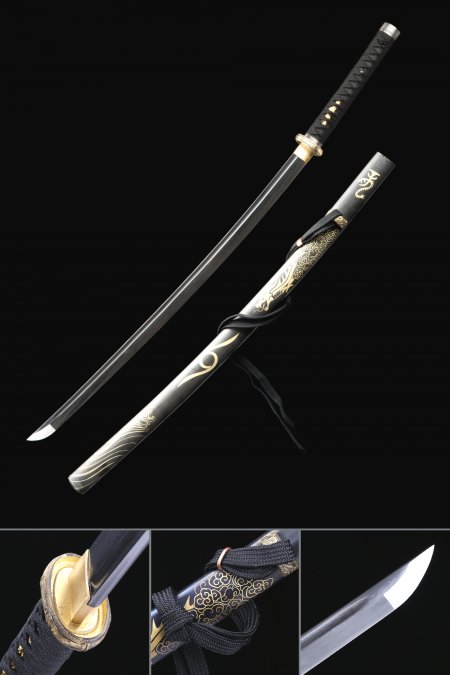
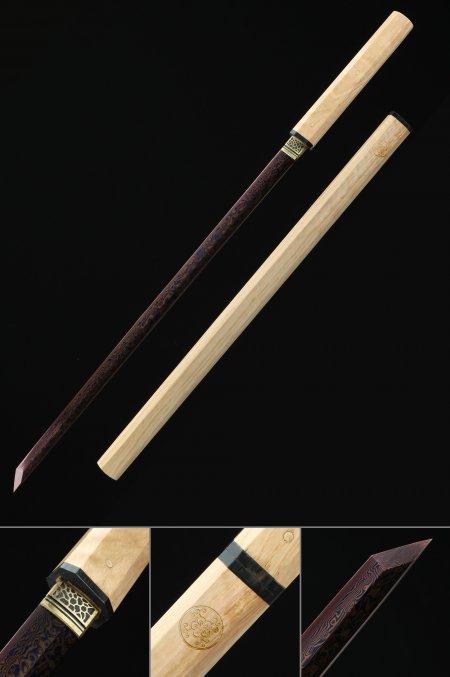
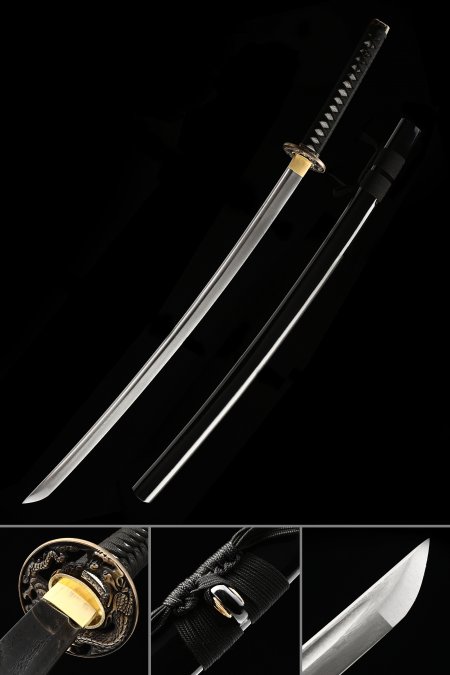
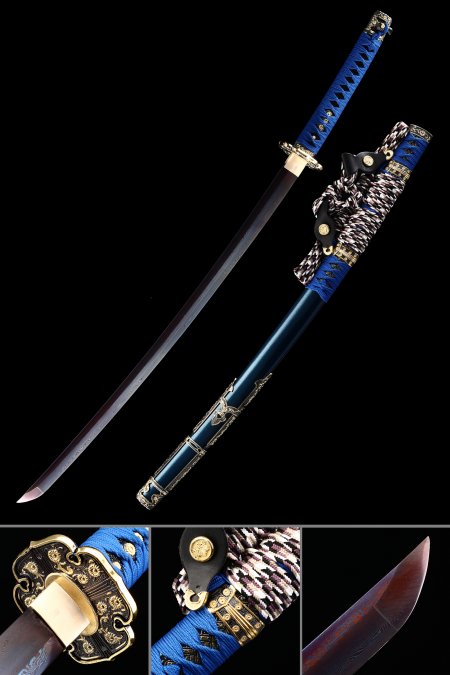
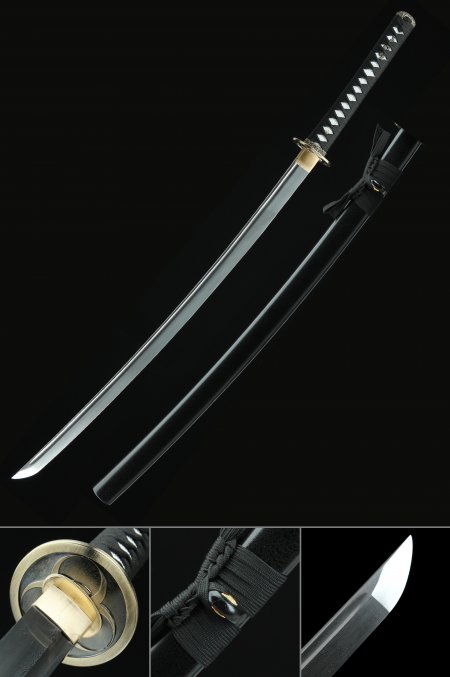
A hamon is the temper line produced when differential clay tempering is applied before quenching. Clay is coated thickly along the spine and thinly near the edge, so the edge cools rapidly and hardens while the spine remains relatively tough. The boundary between these two zones — the hamon — appears as a misty, undulating line running along the lower portion of the blade. On a genuine clay-tempered blade, the hamon has organic irregularities, subtle activity within the line itself, and a milky or frosted appearance under raking light. Simulated hamons produced by mechanical polishing or acid etching tend to look uniform and sharp-edged by comparison. Several Damascus Naginata pieces in this collection specify both clay tempering and a real hamon, and those are the details to prioritize if authenticity of process matters to your collection criteria.