How does clay-tempered folded steel differ from standard folded steel?

 Updated Mar 2026

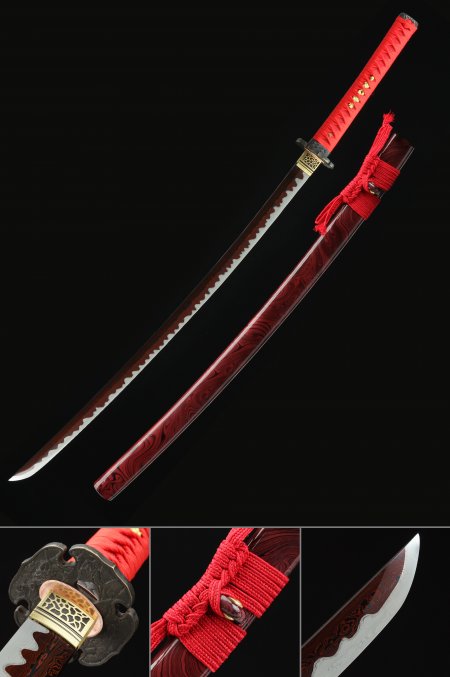
Clay tempering adds a second layer of visual complexity on top of the folded grain. Before the final quench, a smith applies a clay mixture along the spine of the blade, leaving the edge area exposed. When quenched, the unprotected edge cools faster and forms a harder crystalline structure called martensite, while the clay-insulated spine stays in a softer, tougher state. The boundary between these two zones becomes the hamon — the visible temper line that runs the length of the blade. On a folded steel blade that has also been clay-tempered, you get two distinct visual features: the jihada grain pattern across the whole surface, and the hamon line separating hard edge from soft spine. Standard folded steel without clay tempering may still show a hamon if differentially quenched, but the line is typically less pronounced and less defined than what clay tempering produces.
Popular Products

20% OFFdamascus katana
279.00 USD
349.00 USD
15% OFFww2 wakizashi
169.00 USD
199.00 USD
20% OFFdamascus katana
329.00 USD
409.00 USD
15% OFFreal katana
649.00 USD
769.00 USD
20% OFFtachi sword
249.00 USD
309.00 USD
20% OFFdamascus katana
619.00 USD
769.00 USD
15% OFFshort katana
199.00 USD
239.00 USD
20% OFFjapanese katana
229.00 USD
289.00 USD
15% OFFgolden katana
199.00 USD
229.00 USD
15% OFFblack katana
179.00 USD
209.00 USD
15% OFFkatana sword
199.00 USD
229.00 USD
20% OFFdamascus katana
309.00 USD
389.00 USD
20% OFFdamascus katana
279.00 USD
349.00 USD
15% OFFww2 wakizashi
169.00 USD
199.00 USD
20% OFFdamascus katana
329.00 USD
409.00 USD
15% OFFreal katana
649.00 USD
769.00 USD
20% OFFtachi sword
249.00 USD
309.00 USD
20% OFFdamascus katana
619.00 USD
769.00 USD
15% OFFshort katana
199.00 USD
239.00 USD
20% OFFjapanese katana
229.00 USD
289.00 USD
15% OFFgolden katana
199.00 USD
229.00 USD
15% OFFblack katana
179.00 USD
209.00 USD
15% OFFkatana sword
199.00 USD
229.00 USD
20% OFFdamascus katana
309.00 USD
389.00 USD