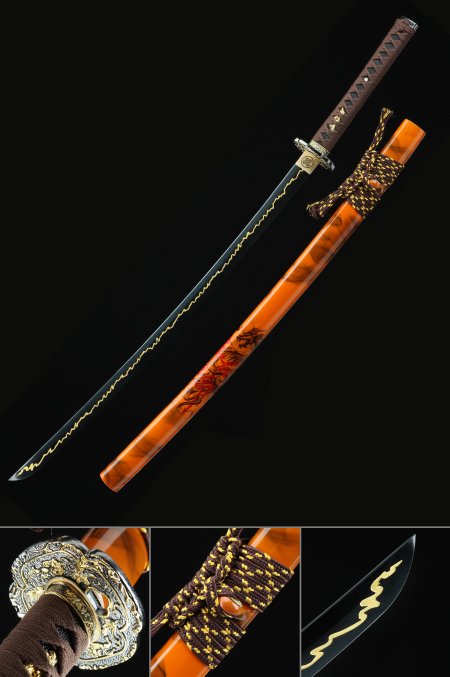
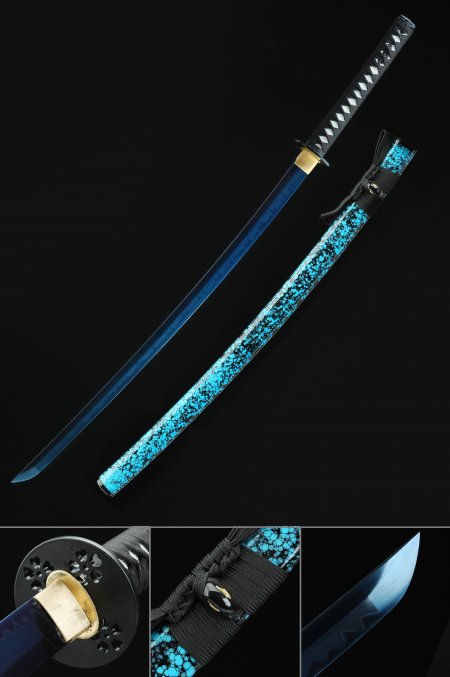
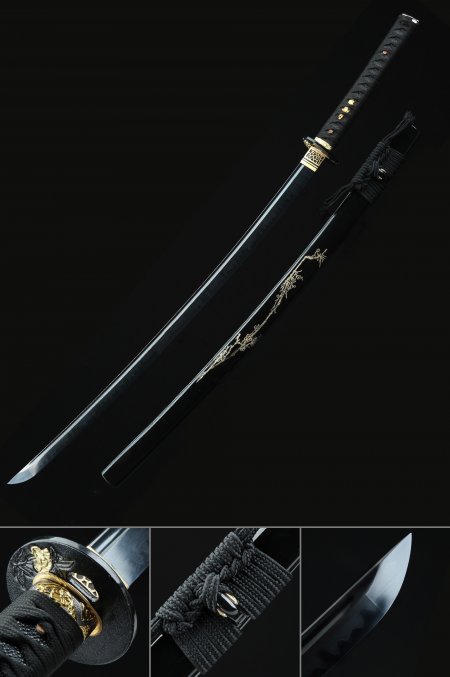
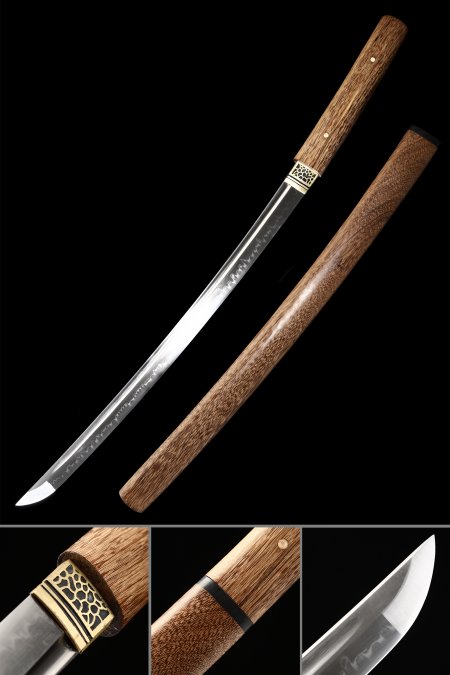
How does T10 clay-tempered steel differ from 1045 carbon steel in these katanas?
Updated Mar 2026
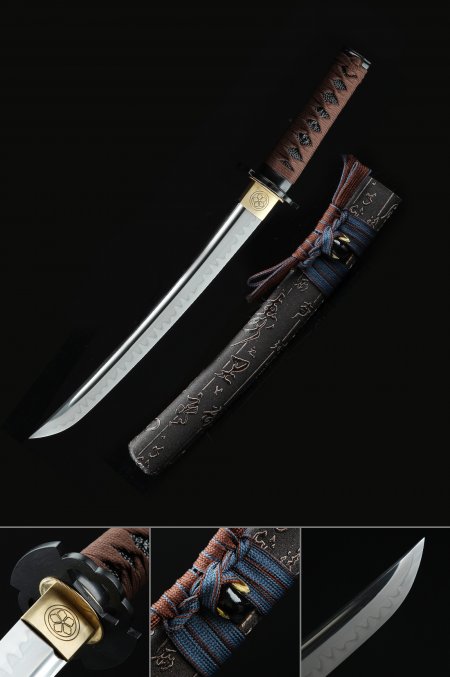
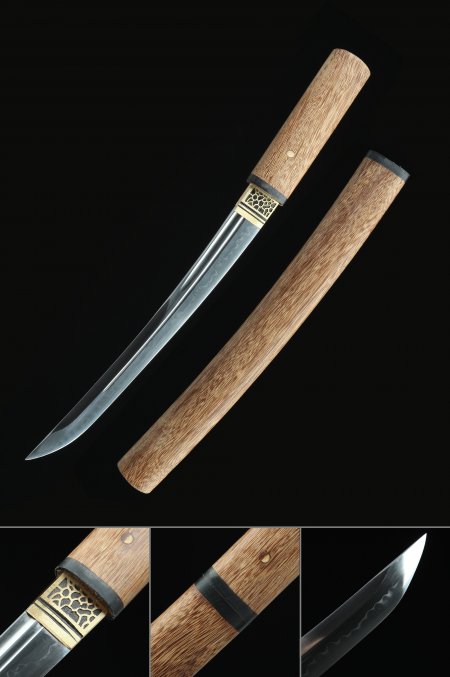
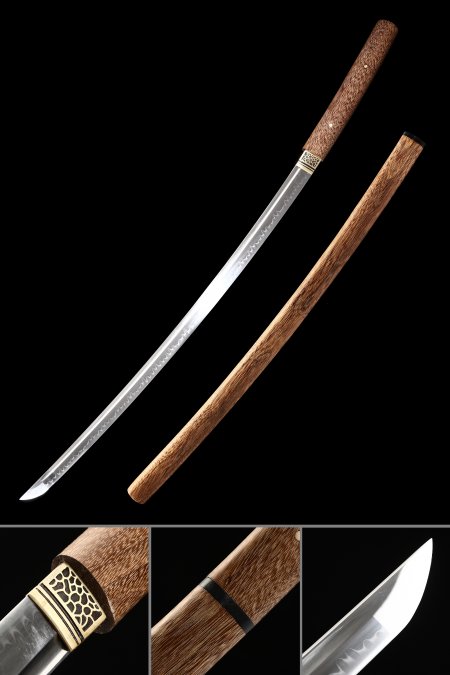
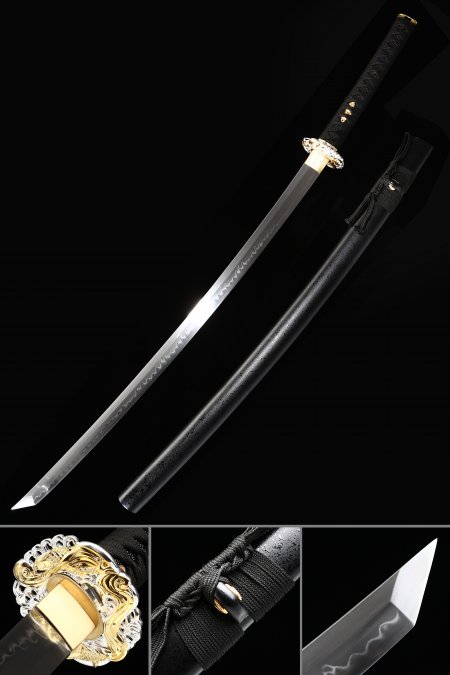
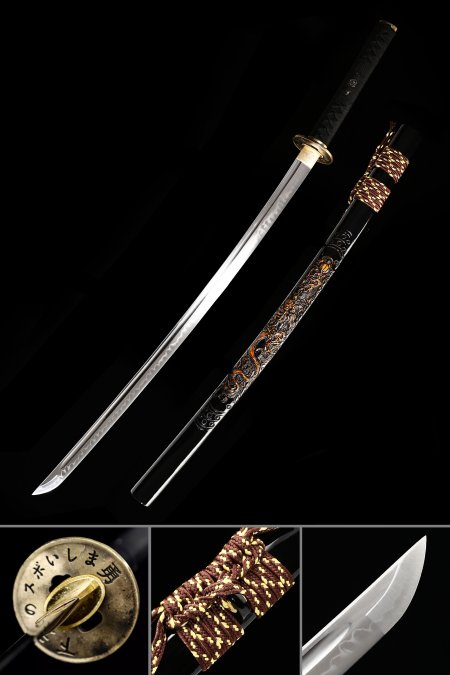
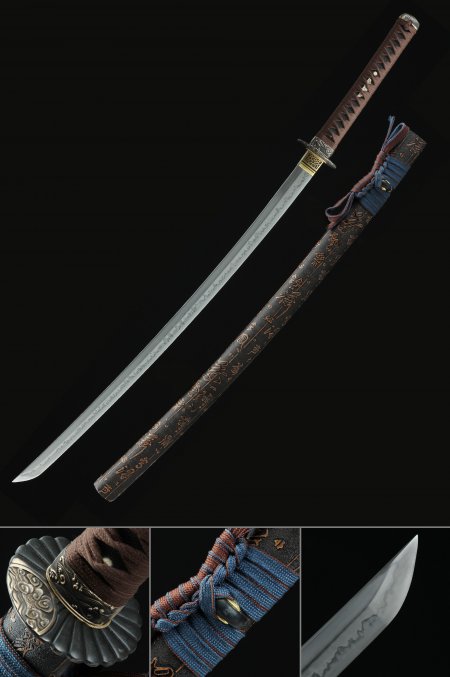
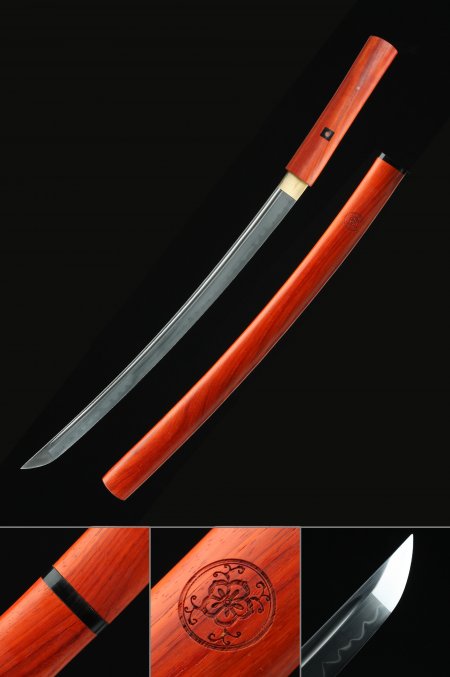
T10 tool steel contains a small amount of tungsten, which refines grain structure and improves wear resistance compared to basic 1045 carbon steel. More significantly, T10 blades in this collection are clay-tempered — a traditional process where a clay mixture is applied along the spine before quenching, causing the edge and spine to cool at different rates. This differential hardening produces a visible hamon, the undulating temper line along the blade's length, which forms naturally rather than being cosmetically etched. The result is a blade with a harder edge zone and a more resilient spine. For collectors, the natural hamon is one of the most prized visual features a katana can display, as it reflects an authentic forging process rather than surface decoration.