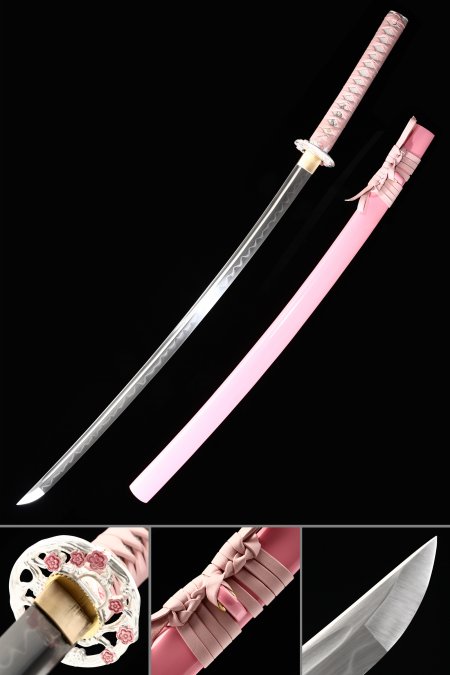
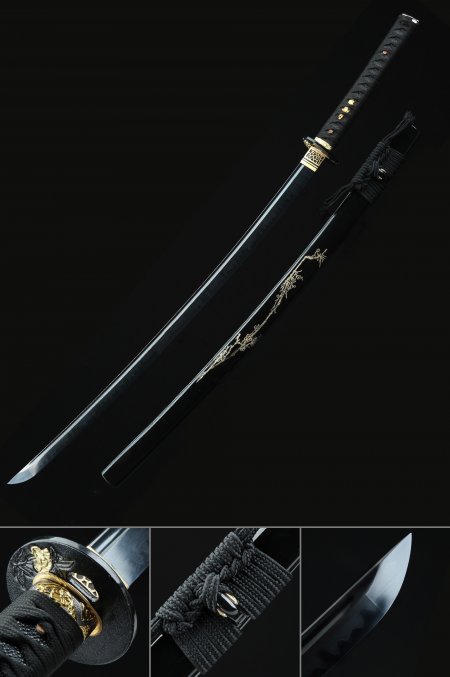
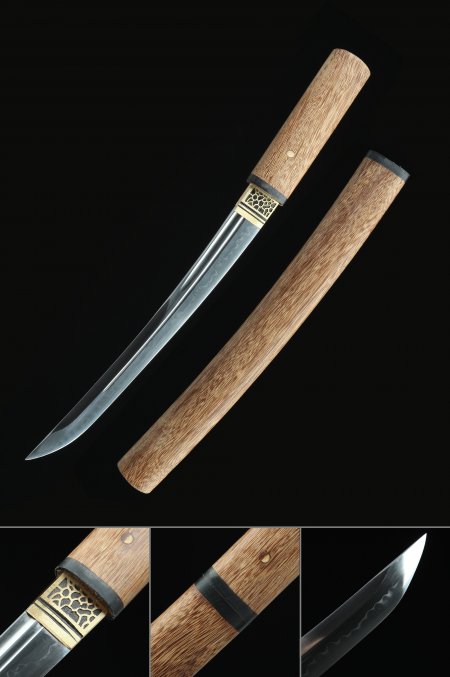
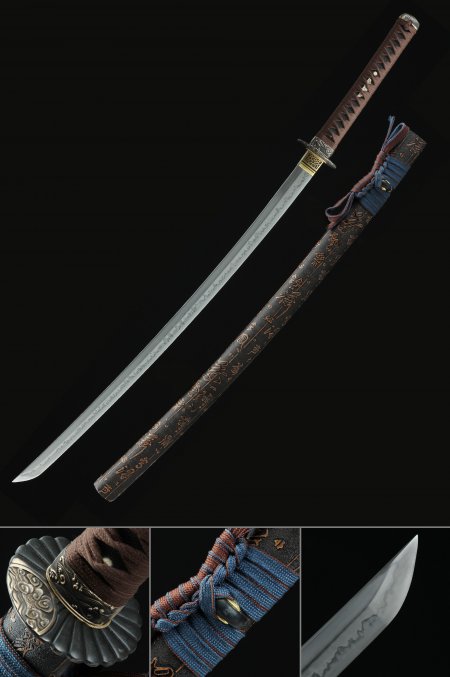
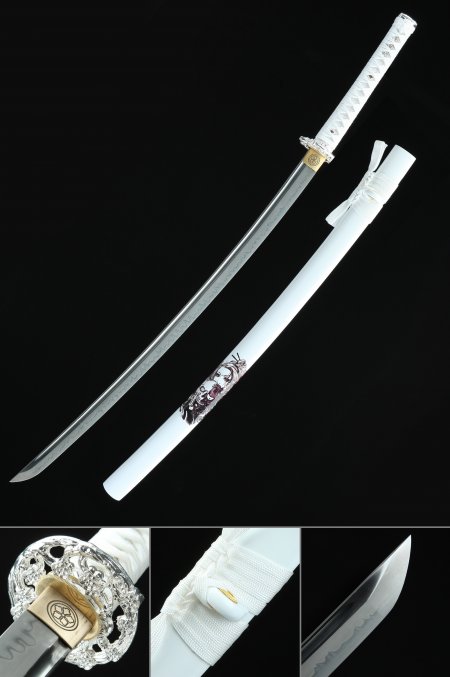
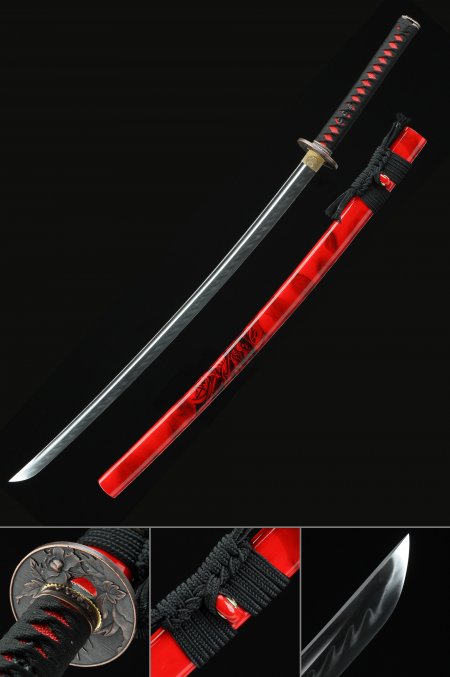
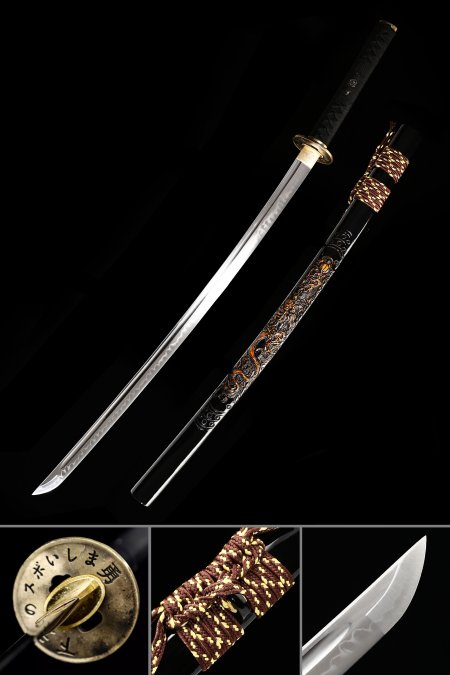
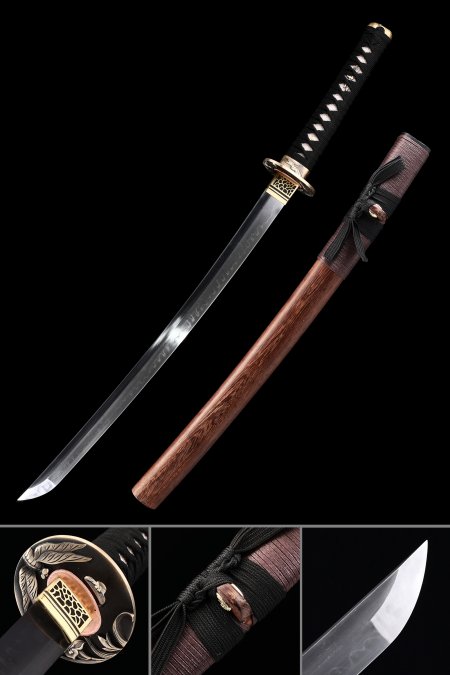
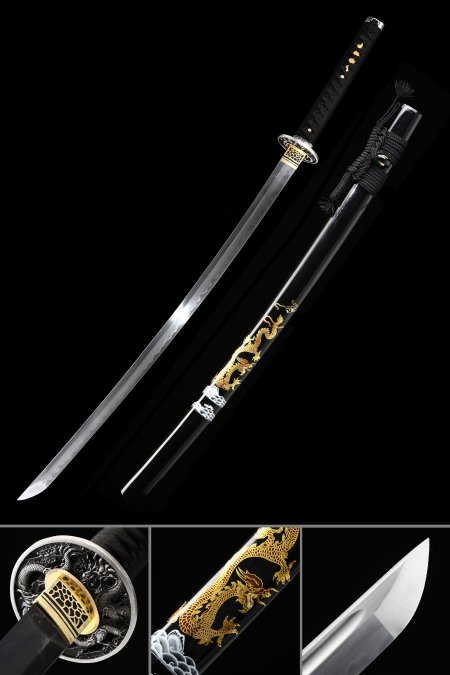
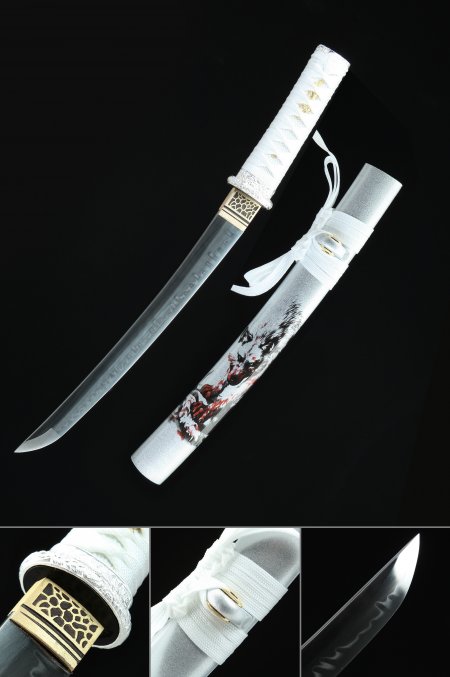
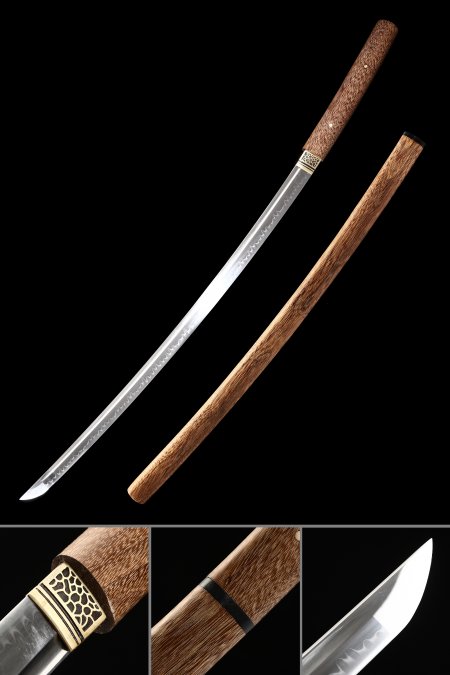
The flame pattern is a hamon — the temper line produced by differential hardening. During forging, clay is applied along the spine of the blade in an uneven or undulating pattern before the steel is heated and quenched in water or oil. Areas left exposed harden into martensite, which appears bright and crystalline, while clay-covered areas cool more slowly and remain softer. The boundary between these two zones forms the hamon. On a flame blade tanto, the hamon is shaped deliberately to resemble surging fire, with peaks and curves that give each blade a unique visual signature. In T10 carbon steel versions, the clay-tempering process is particularly effective at producing a natural, high-contrast hamon with visible nie (sparkling crystalline particles) along the temper line — a detail that seasoned collectors look for as a mark of authentic differential hardening rather than acid-etching.