How does clay tempering affect T10 tanto blades in this collection?
Updated Mar 2026
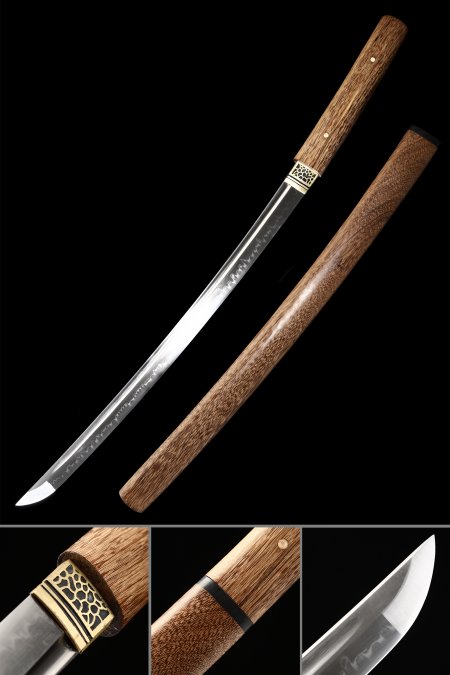
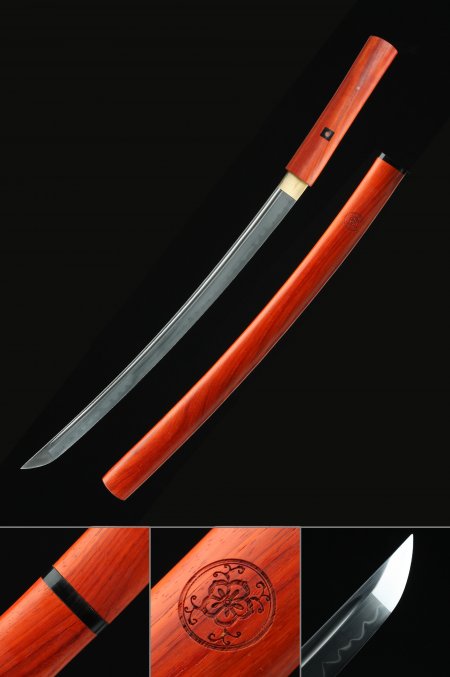
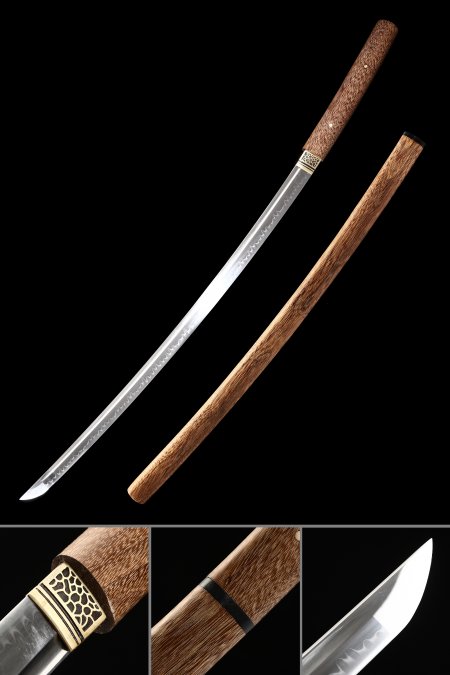
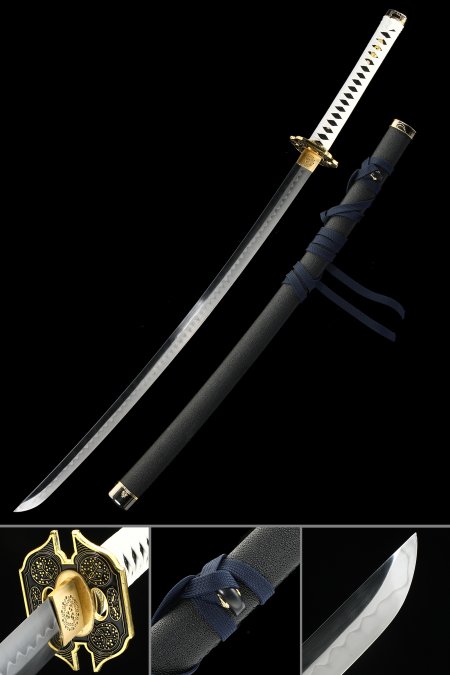
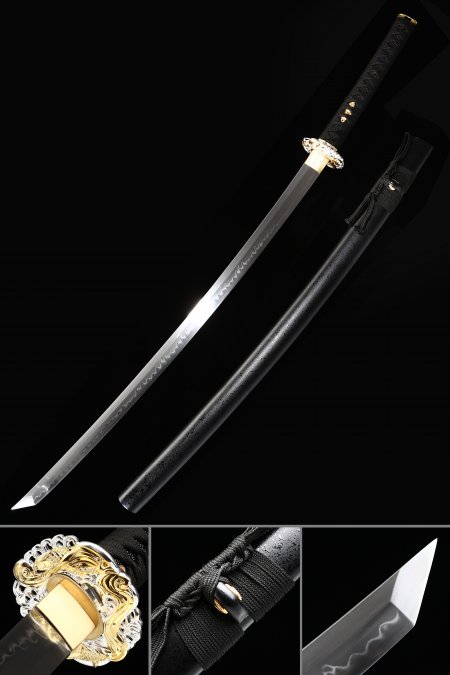
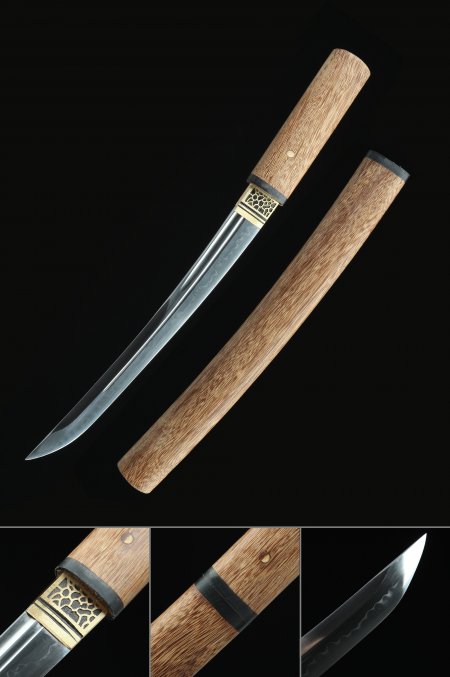
Clay tempering — known as tsuchioki — is a heat-treatment process in which a layer of refractory clay is applied to the spine of the blade before quenching. Because the clay insulates that section during cooling, the spine cools slowly and remains relatively soft and flexible, while the exposed edge cools rapidly and hardens. The boundary between these two zones forms the hamon, the undulating temper line visible along the blade's length. On T10 carbon steel tantos in this collection, the hamon is a structural feature rather than a decorative finish, meaning it cannot be buffed away or replicated by etching. Each blade's hamon is unique because the clay application is done by hand. T10 steel's higher carbon content also means it holds a finer, more mirror-like polish than many production steels, which makes the hamon contrast — the bright edge against the misty transition zone called the nie — more visually dramatic on display.