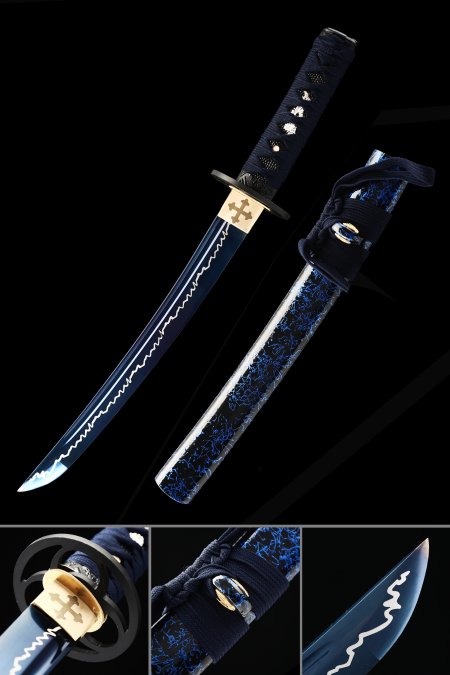
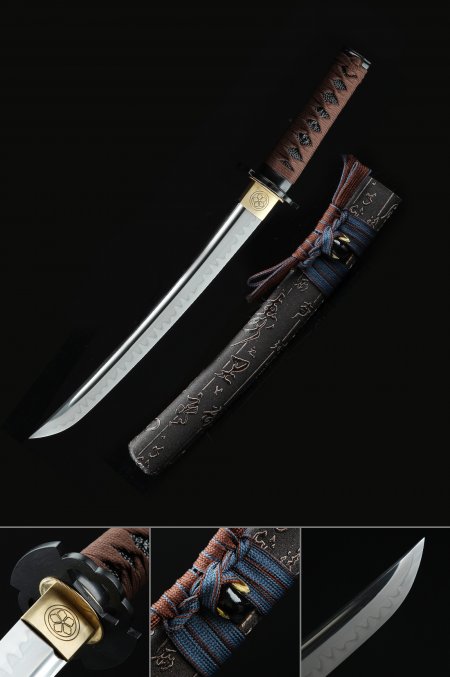
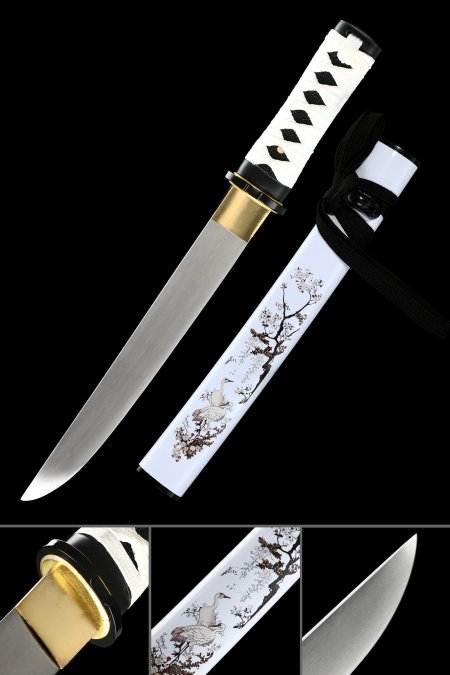
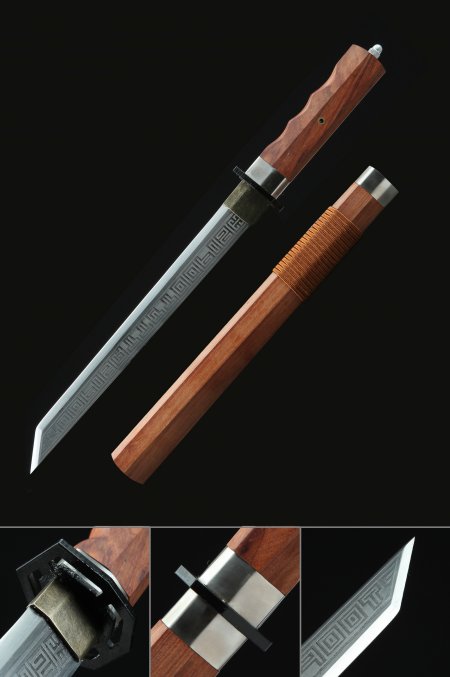
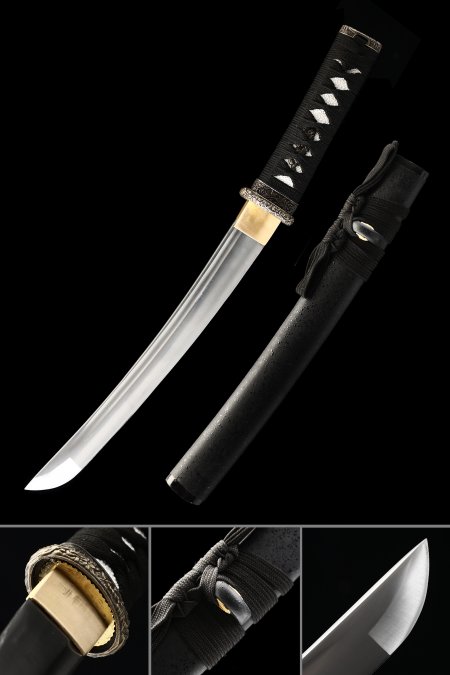
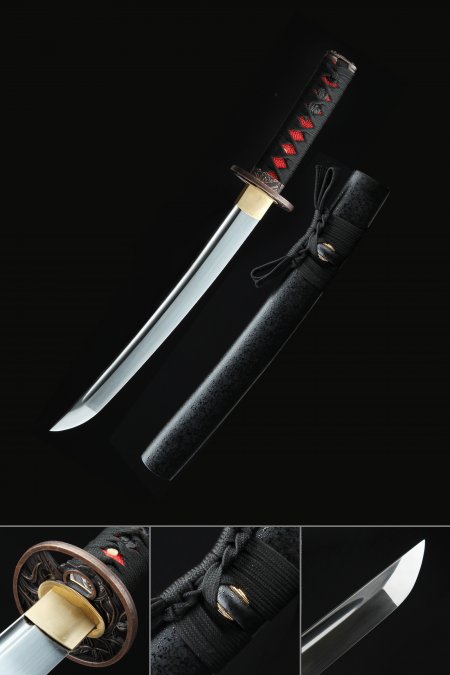
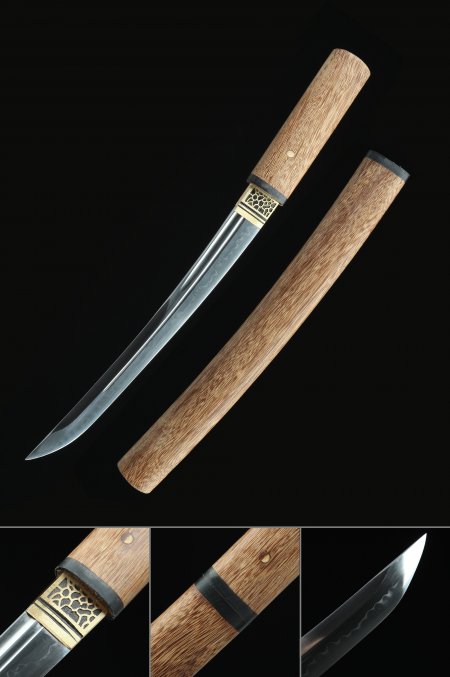
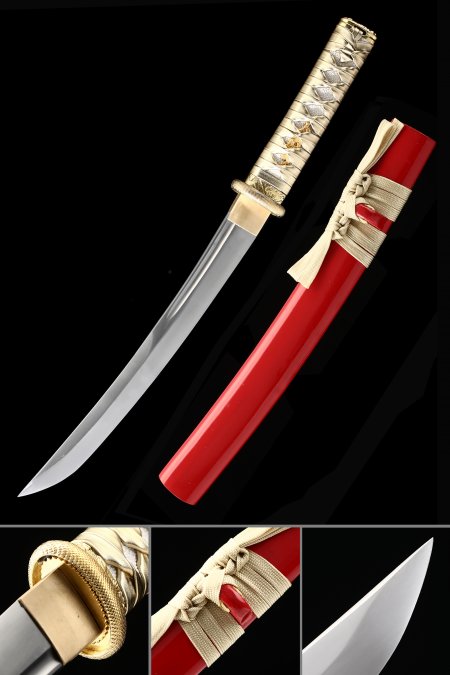
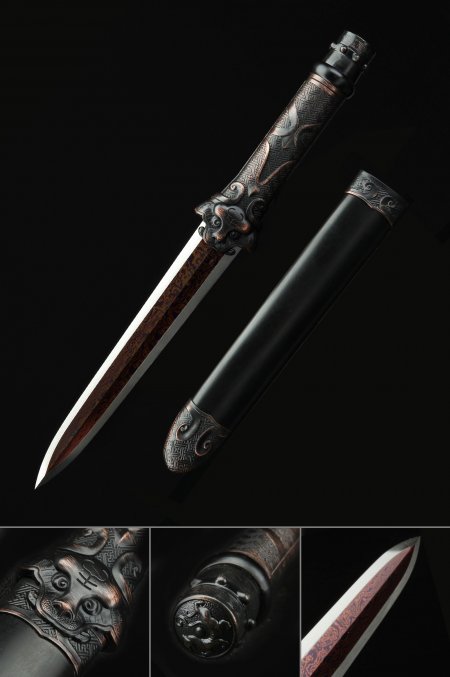
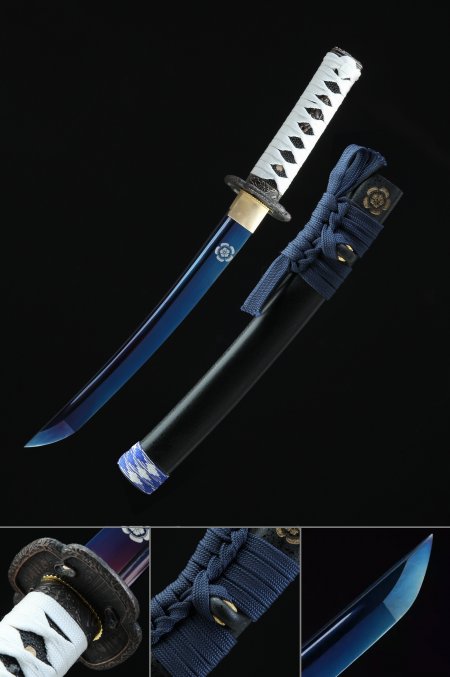
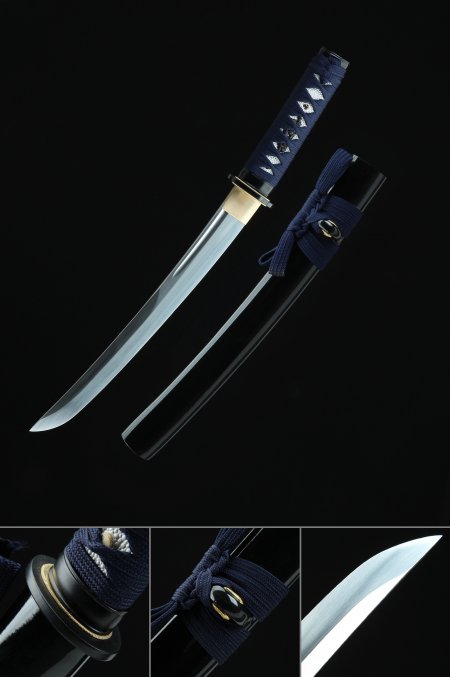
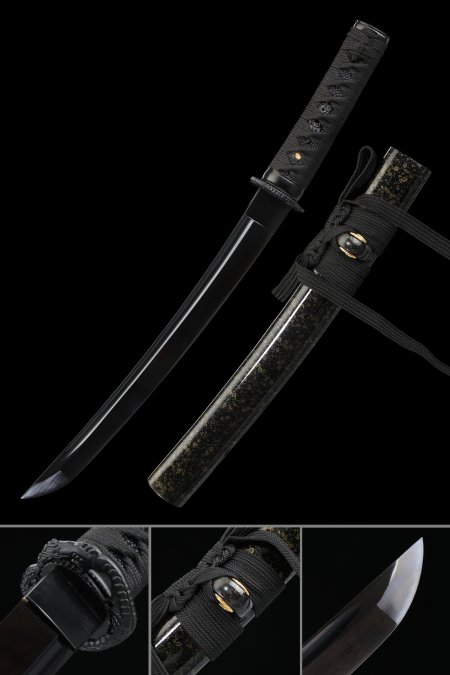
A wave blade tanto features an undulating or notched profile along the cutting edge rather than the clean straight line of a conventional tanto grind. This geometry — sometimes referencing the traditional "notare" hamon wave or a more angular multi-faceted pattern — requires the smith to control steel removal and heat distribution across an irregular curve. The result is a blade that reads differently at every viewing angle, catching light along each transition point. On hand-forged examples, wave engraving or a wave-shaped bevel adds a second layer of surface detail that distinguishes these pieces as display collectibles intended to reward close inspection.