What makes a tanto's hamon 'real' versus decorative?
Updated Mar 2026
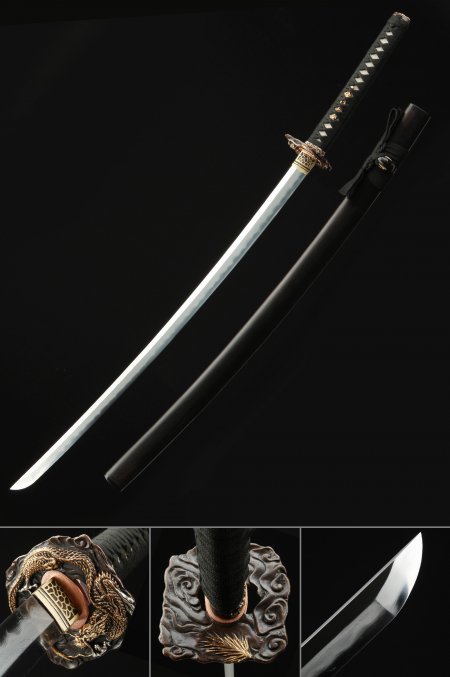
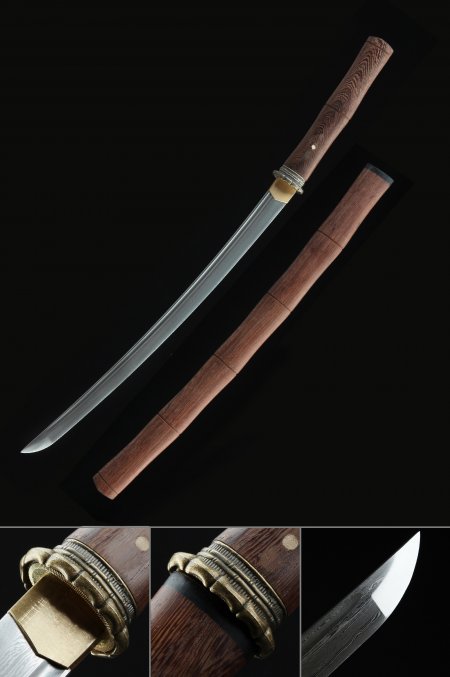
A real hamon forms through clay tempering — a process where a clay mixture is applied unevenly to the blade before quenching. The coated areas cool more slowly, remaining comparatively softer, while the exposed edge hardens rapidly into a fine crystalline structure called martensite. The boundary between these two zones is the hamon, and because the process is never perfectly repeatable, every clay-tempered blade produces a unique temper line. In contrast, an acid-etched or wire-brushed decorative hamon is applied after the fact to simulate this effect on blades that were uniformly heat-treated. On T10 and Damascus tanto in this collection, the hamon is a genuine product of the smithing process, making it a meaningful differentiator for collectors who understand Japanese blade metallurgy.