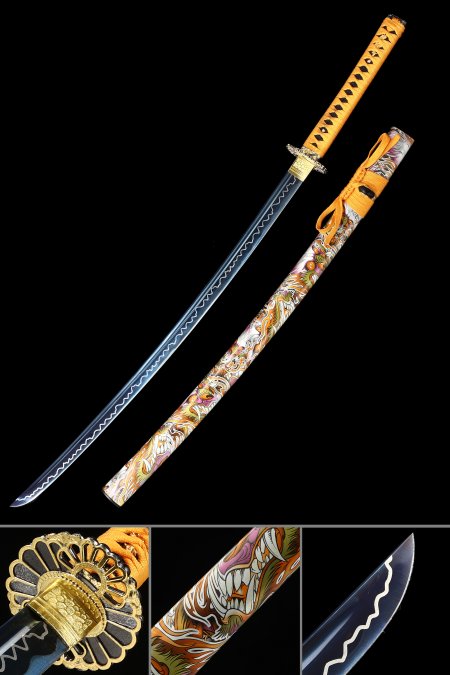
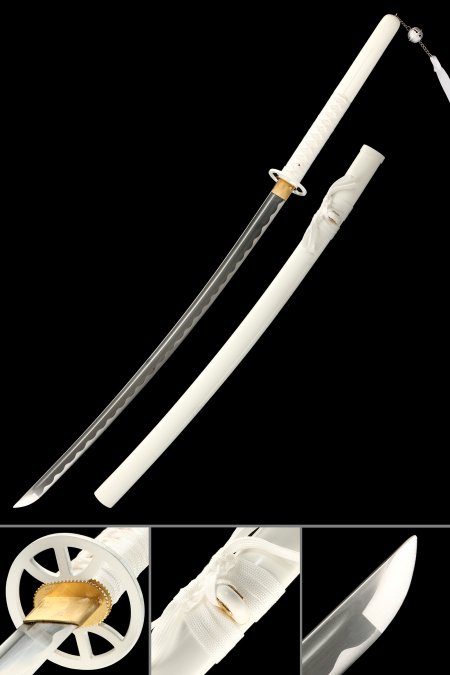
How is a real hamon formed on a 1065 blade?

 Updated Mar 2026

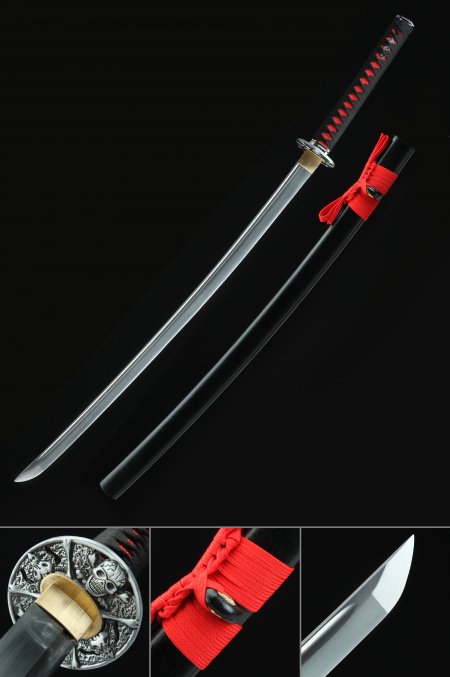
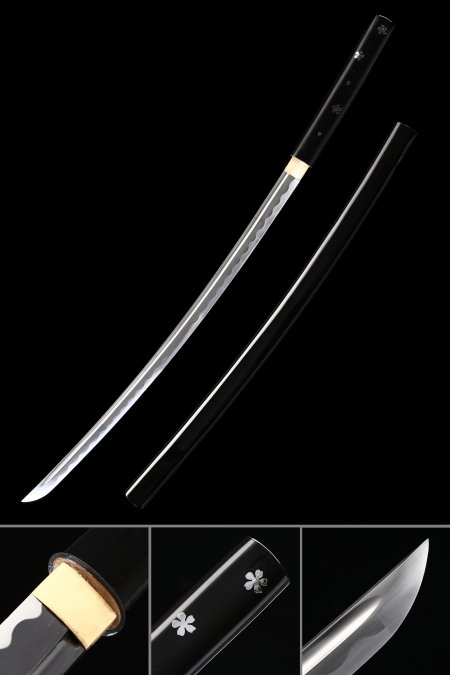
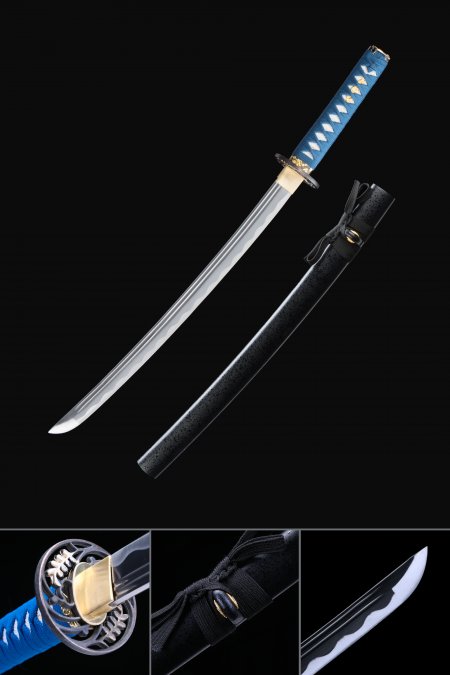
A genuine hamon is produced through a process called differential hardening, or tsuchioki in Japanese. The bladesmith applies a clay mixture along the spine and flat of the blade, leaving the cutting edge relatively bare. When the blade is heated and then quenched in water, the exposed edge cools rapidly and hardens, while the clay-insulated spine cools more slowly and remains comparatively tough. The boundary between these two zones becomes the hamon - a visual line of crystalline contrast visible on the polished steel surface. Because the clay application is done by hand and the quench introduces unpredictable variables, every hamon is unique. A hamon formed this way is fundamentally different from the acid-etched or wire-brushed lines found on lower-cost decorative swords, which are surface treatments rather than structural evidence of the forging process.
Popular Products

20% OFFshirasaya katana
179.00 USD
219.00 USD
20% OFFblue katana
169.00 USD
209.00 USD
15% OFFghost of tsushima sword
169.00 USD
199.00 USD
15% OFFww2 katana
189.00 USD
219.00 USD
30% OFFkenpachi zaraki sword
119.00 USD
169.00 USD
15% OFFgreen and purple katana
189.00 USD
219.00 USD
15% OFFshort katana
179.00 USD
209.00 USD
30% OFFpink katana
149.00 USD
209.00 USD
20% OFFpurple katana
169.00 USD
209.00 USD
20% OFFshirasaya katana
149.00 USD
189.00 USD
20% OFF
149.00 USD
189.00 USD
30% OFFblue blade katana
159.00 USD
229.00 USD
20% OFFshirasaya katana
179.00 USD
219.00 USD
20% OFFblue katana
169.00 USD
209.00 USD
15% OFFghost of tsushima sword
169.00 USD
199.00 USD
15% OFFww2 katana
189.00 USD
219.00 USD
30% OFFkenpachi zaraki sword
119.00 USD
169.00 USD
15% OFFgreen and purple katana
189.00 USD
219.00 USD
15% OFFshort katana
179.00 USD
209.00 USD
30% OFFpink katana
149.00 USD
209.00 USD
20% OFFpurple katana
169.00 USD
209.00 USD
20% OFFshirasaya katana
149.00 USD
189.00 USD
20% OFF
149.00 USD
189.00 USD
30% OFFblue blade katana
159.00 USD
229.00 USD

Explore Our Collections