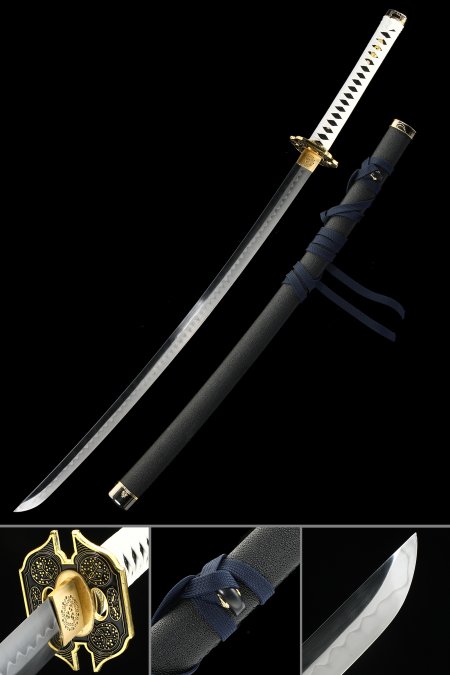
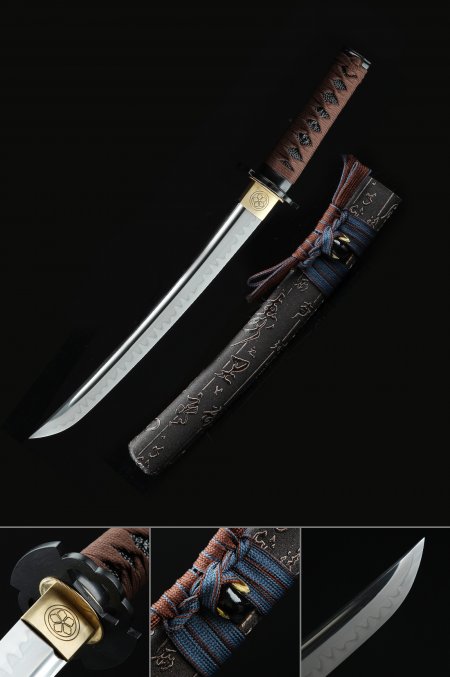
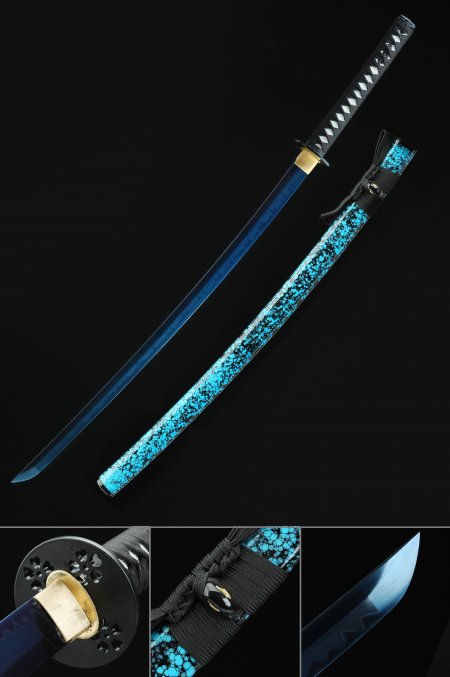
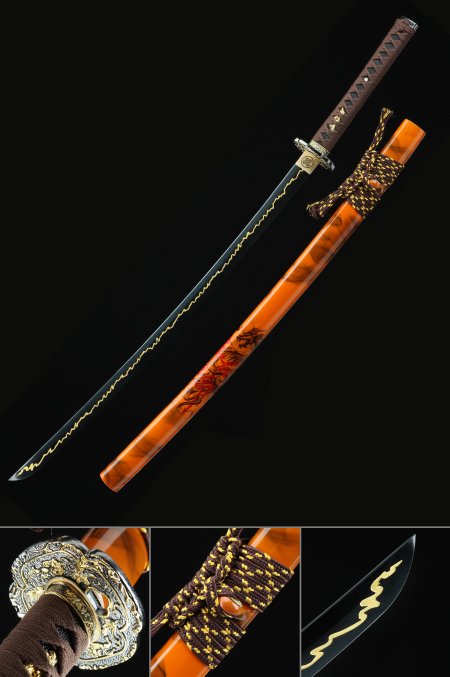
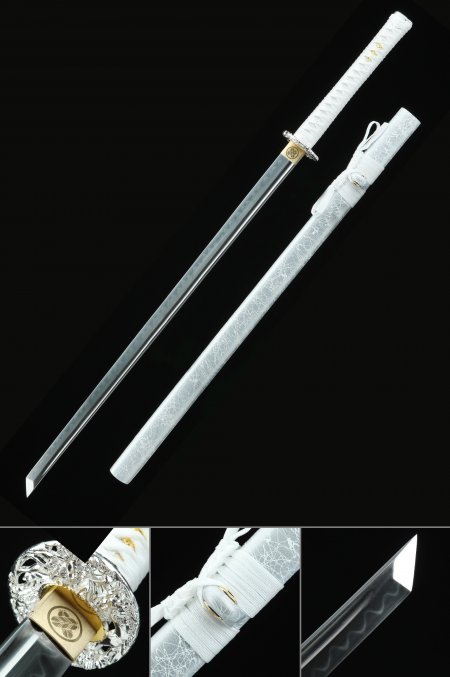
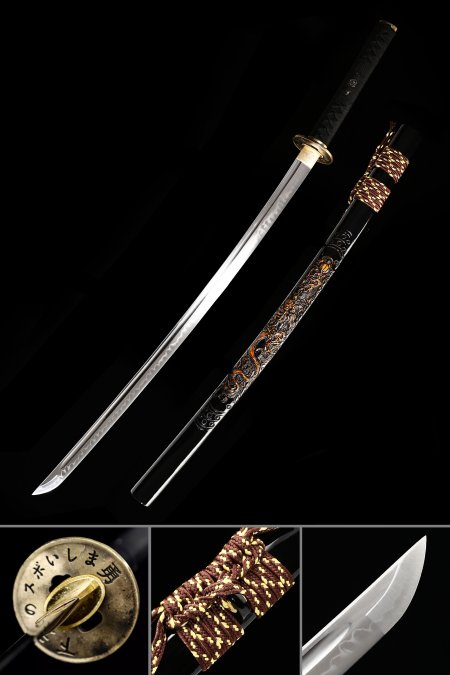
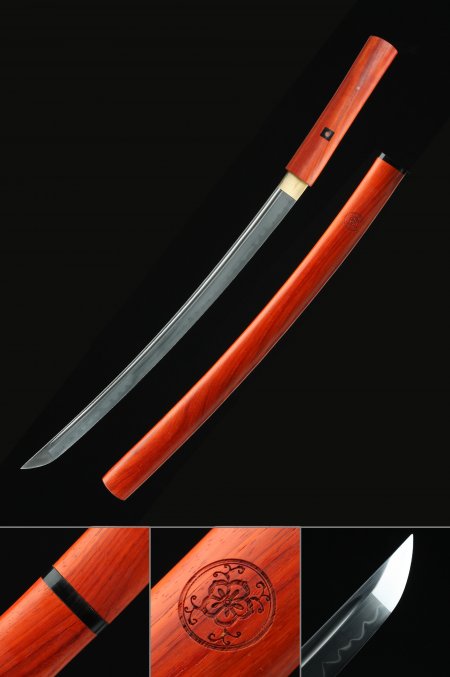
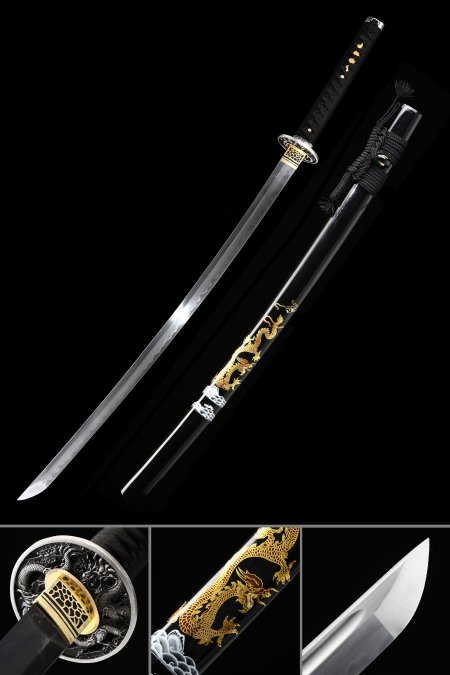
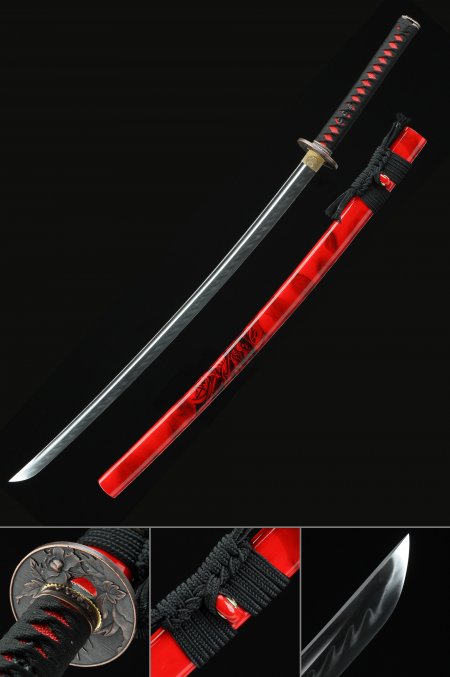
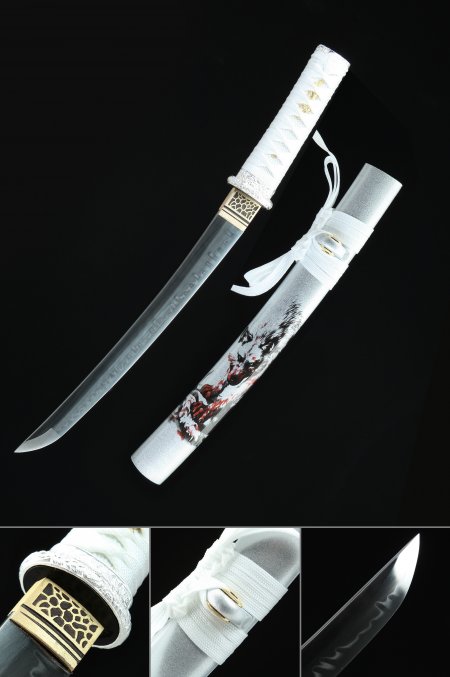
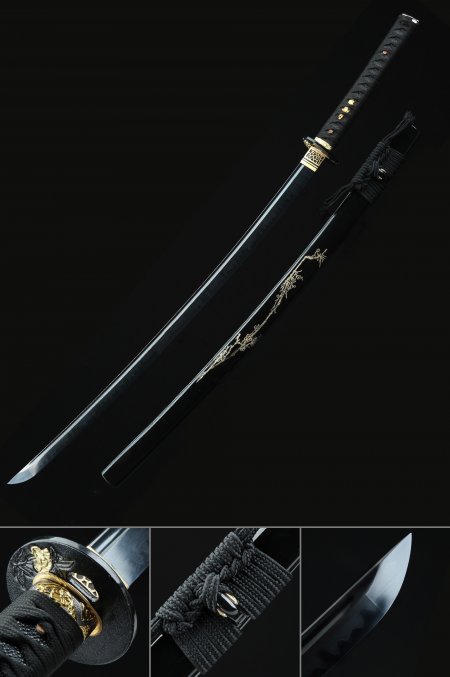
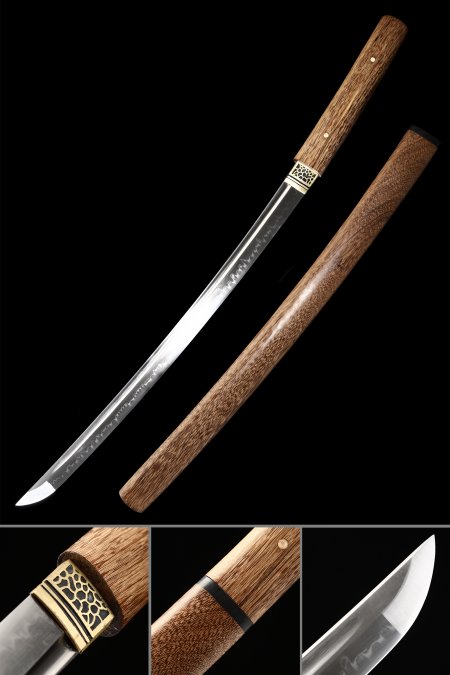
How does T10 clay-tempered steel differ from 1095 in these katana?
Updated Mar 2026
Both T10 tool steel and 1095 high-carbon steel sit in a similar hardness range when fully heat-treated, but their compositions and processing paths produce noticeably different results. T10 contains a small amount of silicon and trace tungsten, which refines the grain structure and supports a sharper, longer-lasting edge geometry compared to standard 1095. The more significant practical difference for collectors is the clay-tempering process applied to T10 blades: a layer of refractory clay is applied to the spine before quenching, causing the edge to cool faster and harden more deeply than the spine. This differential hardening produces a visible hamon - the undulating temper line along the blade - that is a genuine metallurgical feature rather than an acid-etched or polished simulation. For display collectors, a real hamon on a T10 blade is one of the most valued visual authenticity markers a katana can carry.