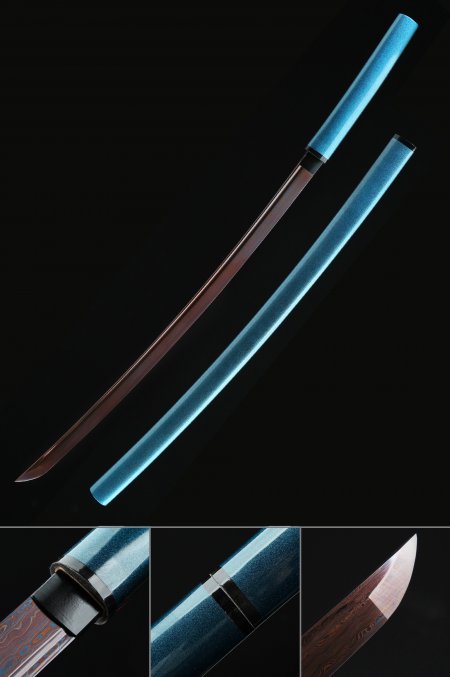
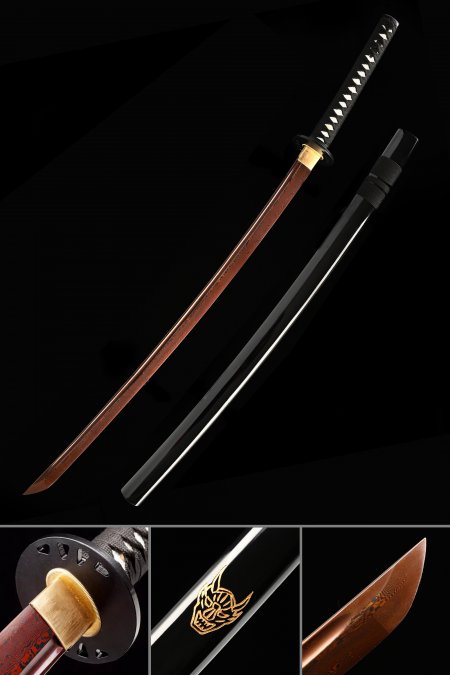
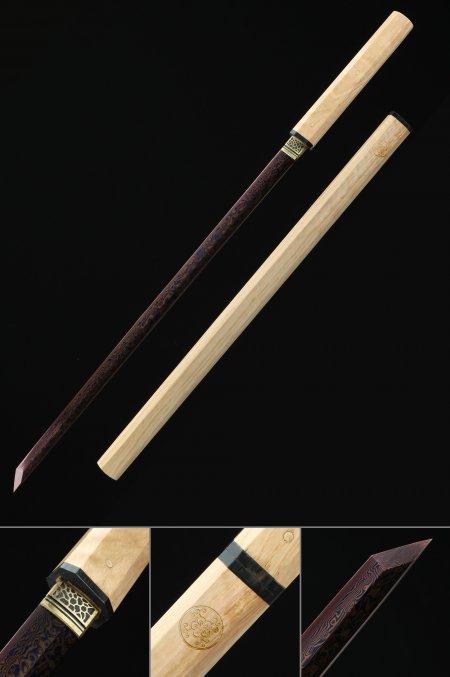
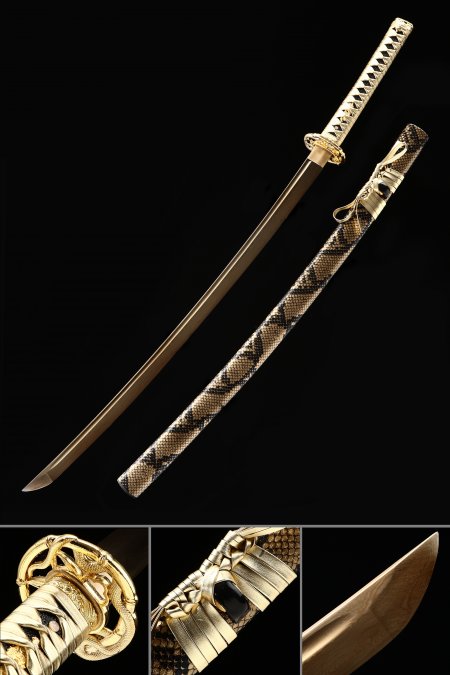
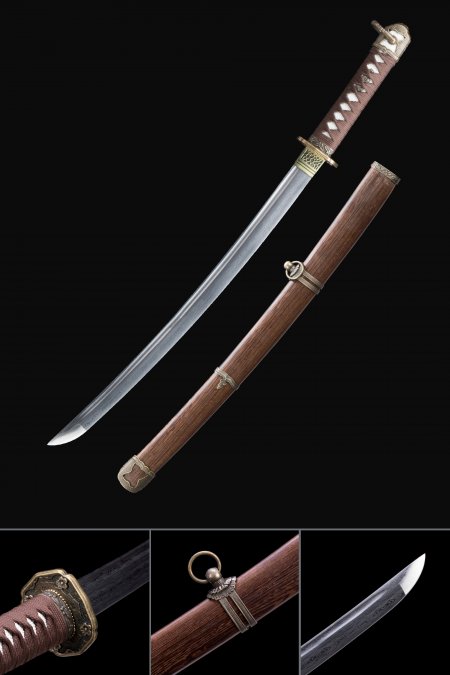
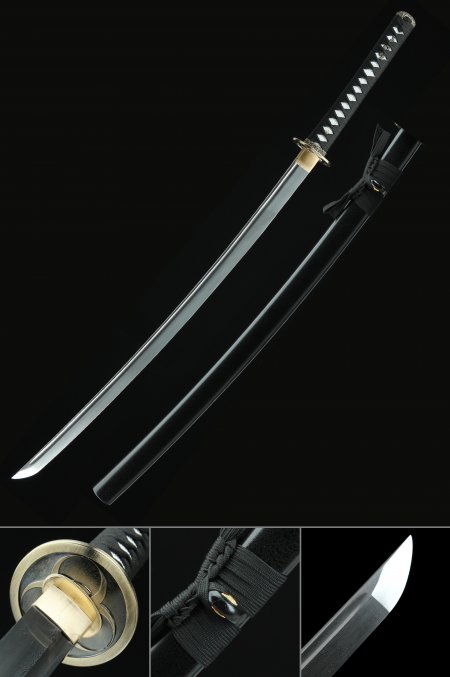
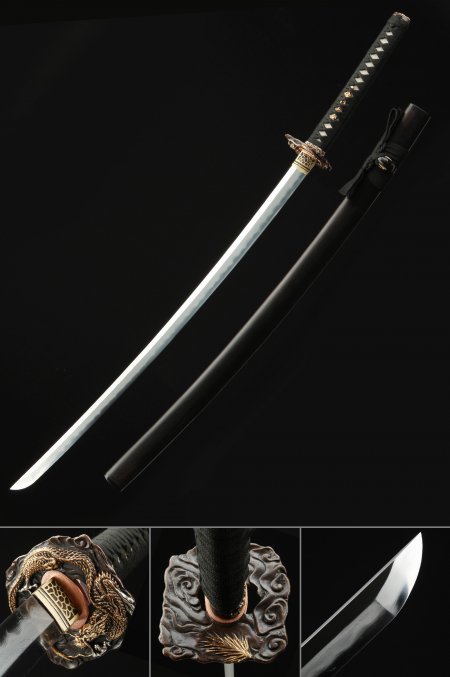
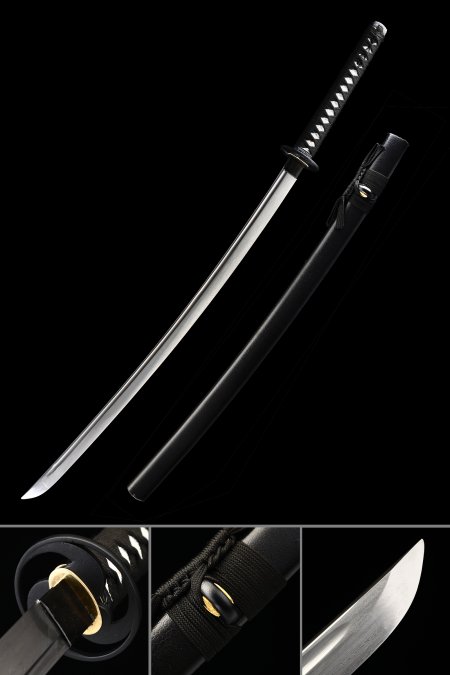
How does T10 carbon steel differ from Damascus in these katanas?
Updated Mar 2026
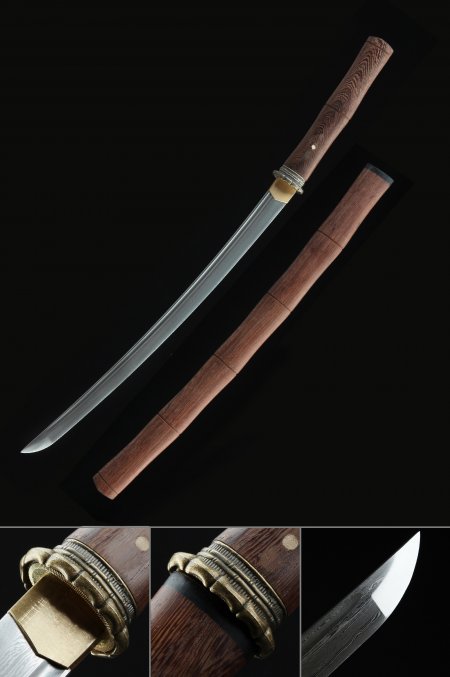
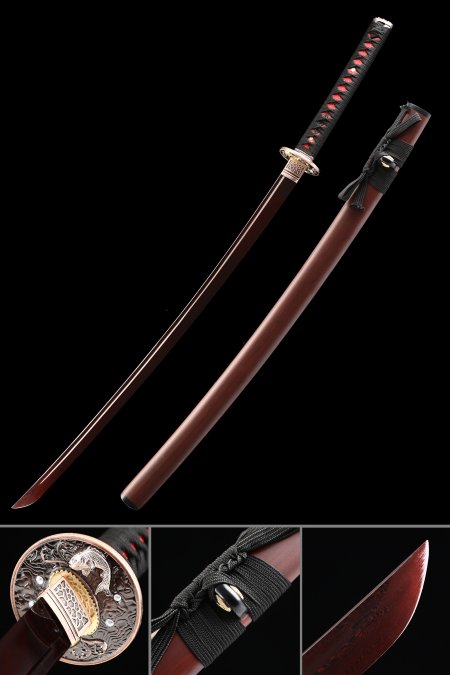
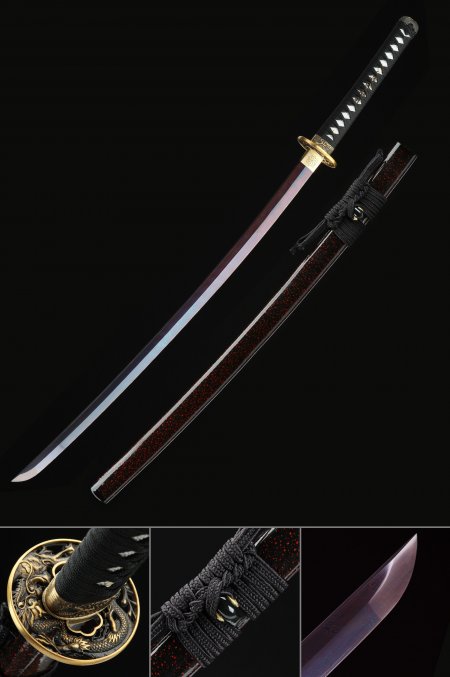
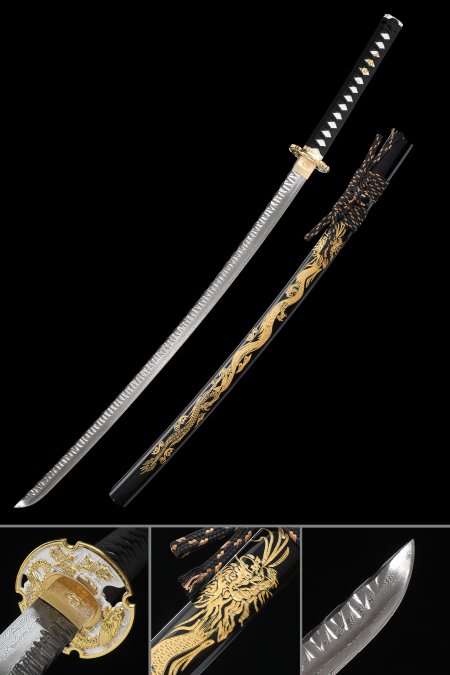
T10 carbon steel is a high-carbon, tungsten-enhanced tool steel valued for its fine grain structure and its ability to produce a well-defined hamon - the visible temper line created through clay differential hardening. The hamon on a T10 blade is sharp, active, and unique to each piece, making every sword visually one-of-a-kind along the blade's edge boundary. Damascus steel, by contrast, achieves its visual character through the forge-welding of multiple steel layers, typically alternating high and low carbon alloys. The resulting grain pattern - called the Damascus pattern or ladder pattern depending on the twist technique - appears across the flat of the blade rather than at the edge. Both materials offer compelling display aesthetics, but they tell different stories: T10 speaks to classical Japanese differential hardening traditions, while Damascus speaks to a layered forging heritage with deep visual complexity.