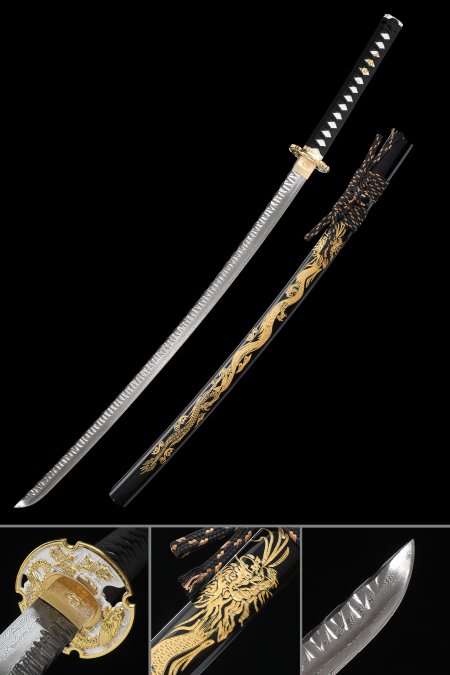
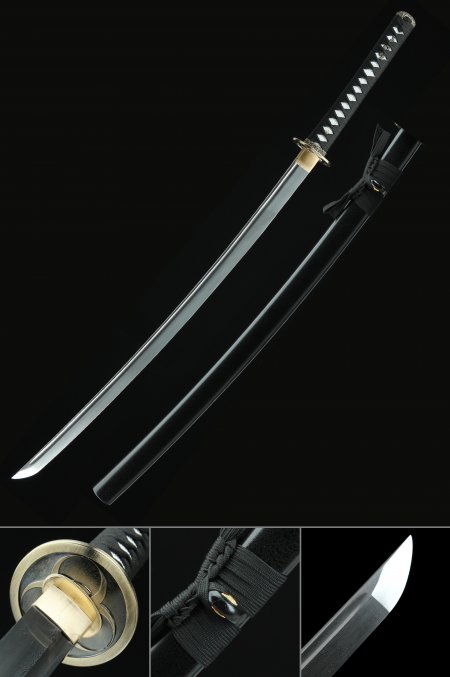
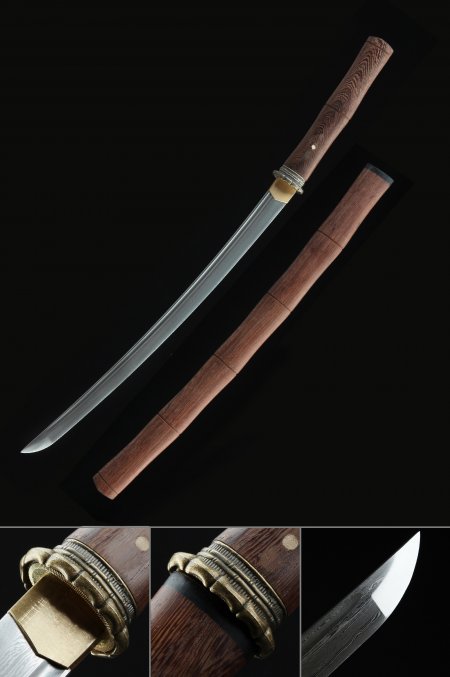
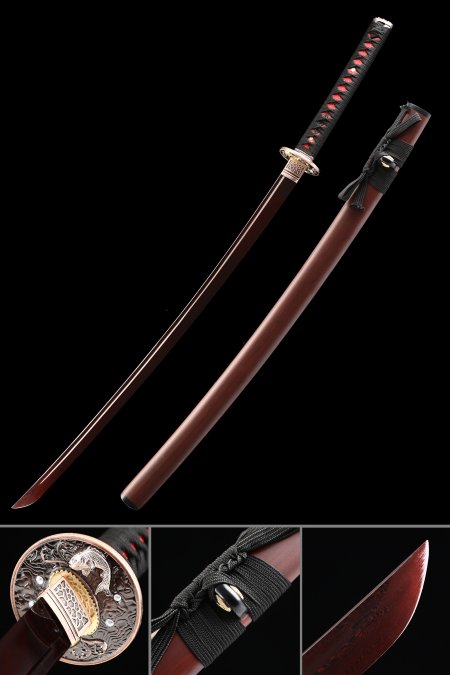
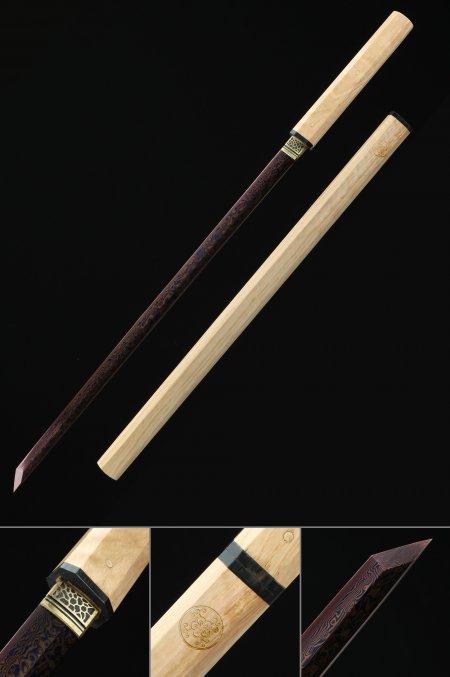
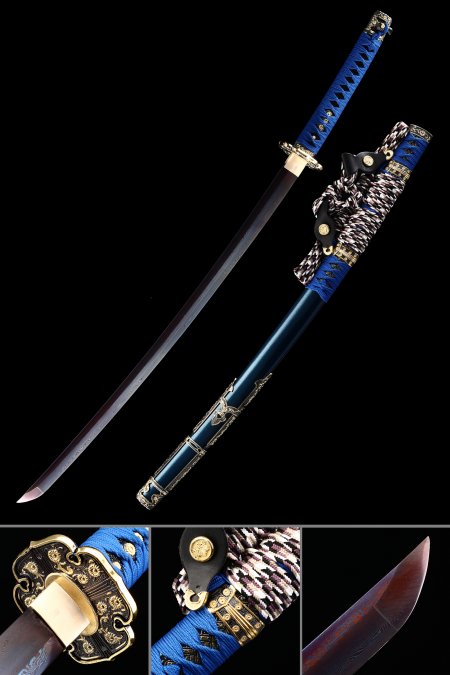
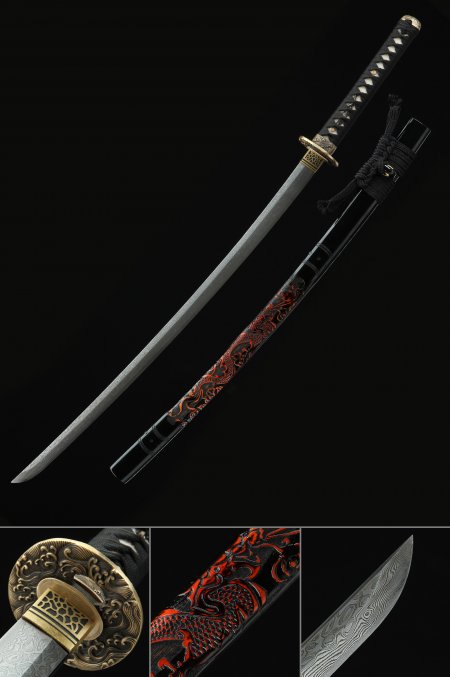
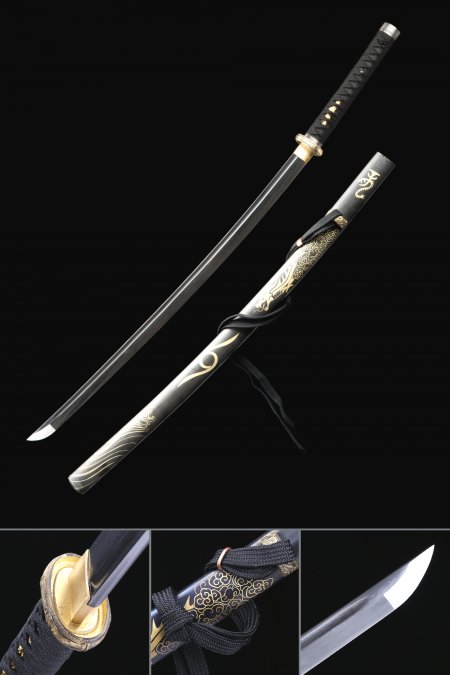
How does Damascus steel differ from T10 in these tachi blades?
Updated Mar 2026
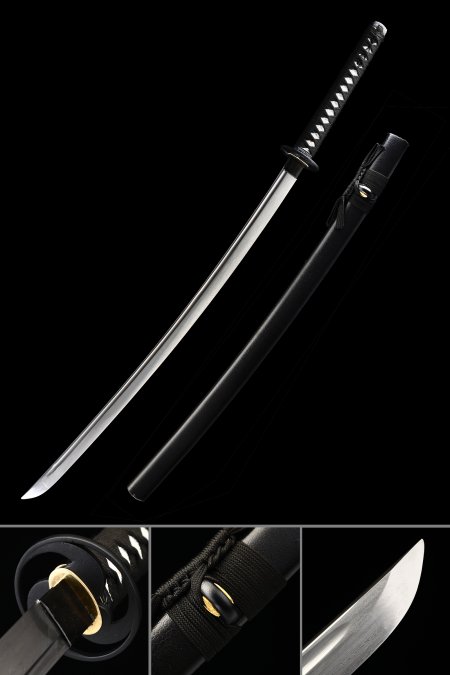
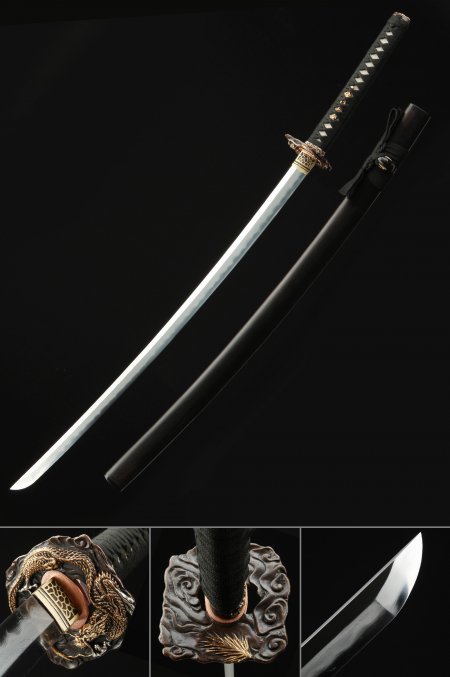
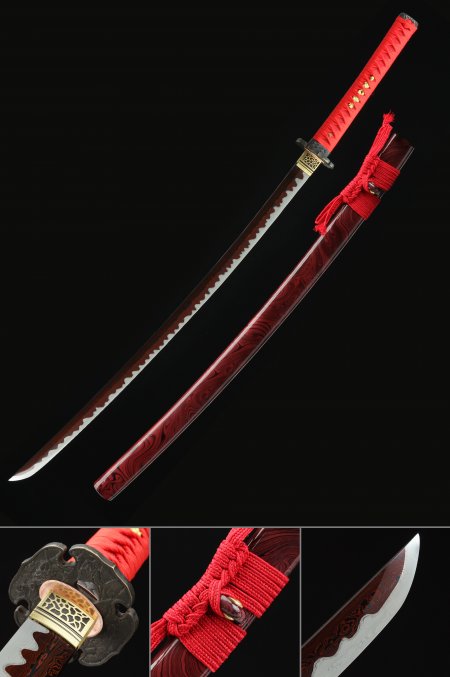
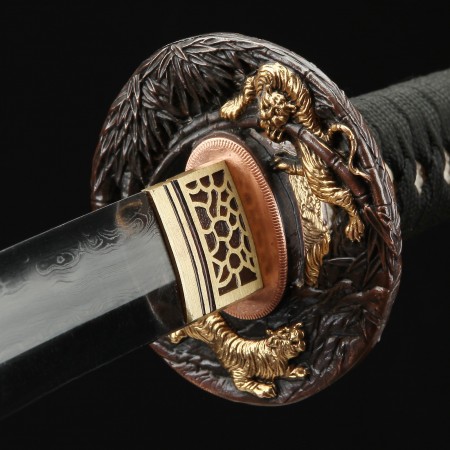
Both steels produce visually striking blades, but through entirely different processes. Damascus steel is created by forge-welding multiple layers of steel together, then folding and drawing them out repeatedly. Acid etching afterward reveals the contrasting grain lines — a flowing, organic surface pattern unique to each blade. T10, by contrast, is a high-carbon tool steel valued for its consistency and responsiveness to clay tempering. When clay is applied to the spine before quenching, the edge cools faster and hardens more than the body, producing a genuine hamon — the visible temper activity line near the edge. Collectors who prioritize surface visual drama often prefer Damascus; those who value the authentic Japanese tempering tradition tend to seek T10 with a real hamon.