What is the visual difference between Damascus and manganese steel blades?
Updated Mar 2026
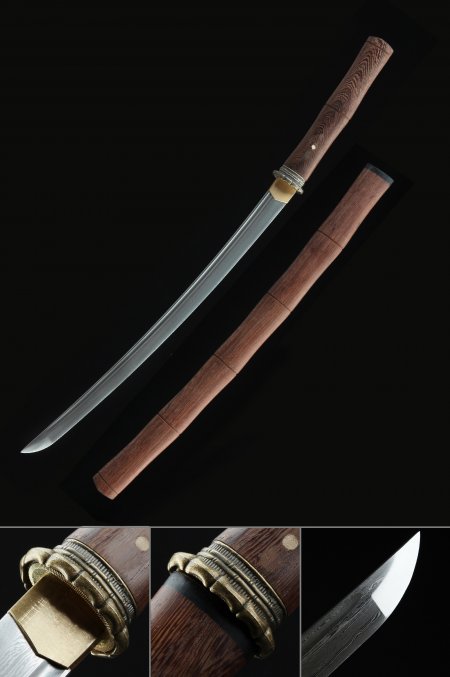
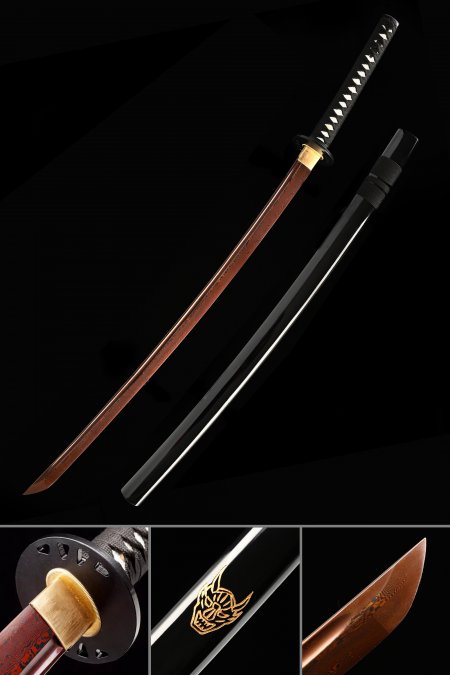
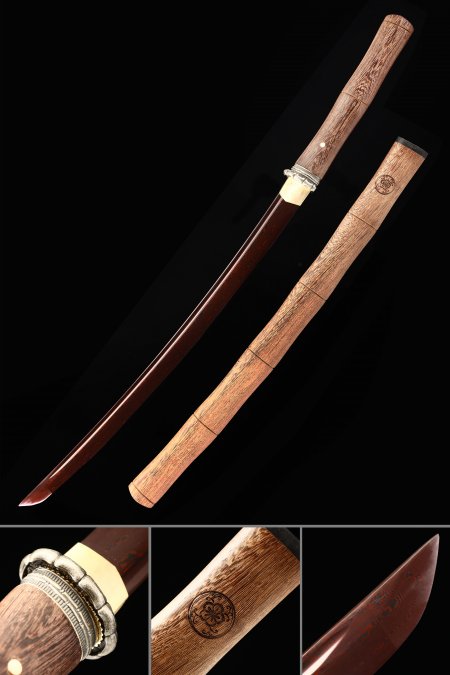
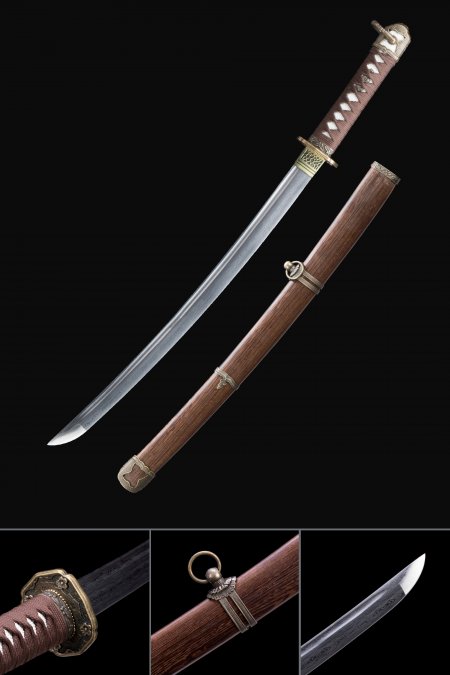
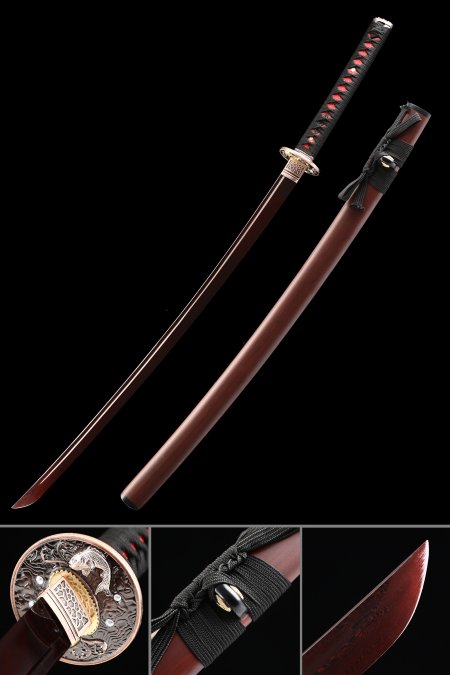
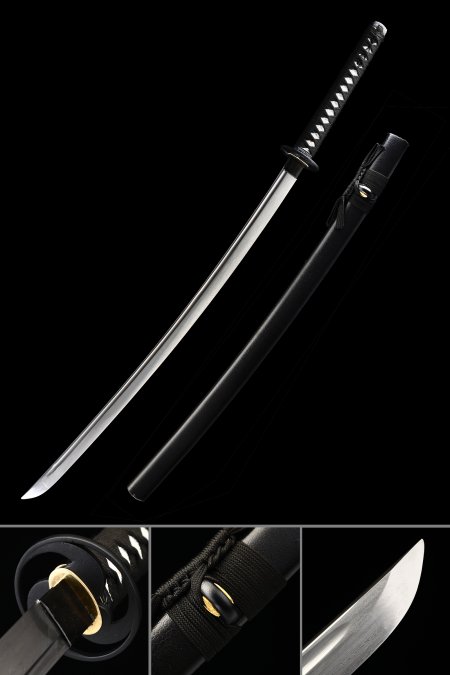
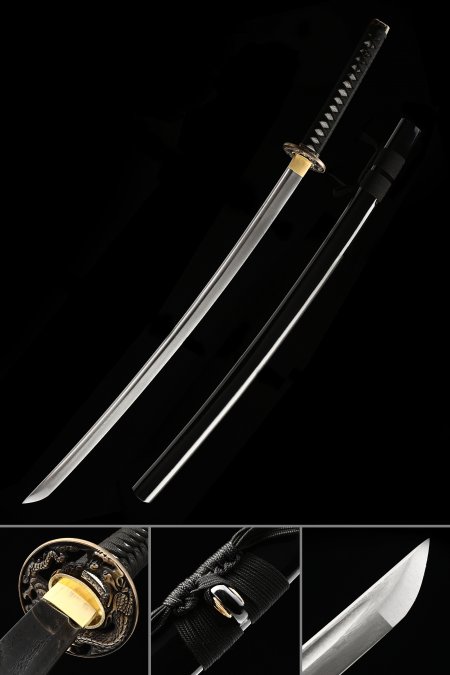
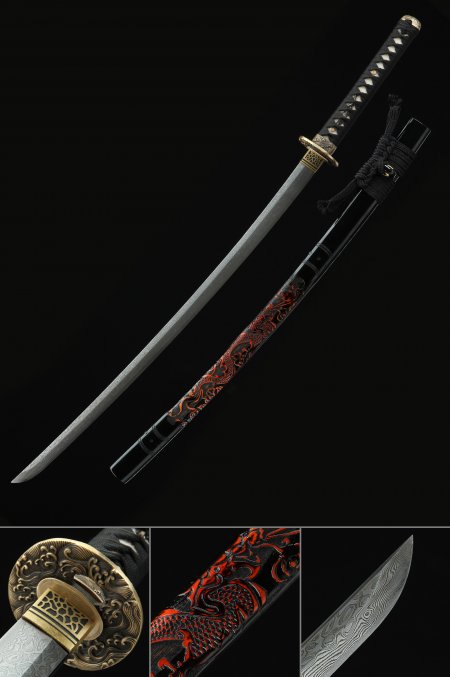
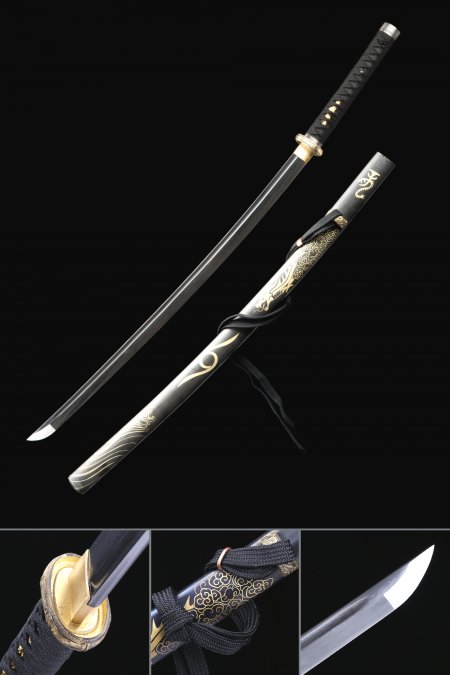
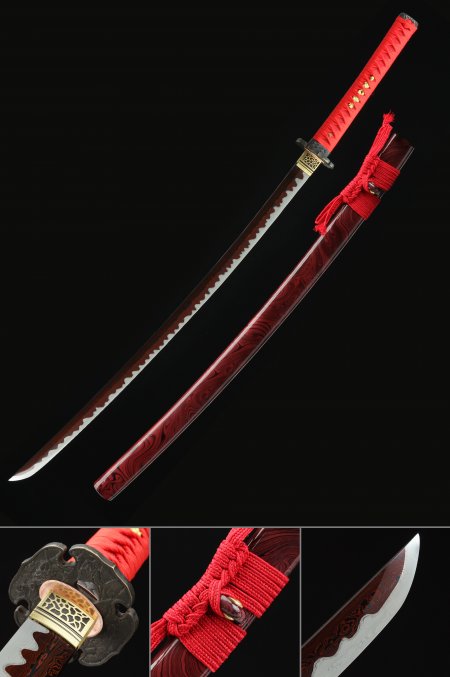
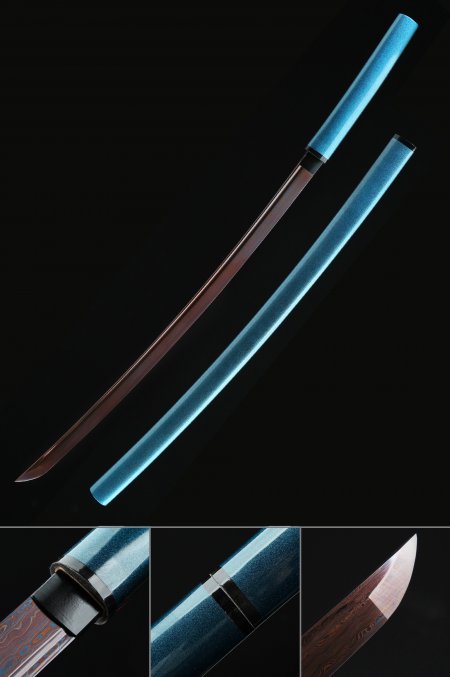
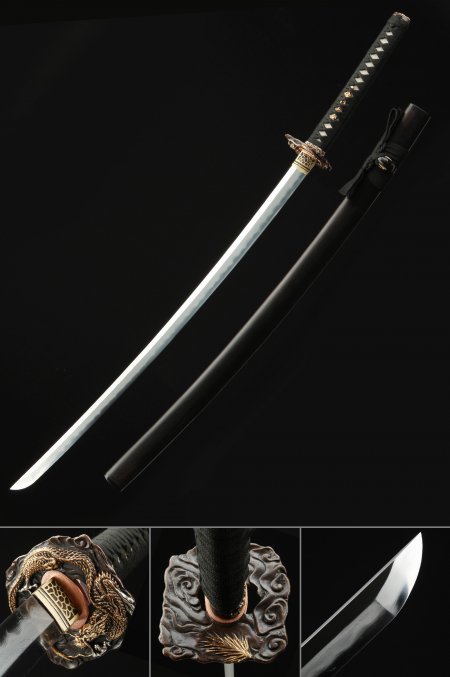
Damascus steel katana are produced by forge-welding two or more steel alloys together and folding the billet repeatedly, then etching the finished blade in acid to reveal the contrasting layers as a flowing, organic surface pattern. No two Damascus blades are visually identical because the folding process distributes layers unpredictably. Manganese steel, by contrast, is a single high-alloy composition — typically containing 1–1.8% manganese alongside carbon — that can be heat-treated and ground to display a uniform finish or, when treated specifically, a colored surface tone such as the blue or dark red blades found in this collection. Those tones come from controlled oxidation or chemical finishing processes and are applied intentionally for visual effect. Collectors choosing between the two are essentially choosing between organic surface complexity (Damascus) and bold monochromatic color drama (manganese).