Can Damascus katana develop surface changes over time in display conditions?
Updated Mar 2026
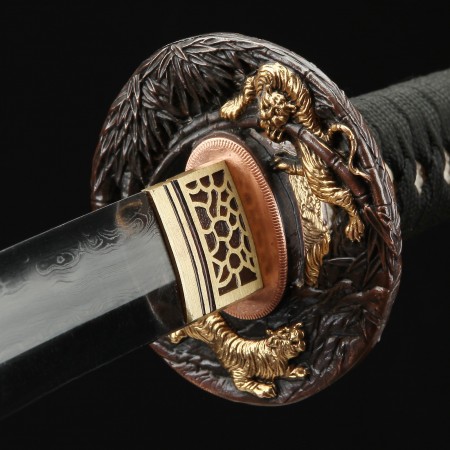
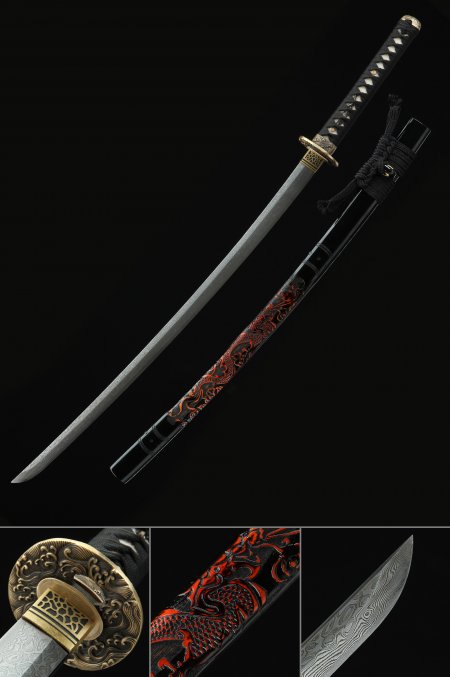
Yes, and understanding why helps collectors manage their pieces properly. Damascus steel - formed by forge-welding alternating layers of high and low carbon steel - is acid-etched after polishing to reveal its layered grain pattern. The contrast between lighter and darker bands reflects the different carbon content reacting to the etchant. Over time, humidity, fingerprint oils, and airborne contaminants can cause surface oxidation that dulls or discolors this pattern unevenly. To preserve Damascus surface contrast, keep the blade in a climate-stable environment away from direct sunlight and humidity spikes. Apply a thin coat of choji oil or Renaissance Wax every two to three months, and avoid touching the flat of the blade with bare hands during handling. A properly maintained Damascus display piece will retain its visual depth for years without refinishing.