How does T10 steel differ from 1095 in a ninjato blade?
Updated Mar 2026
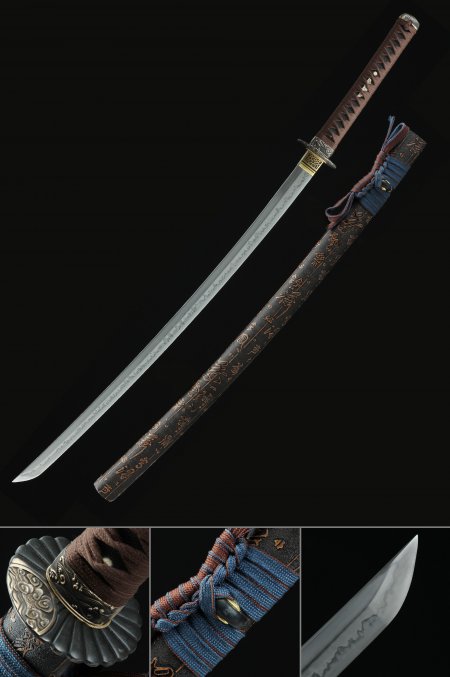
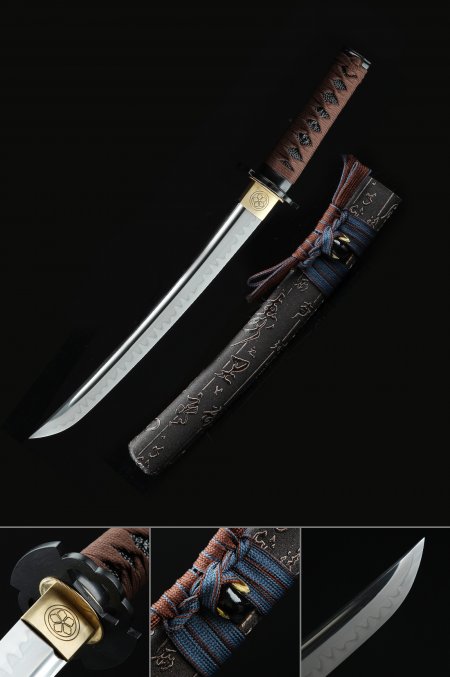
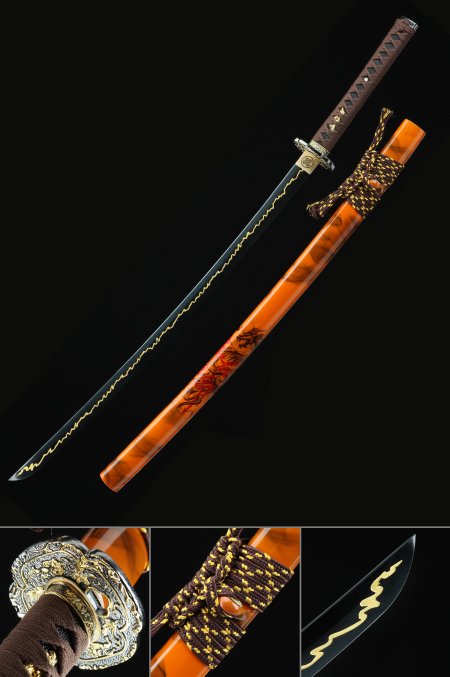
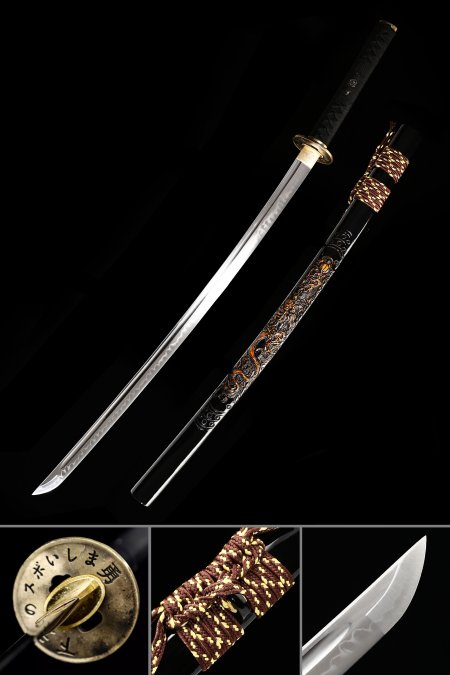
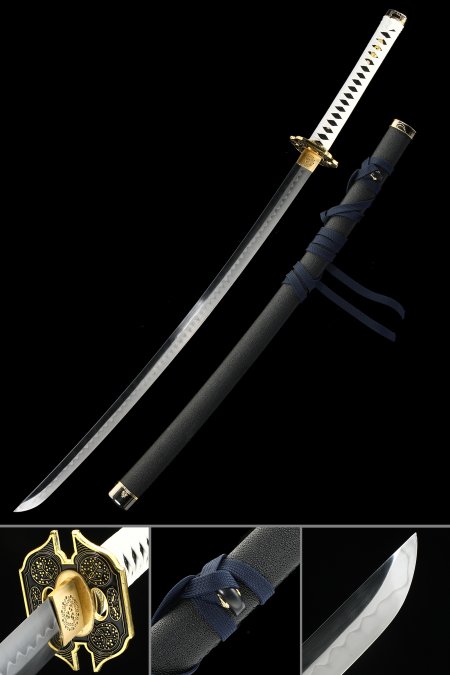
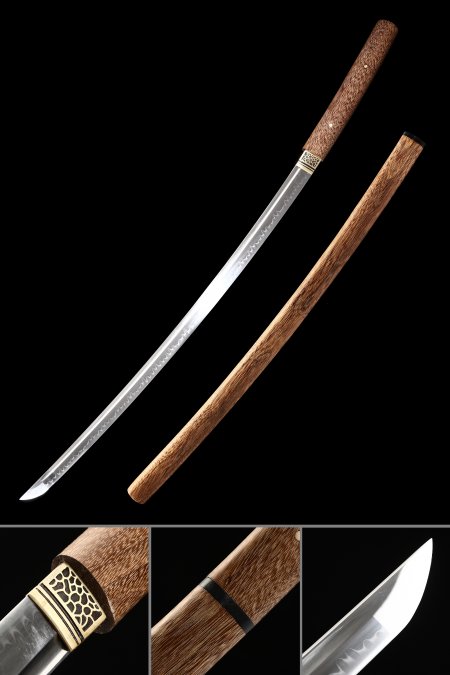
Both T10 and 1095 are high-carbon steels, but they have meaningful differences that matter to collectors evaluating blade quality. T10 contains a small amount of silicon and trace tungsten, which contributes to a finer grain structure and greater wear resistance at the edge. More importantly for display collectors, T10 responds exceptionally well to differential clay-tempering, producing a visible hamon - the temper line that appears along the blade's edge - with more complex activity than 1095 typically yields. 1095, on the other hand, is a cleaner, simpler steel that hardens predictably and offers a smooth, mirror-polish-friendly surface. It is excellent for pieces where blade geometry and finish are the focal point rather than hamon character. If hamon visibility is important to your display preference, T10 pieces in this collection are the stronger choice.