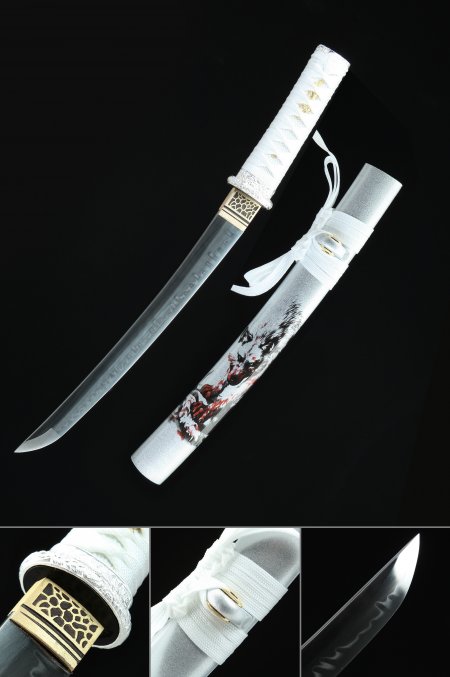
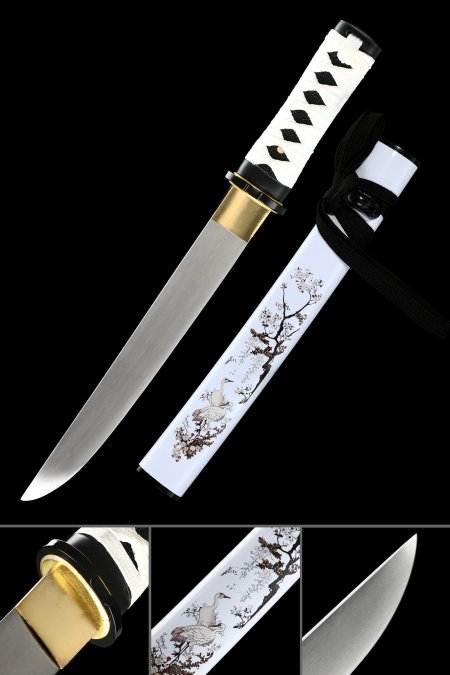
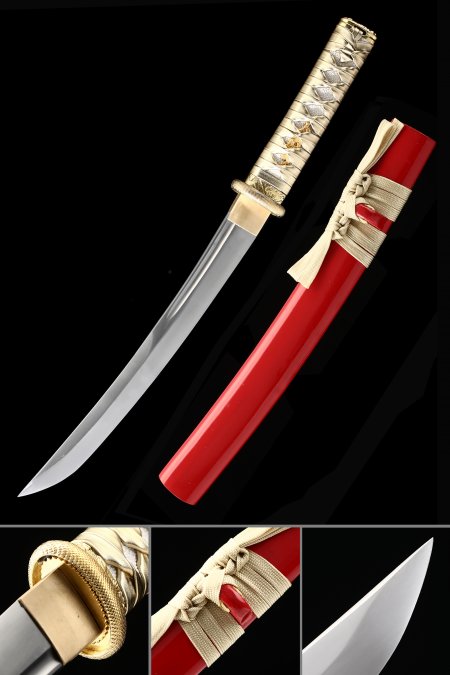
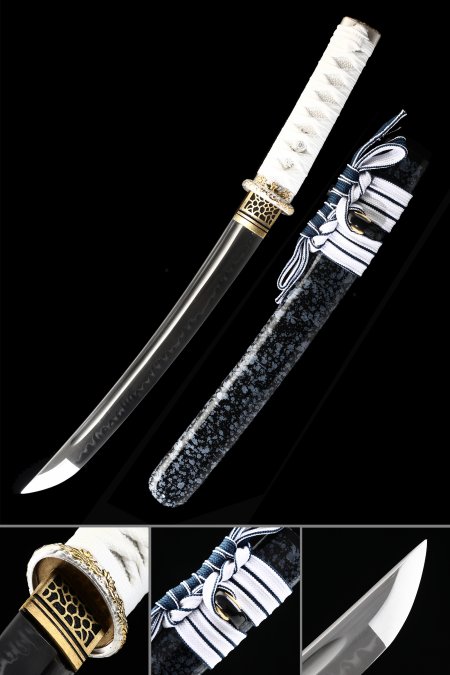
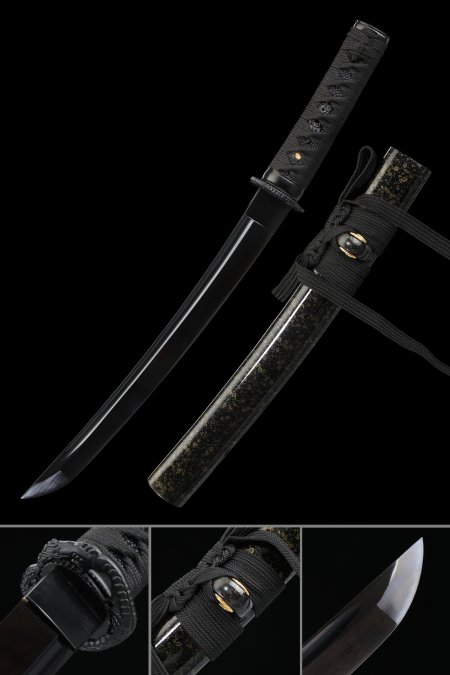
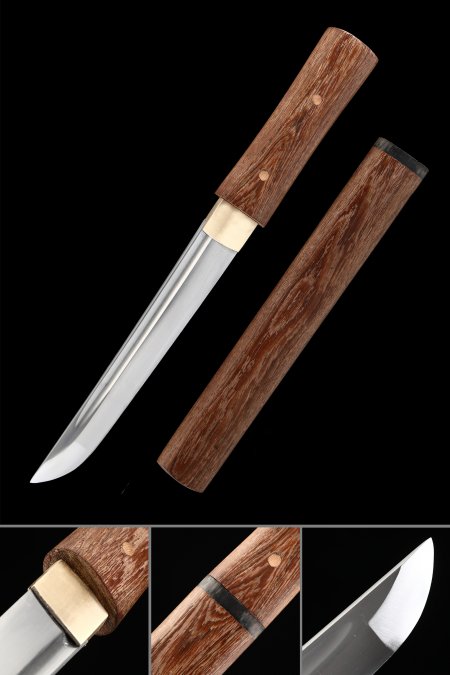
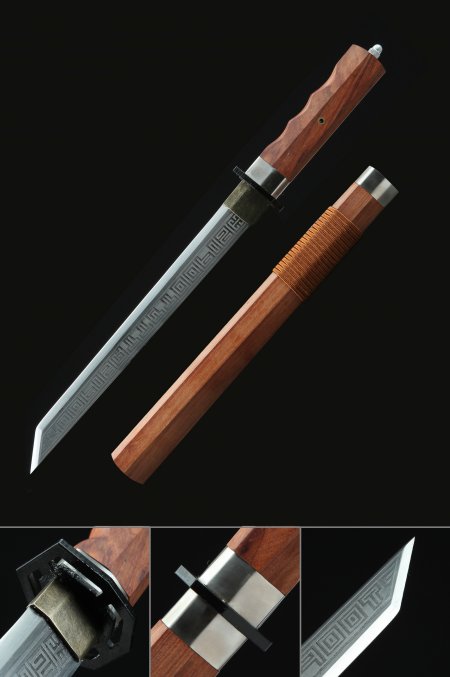
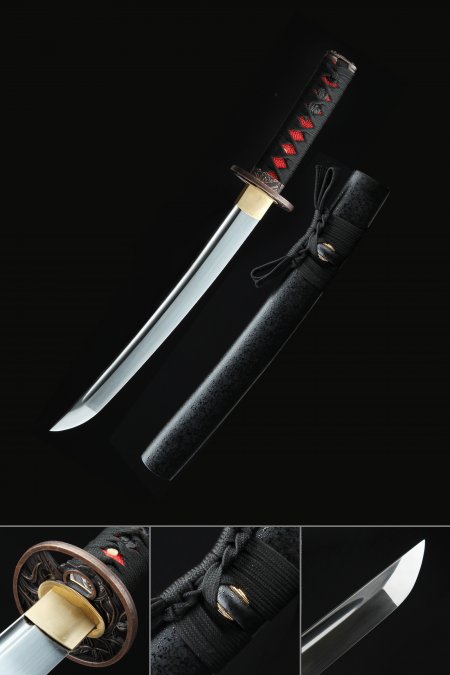
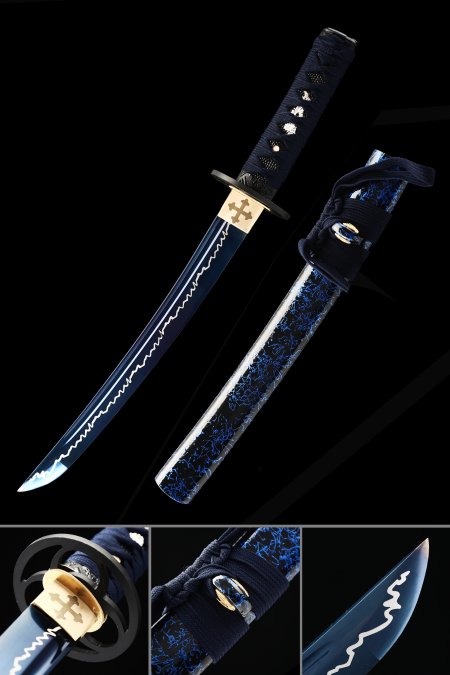
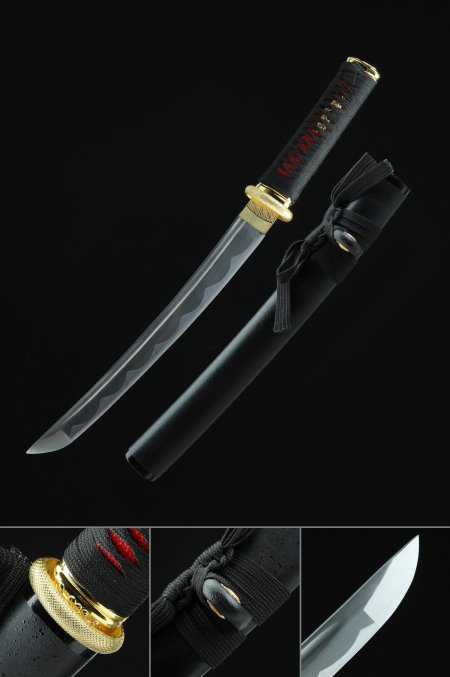
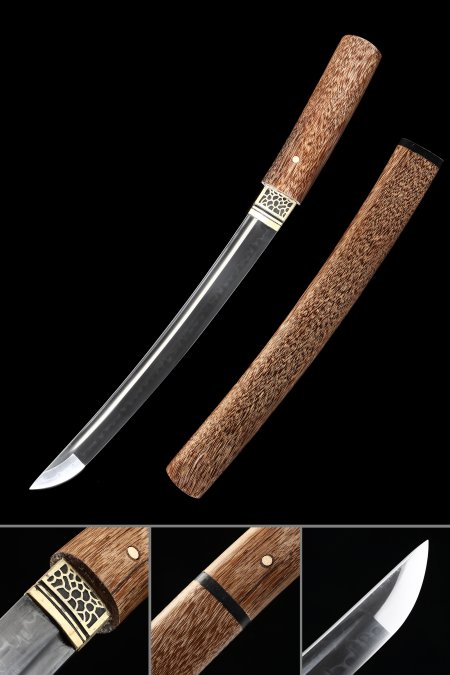
A hamidashi tanto is distinguished by its unusually small tsuba — a guard so compact that it barely extends beyond the width of the handle, sitting nearly flush with the tsuka. This sets it apart from standard tanto, which feature a more prominent, clearly defined guard plate. The term hamidashi roughly translates to 'protruding slightly,' an accurate description of how the guard just barely marks the transition point between handle and blade. Historically, this format was favored for formal indoor carry during the Edo period, where discretion and refinement were valued over visual drama. For collectors, the hamidashi configuration creates a sleek, elongated silhouette that emphasizes the blade and handle as a unified form rather than as separate components divided by a large guard.