How does T10 clay-tempered steel differ from Damascus on a naginata?
Updated Mar 2026
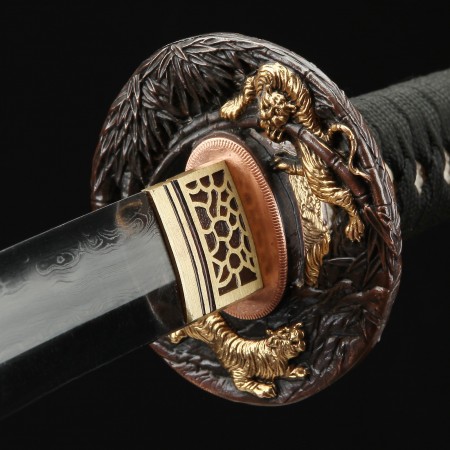
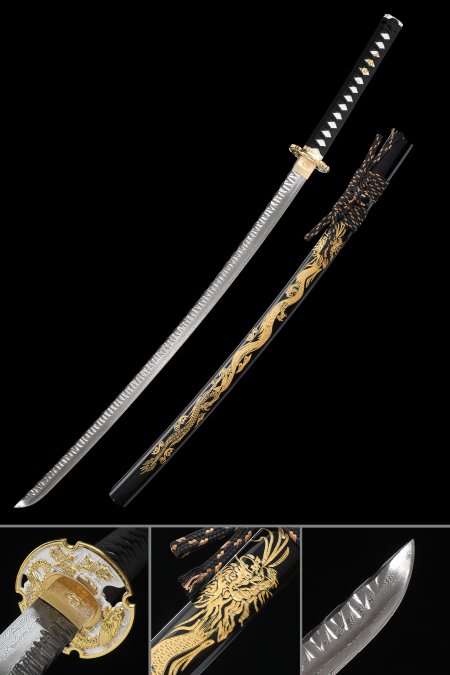
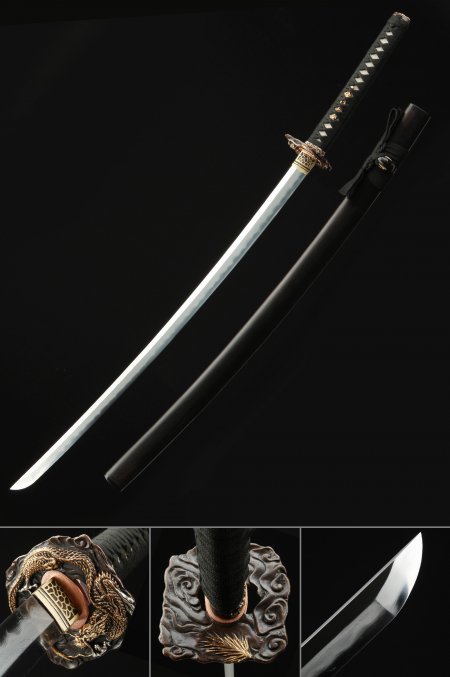
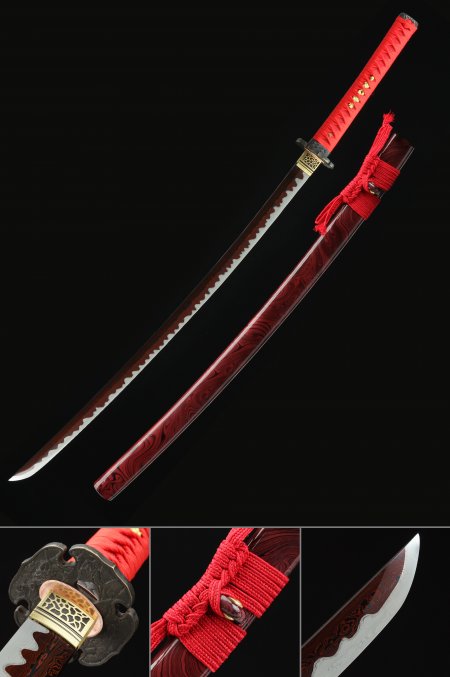
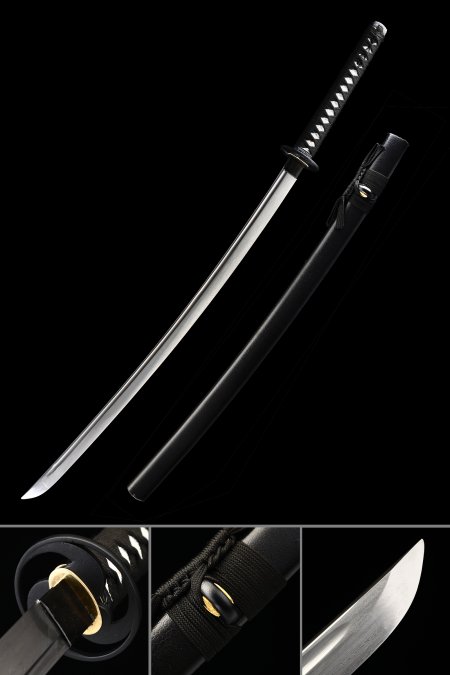
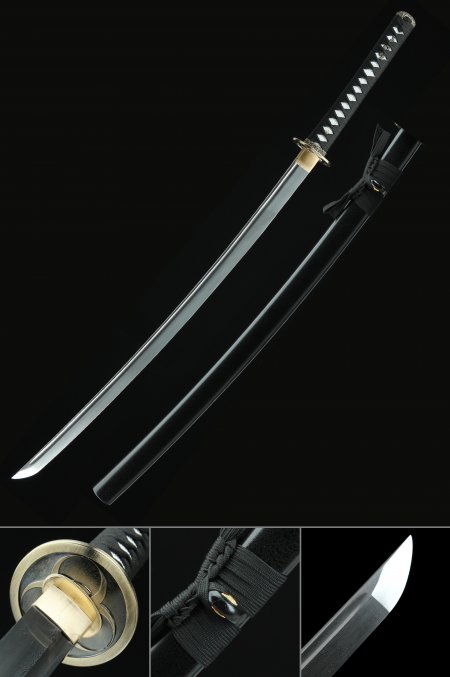
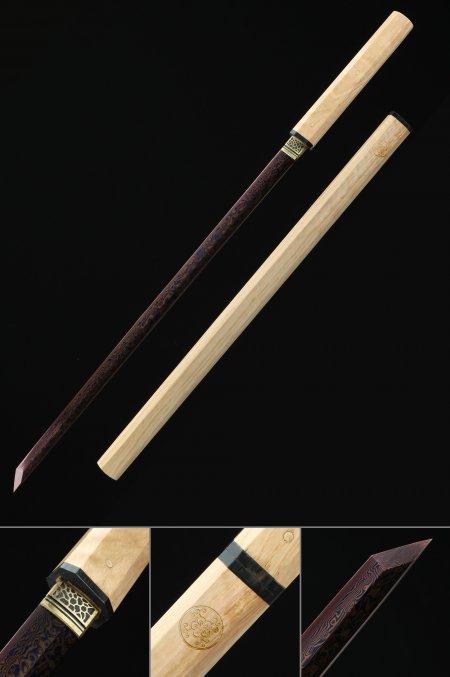
T10 is a high-carbon tool steel prized for its fine grain structure and ability to hold a well-defined hamon when clay-tempered. The clay-tempering process involves applying refractory clay along the spine before quenching, which causes the edge to cool faster and harden more than the body of the blade. The result is a genuine, organic hamon line — a feature specific to each individual blade. Damascus, by contrast, is a pattern-welded steel made by folding and forge-welding layers of different steel types together. Its defining visual characteristic is the flowing surface grain pattern revealed after acid etching. Both are premium choices for collectors; T10 rewards those who appreciate subtle, traditional aesthetics, while Damascus appeals to collectors drawn to high-contrast visual drama across the full length of the blade.