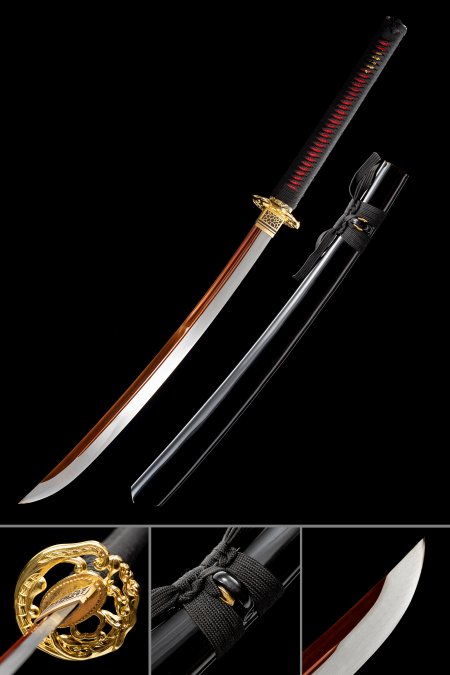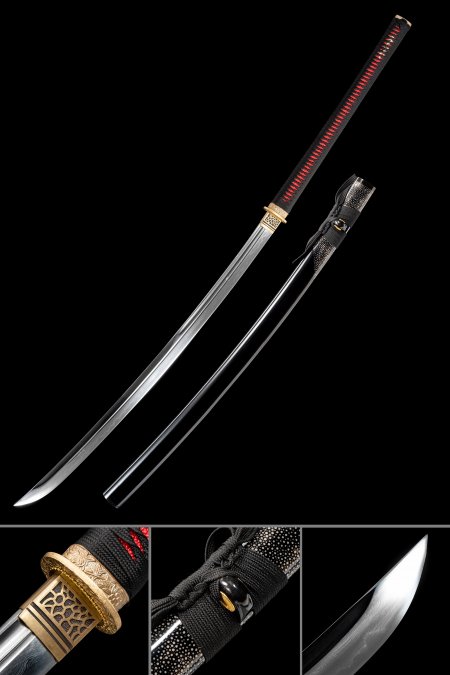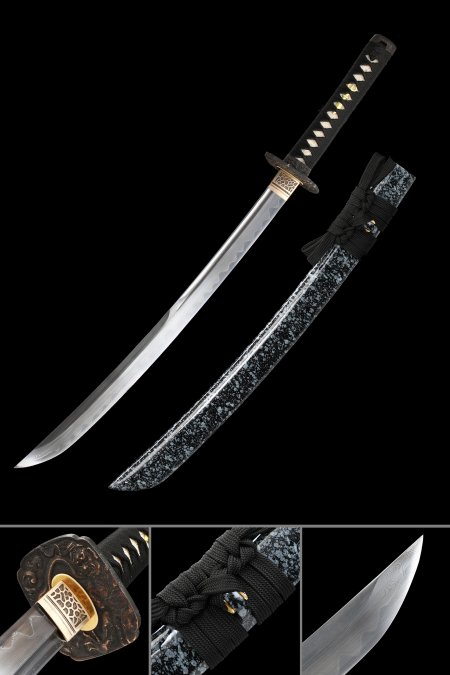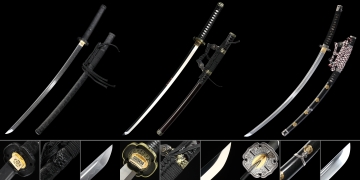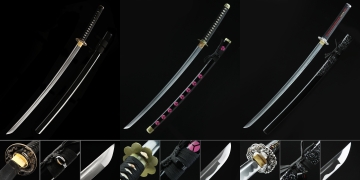
Black Sageo Naginata

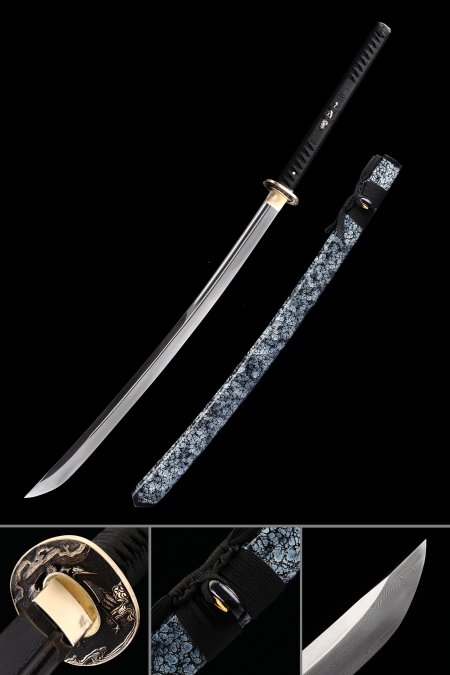
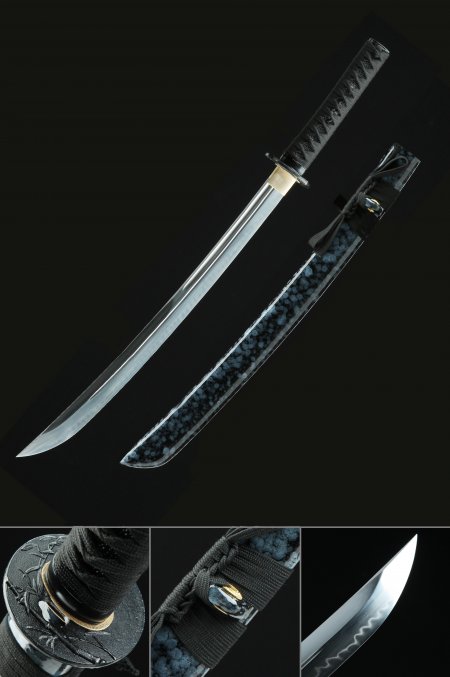
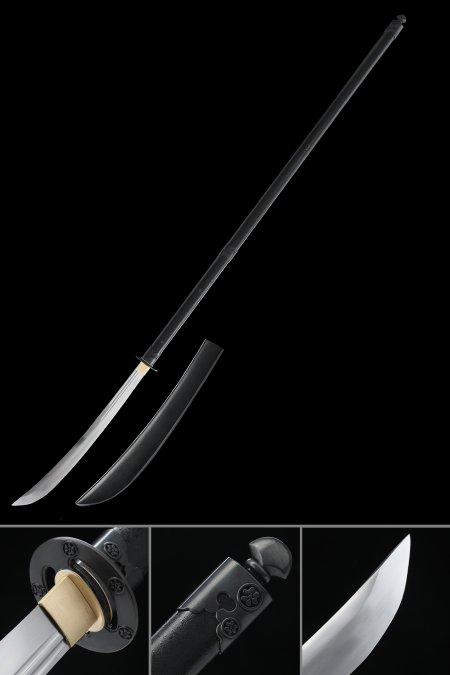
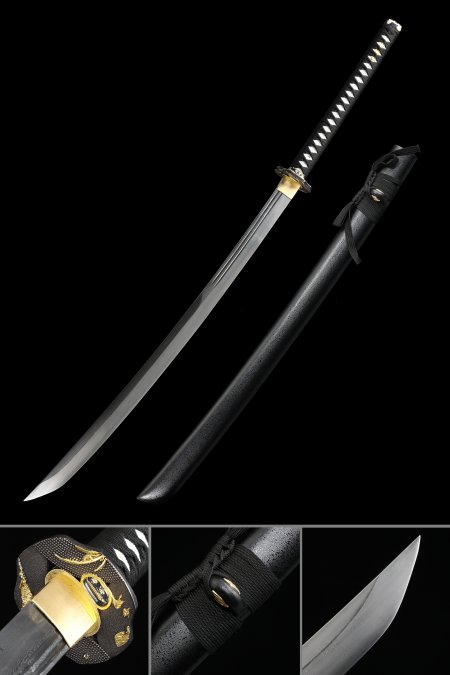
A black sageo is more than an aesthetic detail — it signals intentional craftsmanship and a unified visual identity across the entire polearm. Each naginata in this collection is hand-forged from premium steel, including T10 clay-tempered, Damascus pattern-welded, and 1060 high-carbon variants, fitted with full-tang construction and finished with lacquered saya for display-ready presentation. These are serious collector pieces built to museum-quality standards. Enjoy free shipping on every order, backed by our hassle-free return policy.
Showing 7 Products

Related Collections

Black Steel Katana74 items


768 Reviews

Black And White Katana118 items


1754 Reviews

Black Naginata4 items


4 Reviews

Black Cord Handle Naginata11 items


15 Reviews

Frequently Asked Questions

What does the sageo cord actually do on a naginata?
The sageo is the braided cord attached to the saya, the scabbard of a Japanese polearm or sword. On a katana worn at the waist, it was used to tie the saya to the obi. On a naginata displayed vertically or mounted horizontally, the sageo serves a practical role in securing the saya during storage or transport, and a visual role in completing the aesthetic of the piece. A black sageo in particular creates a consistent dark accent that unifies the saya, handle wrap, and overall presentation. For collectors, the color and material of the sageo — silk versus synthetic, black versus natural — is a meaningful detail that reflects the quality and intentionality of the piece's construction.
How does T10 clay-tempered steel differ from Damascus on a naginata?
T10 is a high-carbon tool steel prized for its fine grain structure and ability to hold a well-defined hamon when clay-tempered. The clay-tempering process involves applying refractory clay along the spine before quenching, which causes the edge to cool faster and harden more than the body of the blade. The result is a genuine, organic hamon line — a feature specific to each individual blade. Damascus, by contrast, is a pattern-welded steel made by folding and forge-welding layers of different steel types together. Its defining visual characteristic is the flowing surface grain pattern revealed after acid etching. Both are premium choices for collectors; T10 rewards those who appreciate subtle, traditional aesthetics, while Damascus appeals to collectors drawn to high-contrast visual drama across the full length of the blade.
Why does full-tang construction matter for a display naginata?
Full-tang construction means the steel of the blade extends completely through the handle, rather than ending partway or connecting via a threaded rod or adhesive. This method mirrors how historical Japanese polearms were assembled: the tang passes through the tsuka and is held in place by one or more mekugi — small bamboo or wooden pegs fitted through aligned holes in the handle and tang. For a collector, full-tang construction is a reliable indicator of authentic build methodology. It also means the piece maintains its structural relationship between blade and handle over decades of display, with no loosening at the joint. When assessing a naginata as a collectible investment, full-tang assembly is one of the clearest quality signals to verify before purchase.
How should I store a black lacquer saya naginata long-term?
Black lacquer saya are durable but sensitive to extreme humidity swings and prolonged direct UV exposure, both of which can cause the lacquer to crack or dull over time. Store the naginata horizontally on a dedicated stand in a climate-controlled room, ideally between 40–60% relative humidity. Remove the blade from the saya every few months to allow any trapped moisture to escape, and apply a thin coat of choji oil or mineral oil to the blade before re-sheathing. Avoid storing the piece near heating vents, exterior walls, or windows. For long-term archival storage, a padded case with moisture-control packets provides added protection. Inspect the mekugi pegs annually to confirm the handle assembly remains secure.
Is a black sageo naginata a good choice as a display gift?
A hand-forged naginata with black sageo makes a distinctive gift for collectors interested in Japanese history, classical polearm design, or Japanese aesthetic traditions. The visual coherence of a matched black sageo and lacquered saya means the piece presents well immediately out of the box without requiring additional styling. For gifting purposes, models with granite or marble saya finishes tend to draw strong reactions due to their unusual texture contrast against the dark cord and fittings. Pairing a naginata with a coordinating piece — such as a Black Sageo Tanto — creates a thematic display set that works well as a premium gift for anyone with an appreciation for traditional Japanese craftsmanship.

Customer Reviews

Eli Mohr New York, United States

Overall good weapon nice cutting and feel but something wrong with the glue job inside the saya as it would keep getting on the blade no matter how many times said saya cleaned it and washed it out with soap and water until I cut it in half and removed it and did my own glue job which seemed to fix that but yea cause of that I can’t give it a 5 star I’m sure you’d understand
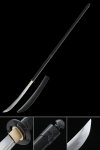
1060 Carbon Steel Japanese Naginata - Black Hardwood Saya, Full Tang, Hand Forged Polearm 1060 Carbon Steel Japanese Naginata - Black Hardwood Saya, Full Tang, Hand Forged Polearm