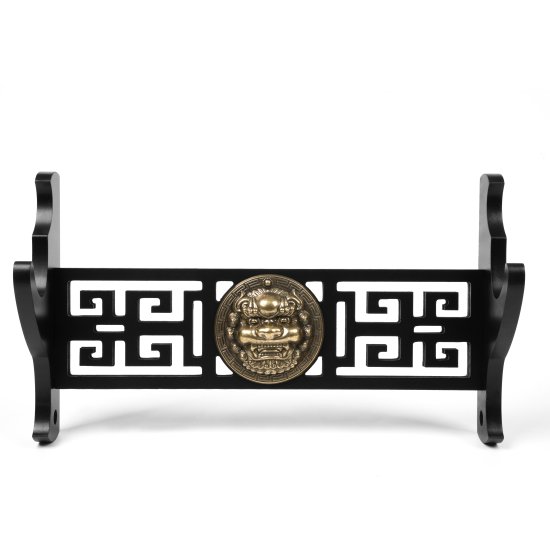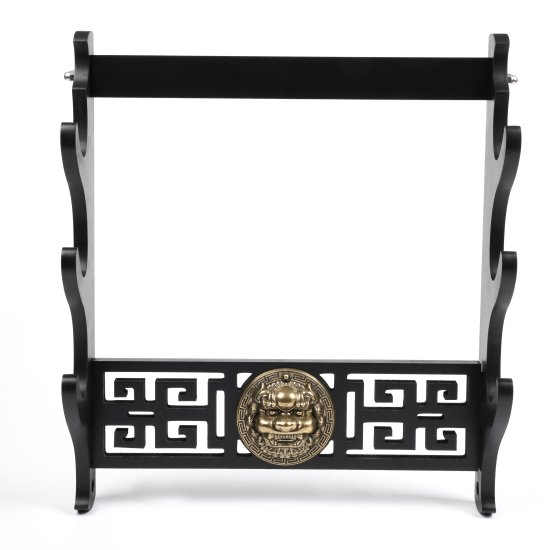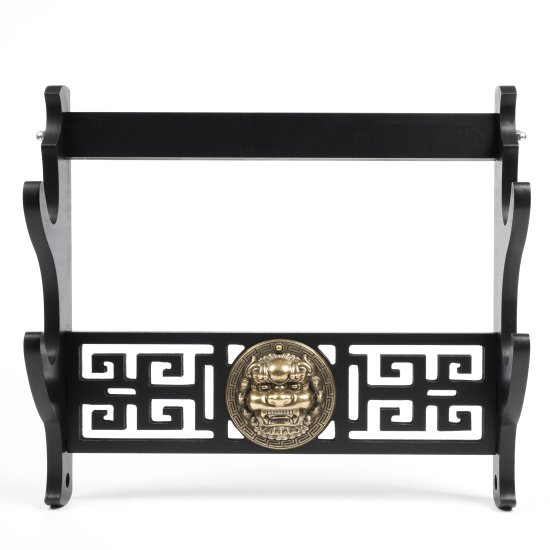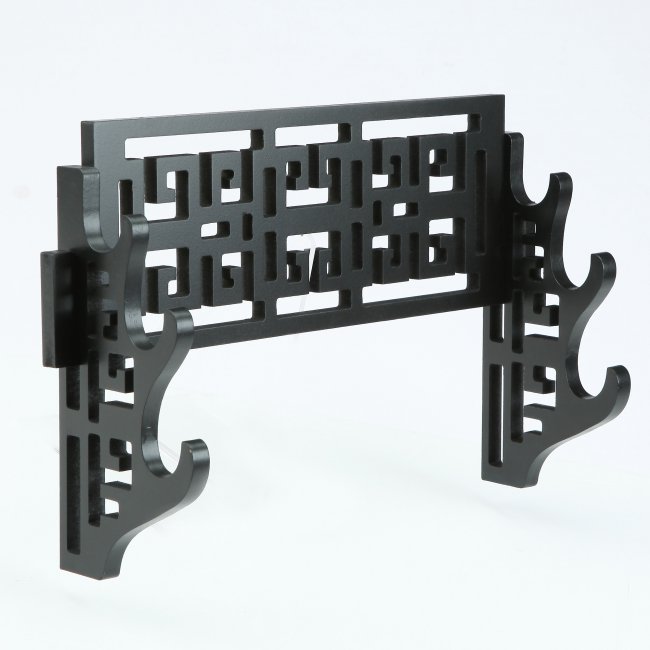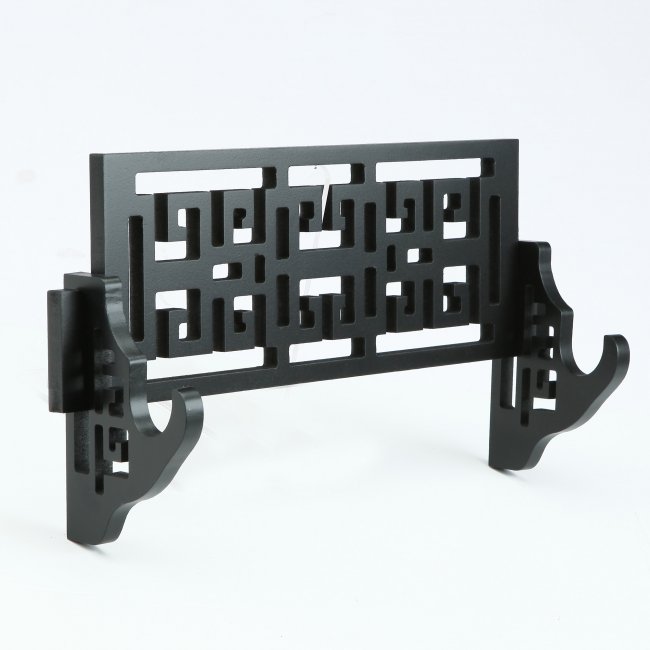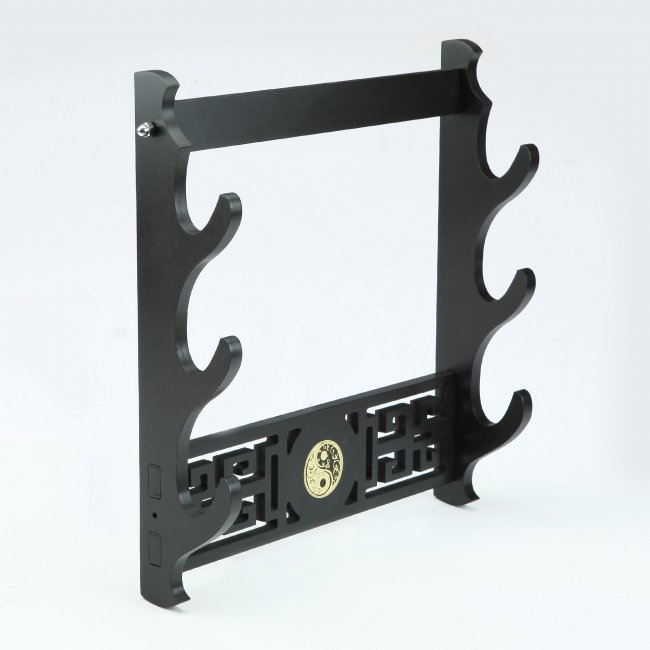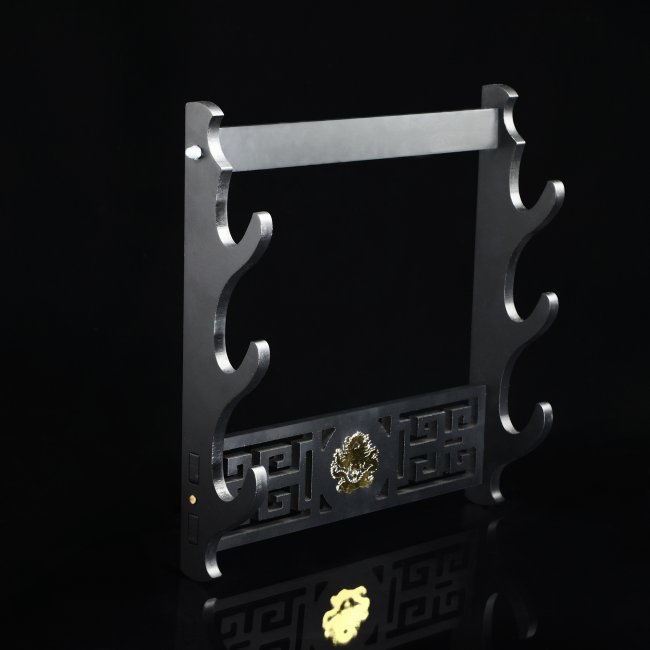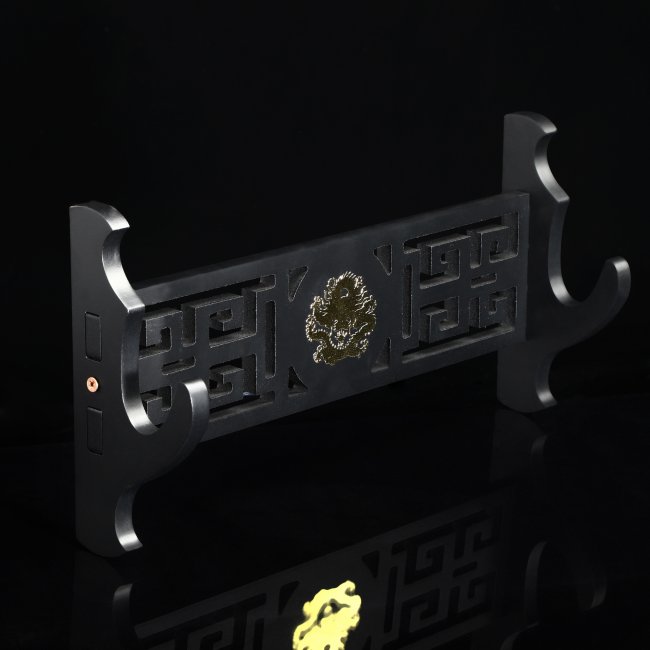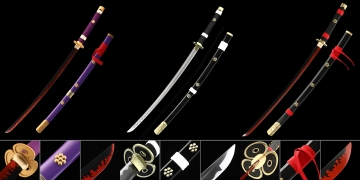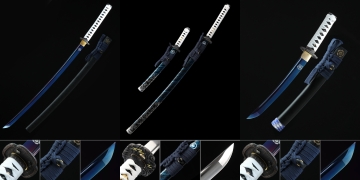
Katana Wall Mount

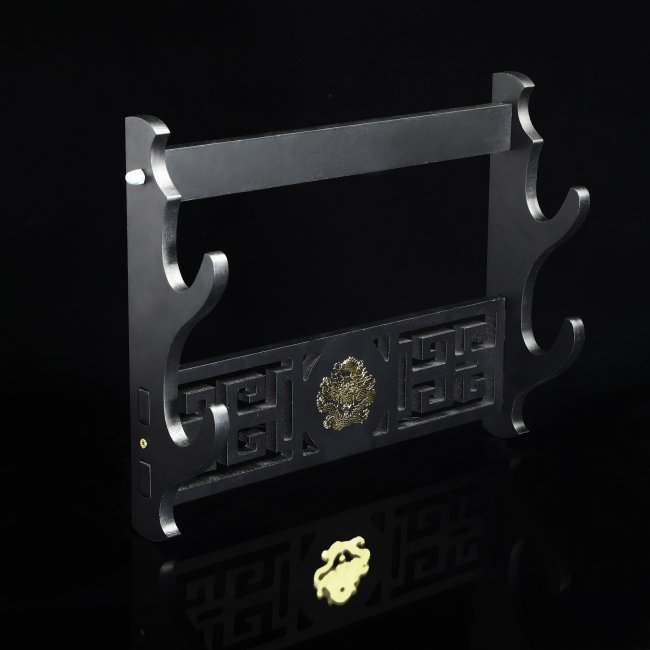
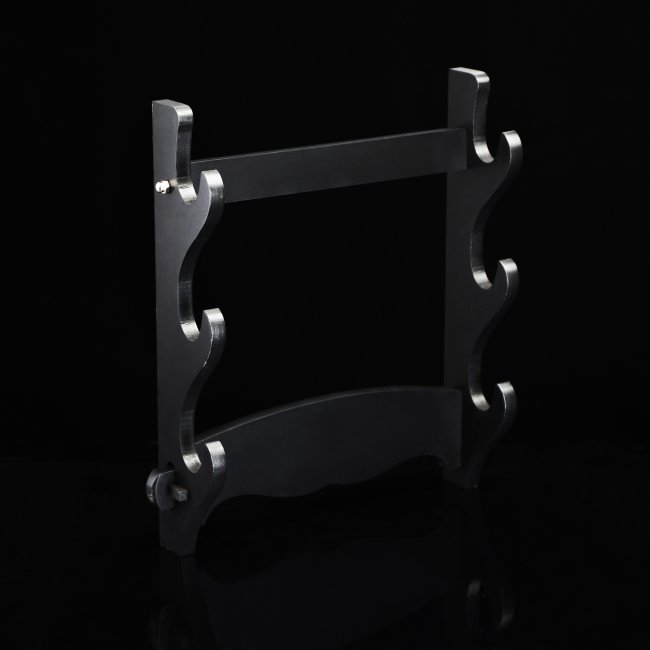
Our katana wall mount collection is built for collectors who refuse to lean a real sword against the wall. Every rack is turned from solid hardwood — oak, walnut, rosewood, or red sandalwood — cut to hold a full-tang Japanese blade the way a museum would: horizontal cradles for traditional display, vertical plaques for tight wall space, and multi-tier designs that keep an entire set visible from a single glance. Inside the pegs we use soft felt padding that grips the saya without scratching the lacquer, and the back plates are pre-drilled for wall-stud anchoring so a 1.5 kg daito stays exactly where you mounted it. Whether you are hanging a single treasured display katana, building a Bleach or Demon Slayer shelf, or organizing a growing daisho set, these mounts pair with our full sword stand lineup and ship free anywhere in the US backed by our 30-day satisfaction guarantee.
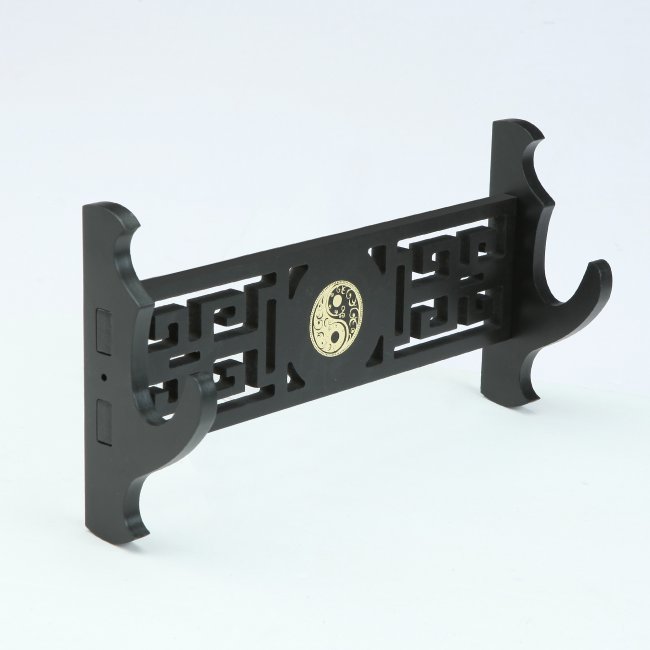
Showing 16 Products

Frequently Asked Questions

What is a katana wall mount?

A katana wall mount is a hardwood rack designed to hold a Japanese sword — or a full set of swords — safely on a vertical wall surface. Unlike a floor-standing sword stand, which lives on a shelf or table, a wall mount bolts directly into wall studs and cradles the saya (scabbard) on felt-lined pegs, keeping the blade elevated, visible, and out of reach of children, pets, and accidental bumps. It is the single most common display solution for collectors who own more than one or two pieces because it frees up tabletop space and turns the wall itself into a gallery.

A typical mount consists of three parts: a hardwood back plate that contacts the wall, one or more horizontal or vertical pegs extending from the plate, and felt padding on every contact surface to protect the lacquer of the saya. Higher-end racks add wall spacers behind the plate to keep the saya a few centimeters off the painted surface, and premium models use dense tropical hardwoods like rosewood or red sandalwood for extra durability and visual depth.

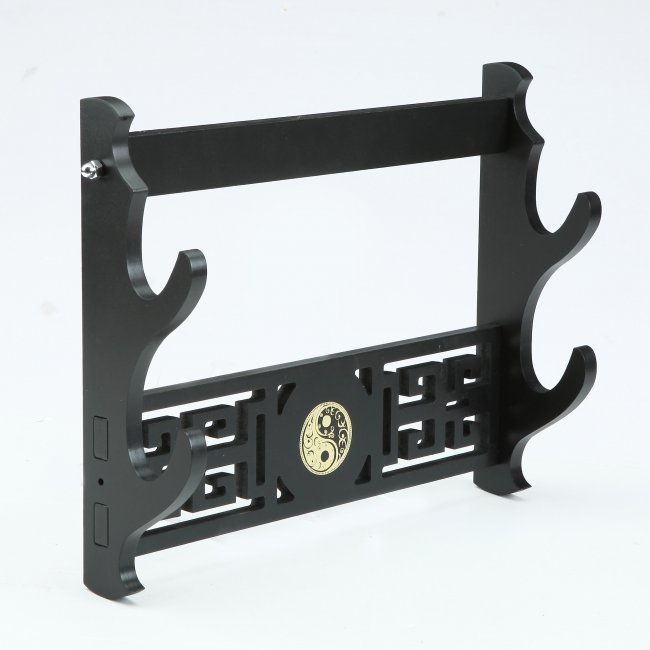
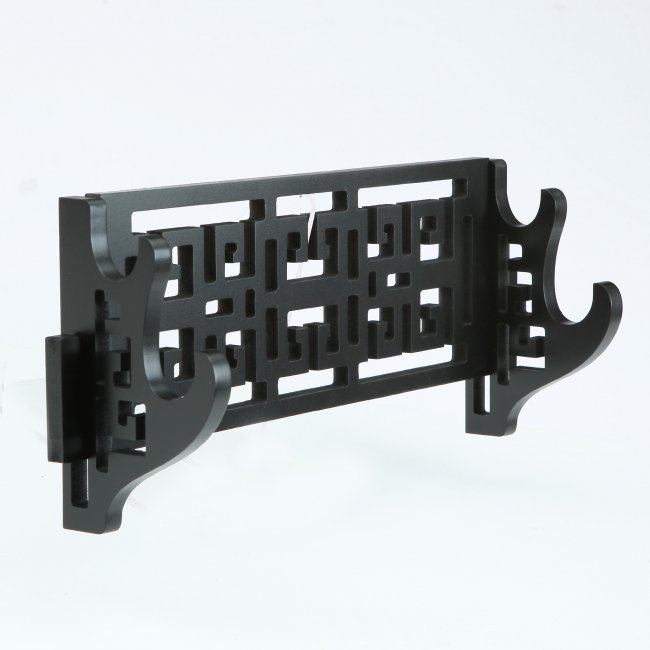
Mounts come in three layout families. Horizontal racks cradle the sword on its side, showing the full length of the saya from guard to kojiri — this is the museum-standard presentation and the most popular choice for single-sword displays. Vertical racks drop the blade kissaki-up or kissaki-down in a narrow footprint, ideal for collectors who have more wall height than width. Multi-tier racks combine two, three, or five pegs in a single back plate so an entire daisho, Bleach set, or Japanese sword collection can live on one structural anchor point.

TrueKatana's katana wall mount collection includes all three families in several wood finishes, weight ratings, and peg widths so buyers can match the mount to the exact sword they own. If you are new to sword ownership, the mount is the second thing you should budget for after the sword itself — never the last. Every day a full-tang daito sits leaning against furniture is a day it can slip, scar the saya, tip into a wall, or worse.

A quick note on terminology. Some collectors use "wall mount" and "wall rack" interchangeably; both refer to the same category of hardware, and our product listings use "mount" consistently across the catalog. If you are cross-referencing forum discussions or older Japanese-language sources, the equivalent term is katana-kake, which literally means "katana hanger" and historically referred to both floor stands and wall racks before the modern distinction emerged. Function is identical — only the mounting surface changes.

Horizontal or vertical — which is better?

The choice between a horizontal and a vertical mount is determined by three factors: how much wall real estate you have, how many swords you want to display, and what the sword itself looks best doing. Horizontal mounts are the museum standard for good reason — they show the full length of the blade, the curve of the sori, the kissaki, and the saya in one continuous line, which is how traditional Japanese sword appreciation (kantei) is practiced. If you own a single treasured piece and have at least three to five feet of clean, uninterrupted wall space, horizontal is almost always the right call.

Vertical mounts solve a different problem. A vertical sword holder drops the blade into a narrow footprint that fits between windows, beside doorways, next to a bookshelf, or in the tight wall slice next to a dresser. Vertical mounts are also the dominant choice in Japanese tearooms and traditional alcoves (tokonoma), where the sword is presented kissaki-up as a symbol of honor rather than a showpiece for the blade itself. A vertical mount typically takes up 10–15 cm of horizontal space and 100–120 cm of height — if your room has tall walls but little width, this is your layout.

There are handling differences too. A horizontal mount lets you lift the sword down two-handed in the same motion you would use to draw it from a traditional display rack on a shelf — natural, safe, and fast. Vertical mounts require you to reach up, grip the tsuka one-handed, and pull the blade straight off the peg, which is slightly less ergonomic for monthly maintenance but perfectly fine for display-only pieces that rarely come down.

For multi-sword collections, both formats scale, but horizontal multi-tier racks like a double tier katana stand are the most common because they keep each blade readable as an individual object. Vertical stacking works for two blades but becomes visually busy beyond that. If you are torn between the two, the practical rule is this: one blade, horizontal; two blades, double-tier horizontal; three or more, horizontal multi-tier; tight wall, vertical. Your own room will usually pick for you the moment you hold the rack up against the wall.

One more consideration — ceiling height. Rooms with low ceilings under 2.4 meters often feel cramped when a vertical mount is installed, because the blade fills the vertical airspace visually. Rooms with tall ceilings above 2.7 meters, on the other hand, almost swallow a horizontal mount unless you center it at eye level. If your ceiling sits near either extreme, factor that into the layout choice before you order.

What hardware do I need to install it?

Every katana wall mount in our collection ships with the basic hardware you need to hang it: wood screws sized for stud mounting, felt pads for the contact faces, and any wall spacers the specific design requires. What we cannot ship is the stud you need to drive those screws into — and that is where most first-time installs go wrong.

Start by gathering four things from outside the box: a stud finder (the cheap magnetic or electronic models both work), a pencil, a drill with a bit slightly smaller than the included screws, and a spirit level. A tape measure helps too. Turn on the stud finder and slide it horizontally along the wall at the height you want the sword to hang. Mark the center of the nearest two studs with a pencil. Standard US residential studs are spaced 16 inches apart, which happens to be the same width as most two-peg horizontal racks — a pleasant coincidence that makes mounting easy in most rooms.

Hold the back plate of the rack against the wall, aligned with your stud marks, and use the spirit level to confirm it is perfectly horizontal. Mark both screw hole locations on the wall through the rack's pre-drilled holes. Set the rack down, drill pilot holes into the stud marks, then screw the rack into place. Check level one more time before fully tightening. The entire process takes about ten minutes.

If your wall layout forces one mounting point between studs, switch that side to a heavy-duty toggle bolt rated for at least 20 kg. Do not use plastic expansion anchors — they look solid on installation but creep under the repeated micro-stress of lifting the sword down for maintenance, and a mount that was perfect on day one can tip forward six months later. For very heavy display pieces, upgrade to a heavy sword stand rack and make sure both mounting points engage solid structural material.

One final tip: always dry-fit the rack on the floor with a dummy load first. Set a broom or a rolled towel the weight of your sword across the pegs and confirm the felt grips it cleanly before you ever drill into the wall. Measure twice, drill once.

If your wall is plaster instead of drywall — common in older homes built before the 1960s — drill the pilot hole with a masonry bit, clear the dust, and use a wood screw slightly longer than the drywall default to reach the stud behind the plaster. Plaster chips easily if you force a standard drill bit through without pre-scoring.

Can it hold a full-tang carbon-steel sword?

Yes — every mount in the katana wall mount collection is rated for full-tang carbon-steel swords, including 1060, 1095, T10, 9260 spring steel, and folded Damascus blades. The racks are built specifically for real swords, not hollow costume props, and the load ratings assume the weight of a genuine daito plus saya, which typically ranges from 1.0 to 1.6 kilograms for a standard katana and up to 2.5 kilograms for an oversized piece like a nodachi or a Zangetsu-style cleaver.

That said, load capacity varies by model. Entry-level oak mounts are rated around 2 kg, which covers any standard katana, wakizashi, tanto, or ninjato without issue. Walnut and rosewood mounts in our mid-tier lineup handle 3–4 kg, comfortably supporting daisho pairs or a single heavy display piece. Premium red sandalwood mounts and dedicated heavy sword stand racks go up to 6 kg or more, which is where you want to be if you are hanging a nodachi, a five-blade multiple katana stand full of daito, or any oversized reproduction blade.

The single most important factor is not the rack itself but what it screws into. A 2 kg sword on a horizontal two-peg rack exerts very little static load on the wood — the rack could technically hold much more — but the moment you pull the blade down for monthly oiling, the dynamic load briefly spikes much higher, and that is what loosens anchors over time. If both screws engage solid wall studs, the system is rock solid. If either screw is in drywall alone, the rack will eventually fail.

For added peace of mind, many collectors over-spec their mounts. If your sword is 1.3 kg, buy a rack rated for 3 kg or more. The extra headroom costs only a few dollars and guarantees the wood pegs never fatigue under years of cycling. Also worth noting: temperature and humidity affect hardwood strength over decades. Rooms that swing from dry winter heat to humid summer air stress the wood grain, so climate-stable interior walls are always a better mounting choice than a garage, sunroom, or uninsulated attic.

A note on dynamic loads. The static weight of a hanging sword is only part of the story. Every time you pull the blade down for monthly maintenance, the pegs absorb a brief tug perhaps 30% above the resting weight as the felt releases the saya. Over thousands of cycles, that repeated pull is what tests the mount's real durability — not the first hang. Quality hardwood racks handle this effortlessly for a lifetime; cheap plywood and MDF racks do not.

How do I arrange multiple swords?

Displaying multiple swords well is an exercise in visual rhythm, not just available wall space. The traditional Japanese arrangement for a two-sword daisho (the paired katana and wakizashi carried by samurai) is horizontal, with the katana on top and the wakizashi directly below it, both blades edge-up and tsuka pointing left. This is the layout a double tier katana stand is built for, and it is the single most historically correct way to present a two-sword set.

For three swords, the most balanced presentation adds a tanto or small wakizashi to the bottom peg, creating a full three-tier descent from longest to shortest. This reads as a complete samurai set and photographs beautifully against a dark wall. For four or five swords, step up to a multiple katana stand rack and follow the same longest-to-shortest hierarchy from top to bottom, or group by theme — all carbon steel on one rack, all folded Damascus on another.

If your collection is mixed — a Japanese daito next to a Bleach Zangetsu next to a Demon Slayer nichirin — you have two good options. Option one: dedicate a separate rack to each theme so each set tells its own story. Option two: group by size and color tone regardless of series, creating a visually unified wall that flows from long to short and dark to light. Both work; the wrong answer is to jam everything onto a single mismatched rack.

Spacing between racks matters too. Leave at least 30 cm of vertical clearance between stacked horizontal mounts so the eye can read each blade as an individual object, and at least 15 cm of side clearance at the tsuka and kissaki ends so nothing feels cramped. If your wall is wide enough, two horizontal racks side by side at the same height often look better than a single multi-tier rack because each sword gets equal visual weight.

Plan the layout on the floor first. Lay all your mounts and swords out on a sheet exactly as you want them on the wall, photograph the arrangement, and compare it to the wall space before drilling. Nothing ruins a display faster than a rack mounted three centimeters too high or too low — and nothing is harder to fix after the screws are in.

Eye-level is the default. Unless you have a specific reason to go higher or lower, center the primary sword at standing eye level — about 155–165 cm from the floor for average-height viewers. This is the height at which museum curators hang featured pieces because it rewards both casual glances and close inspection.

Which hardwood should I choose?

Wood selection is the second-biggest decision after layout, and it affects appearance, durability, and price in roughly equal measure. Oak is the budget champion: light in color, tight in grain, easy to stain, and strong enough to carry any standard daito for decades. A wooden katana stand in oak is the default recommendation for first-time buyers because it looks clean against any wall color, survives normal household humidity swings, and keeps the cost low enough to leave budget for the sword itself.

Walnut sits in the middle tier. Its darker chocolate grain flatters brass tsuba, gold hamon lines, and traditional lacquered saya in deep tones. Walnut is denser than oak, which makes it quieter when you lift the sword down (no creaks) and slightly more resistant to humidity. Expect to pay 30–50% more than the equivalent oak rack, with the payoff being a richer presentation that pulls the eye toward the blade instead of the rack.

Rosewood is where traditional Japanese aesthetics take over. The deep red-brown grain evokes temple woodwork and antique furniture, and rosewood is dense enough to hold a screw indefinitely without wallowing. Our rosewood mounts are the pick for collectors displaying folded Damascus or clay-tempered T10 blades where the rack needs to match the blade in quality. Price is roughly double oak.

Red sandalwood sits at the top of the lineup, reserved for our premium antique katana stand pieces. Sandalwood is extraordinarily dense, resistant to insects and fungus, and carries a subtle natural fragrance that lingers in the display room. It is also the most expensive — three to five times the price of oak — but a sandalwood mount will still be in perfect condition when it is passed to the next generation of collectors.

Avoid at all costs: MDF with wood-grain veneer, painted particle board, pine (too soft), and any rack that lists "hardwood" without specifying which hardwood. These cheap alternatives swell, delaminate, strip their screw threads, and eventually fail. Pay once for real hardwood and you will never think about the rack again.

A finishing note. All of our hardwood mounts ship pre-finished with a food-safe natural oil or a clear satin lacquer depending on the model. The finish protects the wood from fingerprints and minor spills but does not need to be reapplied for years; a light dusting with a microfiber cloth during your monthly sword maintenance is all the upkeep the wood requires. Avoid spray polish and furniture wax — they attract dust and can transfer onto the saya lacquer.

How do I protect the saya from damage?

The saya is the most vulnerable part of any displayed sword — its lacquer finish marks easily, absorbs oil from skin contact, and polishes shallow wear lines from any hard contact surface. A good mount protects the saya in three ways: felt padding on every contact point, correctly-sized pegs that cradle without squeezing, and enough wall standoff to keep the lacquer from rubbing against painted drywall.

Every mount in our katana wall mount collection ships with dense felt pre-installed on the peg interior. The felt should be firm to the touch, not foam-soft; foam crushes within weeks and offers no long-term protection. If the felt on any rack feels thin or sparse, add a second layer before mounting — self-adhesive felt sheets cost almost nothing at any hardware store and give you another decade of protection.

Peg width matters next. A peg cut tight against the saya creates pressure points that polish shiny spots into the lacquer. A peg cut too loose lets the sword rock on the rack, and repeated micro-movement grinds felt residue into the lacquer surface. The right fit is approximately 5% larger than the saya diameter — snug but not squeezing, with the felt doing all the gripping work. If you buy a rack and the pegs are visibly oversized, either return it or add felt shim layers until the fit is snug.

Wall standoff is the third consideration. Many racks bolt flush to the wall, which is fine for small saya but causes the body of a fatter scabbard to rub against painted drywall every time the sword moves with the building. Look for mounts with a 2–3 cm wall spacer built into the back plate, or add your own with washers between the plate and the wall.

For handling day, always remove the sword from the rack two-handed: one hand on the tsuka, one hand supporting the saya near the kojiri. Never grip the saya alone and yank the tsuka upward — that is how koiguchi (scabbard mouth) cracks start. Re-sheath slowly and place the saya back in the felt cradle without dragging it across the peg surface. These small habits add decades to the life of the lacquer finish.

One more detail most buyers overlook: keep the saya out of direct sunlight. UV exposure fades traditional lacquer colors — especially red, navy, and gold — within a few years of constant sun, and no felt padding or premium wood will reverse that fade once it sets in. If your display wall receives afternoon sun, mount a sheer curtain or a UV-blocking window film to protect both the saya and the ito wrap from photodegradation.

Customer Reviews

Cart 0 Items

Your cart is empty