Sakabato Katana

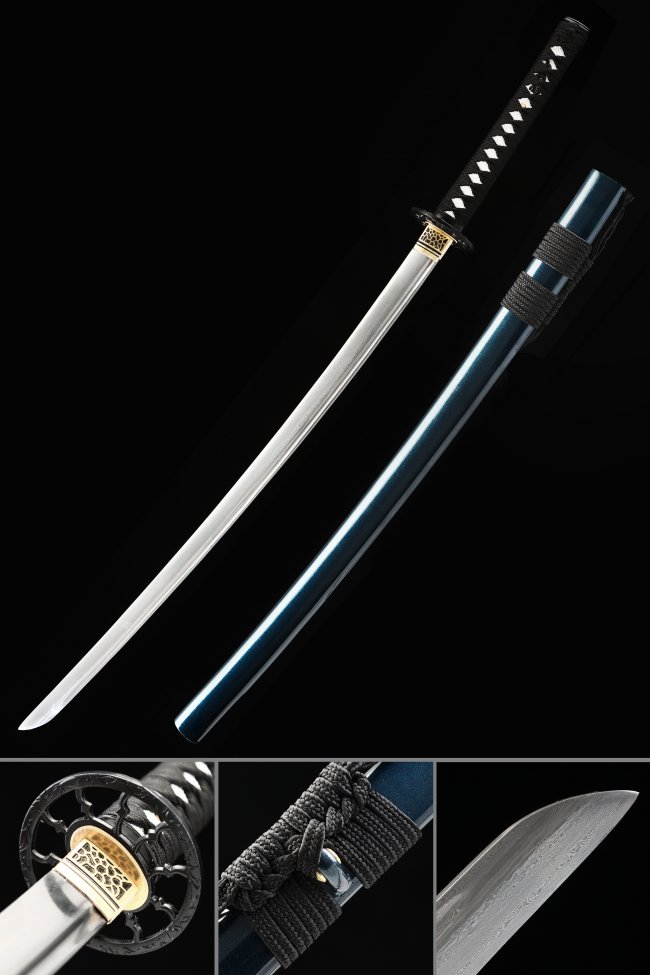
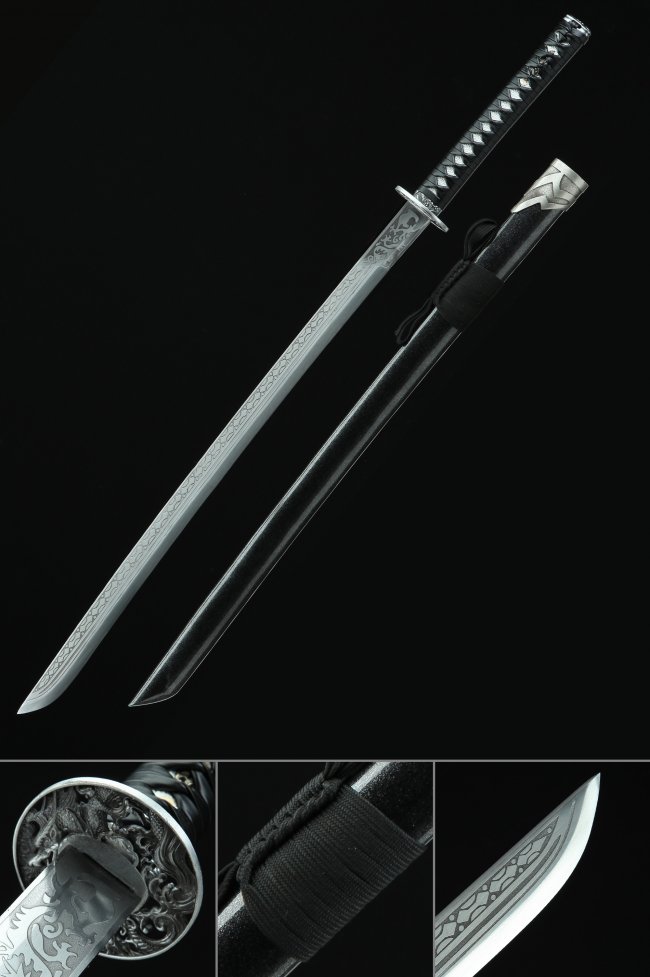
The Sakabato Katana is one of the most distinctive forms in Japanese sword history — a reverse-blade design that places the cutting edge on the spine, born from a legendary vow of non-violence. Each piece in this collection is crafted with meticulous attention to period-accurate fittings, hand-forged construction, and authentic hamon geometry that honors the shintō-era aesthetic. A compelling centerpiece for any serious collector's display. Enjoy free shipping on your order, plus a straightforward return policy so you can collect with confidence.

Showing 2 Products

Related Collections

T10 Katana94 items


161 Reviews

Ninja Sword84 items


461 Reviews

Shirasaya Katana19 items


129 Reviews

Gold Dragon Sword43 items


126 Reviews

Frequently Asked Questions

What makes a Sakabato different from a standard katana?
A standard katana is ground so the cutting edge faces away from the wielder when worn at the hip. A Sakabato reverses this: the ha, the hardened edge, runs along the spine side of the blade. This means the geometry is physically inverted during the forging and grinding process — it is not simply a katana flipped in its saya. On a collectible Sakabato, this reversal is evident in the placement of the hamon (temper line), which traces along what would be the mune on a conventional blade. The result is a visually unique profile that immediately signals its unconventional nature to anyone familiar with Japanese sword anatomy.
What is a hitatsura hamon and why is it rare?
Most katana feature a hamon that runs as a single line along the cutting edge — the boundary between the hardened ha and the softer body of the blade. A hitatsura hamon, by contrast, covers nearly the entire blade surface with temper activity, including the mune. Achieving this requires covering far less of the blade in clay before the quench, exposing more steel to rapid cooling. The risk of warping or cracking increases significantly, and the final pattern — featuring notare (wave) and midare (irregular) activity across both sides — demands precise timing and consistent water temperature. On a Sakabato collectible that reproduces this hamon on a reverse-ground blade, the technical challenge is compounded, making these pieces genuinely uncommon in the display sword market.
Is 1000-layer folded steel actually stronger for display swords?
The "1000-layer" description refers to a folding process where steel is repeatedly folded and forge-welded, creating many thin laminate layers. In historical Japanese swordsmithing, folding helped distribute carbon evenly and remove slag from impure raw steel — tamahagane. For modern display collectibles made from cleaner steel stock like high-carbon or manganese steel, the primary benefit of folding is aesthetic: the layers produce a distinctive grain pattern called jihada on the blade's surface, which becomes visible after polishing. This surface texture is a marker of hand-forged production and is highly valued by collectors who want visual evidence of the smith's process rather than a featureless machine-ground finish.
How should I store and maintain a Sakabato display piece?
Carbon and manganese steel blades require regular maintenance to prevent oxidation, even when kept indoors. Apply a light coat of choji oil or mineral oil to the blade surface every one to three months, depending on your local humidity. Store the sword horizontally on a display stand or inside its saya with the edge — on a Sakabato, the spine side — facing upward, which is the traditional orientation for katana storage. Avoid areas with large temperature swings or moisture fluctuation. Never store a blade in a leather-lined case for extended periods, as leather retains moisture. When handling, use a clean cloth or cotton gloves to prevent fingerprint acids from contacting the steel.
Does the Sakabato make a good gift for a Japanese sword enthusiast?
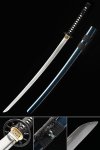
For a collector who already owns conventional katana formats, a Sakabato introduces something genuinely different — both in blade geometry and in the cultural narrative it carries. The reverse-blade concept is immediately recognizable within enthusiast communities, and the shintō-era aesthetic with a hitatsura hamon gives it depth beyond novelty. A Sakabato with a lacquered saya in blue or black and a detailed dragon tsuba displays well on its own or alongside a traditional katana as a thematic counterpoint. It suits collectors interested in the intersection of Japanese swordsmithing history and popular cultural legacy, making it a distinctive and meaningful addition rather than a redundant piece.

Customer Reviews

Wayne Kienitz Ontario, Canada

2 years ago I became aware of the Phoenix weapon. It is activated every 138 years. In 2040 middle of May the Phoenix Phenomena will cause a pole shift, worldwide quakes, worldwide volcanism, oceans slip basins, coastal tsunamis. Atmospheric convergence will render the reptilians unable to disguise themselves. These swords are for the protection of my family and I. Phoenix also brings the Vapor Canopy atmosphere bringing optimal conditions for growth of all lifeforms. Gigantism will return. Meaning giant animals, Avians, insects and humans. And yes reptiles. Dinosaurs. Giant birds will swoop down and take humans away to be eaten. Get your swords chop those birds down and eat THEM. r
Yours Truly, Adam Wayne Herod

Sakabato Reverse Blade Katana - 1000 Layer Folded Steel Rurouni Kenshin Sword with Blue Lacquer Saya Sakabato Reverse Blade Katana - 1000 Layer Folded Steel Rurouni Kenshin Sword with Blue Lacquer Saya