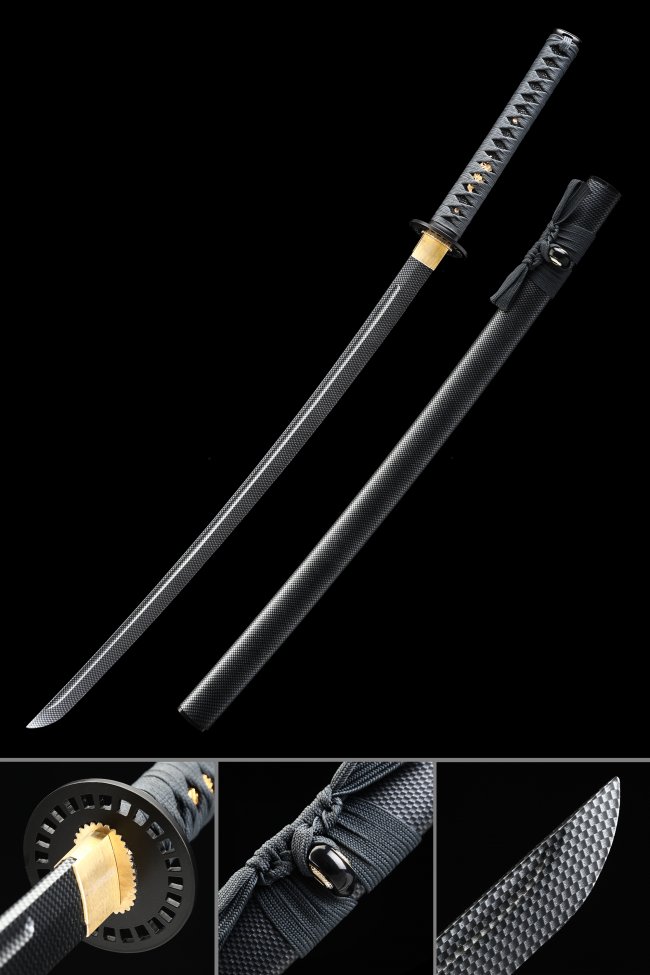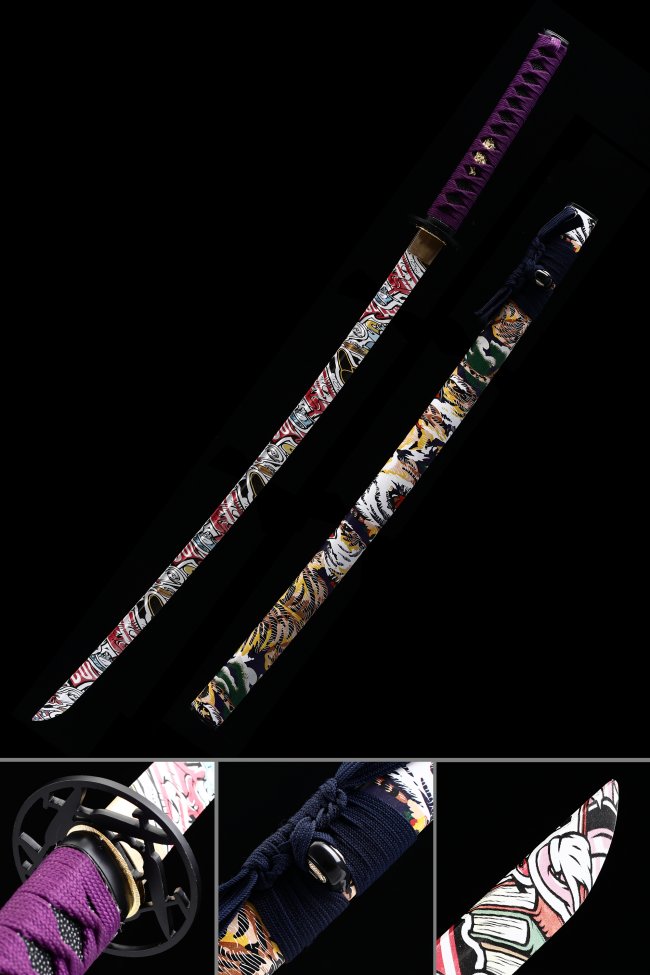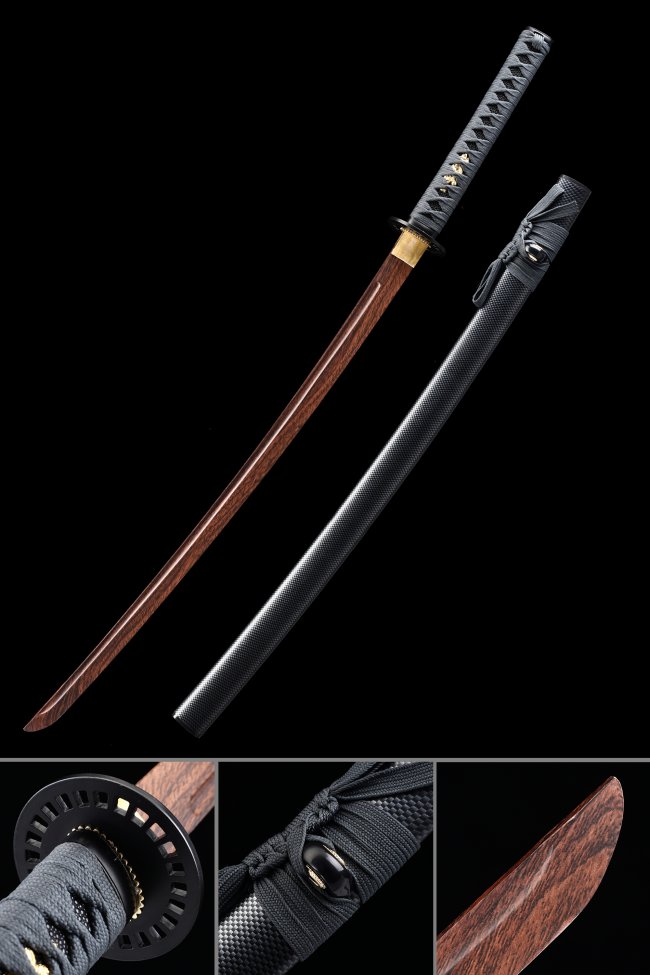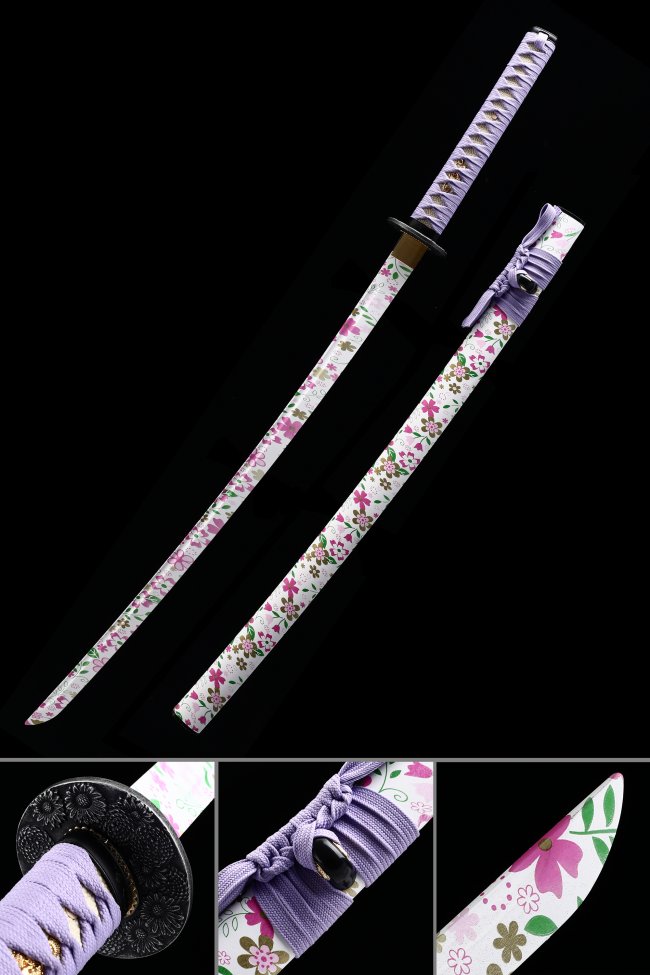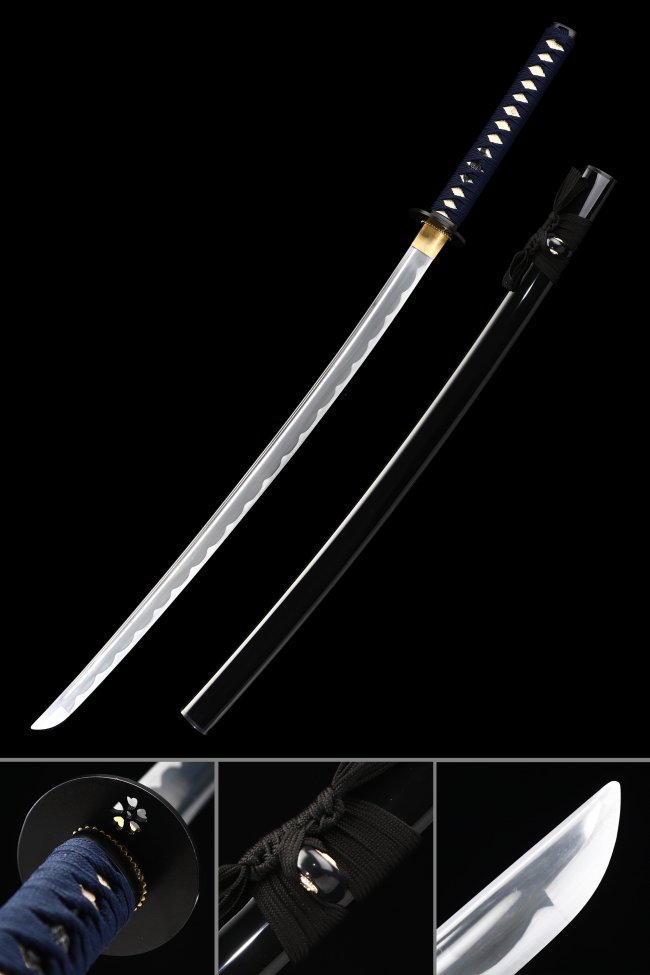
Practice Katana
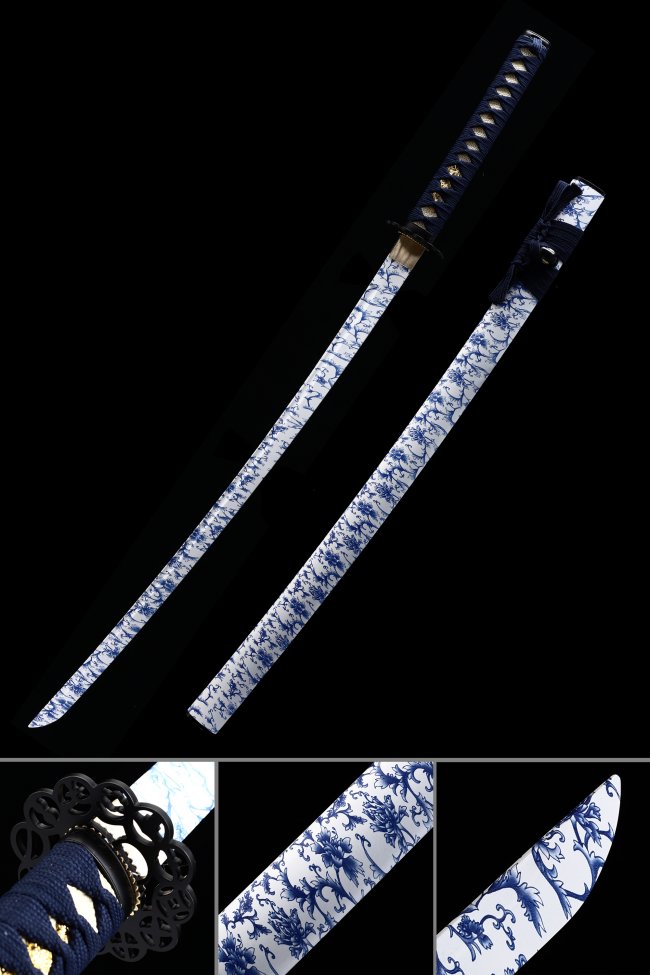
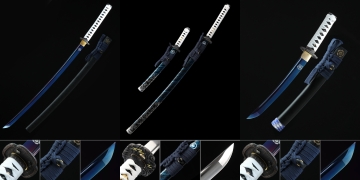
Our practice katana collection covers every stage of Japanese sword training — from aluminum iaito and wooden bokken for beginners learning grip and footwork, to unsharpened carbon steel blades for intermediate kata practice, to fully sharpened training swords for tameshigiri cutting. Each piece is built with correct weight, balance, and full tang construction so the handling translates directly to a live blade. Pick the training tool that matches your current skill level and work your way up.


Related Collections
Frequently Asked Questions
What is the best practice katana for beginners?
For most beginners, the best practice katana is an aluminum alloy iaito — a blunt, full-length metal training sword that replicates the weight, balance, and handling of a real katana without any cutting edge. Starting with an iaito lets you build the fundamental mechanics of Japanese swordsmanship — proper grip, drawing technique, basic cuts, and resheathing — safely and at your own pace. The aluminum blade weighs roughly 20 to 30 percent less than carbon steel, which is a meaningful advantage when you are performing dozens or hundreds of repetitions in a single session, because reduced fatigue means you maintain correct form longer instead of developing sloppy habits as your arms tire. If your eventual goal is tameshigiri cutting, the iaito phase teaches you the body mechanics and blade control you need before introducing a live edge. If your interest is purely iaido kata and forms practice with no intention of ever cutting, an aluminum iaito may be the only practice sword you ever need. The next step up for beginners who want more weight is an unsharpened carbon steel blade, which delivers the full heft of a real samurai sword with a blunted edge. This is a good choice if you already have some training and want to condition your wrists and forearms for the demands of a heavier blade. Avoid starting with a sharpened katana — without established habits for safe handling, a live blade introduces unnecessary risk that slows learning rather than accelerating it.
What is the difference between an iaito and a shinken?
An iaito is a dedicated practice sword with a blunt, non-cutting blade made from aluminum alloy or zinc-aluminum alloy, designed specifically for iaido training. A shinken is a live blade — a fully sharpened carbon steel katana capable of cutting. The distinction is primarily about edge treatment and material, but the practical implications are significant. An iaito blade cannot be sharpened to a functional edge because aluminum and zinc alloys do not harden the way carbon steel does; they are structurally incapable of holding a cutting edge. This is a feature, not a limitation — it means an iaito remains safe through years of training without any possibility of accidental cutting. A shinken, by contrast, is a real weapon that demands constant awareness of where the edge is pointing at all times. In traditional Japanese martial arts, students train with iaito or bokken for months or years before their instructor permits them to handle a shinken, and many lifelong practitioners continue using iaito for daily practice because the risk-to-benefit ratio of training with a live edge simply does not justify it for solo kata. The physical dimensions — blade length, curvature, handle proportions — are intentionally identical between a quality iaito and a shinken so that technique transfers seamlessly. TrueKatana's practice collection includes both metal practice katana in aluminum and fully sharpened carbon steel sharp katana for practitioners ready to make the transition.
Can I practice iaido with an unsharpened steel katana?
Yes, and many intermediate to advanced practitioners specifically prefer an unsharpened steel katana over an aluminum iaito for iaido practice. The reason is weight fidelity. An aluminum iaito is lighter than a real sword, which makes it easier on the body during long sessions but also means the muscle memory you develop is calibrated to a lighter tool. When you eventually pick up a live steel blade, the extra weight changes your timing, your tenouchi (grip squeeze at the point of impact), and the amount of forearm engagement required to control the cut. Training with an unsharpened carbon steel katana eliminates this gap entirely — every draw, every cut, every noto you perform carries the exact weight and inertia of the sharpened sword, so the transition to a live blade involves zero physical adjustment. The trade-off is fatigue: steel is heavier, and you will complete fewer repetitions per session before your form starts to degrade. This is why many practitioners use aluminum for high-volume repetition days and steel for focused quality sessions. The unsharpened edge adds a meaningful safety margin — you can practice in close quarters, demonstrate technique to students, or train at home around family members without the anxiety of a cutting edge. A blunt carbon steel practice katana also holds up well in outdoor environments where an aluminum blade might get scratched or dented from incidental contact with the ground. For iaido specifically, an unsharpened 1060 Japanese sword in full tang construction represents the ideal middle ground between training safety and live-blade realism.
How heavy should a practice katana be?
The ideal weight for a practice katana depends on your training discipline, your physical conditioning, and the specific drill you are performing, but general guidelines exist. A standard katana with a 71-centimeter blade typically weighs between 1,000 and 1,300 grams in carbon steel. Aluminum iaito in the same length run lighter at 700 to 1,000 grams. Wooden bokken sit between 450 and 600 grams for standard sizes. For beginners, starting at the lighter end — an aluminum iaito around 800 to 900 grams — allows you to focus on technique without fatigue distorting your form. As you build wrist and forearm strength over weeks and months of training, you can gradually increase to heavier tools. Intermediate practitioners typically train with something in the 1,000 to 1,150 gram range, which is the weight zone of a standard unsharpened carbon steel practice katana. Advanced cutters and competitive tameshigiri practitioners sometimes prefer heavier blades around 1,200 to 1,300 grams because the additional mass generates more cutting force at impact, producing cleaner cuts through dense targets. The balance point matters as much as total weight — a well-made practice katana with proper distal taper places its balance point 15 to 20 centimeters forward of the tsuba, which allows the blade to lead your cut rather than forcing your arms to push it through. TrueKatana's training katana collection includes weight specifications for each product, making it straightforward to select a practice sword that matches your current conditioning level and training goals.
Is a bokken or a metal practice katana better for training?
They serve different purposes and are not interchangeable. A wooden bokken is designed for partner contact drills — two practitioners striking at each other's weapons to develop timing, distance, reaction speed, and the ability to read an opponent's movements. Kendo, kenjutsu, and aikido all use bokken or shinai for this type of paired practice because wood absorbs impact energy without damaging the weapon or endangering the participants. You cannot safely do contact drills with a metal practice katana, even a blunt one, because metal-on-metal impact damages both blades and transmits dangerous shock through the hands and wrists. A metal practice katana — whether aluminum iaito or unsharpened steel — is a solo training tool. It is designed for practicing draws, cuts against air, kata forms, and eventually cutting against inanimate targets. The metal blade's primary advantage over wood is realism: it matches the weight, balance, rigidity, and dimensions of a real katana far more closely than any bokken can, which means the technique you develop transfers directly to a live blade. A complete training setup includes both. Use the bokken for partner work and the metal practice katana for solo practice. If budget forces you to choose one, prioritize based on your training context: if you attend a dojo with regular partner drills, the bokken is more immediately useful; if you practice solo at home focusing on iaido or tameshigiri preparation, a metal practice katana gives you more training value per session.
What steel is best for a practice katana used for cutting?
For tameshigiri practice, the steel needs to balance three qualities: edge retention (how many cuts before sharpening), toughness (resistance to chipping and bending), and cost (because a training sword takes more abuse than a display piece and may need replacing sooner). 1060 carbon steel hits the sweet spot for most practitioners. At 0.60 percent carbon, it hardens enough to hold a functional cutting edge through a solid practice session of 20 to 40 cuts on rolled tatami, while retaining enough toughness to forgive the occasional off-angle strike that would chip a harder blade. It is the steel grade most recommended by experienced tameshigiri practitioners and martial arts instructors for regular training use. 1045 carbon steel is a strong choice for beginners specifically because it is the toughest option — it flexes rather than chips under stress, which provides a meaningful safety margin while you develop proper cutting mechanics. The trade-off is faster edge dulling, but at this stage you are learning body mechanics, not chasing perfect cuts. 1095 carbon steel and T10 tool steel hold the sharpest edges the longest, making them ideal for advanced cutters who have refined technique and want maximum performance. The downside is that they chip more easily on bad cuts and rust faster, demanding more careful handling and maintenance. Regardless of which grade you choose, make sure the blade is full tang with bamboo mekugi pegs — a cutting sword under load is the worst place for structural shortcuts. TrueKatana's battle ready katana collection spans all four steel grades, letting you match the blade to your current skill level and upgrade as your technique improves.
Can I use a practice katana for tameshigiri?
Only if the practice katana is a sharpened carbon steel blade with full tang construction. Tameshigiri — the art of test cutting against targets like rolled tatami mats, tatami omote, water bottles, or bamboo — requires a live cutting edge to produce clean cuts, and it requires a structurally sound sword to handle the impact forces generated when the blade passes through a resistant medium. An aluminum iaito cannot be used for tameshigiri because aluminum does not hold a cutting edge and would deform on impact with a tatami roll. A wooden bokken will splinter and break against any serious cutting target. An unsharpened carbon steel katana could technically be forced through some targets using brute impact force, but the blunt edge tears rather than cuts, teaching incorrect mechanics and providing zero useful feedback on your technique. For tameshigiri, you need a properly sharpened blade in 1045, 1060, 1095, or T10 carbon steel. The sharpened edge is what makes clean cuts possible — it is also what makes technique errors visible, because a glancing cut or a bad angle shows up immediately as a ragged surface or a failed pass-through. Many practitioners keep separate swords for different training modes: an aluminum iaito for daily kata practice, an unsharpened steel blade for weighted rehearsal, and a sharpened sharp katana reserved exclusively for cutting sessions. This protects your cutting blade's edge from unnecessary wear and keeps each tool in its optimal role.
Customer Reviews
We needed a training sword to practice stances, grips and technique, I was skeptical at first but willing to give it a try. The sword does not disappoint at all. The fit and finish are very nice, it looks beautiful and well made.r
I would buy this over any of the other training weapons I have worked with in the past.
![]() |
Black Aluminum Practice Katana - Unsharpened 41-Inch, Iron Tsuba, Dark Blue Handle, Training Sword |
The sword design is elegant and using it feels so much better for kenjutsu and iaido training. I was disappointed about the saya being plastic instead of wood, but overall I’m happy with what I got.
![]() |
Black Aluminum Practice Katana - Unsharpened 41-Inch, Iron Tsuba, Dark Blue Handle, Training Sword |
Online ordering was simple and user friendly. My sword was packaged with care and S&H was extremely fast with no issues!
![]() |
Black Aluminum Practice Katana - Unsharpened 41-Inch, Iron Tsuba, Dark Blue Handle, Training Sword |
Very good, a little loose from the tsuba but easy to fix. Perfect light training sword.
![]() |
Black Aluminum Practice Katana - Unsharpened 41-Inch, Iron Tsuba, Dark Blue Handle, Training Sword |
I received my aluminum practice sword in 13 days. Very light and and blunt blade makes the swoosh sound. It is about what I expected.
![]() |
Black Aluminum Practice Katana - Unsharpened 41-Inch, Iron Tsuba, Dark Blue Handle, Training Sword |
Just excellent service, communication and delivery!!
![]() |
Black Aluminum Practice Katana - Unsharpened 41-Inch, Iron Tsuba, Dark Blue Handle, Training Sword |
I have absolutely LOVED every actual katana I have purchased from you and I love these unsharpened ones too! They're perfect to keep up practice without damaging my kickboxing stand on the off chance I miss. Cool swords! Thank you!
![]() |
Black Aluminum Practice Katana - Unsharpened 41-Inch, Iron Tsuba, Dark Blue Handle, Training Sword |
Note: Katana arrived in styrofoam without an outer box and had some smudges on the handle that needed to be cleaned. However, it is great quality, arrived in a timely manner and overall, very happy with my purchase. Received many compliments.
![]() |
Black Aluminum Practice Katana - Unsharpened 41-Inch, Iron Tsuba, Dark Blue Handle, Training Sword |