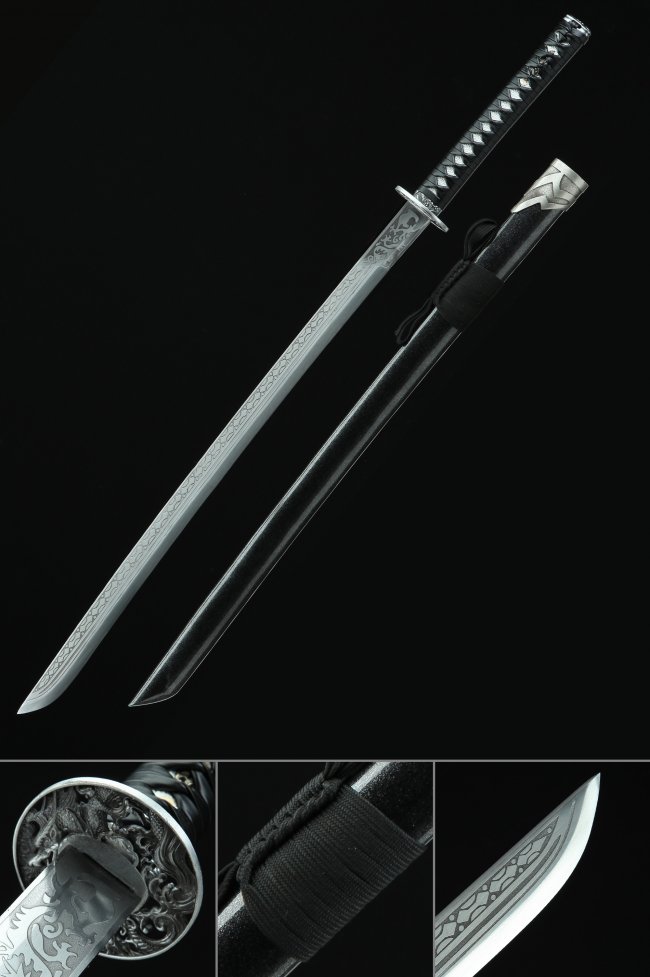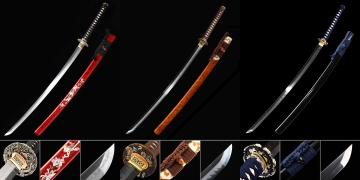
Sakabato Sword

The Sakabato, or reverse-blade sword, stands as one of the most recognizable designs in Japanese sword culture - its edge forged on the spine rather than the traditional cutting side, embodying a deliberate philosophy of restraint and honor. Each piece in this collection is hand-crafted to reflect that legacy, with careful attention to period-accurate fittings, blade geometry, and lacquered saya construction. Explore our Sakabato collection and enjoy free standard shipping on every order, backed by our hassle-free return policy.

Showing 2 Products

Related Collections

Blue Katana Sword100 items


419 Reviews

Damascus Steel Wakizashi25 items


87 Reviews

1045 Sword116 items


3833 Reviews

Shirasaya Katana Swords19 items


130 Reviews

Frequently Asked Questions

What makes a Sakabato different from a standard katana?
A Sakabato reverses the fundamental orientation of the blade: the sharpened edge faces inward toward the spine rather than outward as on a conventional katana. This inverted geometry changes the sword's entire visual profile - the curvature appears to curve away from the edge rather than toward it, which experienced collectors can identify immediately. Beyond aesthetics, this design is steeped in symbolic meaning, representing a deliberate rejection of lethal intent. In terms of construction, a quality collectible Sakabato maintains all the structural hallmarks of a proper katana - correct curvature (sori), a full-tang assembly, a tempered hamon, and period-accurate fittings - while presenting that unique reversed geometry that makes it instantly distinctive on any display rack.
What is the difference between folded steel and manganese steel blades?
Folded steel blades are produced by repeatedly working and layering the billet during forging, which distributes carbon more evenly and creates the distinctive flowing grain pattern visible on the blade's surface. A 1000-layer fold is a common specification, and the resulting hamon tends to be visually complex - making these blades especially rewarding to examine up close under angled light. Manganese steel, by contrast, is an alloy steel with elevated manganese content that provides high toughness and resistance to surface stress. It produces a cleaner, more uniform blade without the layered grain aesthetic, but it handles frequent handling and temperature fluctuations particularly well. Collectors focused on visual drama tend to favor folded steel; those who prioritize durability and longevity of finish often prefer manganese steel.
How should I display a Sakabato in my home collection?
A horizontal katana stand (katana-kake) is the standard display method, and for a Sakabato the convention of placing the edge upward still applies - though the edge here is the spine-facing side. Keeping the blade horizontal reduces long-term stress on the tsuka assembly. Avoid display positions near windows with direct sun exposure, as UV light will fade lacquered saya finishes and can cause the ito wrapping to dry and loosen over time. A low-humidity environment is ideal; if you live in a coastal or high-humidity area, a small silica gel packet placed near - not touching - the saya helps regulate moisture. Displaying the sword with its saya on rather than bare maintains the lacquer and protects the blade surface from airborne particulates.
Is a full-tang construction important for a display Sakabato?
Yes - even for a piece intended purely for display and handling, full-tang construction matters significantly. A full-tang blade extends the steel continuously from the tip all the way through the handle, where it is secured by the mekugi (bamboo or buffalo horn peg) through the tsuka. This creates a single unified structure with no mechanical joint at the habaki or ricasso area that could shift or loosen over years. Rat-tail or partial-tang constructions use a thin threaded rod glued or bolted into the handle - a shortcut that affects both the balance feel when holding the piece and its long-term structural reliability. For a collectible meant to be picked up, examined, and passed between hands at a display, full-tang construction is the correct standard.
Can a Sakabato make a good gift for a Japanese culture enthusiast?
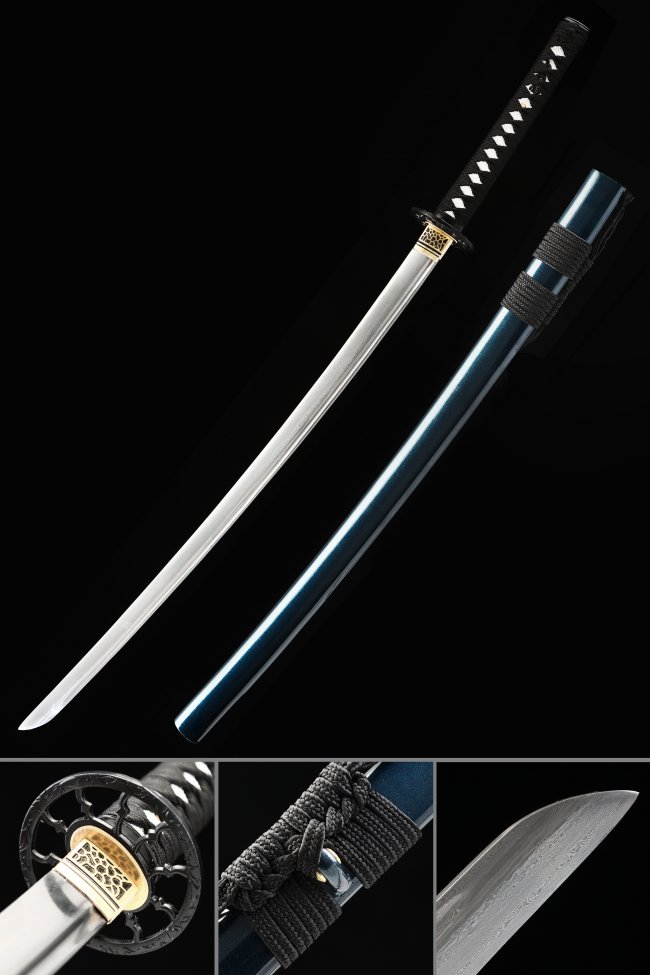
It is one of the more thoughtful options in Japanese sword collectibles, precisely because it carries a narrative that most enthusiasts will already appreciate. The reverse-blade design is recognized across Japanese pop culture, historical fiction, and martial arts circles, giving the recipient an immediate point of connection. For gifting, the blue lacquer saya variant tends to be visually arresting and culturally evocative, while the dragon tsuba model appeals to collectors who favor ornate classical iconography. Pairing the sword with a proper display stand completes the presentation. Unlike purely decorative wall art, a Sakabato invites physical engagement - the weight, balance, and detail of the fittings are all part of the experience - making it a gift with lasting appeal for someone who genuinely values Japanese craftsmanship.

Customer Reviews

Wayne Kienitz Ontario, Canada

2 years ago I became aware of the Phoenix weapon. It is activated every 138 years. In 2040 middle of May the Phoenix Phenomena will cause a pole shift, worldwide quakes, worldwide volcanism, oceans slip basins, coastal tsunamis. Atmospheric convergence will render the reptilians unable to disguise themselves. These swords are for the protection of my family and I. Phoenix also brings the Vapor Canopy atmosphere bringing optimal conditions for growth of all lifeforms. Gigantism will return. Meaning giant animals, Avians, insects and humans. And yes reptiles. Dinosaurs. Giant birds will swoop down and take humans away to be eaten. Get your swords chop those birds down and eat THEM. r
Yours Truly, Adam Wayne Herod

Sakabato Reverse Blade Katana - 1000 Layer Folded Steel Rurouni Kenshin Sword with Blue Lacquer Saya Sakabato Reverse Blade Katana - 1000 Layer Folded Steel Rurouni Kenshin Sword with Blue Lacquer Saya