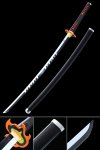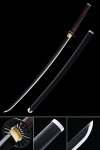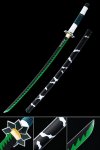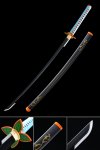
Nichirin Sword

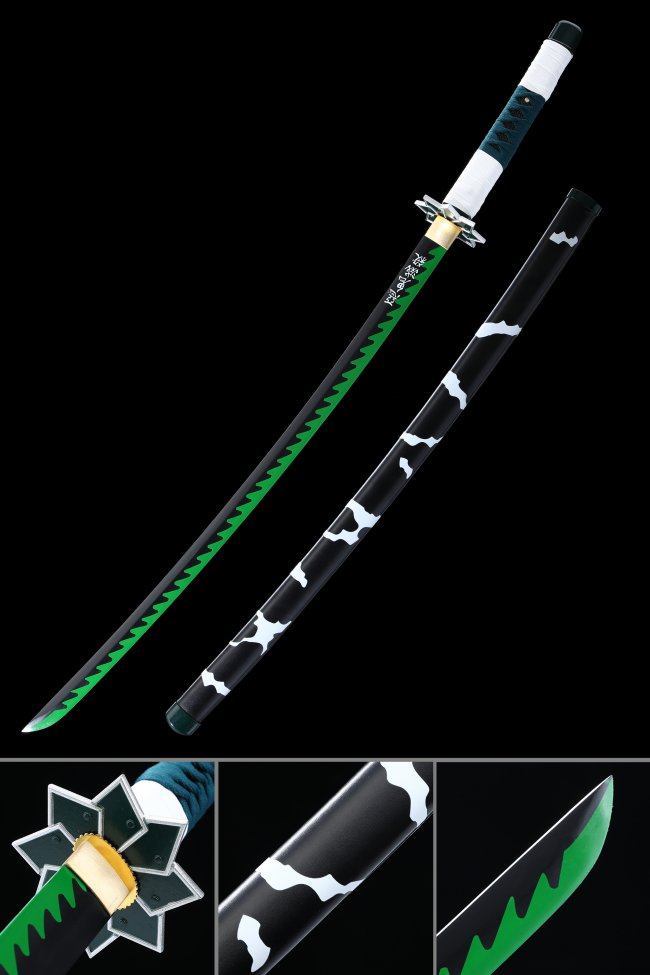
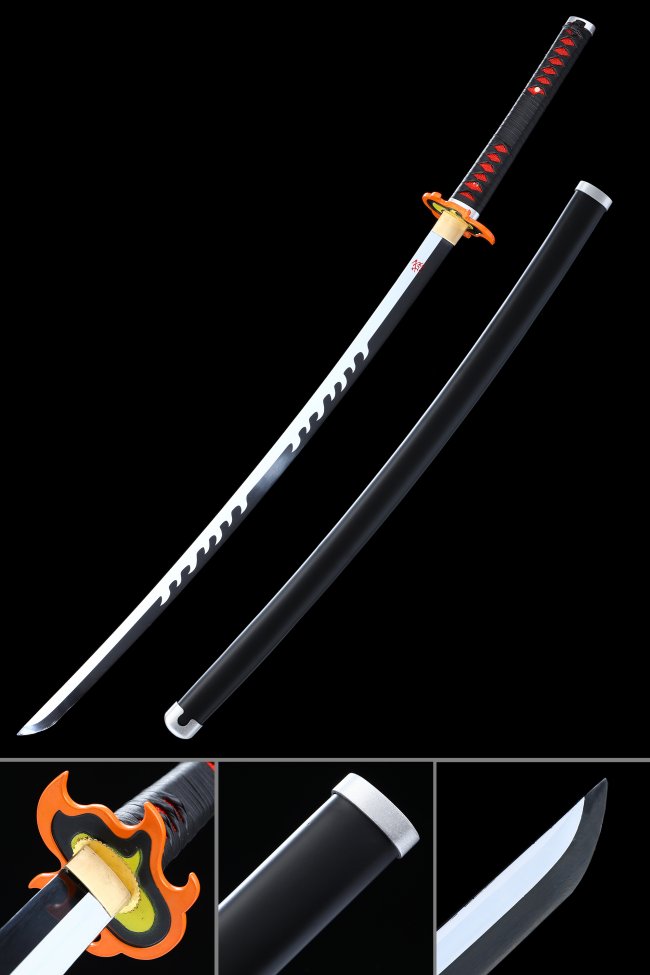
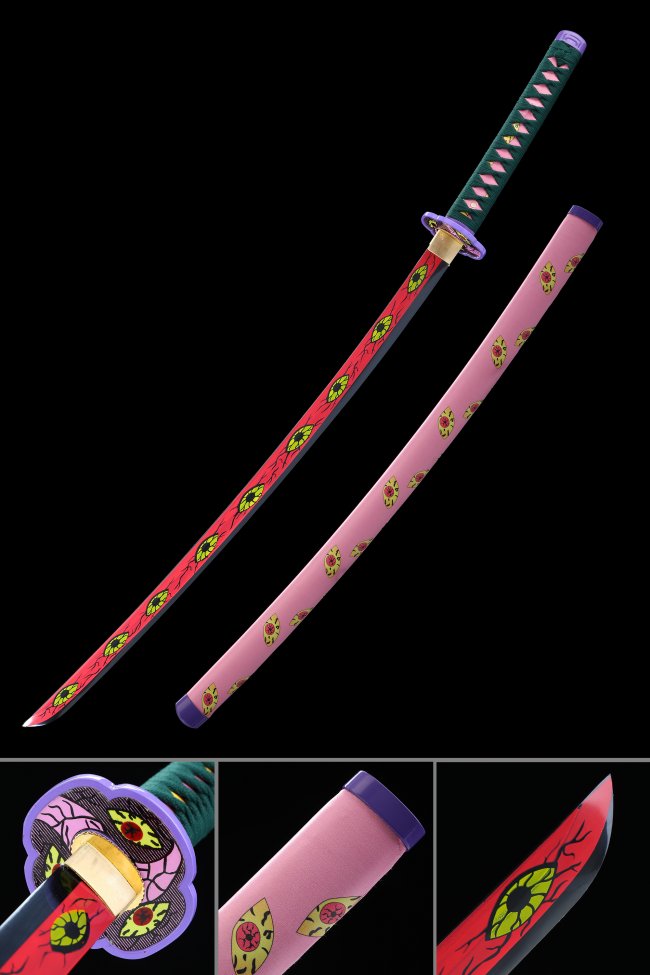
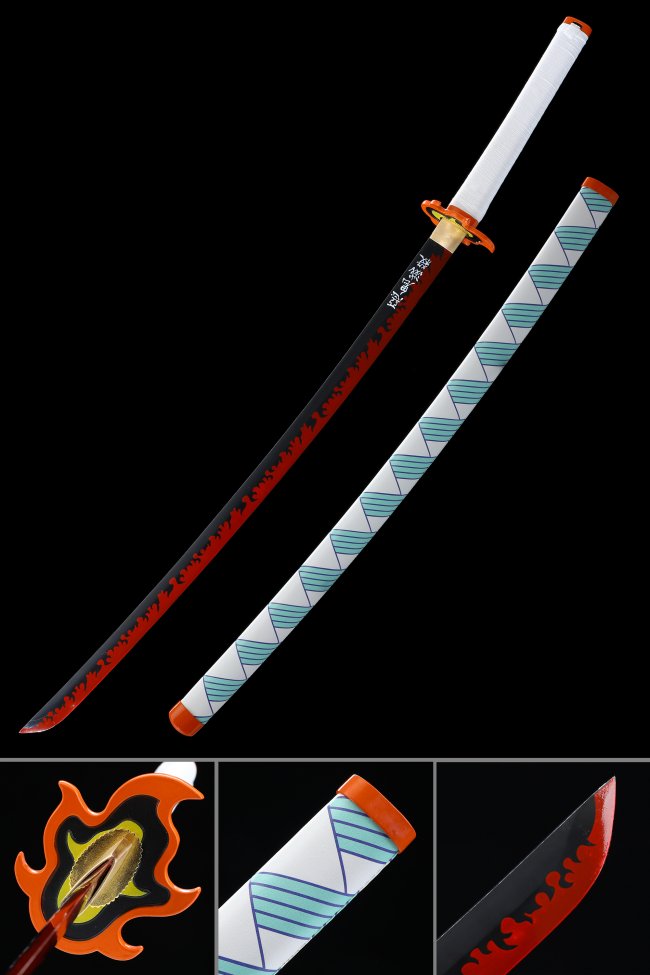
The color-changing katana from Demon Slayer — forged here in real carbon steel. Every canonical Nichirin blade color is in this collection: Tanjiro's jet-black, Zenitsu's thunder yellow, Rengoku's flame red, Giyu's water blue, and the full nine-sword Hashira spectrum. Each sword is hand-forged with a full-tang build, genuine ray-skin grip, tight ito wrapping, and a lacquered scabbard color-matched to the anime. Collect one character or build the entire breathing-style rainbow.

Showing 12 Products

Related Collections

Shirasaya Wakizashi8 items


127 Reviews

Roronoa Zoro Sword10 items


1191 Reviews

Anime Katana41 items


2197 Reviews

Manga Katana35 items


2243 Reviews

Frequently Asked Questions

What is a nichirin sword?


A nichirin sword is the standard-issue weapon of the Demon Slayer Corps in Koyoharu Gotouge's manga and anime Demon Slayer: Kimetsu no Yaiba. In the story, nichirin blades are forged from a special scarlet crimson iron sand and scarlet ore found only on a mountain summit where sunlight never fades. Because the raw material has absorbed centuries of perpetual sunlight, the finished steel carries that solar energy within it — and sunlight is the only force in the Demon Slayer universe that can permanently destroy a demon. An ordinary blade can decapitate a demon, but the creature will regenerate. A nichirin blade severs the head and ends the regeneration cycle permanently.

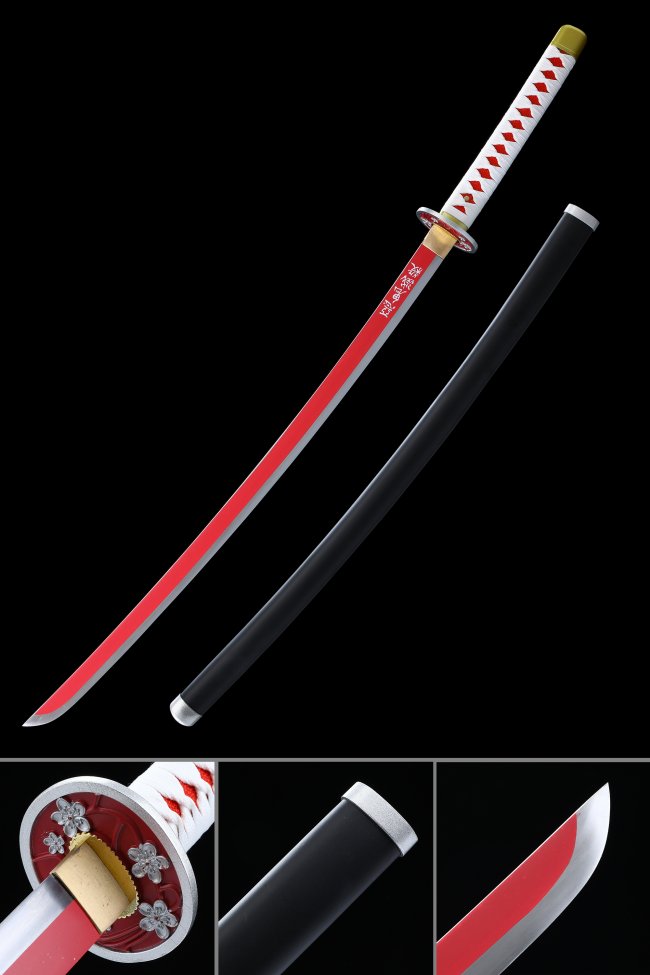
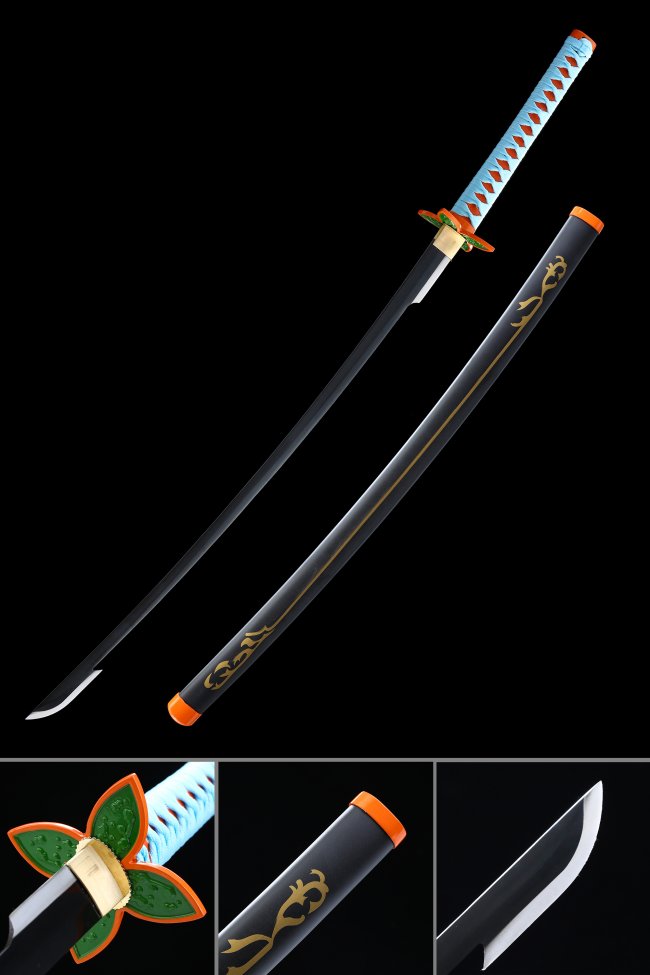
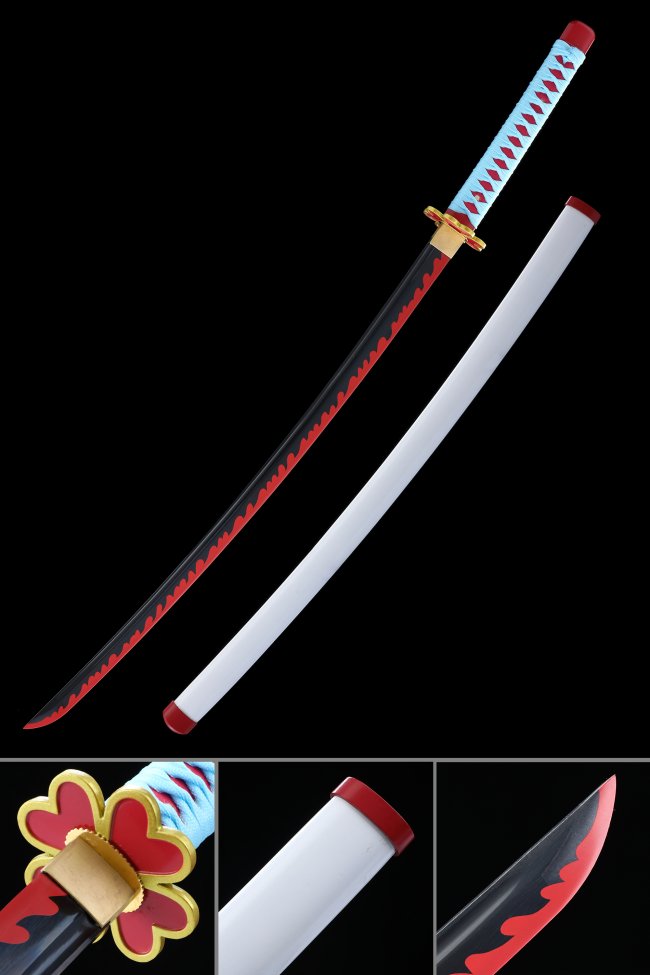
The most famous feature of a nichirin sword is its color change. When a newly graduated Demon Slayer draws the blade for the first time, the uncolored steel shifts to a hue that matches the wielder's innate breathing affinity — black for Sun Breathing, yellow for Thunder, blue for Water, red for Flame, pink for Love, white for Mist, green for Wind, lavender for Insect, and gray for Beast. This mechanic gives every major character in the series a visually distinct weapon, which is why the franchise is exceptionally rewarding for sword collectors: the full Hashira set is essentially a curated rainbow of steel.

For collectors, a "nichirin sword" refers to a physical replica that recreates one of these color-specific blades in real carbon steel. Our nichirin sword collection stocks every canonical color in multiple steel grades — 1045, 1060, 1095, T10 clay-tempered, folded Damascus, and 9260 spring steel — all built on a full-tang nakago with traditional mekugi pegs, genuine ray-skin same', and a hand-lacquered saya matched to the anime reference. Whether you want a single character blade or the complete Corps display, the category covers the full spectrum from Tanjiro's mythical black nichirin to Mitsuri's Love Pillar pink.

A note on naming. Fans sometimes write "nichirin blade," "nichirin katana," or "sun sword" interchangeably — all refer to the same category. Our catalog uses "nichirin sword" consistently because that is the term the overwhelming majority of buyers search for. Regardless of what you call it, the defining features are the same: sun-forged steel, color-coded breathing affinity, and the Corps kanji stamped somewhere on the fittings. If a listing is missing the Corps details, it is a generic colored katana, not a true nichirin replica — and there is a real difference in how the finished sword reads on display and in cosplay photography.

Why does each nichirin change color?


The color-change mechanic is one of the signature worldbuilding details that sets Demon Slayer apart from other shonen series. In Gotouge's mythology, the scarlet ore used to forge nichirin blades is "alive" in a loose metaphysical sense — it has absorbed so much solar energy over centuries that it responds to the spiritual pressure of whoever grips it. When a young slayer first holds the blank blade, their breathing affinity — the fundamental elemental connection that determines which breathing technique they will master — resonates with the ore and triggers the color shift.

The color is permanent once it sets. A Water Breathing user will always carry a blue nichirin; a Flame Breathing user will always carry a red-orange one. The color cannot be changed, reset, or overwritten by a second user, which is why a fallen slayer's blade is returned to swordsmiths rather than redistributed to new recruits. Each new slayer receives a freshly forged blank.

For collectors, this permanence is a gift. Every character you want to represent on the wall is a different color, which means a multi-blade display is inherently varied and visually interesting without extra effort. Tanjiro's black nichirin sits next to Zenitsu's yellow, which sits next to Giyu's blue, which sits next to Rengoku's flame, and so on — each one instantly identifiable at a glance, even from across the room.

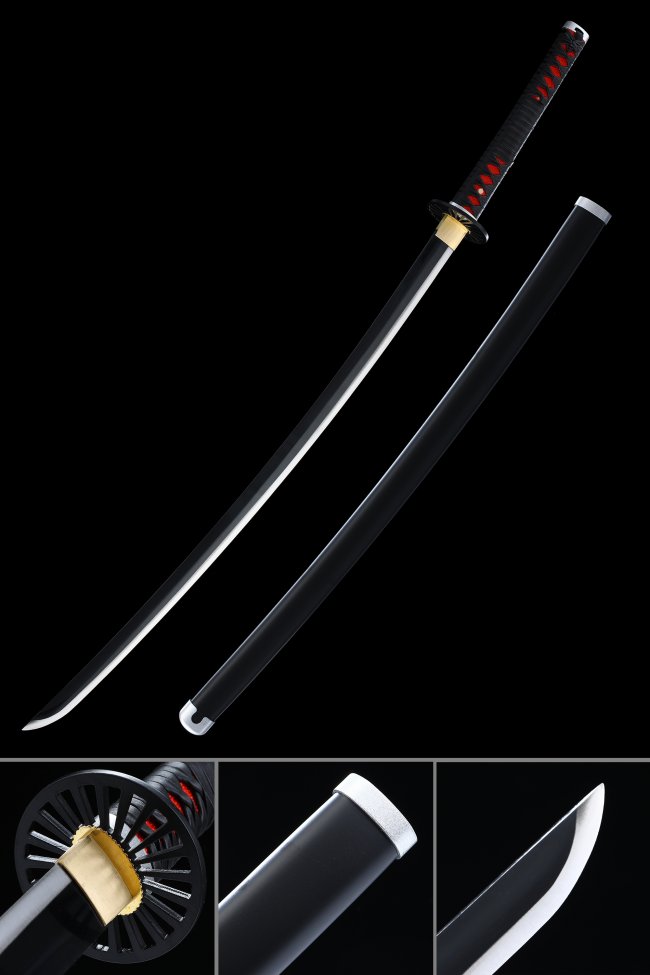
The one exception in the story is Tanjiro's black blade, described as so rare that almost no slayer in recorded history has wielded one. Black is tied to Sun Breathing, the original technique from which all other breathing styles descend, and its rarity adds narrative weight that makes it the centerpiece of any Hashira display. If you buy only one nichirin, Tanjiro's black blade is almost always the right starting point because it carries the most story significance of any sword in the franchise.

One more interesting detail. In the story, black nichirin blades were historically considered bad omens because their wielders died young — nobody had survived long enough with one to demonstrate the true power of Sun Breathing. Tanjiro is the first slayer in generations to break that curse, which means the black blade's reputation evolves during the story itself. For collectors, that narrative arc makes the black nichirin uniquely compelling as a centerpiece — it is not just a weapon but a symbol of inherited legacy and broken fate. That emotional weight is precisely why black is the best-selling nichirin color in our entire catalog.

Which nichirin should I buy first?


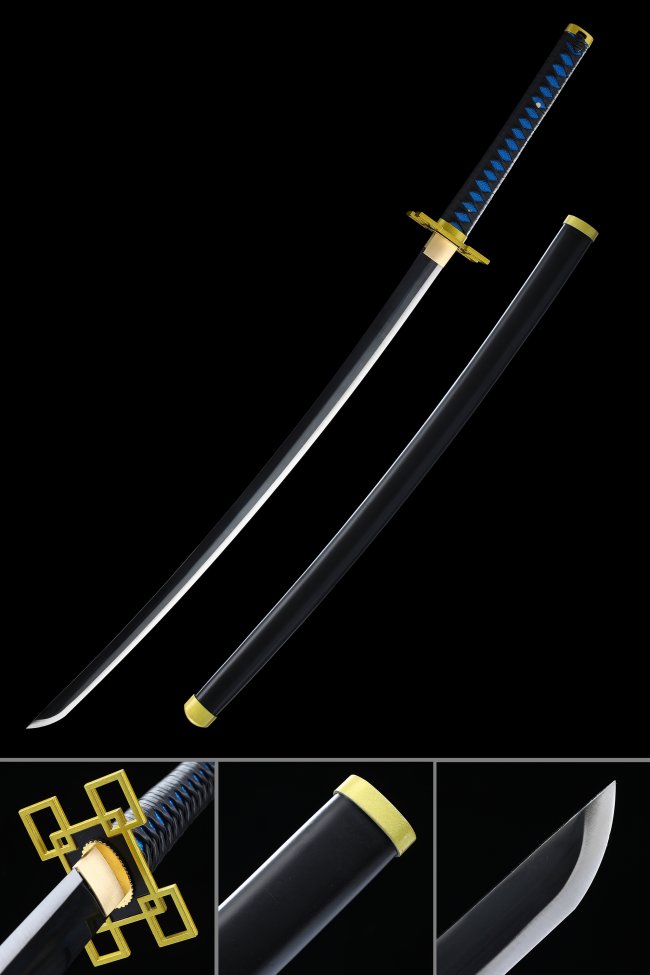
For most first-time Demon Slayer collectors, the right starting blade is Tanjiro's black nichirin — the protagonist's signature sword and the most recognizable blade in the franchise. Three reasons make it the default recommendation. First, any anime fan who sees the jet-black blade with its square tsuba stamped with the Corps "滅" kanji will know exactly what it is, making it the highest-impact single purchase for display or cosplay. Second, the black finish photographs dramatically against almost any wall color. Third, Tanjiro's blade is standard katana proportions — roughly 40 inches overall — making it the easiest nichirin to handle, draw, and maintain for a new owner.

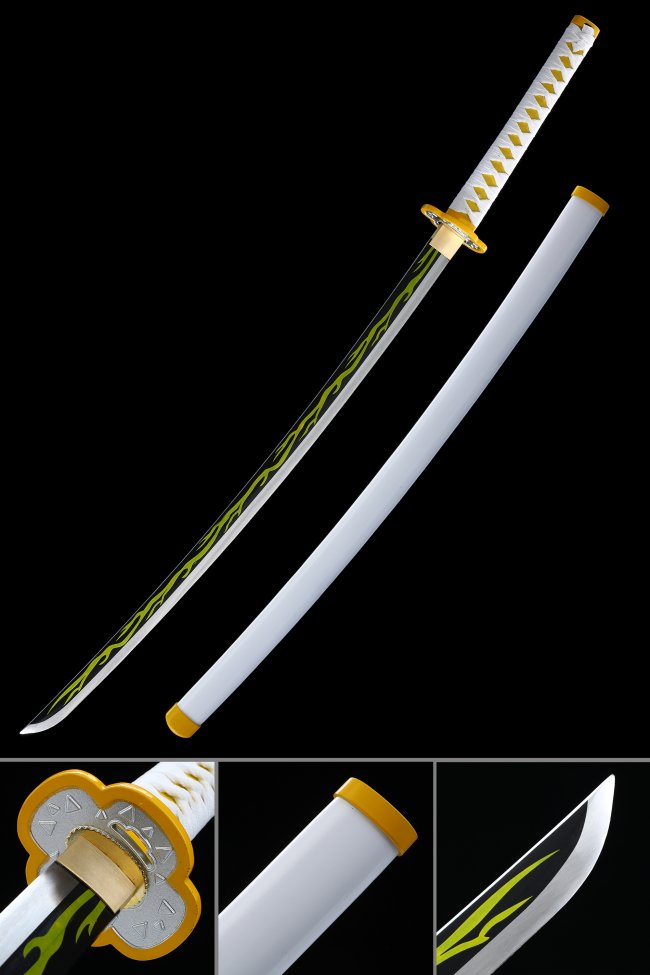
If Tanjiro does not fit your budget at the steel tier you want, the second-best starting blade is Zenitsu's yellow nichirin. Zenitsu's Thunder Breathing blade is the most photographed nichirin in the cosplay world because its brilliant yellow pops on camera, and the character's massive fanbase ensures the sword draws attention at conventions. The yellow finish is one of the most vivid in the lineup, which makes it a natural first splash of color if you plan to expand into a full Hashira display later.

For fans whose favorite character is a Hashira rather than a protagonist, start with Rengoku's flame nichirin. The Mugen Train arc cemented Rengoku as one of the most beloved characters in the franchise, and his red-orange blade is visually unique among the nichirin because it evokes literal fire. It is the most emotionally resonant single-blade purchase for fans who watched the movie first.

Whichever blade you pick, we recommend 1060 steel for a first purchase. It balances cost, handling, and real full-tang construction without the premium price of T10 or folded Damascus. If you later decide to step up, 1060 gives you enough hands-on experience to make an informed decision on the next tier.

A budget planning note. Collectors who know they will eventually own multiple nichirin often ask whether to save up for one premium T10 blade or buy two 1060 blades for the same money. The honest answer is that two complementary blades almost always read better on the wall than a single isolated piece, and 1060 is a perfectly respectable grade for display. Unless you specifically want to do heavy tameshigiri on premium steel, the two-blade approach builds a more satisfying collection faster and gives you an immediate visual pairing on the rack. Start with a Tanjiro-plus-Zenitsu pair and you already have the franchise's most iconic color contrast — black and yellow side by side.

How many nichirin colors exist?


The canonical color list in Demon Slayer includes at least nine confirmed permanent hues tied to specific breathing styles: black (Sun), yellow (Thunder), blue (Water), red-orange (Flame), pink (Love), white or pale blue (Mist), green (Wind), lavender (Insect), and gray (Beast). Some fan interpretations expand this further by counting the crimson-red "Bright Red Nichirin Sword" state that certain blades reach during critical battles — a temporary transformation triggered by extreme force rather than a permanent color — bringing the count to ten or more depending on how you classify temporary versus permanent.

TrueKatana stocks dedicated categories for every major permanent color: black nichirin, blue nichirin, red nichirin, pink nichirin, green nichirin, and white nichirin. Individual character listings cover the remaining hues — Zenitsu's yellow, Inosuke's gray, and Shinobu's lavender are all available under their respective character pages.

For collectors planning a complete display, the practical count is nine permanent colors plus the protagonist trio's three blades (Tanjiro black, Zenitsu yellow, Inosuke gray), for a total of twelve individual swords on a fully-stocked Corps wall. Most fans build this set over several months, starting with the protagonist trio and adding Hashira one at a time. The display is worth the patience — a twelve-blade wall covering the entire Corps color spectrum is one of the most visually striking anime collections you can assemble, because every blade is a different hue and the whole thing reads like a curated art installation rather than a simple sword rack.

The Bright Red Nichirin question. The temporary crimson state that appears during climactic battles (when a blade is gripped with enough force and intent to trigger the color change) is not a separate permanent color — it is an enhancement that any nichirin can achieve under extreme conditions. For display purposes, some collectors buy an extra red-tinted red nichirin to represent this powered-up state alongside the character's normal-color blade, but it is strictly optional and not part of the standard Corps canon count. Whether you count it or not is a fan-debate question, not a collecting requirement.

Other non-standard colors. A few background slayers and historical characters in the manga carry nichirin in colors not tied to a named Hashira breathing style. These edge-case blades rarely appear in collector displays because the characters are not prominent enough to justify a dedicated spot on the wall, but TrueKatana stocks select versions in the broader Kimetsu no Yaiba sword lineup for fans who want completionist coverage beyond the main cast. The core nine-color canon plus the protagonist trio remains the standard any serious Corps display is measured against.

Are nichirin replicas real swords or props?


Every nichirin in the TrueKatana collection is a real, fully forged carbon-steel sword — not a costume prop, not a painted aluminum blank, and not a cast zinc wallhanger. The blades are made from the same 1045, 1060, 1095, T10, 9260, and folded Damascus steel grades we use on our traditional Japanese katana lineup, heat-treated and tempered to the same hardness specifications, and built on a full-tang nakago that extends the entire length of the handle and is pinned with bamboo mekugi pegs.

The difference between a TrueKatana nichirin and a generic "Demon Slayer prop" is inside the tsuka. Our blades have a full-length nakago under genuine ray-skin same' and tight ito wrap. Budget props have either a threaded-rod tang that wobbles after a few swings, a short rat-tail tang that can snap under lateral stress, or no tang at all — just a glued-on handle over a hollow tube. Ours are swords. Theirs are decorations shaped like swords.

That said, a nichirin is a replica — it recreates a fictional design rather than copying a historical Japanese daito. Each character's blade has specific non-traditional features (Tanjiro's square tsuba, Shinobu's rapier-style thrust point, Mitsuri'sflexible whip profile) that make it unique. What makes ours functional rather than decorative is the material and construction hidden under the anime-accurate fittings: real steel, real tang, real edge geometry, real saya with proper koiguchi fit.

Even if you buy a nichirin purely for display and never intend to swing it, the weight, balance, and metallic ring of a real forged blade make it a completely different ownership experience from a hollow prop. It feels like a sword when you lift it, sounds like a sword when you draw it, and sits on the wall with a presence that plastic and zinc alloy cannot replicate. That is why serious Demon Slayer sword collectors insist on forged steel — once you have held a real nichirin, a prop feels like a toy.

One quick test to tell them apart without opening the box. Ask the seller for the blade weight. A real full-tang 1060 katana weighs roughly 1.0–1.2 kg bare blade, plus another 200–300 grams for the saya. A prop or hollow alloy replica rarely exceeds 600 grams total. If the listing does not state the weight, that is itself a red flag — reputable forged-steel sellers always publish exact specs because they know collectors check.

Can I cut with a nichirin replica?


Yes — every nichirin in the collection is a real full-tang carbon-steel blade capable of cutting test targets when you choose the right steel and develop proper technique. The key variable is the grade. 1045 is designed for display; do not attempt tameshigiri with it. 1060 handles soft targets — water bottles, pool noodles, rolled newspaper — without issue. 1095 and T10 cut single and stacked tatami omote cleanly when wielded with correct edge alignment. 9260 spring steel survives even bad cuts without chipping, making it the most forgiving cutting grade.

Before you swing any nichirin at a target, spend time practicing the draw and the full swing path in an empty room with at least ten feet of clearance on all sides. Start with no target at all — just groove the muscle memory for a clean, relaxed downward cut with firm hips and loose shoulders. Only when the motion feels repeatable should you set up a water bottle on a stand and attempt a clean bisection.

Graduate from bottles to rolled newspaper, then to single tatami omote (soaked and mounted on a dedicated stand), and eventually to stacked double or triple tatami if your form supports it. Never skip steps — clean technique at each level is the foundation for the next. Cutting bamboo is possible at the top steel tiers but demands hundreds of clean tatami cuts behind you first.

Between sessions, wipe the blade with a microfiber cloth and apply a light coat of choji oil. The colored nichirin finish provides a small amount of surface protection, but the underlying carbon steel will still rust if you leave moisture or fingerprints for weeks. Store the sword horizontally on a katana wall mount in a climate-controlled room below 60% humidity.

One safety point that applies to every nichirin color: the pigmented finish can make it harder to see exactly where the cutting edge is, especially in low light or with dark-colored blades like Tanjiro's black. Keep all cutting practice in daylight hours until you know the blade's geometry instinctively by feel rather than sight.

A note on cutting form with colored blades. Many beginners try to swing as hard as they can, which is exactly wrong. A clean cut depends on edge alignment, not raw power. Slow the swing down, keep your hips stable and your shoulders relaxed, and let the weight of the blade do the cutting work. Speed comes later; alignment comes first. If you are tearing targets instead of slicing them, the problem is form, not the sword.

How do I build a full Corps display?


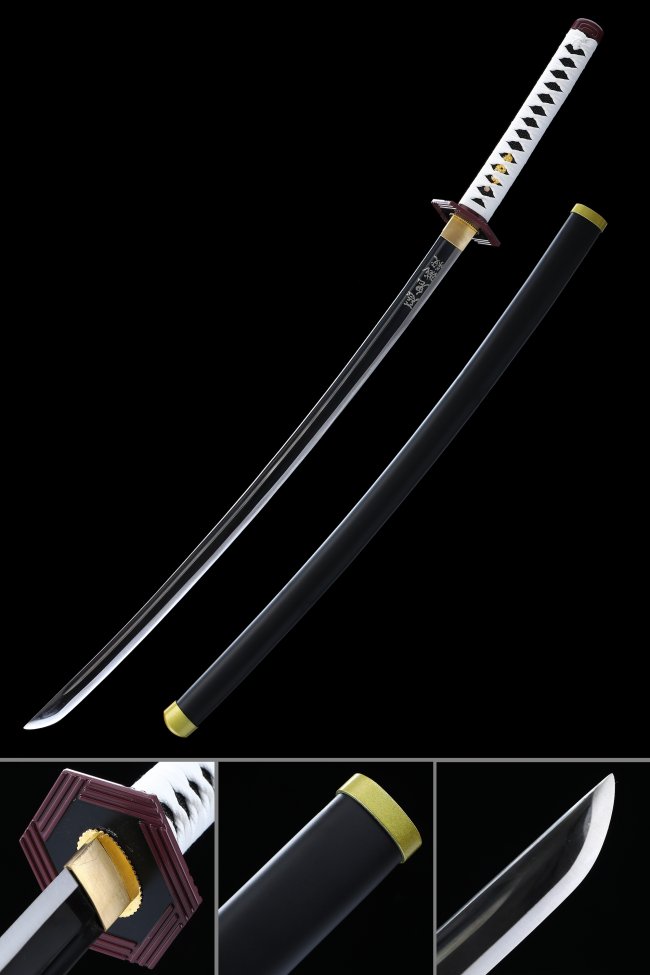
Building the complete Demon Slayer Corps wall is the most ambitious — and most visually rewarding — project in anime sword collecting. The full set includes three protagonist blades (Tanjiro's black, Zenitsu's yellow, Inosuke's gray) plus nine Hashira blades (Giyu's blue, Rengoku's flame, Mitsuri's pink, Muichiro's white, Shinobu's lavender, Sanemi'sgreen, Tengen's gold, Obanai's blue-gray, and Gyomei's gray), for a total of twelve individual swords. Some collectors add Nezuko's pink blade or secondary character weapons to round out the display even further.

Build in phases. Phase one: the protagonist trio. These three anchor the display emotionally and give you a functional starter wall that already looks impressive. Phase two: the first four Hashira — Rengoku, Giyu, Mitsuri, Muichiro — the most screen-visible pillars that add real color variety. Phase three: the remaining Hashira — Shinobu, Sanemi, and the rest.

Rack planning matters. A single multi-tier hardwood rack holds five to six blades comfortably. For twelve blades, plan two vertical columns of six, or three rows of four, depending on wall dimensions. Leave at least 30 cm of vertical space between stacked mounts and 15 cm of side clearance at each end. Lay the full layout on the floor with painter's tape before drilling — moving screw holes after the fact is always messier than measuring twice.

Budget wisely. Most experienced collectors buy T10 or folded Damascus for the protagonist trio and 1060 for the supporting Hashira. The three centerpiece blades are premium while the supporting wall keeps costs sensible. Over time, upgrade individual Hashira to T10 whenever budget allows, swapping the 1060 blade into a secondary display or gifting it to a friend starting their own collection.

Lighting is the final touch. A row of warm 2700–3000 K LED puck lights mounted above the display pulls each colored nichirin finish out of shadow and makes the differences between hues visible from across the room. Avoid cool-white overhead fluorescents, which wash all colors toward gray and kill the vibrancy of yellows and reds. Angling the light roughly 30 degrees above horizontal rakes across the blade surface and highlights hamon lines on T10 blades even under the pigmented coat. Dark charcoal or deep navy wall paint behind the rack provides the cleanest backdrop for colored steel, and the whole display can be built out gradually over months without any single purchase feeling like the "final" investment. Every new blade you hang changes the visual rhythm of the wall, and that evolving quality is half the fun of building the set.

Customer Reviews

Micheal Pfamatter Pennsylvania, United States

I had to order a gift last minute (12/16) and was super nervous but Truekatana pulled through, was true to their advertising and delivered as promised. My gift arrived on 12/23 and it is exactly what I expected/ordered, perfect. Thank you! My only critique, to show fairness is that I didn't receive a shipping confirmation (adding to the super nervousness). Considering the whole experience I will still give 5 stars and order from them in the future.

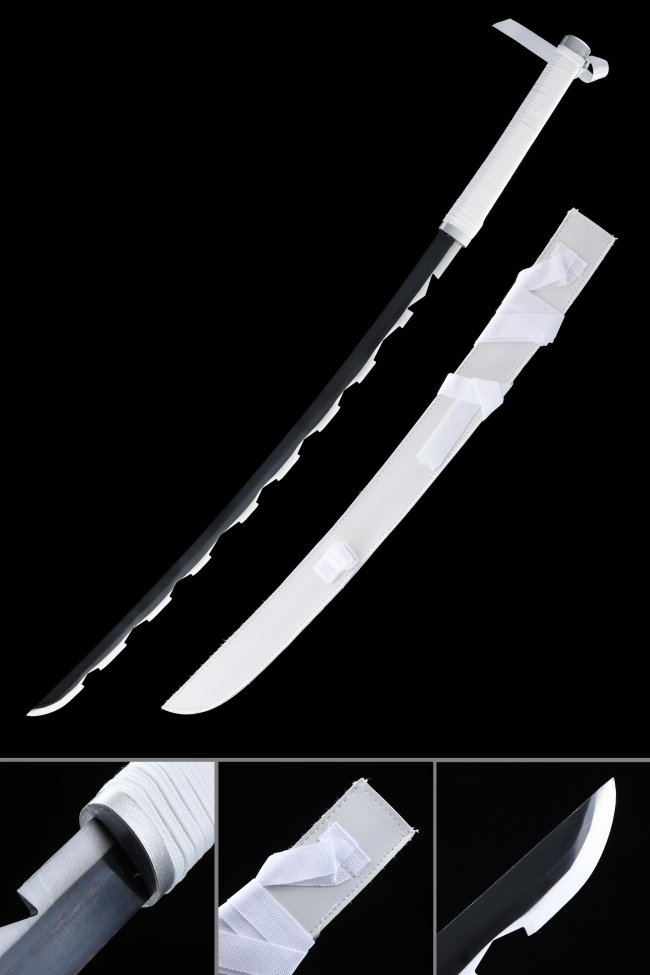
Inosuke Sword - Kimetsu No Yaiba Beast Hashira Nichirin Replica, 1045 Carbon Steel, Jagged Edge Inosuke Sword - Kimetsu No Yaiba Beast Hashira Nichirin Replica, 1045 Carbon Steel, Jagged Edge
Cart 0 Items

Your cart is empty