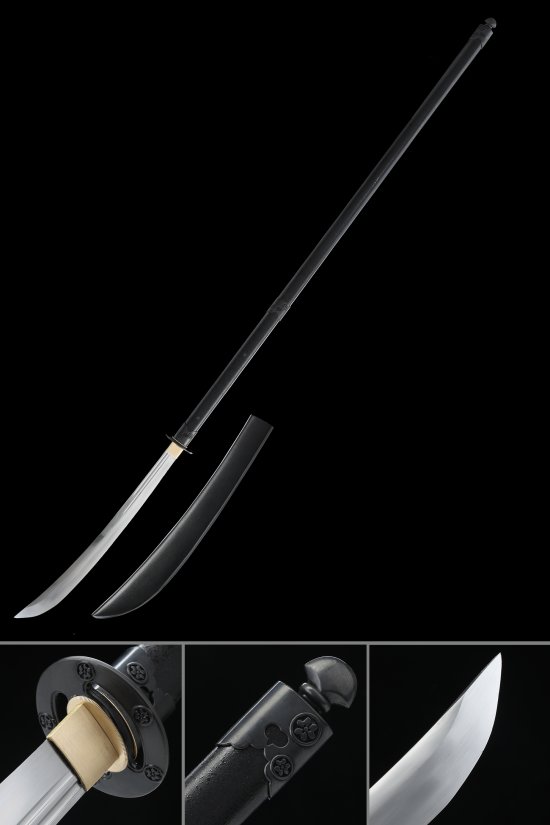
What makes a naginata different from a katana or other Japanese swords?
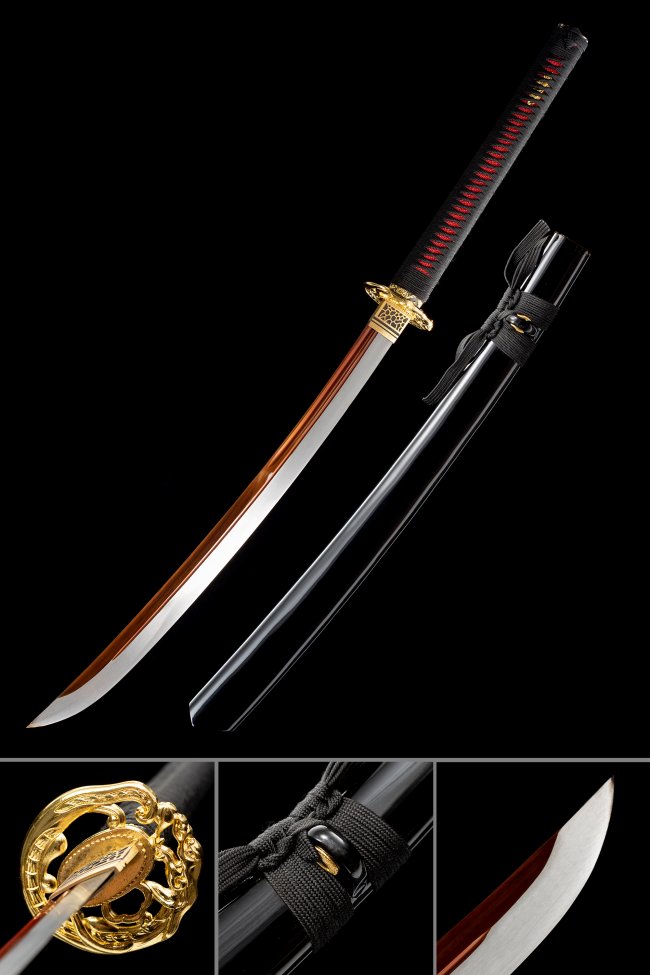
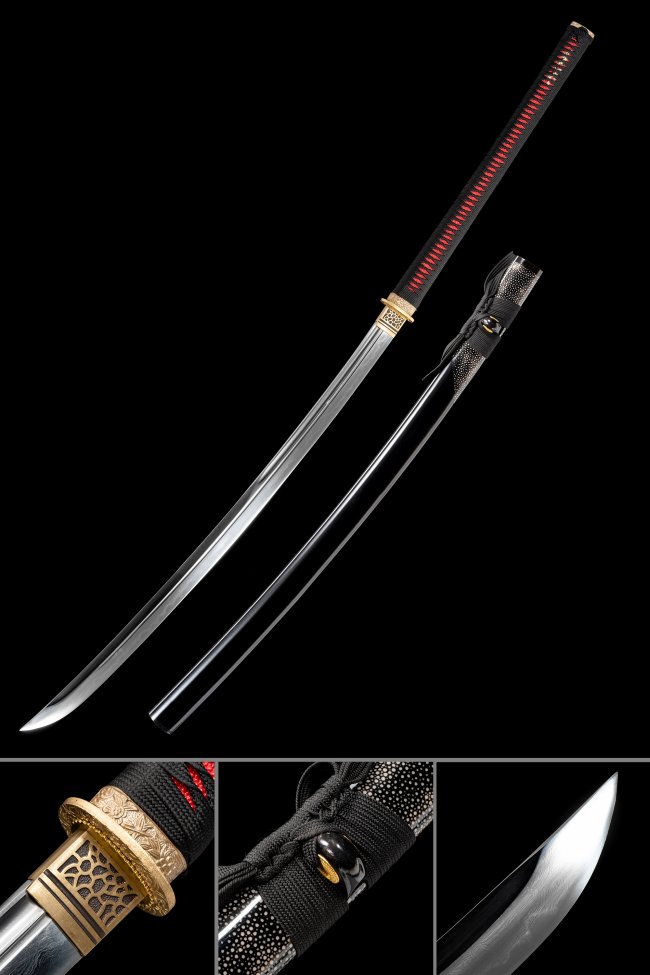
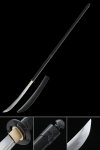
A naginata is a polearm rather than a hand-held sword. Its curved blade — typically 30 to 60 centimeters long — is mounted on an extended wooden shaft that brings the overall length well past one meter. This design originated to give foot soldiers and temple guardians superior reach. Structurally, the blade geometry resembles a katana's curve but is proportioned differently, with a wider base tapering toward the tip for sweeping arcs. For collectors, the naginata offers a display profile that no katana can replicate: the long shaft, prominent tsuba area, and dramatic blade create an imposing vertical or horizontal presentation that commands wall space in a way shorter swords simply cannot.
Why do some black naginata blades show visible hamon lines?
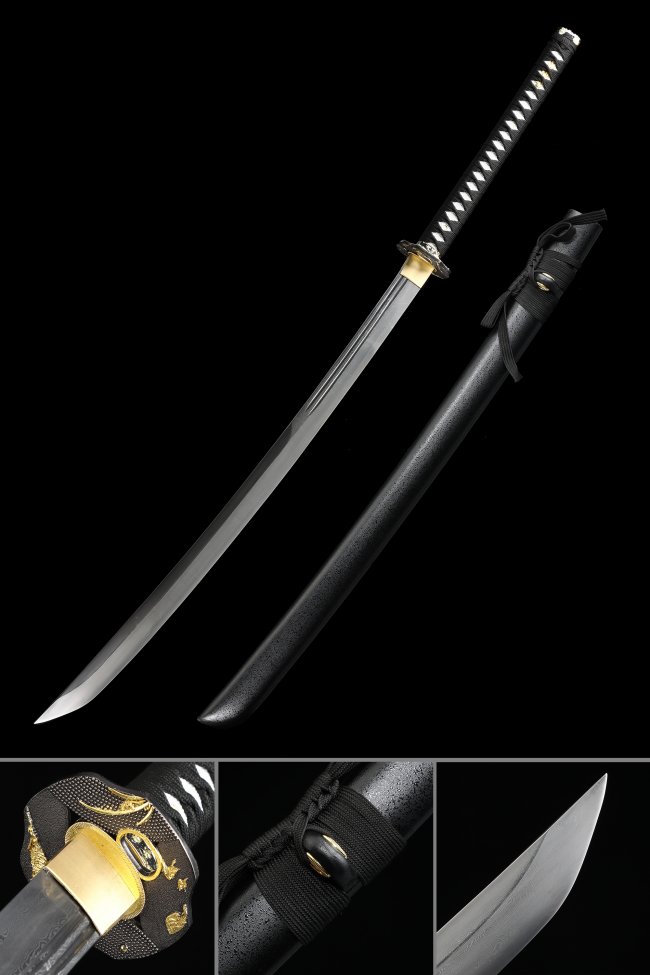
Visible hamon lines appear on blades that have been clay tempered, a centuries-old technique where a clay mixture is applied unevenly across the blade before quenching. The thinner clay layer along the edge cools faster, producing harder martensite steel, while the thicker clay on the spine cools slowly, leaving softer pearlite. The boundary between these two zones creates the hamon — a wavy, cloud-like line unique to each blade. On black-finished naginata, the hamon becomes especially dramatic because the contrast between the dark surface treatment and the brighter temper line draws the eye. It is both a functional indicator of differential hardening and one of the most prized visual details a collector can look for.
How should I store and maintain a black naginata for display?
Start by applying a thin layer of choji oil or refined mineral oil along the blade every four to six weeks, using a soft cotton cloth. This prevents surface oxidation and keeps the black finish lustrous. Store or mount the naginata in a low-humidity environment — ideally below 55 percent relative humidity — away from direct sunlight, which can fade lacquer over time. If your display room fluctuates in moisture, a small silica gel packet inside the saya helps absorb excess dampness. Handle the blade only with clean, dry hands or cotton gloves, since fingerprint oils are mildly corrosive to carbon steel. For the lacquered saya and shaft, an occasional wipe with a barely damp microfiber cloth keeps dust at bay without damaging the finish.
What is Damascus pattern steel and how does it affect a naginata's appearance?
Damascus pattern steel is created by forge-welding multiple layers of different steel alloys together, then folding and hammering the billet repeatedly. The result is a blade with visible flowing lines, swirls, or ladder patterns embedded in the metal itself — not etched or printed on the surface. Each Damascus naginata blade is essentially one-of-a-kind because the folding process produces unrepeatable grain structures. When paired with a black finish or acid etch, the contrasting steel layers become even more pronounced, giving the blade a textured, almost topographic look. Beyond aesthetics, the layered construction distributes stress across many micro-boundaries within the steel, contributing to a resilient and visually captivating collectible.
Is a full-tang naginata better for display than a partial-tang version?
Full-tang construction means the steel runs uninterrupted from the blade tip through the entire handle, secured by meki pins. For display purposes, this matters because the blade sits firmly in the shaft without any wobble or looseness over time — a common issue with partial-tang mounts as adhesive or friction fits gradually weaken. Full tang also gives the naginata a balanced, authentic weight distribution that you can feel immediately when handling the piece, and it reflects the construction standard historically used for naginata intended for serious use. Collectors generally regard full-tang assembly as a baseline quality indicator, so it adds both structural confidence and resale value to any display-grade polearm.