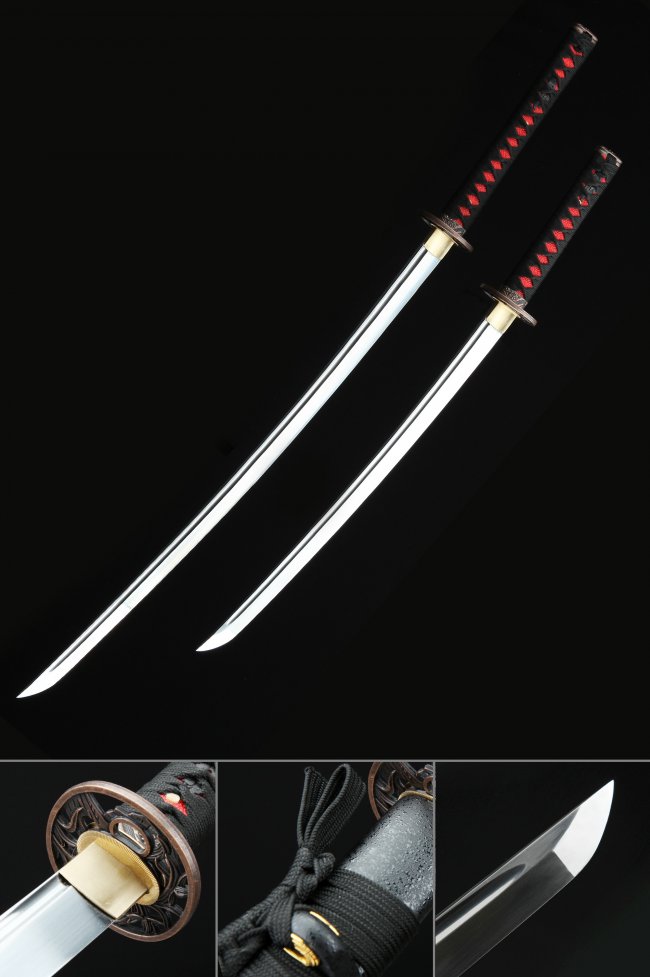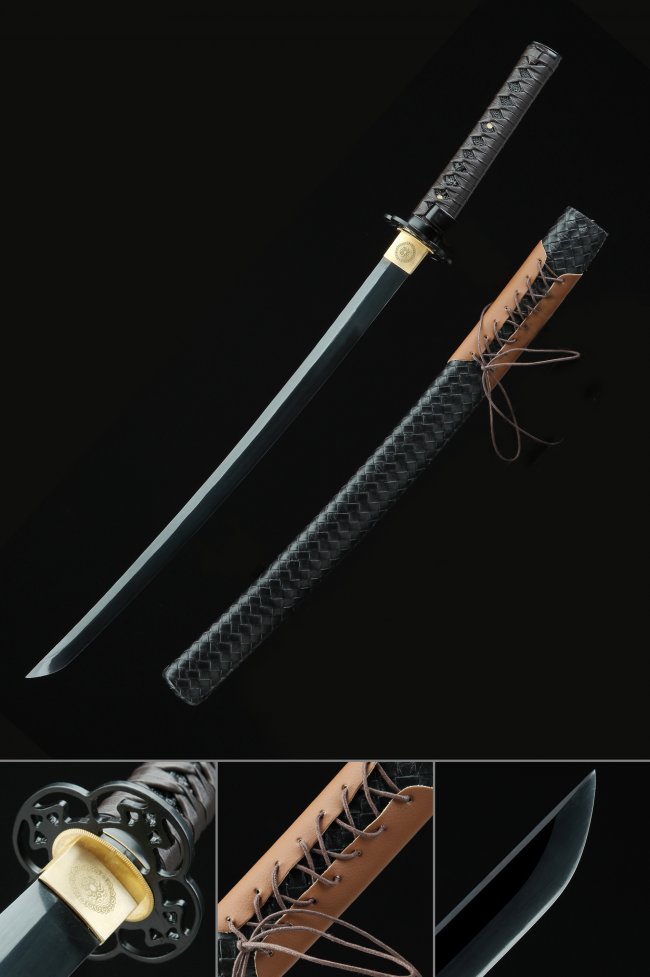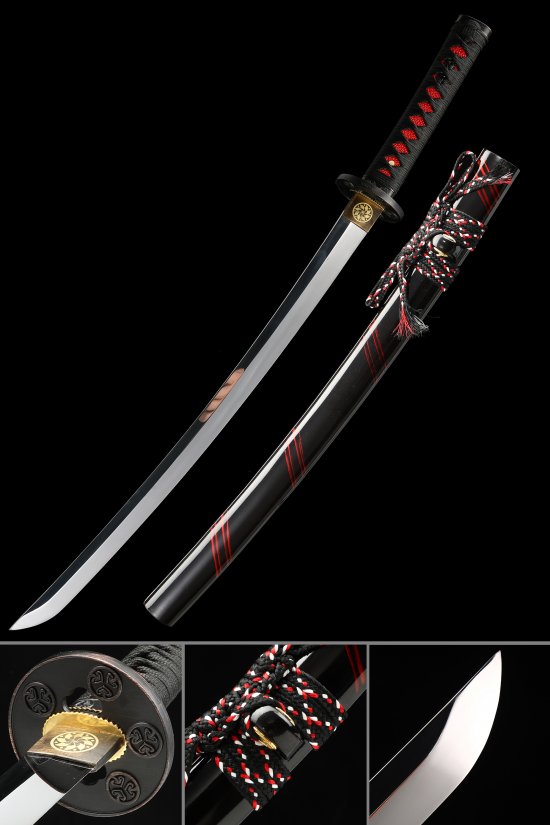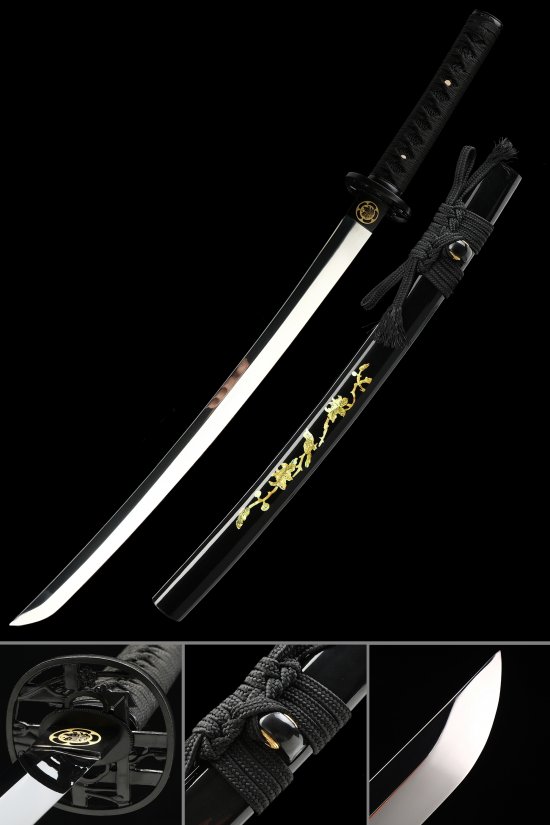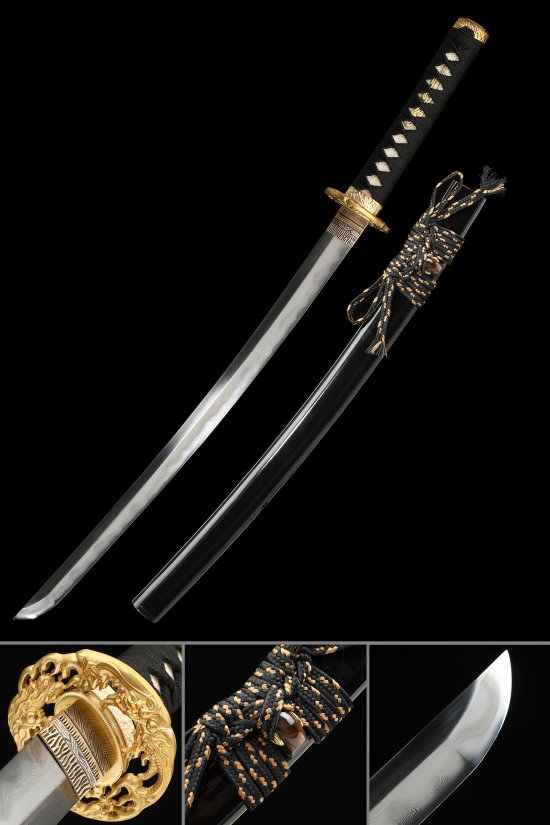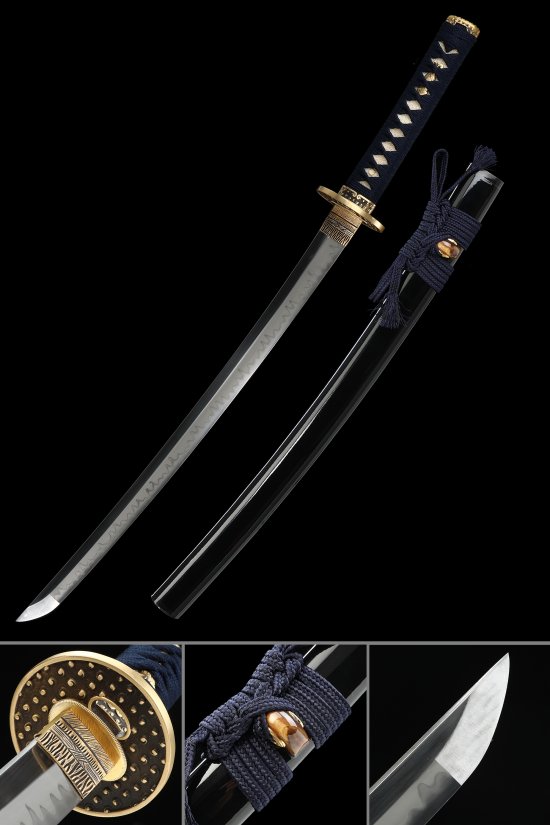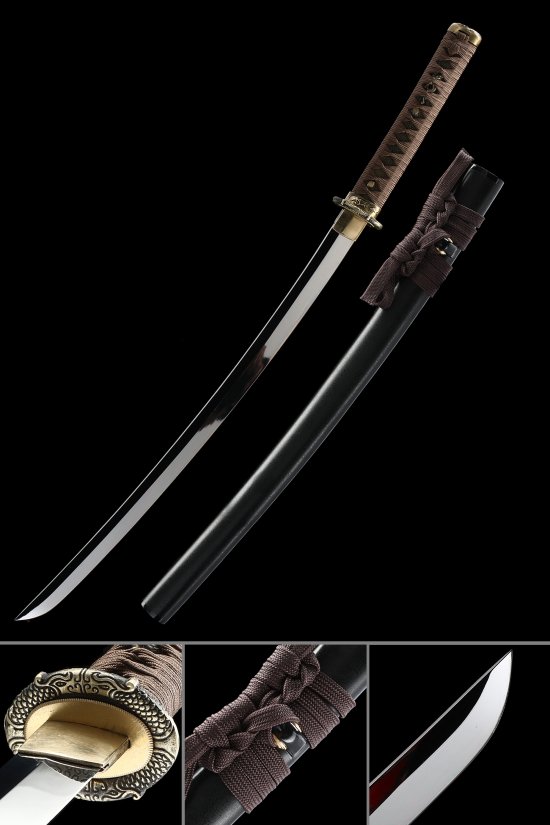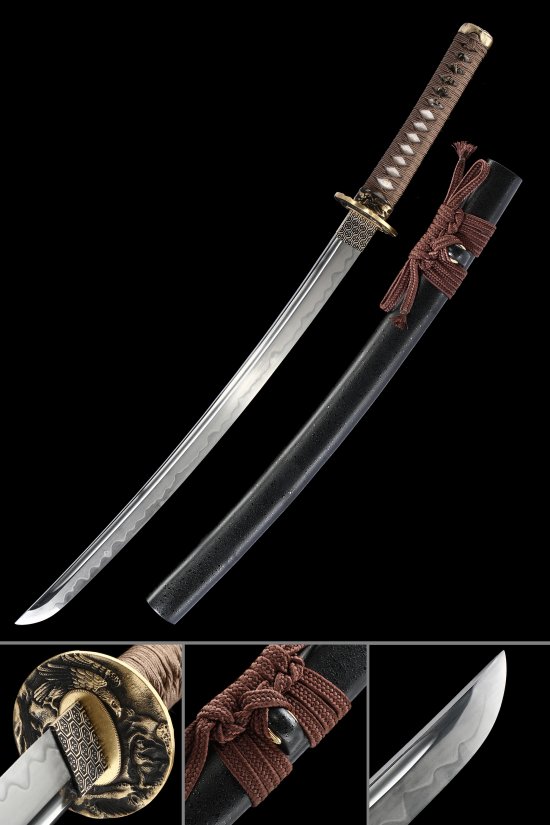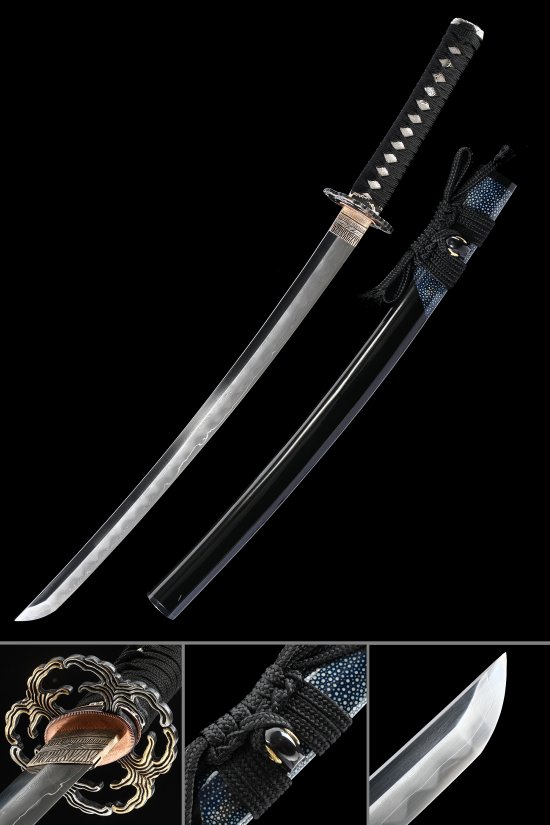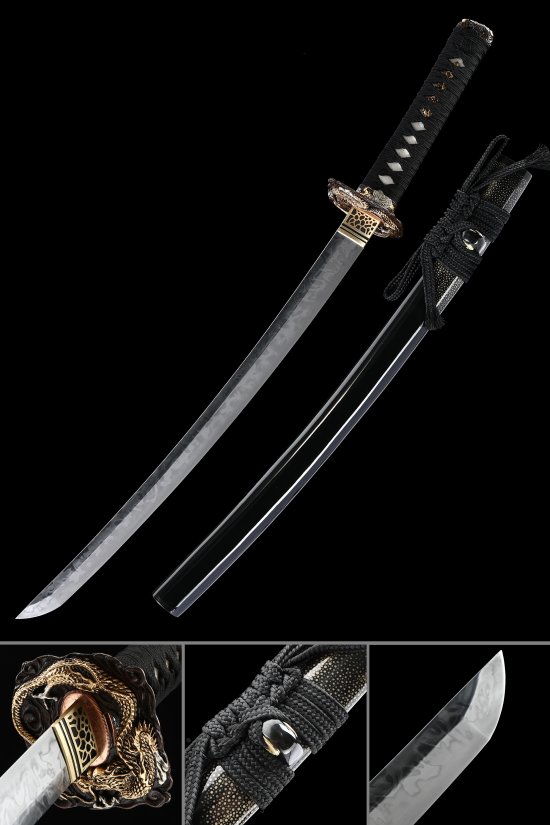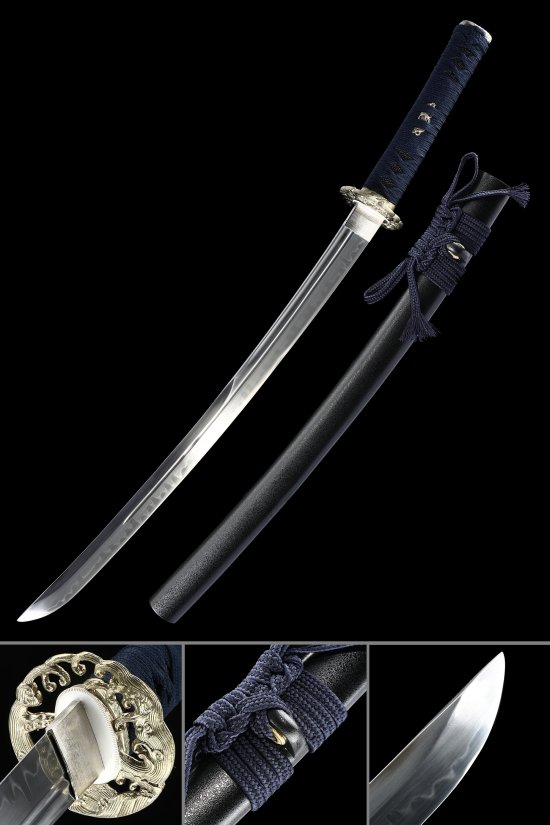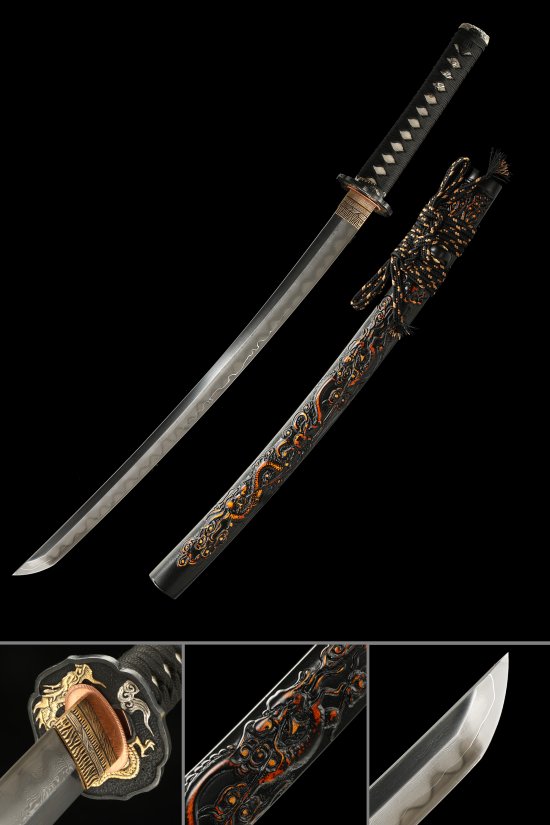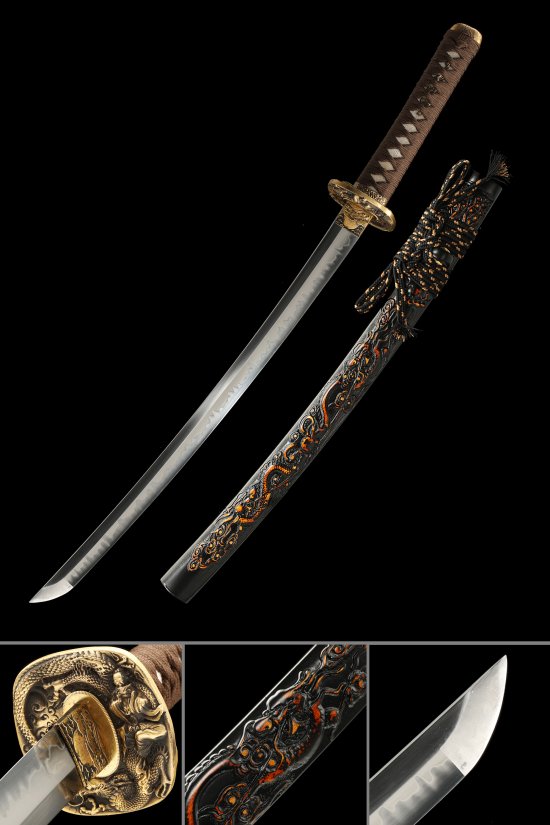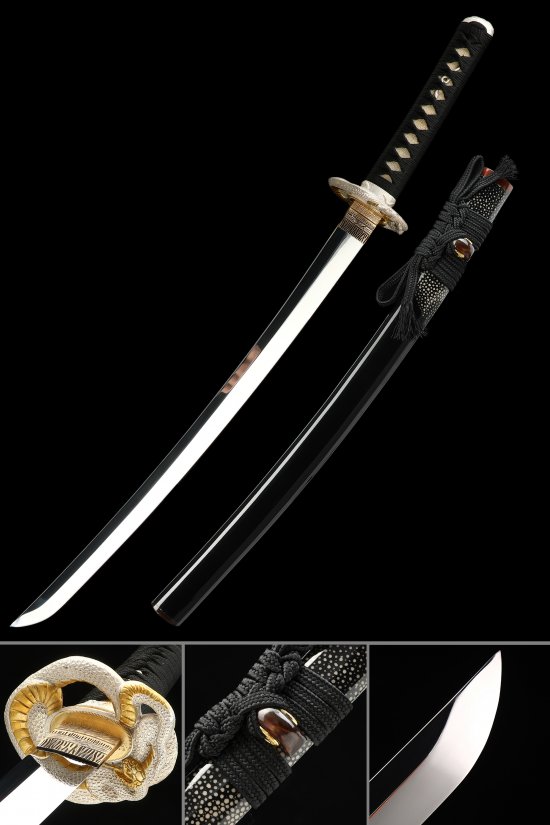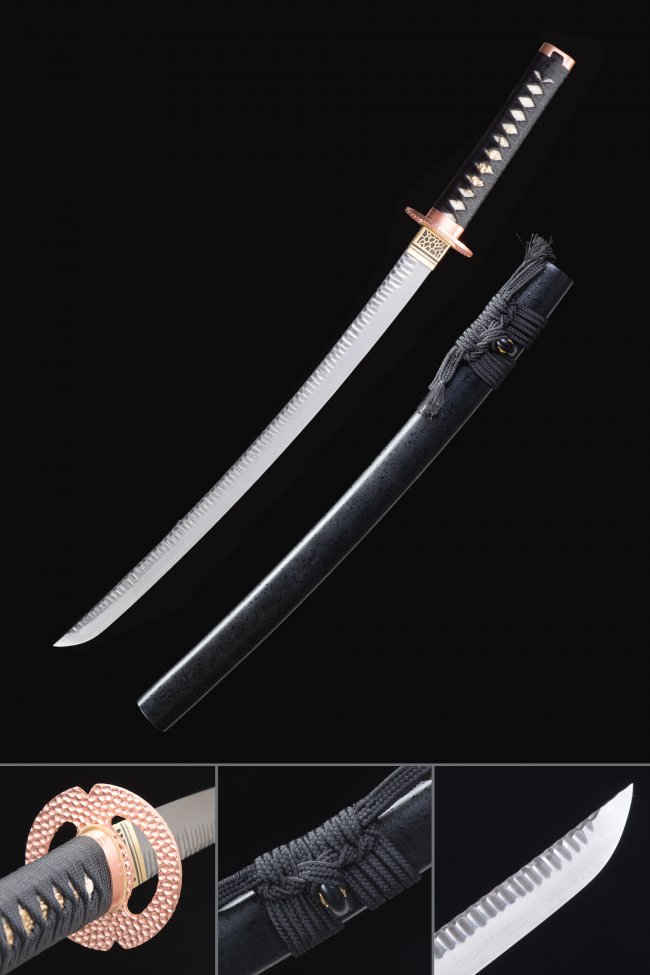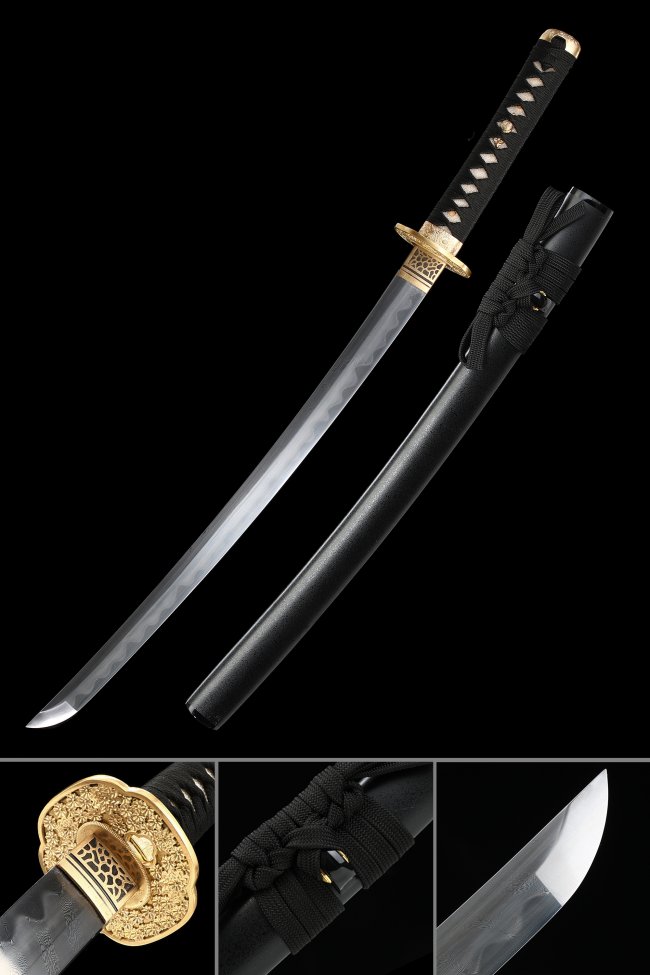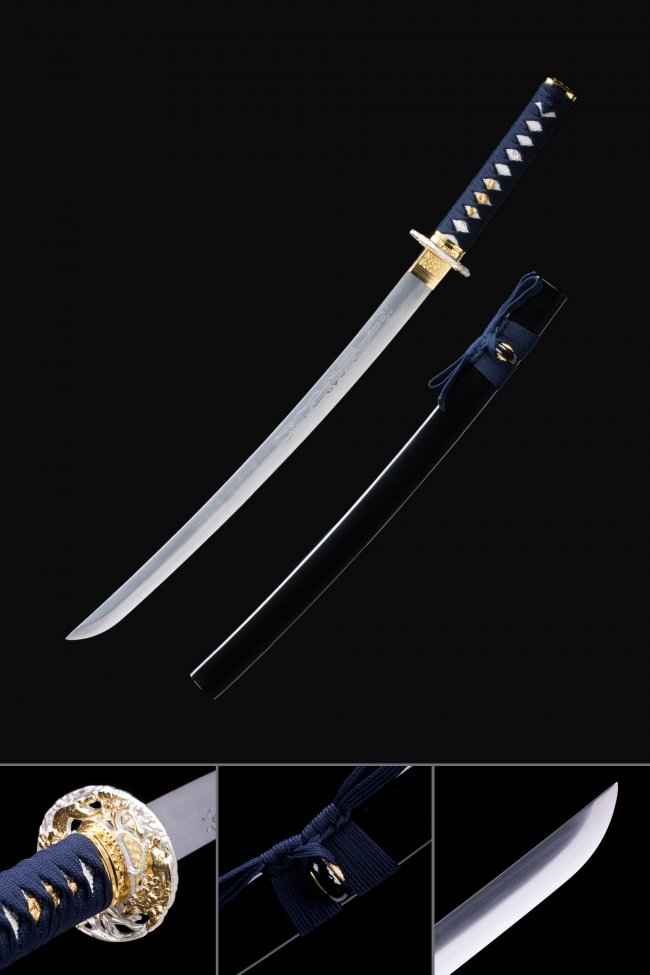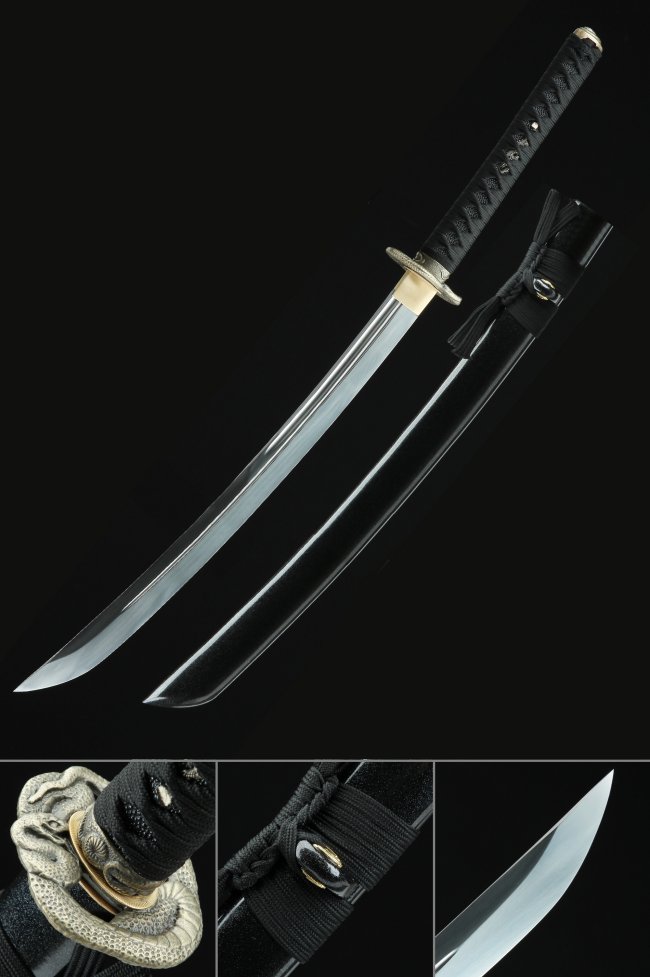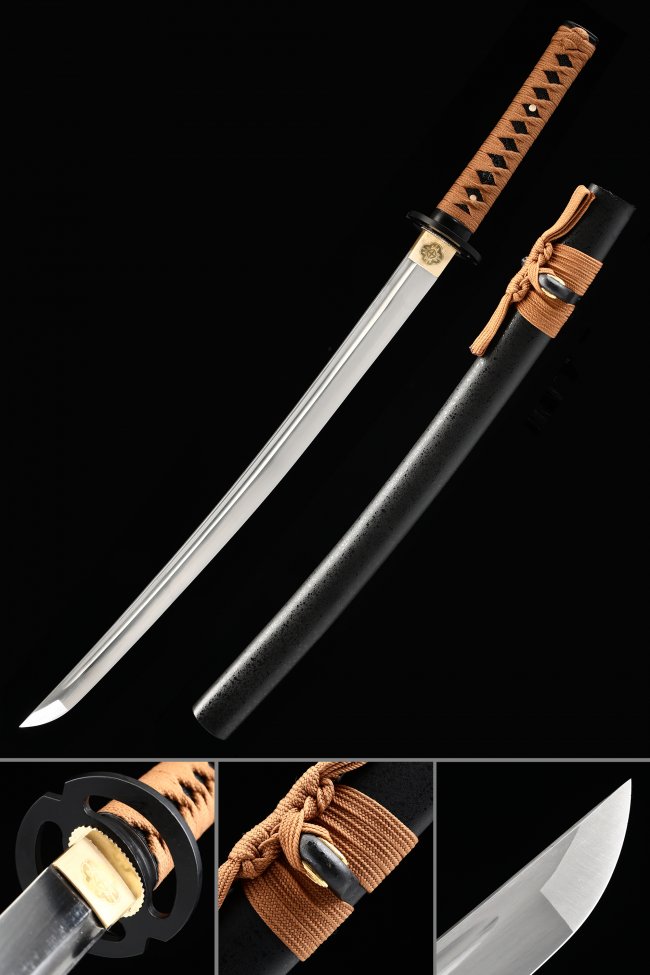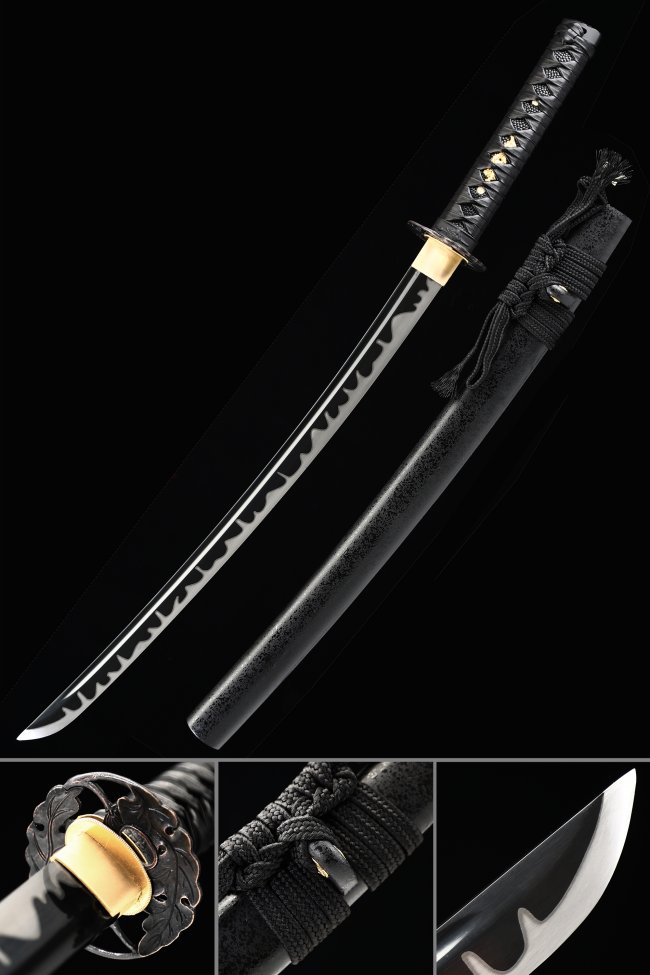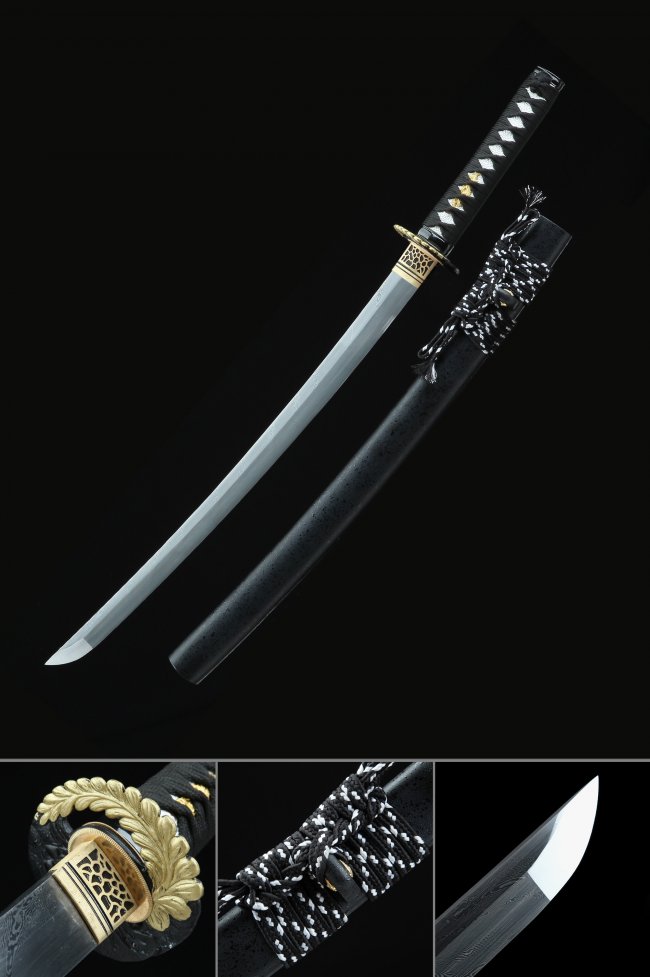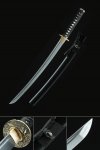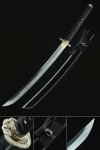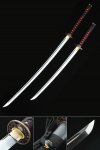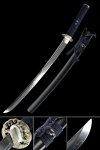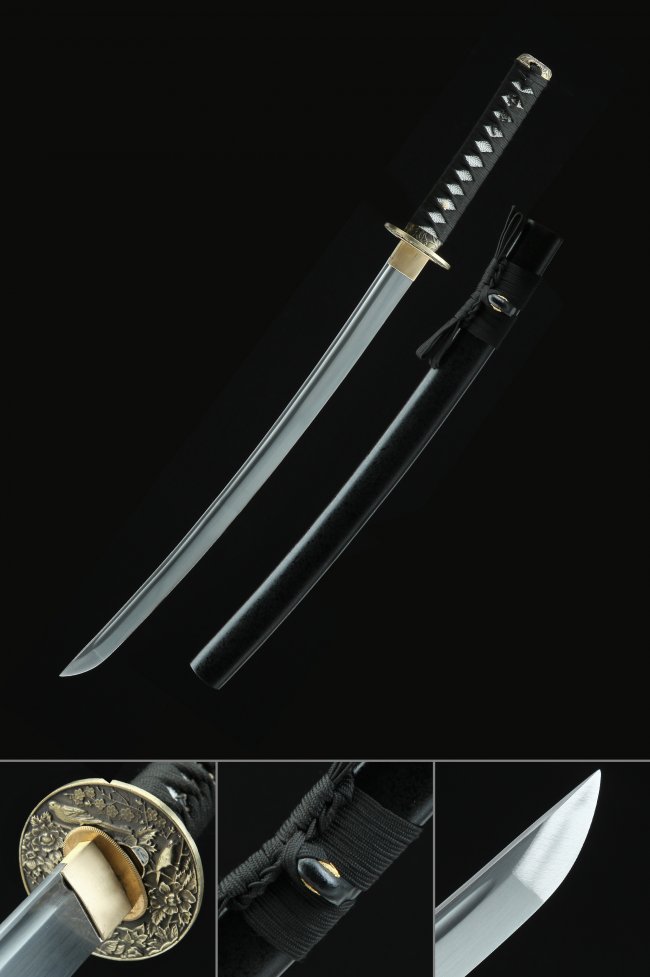
Black Wakizashi
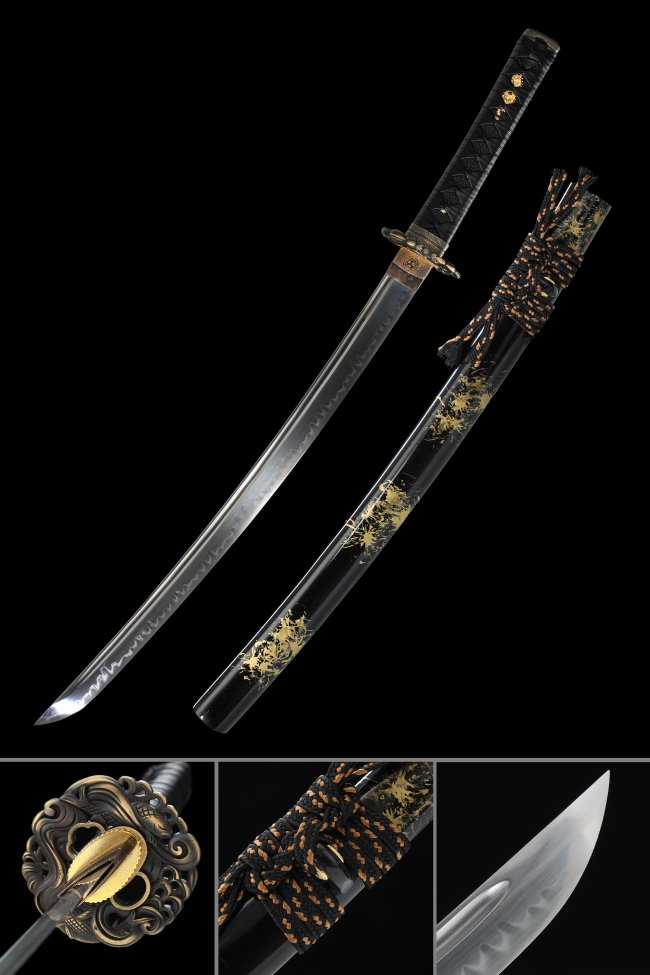
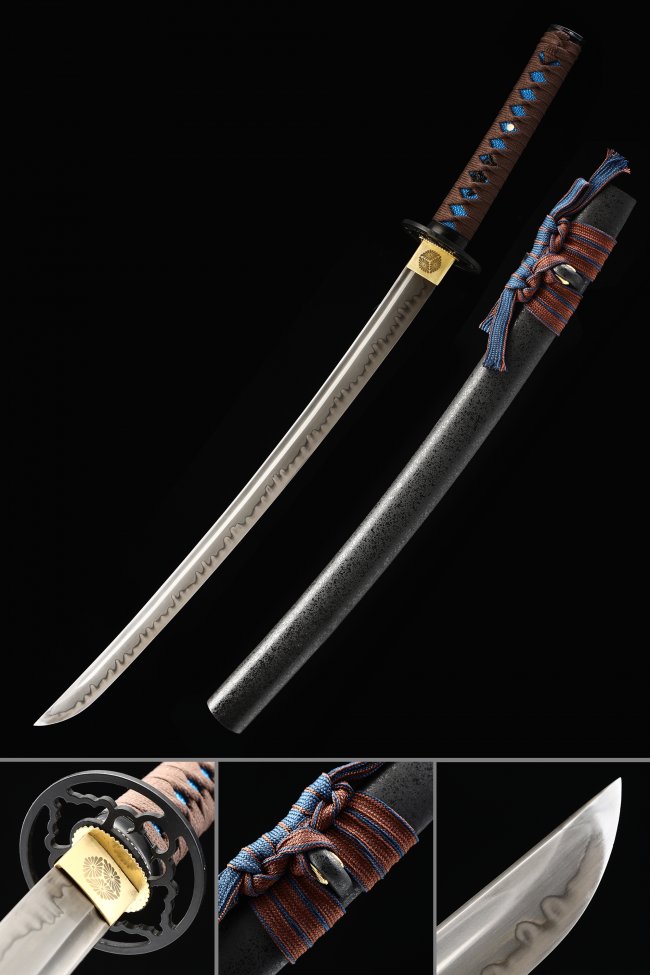
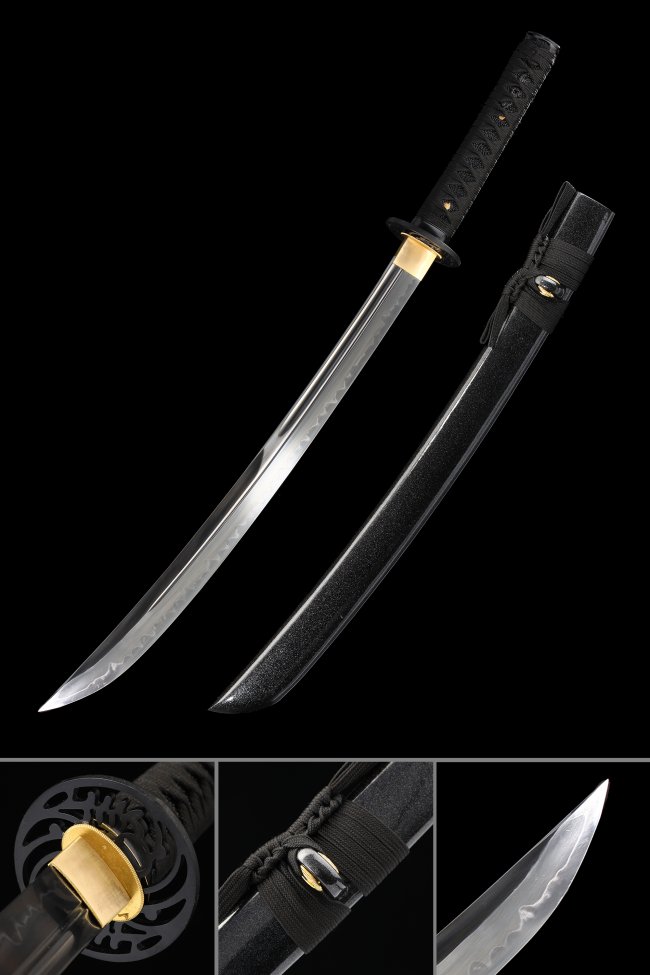
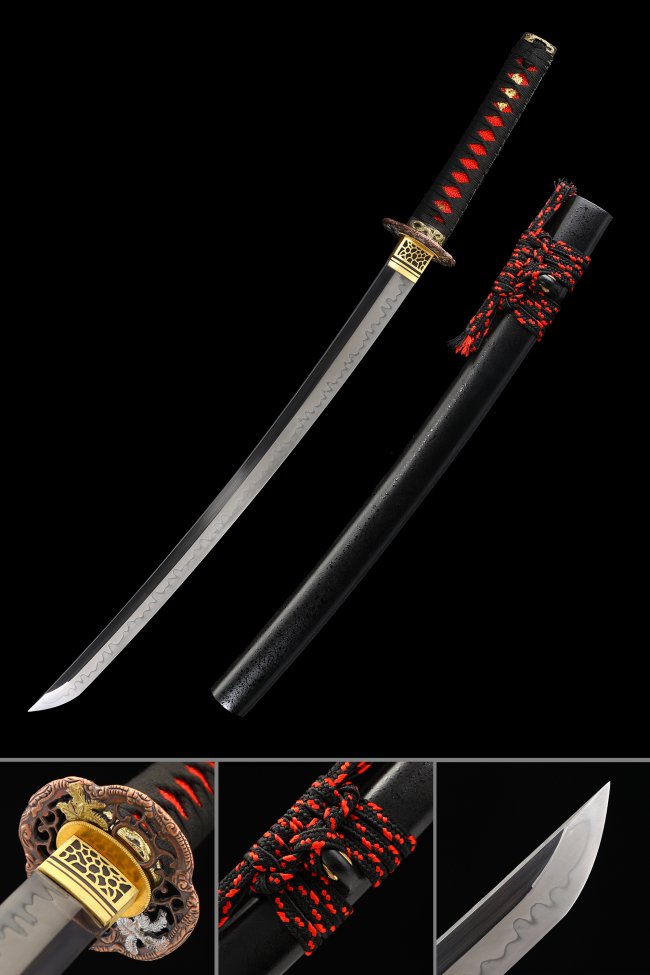
A black wakizashi strips the traditional Japanese short sword down to its most striking form — dark blade, black lacquer saya, blackened tsuba, and dark cord wrap unified into a single cohesive aesthetic. Our collection is hand-forged from high-carbon steel and T10 tool steel with full-tang construction, delivering real weight and structural integrity in a compact blade built for display, collection, or pairing with a matching katana in a daisho set. Clean lines, no excess, all substance.


Related Collections
Frequently Asked Questions
What is a wakizashi sword?
A wakizashi is a traditional Japanese short sword with a blade length between 30 and 60 centimeters, making it shorter than a katana but longer than a tanto. The name literally refers to the practice of wearing it thrust through the obi (sash) at the side, and it was one of the key weapons in a samurai's arsenal during feudal Japan. Historically, the wakizashi served multiple roles: it was the samurai's sidearm for close-quarters and indoor combat where the longer katana was impractical, it was used for the ritual practice of seppuku, and it was the one sword that samurai were permitted to keep on their person at all times — even indoors, where the katana had to be surrendered at the door. During the Edo period starting in the early 1600s, the Tokugawa shogunate formalized the practice of wearing the katana and wakizashi together as a matched pair called the daisho, making the combination the official visual identifier of samurai social status. In terms of construction, a wakizashi is built exactly like a katana — same forging techniques, same steel types, same handle construction with ray-skin and cord wrap — just scaled down proportionally. For modern collectors, the wakizashi offers the full Japanese sword experience in a more compact, displayable, and often more affordable format. Our black wakizashi collection applies that traditional construction to a modern all-black aesthetic that works in any setting.
What is the difference between a wakizashi and a katana?
The fundamental difference is blade length: a katana has a blade of 60 centimeters or longer, while a wakizashi blade falls between 30 and 60 centimeters. This isn't just a sizing distinction — it changes how the sword handles, what it's used for, and how it's carried. A katana is a two-handed weapon optimized for open-space combat with sweeping cuts and powerful strikes, while a wakizashi is lighter, faster to draw, and designed for one-handed use in confined spaces where a katana's length becomes a disadvantage. In terms of construction, both swords use identical forging methods, steel types, and mounting styles — a wakizashi is essentially a scaled-down katana with the same curvature profile, the same tang construction, the same tsuba-guard-grip assembly. The historical relationship between the two is inseparable: samurai wore them as the daisho pair, with the katana as the primary weapon and the wakizashi as the constant companion that never left the warrior's side. For collectors, the practical differences matter too — a wakizashi requires less display space, is easier to handle and draw for inspection, weighs less, and is typically more affordable in the same steel grade and finishing tier. Many collectors start with a katana and add a wakizashi later to complete a daisho pair, especially in a matching finish like all-black. If you're choosing between the two, consider starting with whatever fits your available display space, then expanding with a matched piece from the katana and wakizashi set collection when you're ready to pair them up.
Why are black blades popular on Japanese swords?
The popularity of black-finished Japanese swords comes from a combination of aesthetic appeal, practical benefits, and cultural influence. Visually, an all-black sword delivers a striking minimalist look — the unified dark palette creates a clean, modern silhouette that reads as both elegant and intimidating. Unlike traditional polished blades that rely on contrast between bright steel, colored saya, and mixed-metal fittings, a black sword presents as a single cohesive object where nothing competes for attention. This aesthetic resonates strongly with contemporary interior design trends, making black swords easier to integrate into modern living spaces without looking out of place. On the practical side, the black treatment — whether acid etching, oxidation, or a protective coating — adds a layer of corrosion resistance to carbon steel by reducing the amount of bare metal exposed to air and moisture. This means slightly less maintenance compared to a mirror-polished blade that shows every fingerprint and humidity mark. Cultural influence plays a role too: black blades feature prominently in anime and manga, from the Shusui in One Piece to Tanjiro's black Nichirin blade in Demon Slayer, driving demand among fans who want that specific look. The "black blade" concept also appears in One Piece sword lore, where permanently blackened swords represent the highest level of a swordsman's mastery. Whatever the motivation, a black-finished wakizashi or short katana sword is one of the most versatile display pieces you can own — it works in virtually any aesthetic context.
Is a wakizashi good for self-defense?
This question comes up frequently in sword forums and collector communities, and the honest answer requires some nuance. A hand-forged carbon steel wakizashi is a real weapon — it has a genuine edge, a solid full-tang structure, and enough weight to cause serious harm. Historically, the wakizashi was absolutely used as a combat weapon by samurai, particularly in close-quarters situations where the longer katana was impractical, such as indoor fighting, grappling range, or surprise encounters. Its shorter length actually made it faster to draw and more maneuverable in tight spaces compared to a katana. However, in a modern legal and practical context, carrying a wakizashi for self-defense is not advisable and is illegal in most jurisdictions. Sword carry laws in the United States vary by state, but virtually no state permits openly carrying a bladed weapon of wakizashi length in public for self-defense purposes. Even in states with more permissive weapon laws, using a sword in a self-defense situation would create enormous legal complications. The realistic modern applications for a black wakizashi are display, collection, martial arts training under supervised conditions, and cosplay. If home defense is genuinely a concern, there are far more practical and legally defensible options than a Japanese sword. Buy your wakizashi because you appreciate the craftsmanship and aesthetics, and treat it as the collectible it is. Our wakizashi swords are built to the standard of real weapons, but they're sold and intended as collector's pieces and display items.
How long is a wakizashi blade?
A wakizashi blade measures between 30 and 60 centimeters (approximately 12 to 24 inches), which is the defining characteristic that separates it from both the longer katana (60 cm and above) and the shorter tanto (under 30 cm). This blade length was officially standardized during the Edo period when the Tokugawa shogunate regulated sword types and the social classes permitted to carry them, formally fixing the boundaries between the three main Japanese sword categories. Within the 30–60 cm range, there's meaningful variation: shorter wakizashi closer to 30 cm handle more like an oversized tanto and feel extremely quick to draw and maneuver, while longer examples near 60 cm approach katana territory and offer more cutting reach. Most commercially available wakizashi replicas, including the black models in our collection, fall in the 40–50 cm blade range, which hits the traditional sweet spot for the weapon's historical role as a close-quarters companion sword. Overall length with the handle and saya typically adds another 25–35 cm, putting the total sheathed length at roughly 55–80 cm depending on the specific model. This compact size is one of the wakizashi's biggest advantages for collectors — it fits display spaces where a 100+ cm katana simply won't work, and it's easy to store safely in a closet or drawer when not displayed. If you're considering size specifically for a display setup, the wakizashi pairs beautifully below a full katana on a two-tier rack as part of a daisho set arrangement.
Can I use a wakizashi for cutting practice?
A properly forged carbon steel wakizashi with full-tang construction and a sharpened edge is technically capable of cutting soft targets — tatami mats, water bottles, and pool noodles are the most common test targets in the sword community. The steel is real, the edge geometry can be honed for cutting, and the structural integrity of a full-tang build can handle the stress of striking a target. That said, there are important caveats. First, the shorter blade means less leverage and cutting arc compared to a katana, so your technique needs to compensate — cuts that flow naturally with a 70 cm katana blade require more precision and speed with a 45 cm wakizashi blade. Second, not all wakizashi are sold with a cutting-ready edge; many come with a semi-sharp or display edge that would need professional sharpening before serious cutting work. Third, if you bought a premium black-finished model specifically for display, using it for cutting practice risks damaging the blade coating and scuffing the fittings — better to have a dedicated practice piece and keep the display sword pristine. For martial arts practitioners who specifically train with wakizashi-length blades, a 1060 or T10 steel model with a purpose-sharpened edge is the right choice, and the dark finish actually helps hide the minor surface marks that accumulate during regular use. If you're new to cutting practice, start with proper instruction and a clear, safe space — a sharp blade of any length demands respect. For display-focused collectors, our short wakizashi range includes options across every edge profile from completely unsharpened to battle-ready.
What is a daisho set and do I need a wakizashi for it?
A daisho is the traditional paired set of a katana (long sword) and a wakizashi (short sword) that samurai wore together during feudal Japan, and yes — the wakizashi is an essential half of the pair. The word "daisho" itself literally translates to "big-little," referring to the long-short sword combination. During the Edo period, wearing the daisho was not just a practical choice but a legal and social requirement — the katana-wakizashi pair was the official badge of samurai status, and only members of the warrior class were permitted to carry both swords. Commoners could own a single sword for self-defense, but the paired daisho was exclusively a samurai privilege. For modern collectors, recreating a daisho is one of the most satisfying display configurations because it carries deep historical significance and creates a visually compelling arrangement. The key to a good daisho display is matching — both swords should ideally share the same steel type, the same saya finish, similar fittings, and coordinated handle wrapping. This is where a black daisho shines: the all-black aesthetic automatically creates visual unity between the two swords, even if they weren't purchased as a matched set. Some collectors extend the daisho concept into a three-piece arrangement by adding a tanto (dagger) in the same finish, creating a complete katana-wakizashi-tanto display that covers the full spectrum of traditional Japanese blade lengths. Our katana and wakizashi set collection includes pre-matched pairs where the forge coordinates every detail from the start, and black-finished sets are among the most popular configurations.
Are black wakizashi suitable for martial arts training?
The suitability depends on the specific type of training and the construction of the particular sword. For form practice (kata), drawing drills (iaijutsu), and controlled two-person exercises with safety protocols, a well-made carbon steel wakizashi with full-tang construction and a real edge is a legitimate training tool — particularly in martial arts systems that include short sword techniques, such as certain branches of kenjutsu, aikido, and ninjutsu. The wakizashi's shorter length actually makes it a valuable training instrument for developing quick-draw timing, close-range precision, and one-handed techniques that don't translate well to katana-length blades. The black finish specifically adds a minor practical benefit: the dark coating reduces light reflection during indoor training, which can be less distracting for both the practitioner and training partners. However, for full-contact sparring or any drill involving blade-on-blade contact, carbon steel swords are not appropriate — that requires dedicated training weapons like bokken (wooden swords) or specialized blunted steel trainers. Using a real-edged carbon steel wakizashi for full-contact work risks damaging both the sword and your training partner. If you're buying specifically for martial arts practice, choose a 1060 or higher steel grade for better durability under repeated use, and opt for a functional edge profile rather than a display-only finish. For iaijutsu practitioners specifically, a black wakizashi with a tight-fitting saya makes a beautiful and functional training companion.
How should I display a black wakizashi?
A black wakizashi benefits from display approaches that emphasize its clean silhouette and unified dark aesthetic. The simplest and most effective method is a single horizontal wall mount — two small hooks or a dedicated sword rest that holds the sword at about eye level against a light-colored wall. The contrast between the black sword and a white or light gray background creates an immediate visual impact that darker walls can't match. If you're displaying the sword in its saya, angle it with the edge facing upward and the tsuba to the left, which follows the traditional Japanese display convention for a sword at rest (as opposed to ready for combat). For collectors who want to show off the blade itself, a mount that holds the bare blade with the saya displayed separately below or beside it lets the black blade finish shine while also protecting the steel with better air circulation than a sheathed display. LED backlighting or strip lighting above the mount adds dramatic shadow effects that work especially well with all-black finishes, creating depth and dimension that flat lighting misses. If you're displaying the wakizashi as part of a daisho pair or a three-piece set with tanto, a multi-tier vertical rack keeps the swords aligned in descending size order — katana on top, wakizashi in the middle, tanto at the bottom — which creates a pyramid composition that draws the eye naturally. Avoid placing any carbon steel sword in direct sunlight, near radiators, or in bathrooms and kitchens where humidity swings can promote corrosion. A well-chosen spot in a black saya wakizashi display turns even a single sword into a genuine room centerpiece.
Customer Reviews
I've bought 3 swords: katana, tanto and wakuzishi from Truekatana. Very happy with service and quality. Would recommend to anyone.
![]() |
Manganese Steel Wakizashi Sword With Black Piano Lacquer Saya And Floral Bird Tsuba |
Quality Wakizashi Sword at a great price. Shipped the very next day!
![]() |
Manganese Steel Wakizashi Sword With Black Piano Lacquer Saya And Floral Bird Tsuba |
I'm verry happy with the daisho set, it is beautiful, nice , and sharp :)
![]() |
Daisho Set - Manganese Steel Katana and Wakizashi with Black and Red Ito, Floral Alloy Tsuba |
I couldn’t believe the craftsmanship. At this price??? Unbeatable. This really looks amazing hanging up about my tv in the living room!
![]() |
Manganese Steel Wakizashi Sword With Black Piano Lacquer Saya And Floral Bird Tsuba |
My Daisho set is beautiful and very well made. I also purchased the matching tango and a stand for display. The team a TrueKatana are very helpful, friendly, and willing to assist you.
![]() |
Daisho Set - Manganese Steel Katana and Wakizashi with Black and Red Ito, Floral Alloy Tsuba |
I am very happy with them I am currently having them sharpened by a Sword master.
![]() |
Manganese Steel Wakizashi Sword With Black Piano Lacquer Saya And Floral Bird Tsuba |
Bonjour , pour toute l'équipe de TRUE KATANA . J'ai acheté chez vous 11 Katanas , pour ma collection . Les katanas ,wakizashi , et Tanto que je vous ai acheté , sont de très belles finitions . Cependant ,la SAYA en bois noir de mon wakizashi , étais fendue en deux endroits avec l'entrée trop étroite , pour introduction de l' HABAKY du sabre . Je l'ai fait recollé par un spécialiste sur bois . J'ai aussi dans le passé , perdu deux sabres , qui se sont égaré dans le transport vers mon domicile . Je me permet ces informations ,à votre demande ,afin d'améliorer le suivis , et la qualité de vos commandes . En bon client , je vous souhaite à toute l'équipe une bonne journée .
![]() |
T10 Carbon Steel Wakizashi with Black Lacquer Saya - Dark Blue Cord Handle, Gold Scroll Tsuba |
Fast shipping. Sword is well made, and the furniture is well fitted.
![]() |
T10 Steel Wakizashi with Clay Tempered Blade in Black Lacquer Saya - Real Hamon |