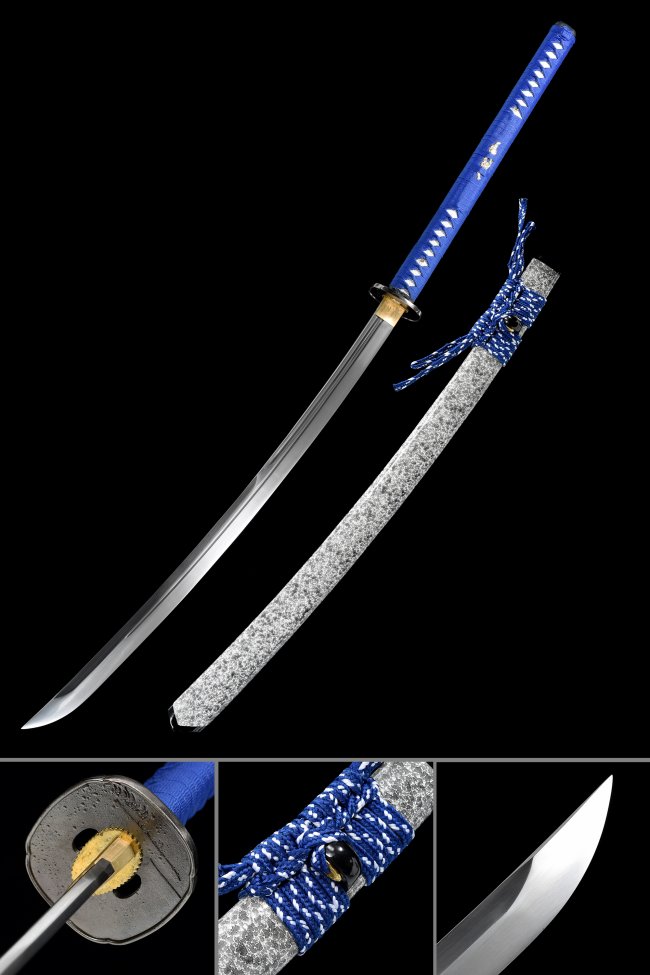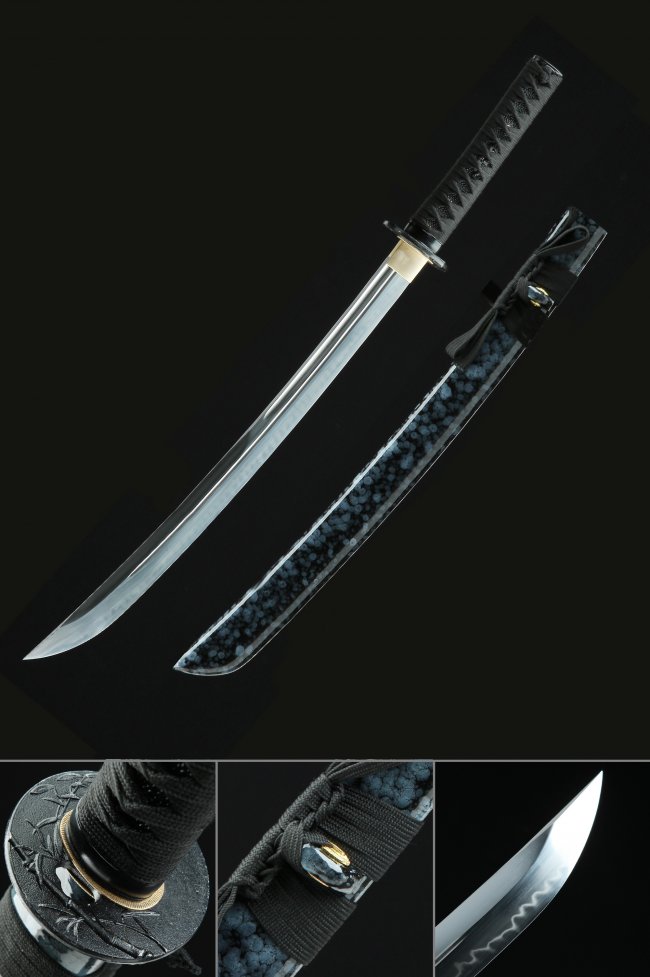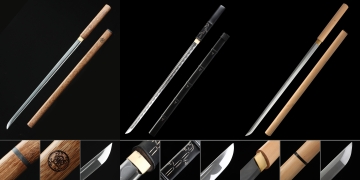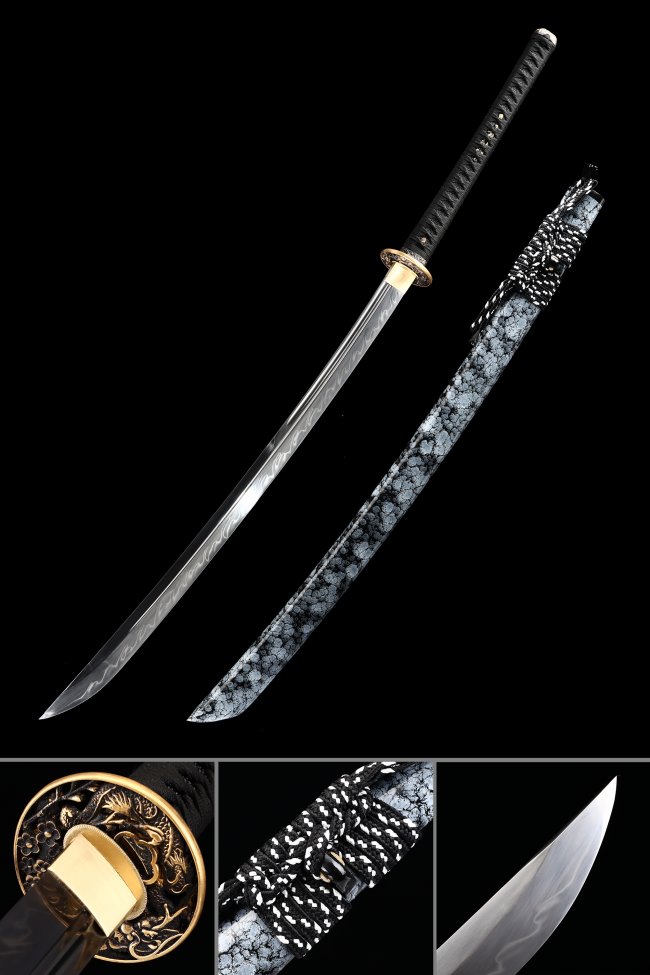
Blue Naginata

Browse our Blue Naginata collection — hand-forged polearm replicas finished in rich blue lacquer, crafted with T10 clay-tempered steel and authentic hamon lines. Each piece showcases traditional Japanese forging techniques paired with a bold, modern aesthetic perfect for serious collectors. Every order ships with free worldwide delivery and hassle-free returns.

Showing 3 Products

Related Collections

Blue Katana Sword100 items


419 Reviews

Blue Dragon Katana4 items


Reviews

Black Cord Handle Naginata11 items


15 Reviews

Black Scabbard Naginata5 items


4 Reviews

Frequently Asked Questions

What makes T10 steel a good choice for collectible naginata blades?
T10 is a high-carbon tool steel with a tungsten additive that enhances hardness and wear resistance. When used in naginata forging, it responds exceptionally well to clay tempering — the process of coating the spine with a clay mixture before quenching so the edge cools faster than the body. This differential cooling produces a genuine hamon temper line and creates two distinct zones: a harder edge region (around 58-60 HRC) and a more flexible spine. For collectors, T10 is appealing because it holds fine detail during polishing, develops attractive grain patterns, and maintains its finish over long display periods with only minimal oiling. Compared to softer carbon steels like 1045, T10 offers noticeably better edge retention and a more dramatic hamon, making it a preferred material for premium replica polearms.
How does a blue lacquer saya differ from a standard wood scabbard?
A blue lacquer saya undergoes multiple rounds of hand-applied urushi-style lacquer coating, with each layer dried, smoothed, and re-coated before the next. The result is a glossy, deeply pigmented finish that protects the underlying wood from moisture and temperature fluctuations far better than raw or lightly oiled timber. Standard wood scabbards typically rely on a single coat of oil or wax, which can dry out and leave the grain exposed over time. The lacquered version also resists fingerprint marks and minor scuffs, keeping the display appearance pristine. The rich blue tone itself draws on Edo-period dyeing traditions, where indigo blue signified refinement and status — a fitting aesthetic parallel for a collectible naginata.
What is the typical overall length of a full-size naginata replica?
Traditional naginata proportions place the total length between 180 cm and 220 cm, with the curved blade section accounting for roughly 60-80 cm and the hardwood shaft making up the remainder. In our Blue Naginata collection, several models measure around 118 cm in blade-and-tang length, which translates to an assembled display length in the neighborhood of 200 cm once the shaft is fitted. This faithful scaling is important for collectors because it preserves the authentic balance point — the spot roughly one-third up from the base where the piece feels naturally weighted. Accurate proportions also ensure the replica looks correct on a horizontal wall rack or vertical floor stand designed for polearm display.
How should I maintain the hamon line on a clay-tempered naginata?
The hamon is formed during the quenching process and exists within the steel itself, so it cannot be wiped away by normal handling. However, its visibility depends on surface condition. To keep the temper line crisp and vivid, apply a thin layer of choji oil (clove-infused mineral oil) with a soft flannel cloth every two to three months, wiping in a single direction from spine toward edge. Avoid silicone-based sprays, which can leave a hazy film that dulls the contrast between the hardened and unhardened zones. If light surface oxidation appears, a gentle pass with an uchiko powder ball — the traditional Japanese polishing powder — will lift it without scratching the polish. Store the blade inside its lacquer saya when not on display to limit air exposure.
Can I display a naginata alongside katana and tanto pieces?
Absolutely, and many collectors intentionally curate multi-blade displays that span the full spectrum of Japanese edged craftsmanship. A naginata adds dramatic scale and visual variety next to shorter swords and daggers. For a cohesive blue-themed arrangement, you might pair a Blue Naginata with a matching Blue And Gold Katana and a Dark Blue Cord Handle Tanto, creating a three-tier presentation that moves from polearm to long sword to dagger. Wall-mounted horizontal racks designed for polearms work well above a standard two- or three-tier katana stand, keeping sight lines balanced. Just ensure each piece has adequate spacing — at least 15 cm between items — so the individual fittings and lacquer tones can be appreciated without visual crowding.

Customer Reviews

Shawn P Franco New Mexico, United States

I have to say I'm impressed with the high quality and astounding prices. Here is my latest acquisition on the top tier. Extremely satisfied with this company's vast array of offerings. Very good business model ends up a win for all involved in any transaction. TRUEKATANA HAS IT NAILED!! Many thanks.
T10 Clay Tempered Naginata - Handcrafted Folded Steel, Real Hamon, Blue Saya, 118cm T10 Clay Tempered Naginata - Handcrafted Folded Steel, Real Hamon, Blue Saya, 118cm