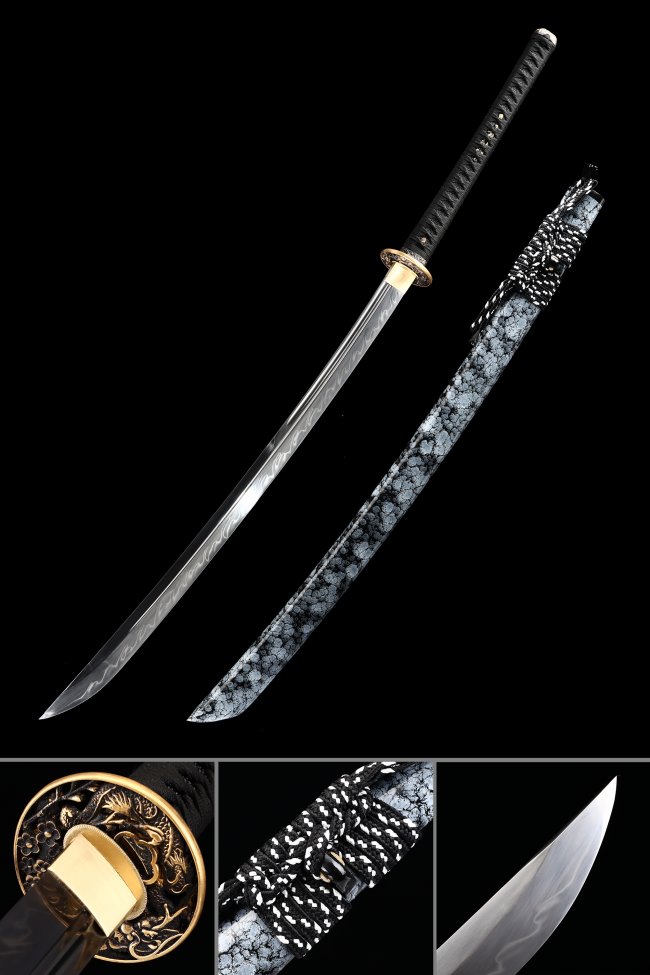
T10 Steel Naginata

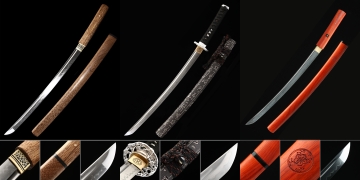
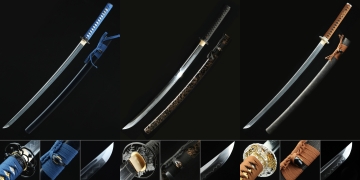
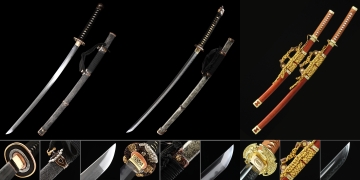
Explore our T10 Steel Naginata collection — hand-forged polearm replicas featuring clay-tempered T10 high-carbon steel with real hamon lines, full-tang construction, and lacquered saya. Each piece is crafted for serious collectors who value authentic Japanese craftsmanship and striking display presence. Every order ships with free worldwide delivery and a hassle-free return policy.

Showing 4 Products

Related Collections

T10 Sword86 items


348 Reviews

T10 Steel Sword94 items


498 Reviews

Naginata Katana12 items


15 Reviews

O-Naginata6 items


10 Reviews

Frequently Asked Questions

What makes T10 steel a good choice for a naginata blade?
T10 is a high-carbon tool steel that contains a small but meaningful percentage of tungsten, typically around 0.4–0.5%. The tungsten refines the steel's grain structure during forging, which translates into a harder, more wear-resistant edge compared to standard 1095 or 1060 carbon steels. After proper heat treatment, T10 blades generally reach 58–61 HRC on the Rockwell scale. For a naginata — which features a long, curved blade on an extended shaft — this hardness-to-toughness balance is especially important because the blade geometry concentrates stress over a sweeping cutting edge. T10 handles that stress well while maintaining its shape over long-term display, resisting warping and surface degradation better than lower-alloy alternatives.
How does clay tempering create the hamon on these naginata?
Clay tempering, or tsuchioki, involves coating the blade's spine and flat surfaces with a thick layer of refractory clay while leaving the edge thinly coated or exposed. When the blade is heated to critical temperature and quenched, the exposed edge cools rapidly and transforms into hard martensite, while the insulated spine cools more slowly and retains a softer, more flexible pearlite structure. The visible boundary between these two metallurgical zones is the hamon. Because the clay is applied by hand, every hamon pattern is unique — no two T10 naginata will display exactly the same line. The effect is both functional, creating a hard edge backed by a resilient spine, and deeply aesthetic, producing a misty, undulating line that becomes more pronounced with careful polishing.
What is the best way to display and store a T10 naginata?
Mount the naginata horizontally on a wall rack or vertically on a dedicated polearm stand, keeping it away from direct sunlight and humidity sources. Before placing it in its lacquered saya for extended storage, apply a thin coat of choji oil or high-quality mineral oil along the entire blade surface to prevent oxidation. T10 steel is not stainless, so moisture is its main adversary. Wipe the blade with a soft, lint-free cloth every few weeks if it is displayed openly, and reapply oil every two to three months. If you live in a humid climate, consider adding silica gel packets near the display area. Avoid touching the blade with bare fingers, as skin oils accelerate spot corrosion on high-carbon steel.
How does a T10 naginata differ from a T10 katana in structure?
The most obvious difference is blade mounting. A katana blade sits in a short handle designed for two-handed grip at close range, while a naginata blade is affixed to a long wooden shaft, historically ranging from 120 to 200 cm in total length. The naginata blade itself tends to be slightly thinner in cross-section with a more pronounced curve near the tip, optimized for sweeping arcs rather than linear draws. Structurally, the tang of a naginata extends deep into the haft and is pinned securely, similar to a spear construction, whereas a katana tang is held by a single mekugi pin through the tsuka. Both use the same T10 steel and clay-tempering process, so metallurgical quality is identical, but the visual impact of a naginata on display is dramatically different due to its imposing length and polearm silhouette.
Are these T10 naginata full-tang collectibles?
Yes, every T10 naginata in this collection features full-tang construction, meaning the steel extends from the tip of the blade continuously through the shaft mounting point. This is critical for structural integrity, especially on a polearm where the junction between blade and haft bears significant leverage. The tang is typically secured with multiple pins and fitted tightly into the wooden shaft, preventing any looseness or wobble. For collectors, full-tang construction signals a higher tier of craftsmanship — it indicates the smith forged the blade and tang as one continuous piece rather than welding a short stub onto the shaft. It also means the piece holds up well over decades of display without developing the rattling or shifting that can occur in rat-tail or partial-tang alternatives.

Customer Reviews

Cosmos Wrenn Tennessee, United States

My first Naganata. I'm hooked. The most solid and we'll balanced sword I have purchased yet. The wooden Saya is a thing of beauty. The entire sword is gorgeous from top to bottom. It came perfect out of the box. Sharp, no rattles, fits perfectly in the saya. It will be my main blade to practise with going forward. Great job!
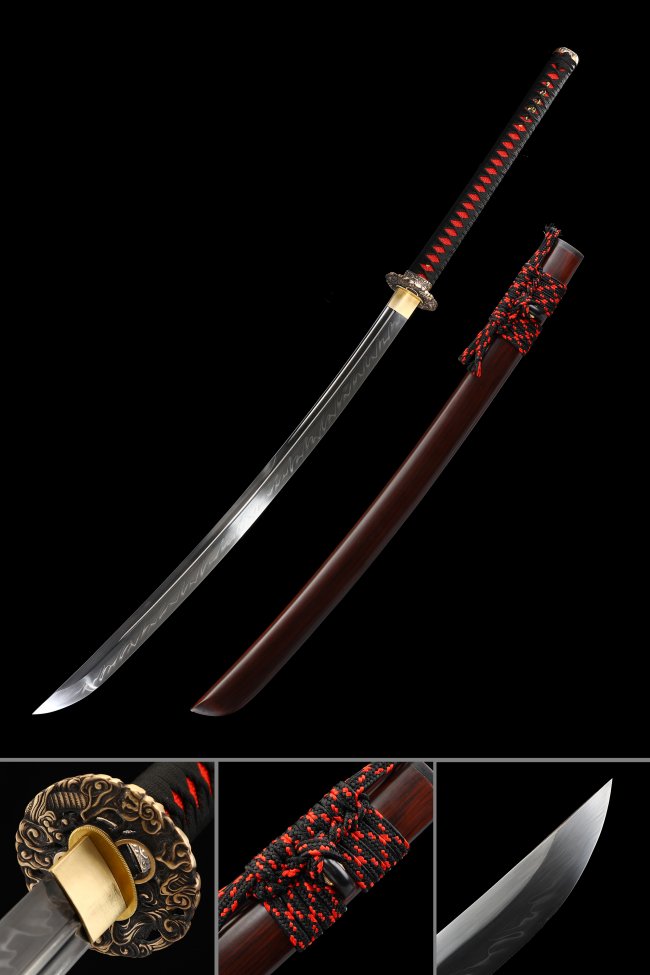
T10 Naginata - Handcrafted Clay Tempered Steel, Real Hamon, Red Saya, Wave Tsuba, 118cm T10 Naginata - Handcrafted Clay Tempered Steel, Real Hamon, Red Saya, Wave Tsuba, 118cm
Shawn P Franco New Mexico, United States

I have to say I'm impressed with the high quality and astounding prices. Here is my latest acquisition on the top tier. Extremely satisfied with this company's vast array of offerings. Very good business model ends up a win for all involved in any transaction. TRUEKATANA HAS IT NAILED!! Many thanks.
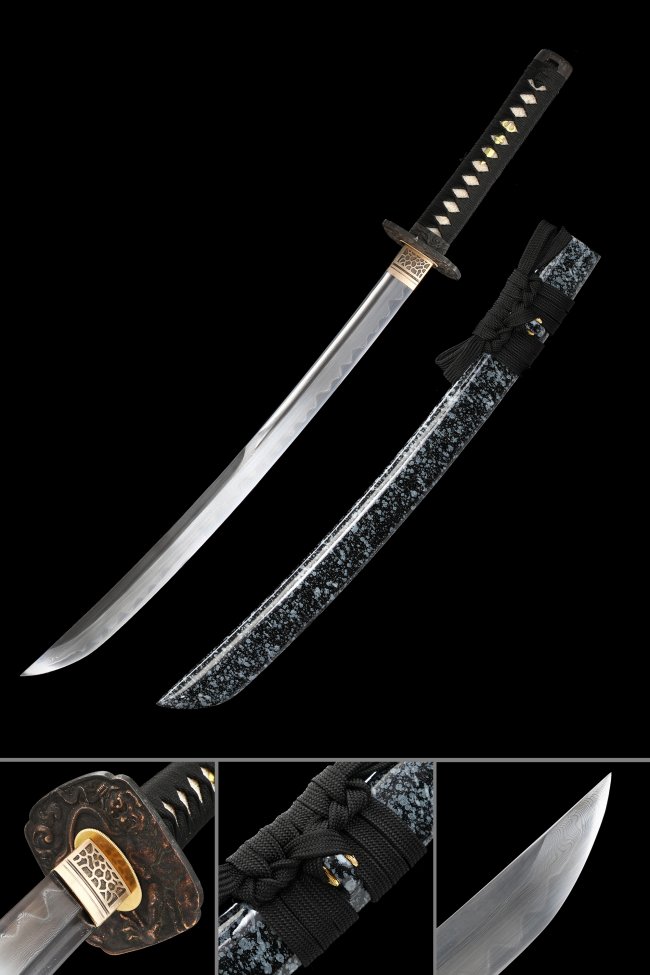
T10 Clay Tempered Naginata - Handcrafted Folded Steel, Real Hamon, Blue Saya, 118cm T10 Clay Tempered Naginata - Handcrafted Folded Steel, Real Hamon, Blue Saya, 118cm