T10 Carbon Steel Naginata

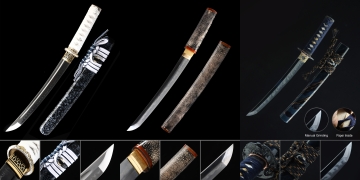
T10 carbon steel naginata represent one of the most distinguished forms of Japanese polearm artistry, combining a deep-curved blade with a long hardwood shaft to create a silhouette instantly recognized by serious collectors worldwide. Each piece in this collection is individually hand-forged, clay tempered for a genuine hamon, and finished with full-tang construction - hallmarks of authentic craftsmanship rather than mass production. Explore our selection with confidence: every order ships free, and we stand behind every piece with a hassle-free return policy.
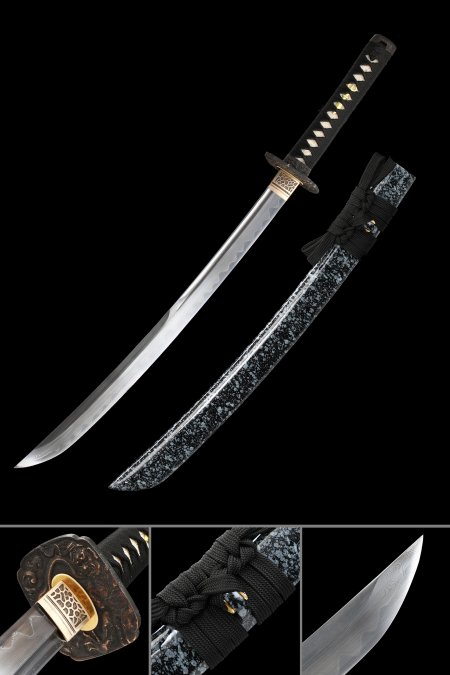
Showing 4 Products

Related Collections

T10 Carbon Steel Tanto52 items


210 Reviews

T10 Carbon Steel Ninjato19 items


81 Reviews

T10 Carbon Steel Wakizashi43 items


206 Reviews

T10 Carbon Steel Aikuchi42 items


70 Reviews

Frequently Asked Questions

What makes T10 steel a preferred choice for naginata blades?
T10 is a high-carbon tool steel with a carbon content of roughly 0.95-1.05%, which gives it a dense, fine-grain structure well suited to blade craftsmanship. For naginata collectibles, its most appreciated quality is how it responds to clay tempering: the steel develops a sharply defined, naturally occurring hamon with visible nie activity - the fine crystalline sparkle along the temper line - that collectors immediately recognize as a mark of authentic thermal processing. Compared to lower-carbon steels, T10 also polishes to a brighter, more reflective surface, which enhances the visual contrast between the hardened edge zone and the softer spine when the blade is displayed under light.
How do I tell a real hamon from an acid-etched one?
A genuine hamon on a clay tempered T10 naginata is produced by differential quenching - the physical boundary between harder and softer steel crystalline structures - and has distinct visual characteristics. Under angled lighting, an authentic hamon shows depth: you can observe nie (bright micro-crystals), nioi (a misty boundary cloud), and subtle activity that shifts as the viewing angle changes. An acid-etched or wire-brushed false hamon, by contrast, looks flat and uniformly consistent, with no depth or variation under different light conditions. The boundary line on a real hamon often follows an irregular, naturalistic path rather than a perfectly uniform wave, because it reflects the actual clay application made by hand before quenching.
What display setup works best for a full-length naginata?
A naginata typically measures around 118 cm overall, which requires a purpose-built horizontal polearm wall mount or a floor-standing vertical rack designed for long-shaft bladed collectibles. Horizontal display is generally preferred for visibility, as it showcases the full curvature of the blade and the contrast between the lacquered saya and the hardwood shaft simultaneously. Avoid display in rooms with high humidity fluctuation - the hardwood shaft and lacquered saya are both sensitive to moisture cycling, which can cause micro-cracking in the lacquer finish over time. A stable indoor environment between 45-55% relative humidity is ideal for long-term preservation.
How does a naginata differ from a katana as a collectible?
The primary distinction is form and display presence. A katana is a single-handed or two-handed sword averaging 70-75 cm in blade length, mounted on a comparatively short handle. A naginata combines a similarly curved blade with a substantially longer hardwood shaft - typically bringing the overall length to around 118 cm or more - which creates a dramatically different visual scale on display. From a craftsmanship standpoint, the blade geometry of a naginata is also distinct: the curvature tends to be more pronounced near the tip, and the transition from blade to shaft involves specialized fitting hardware not found on katana mountings. Collectors who specialize in Japanese edged collectibles often pursue both forms as complementary pieces representing different aspects of traditional blade culture. See our High Carbon Steel Katana Sword collection for direct comparison.
What care routine does a T10 naginata blade need in storage?
T10 high-carbon steel is more reactive to moisture than stainless alloys, so consistent maintenance is important for collectors storing pieces long-term. Every three to six months - or more frequently in humid climates - lightly apply a thin coat of blade oil (choji oil or a food-grade mineral oil alternative) using a soft, lint-free cloth, working from the base toward the tip. Before oiling, remove any residual dust or old oil with a clean patch. Store the naginata in its saya when not on open display, as the fitted scabbard limits airborne moisture contact. Silica gel packets placed near - not touching - the storage area help buffer humidity. Never store in an airtight sealed case without moisture management, as trapped humidity accelerates oxidation rather than preventing it.

Customer Reviews

Cosmos Wrenn Tennessee, United States

My first Naganata. I'm hooked. The most solid and we'll balanced sword I have purchased yet. The wooden Saya is a thing of beauty. The entire sword is gorgeous from top to bottom. It came perfect out of the box. Sharp, no rattles, fits perfectly in the saya. It will be my main blade to practise with going forward. Great job!
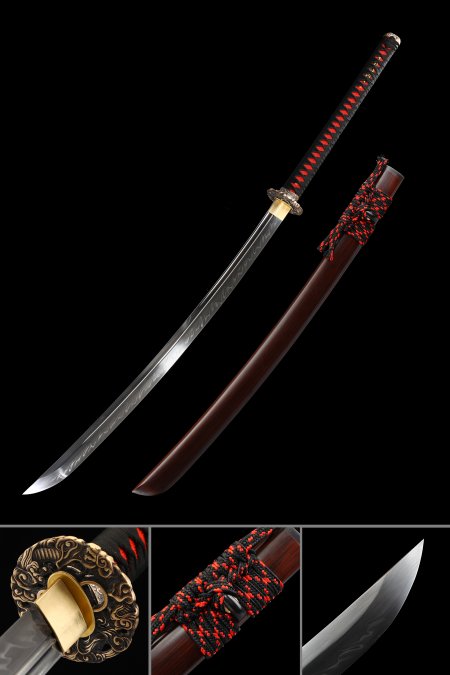
T10 Naginata - Handcrafted Clay Tempered Steel, Real Hamon, Red Saya, Wave Tsuba, 118cm T10 Naginata - Handcrafted Clay Tempered Steel, Real Hamon, Red Saya, Wave Tsuba, 118cm
Shawn P Franco New Mexico, United States

I have to say I'm impressed with the high quality and astounding prices. Here is my latest acquisition on the top tier. Extremely satisfied with this company's vast array of offerings. Very good business model ends up a win for all involved in any transaction. TRUEKATANA HAS IT NAILED!! Many thanks.
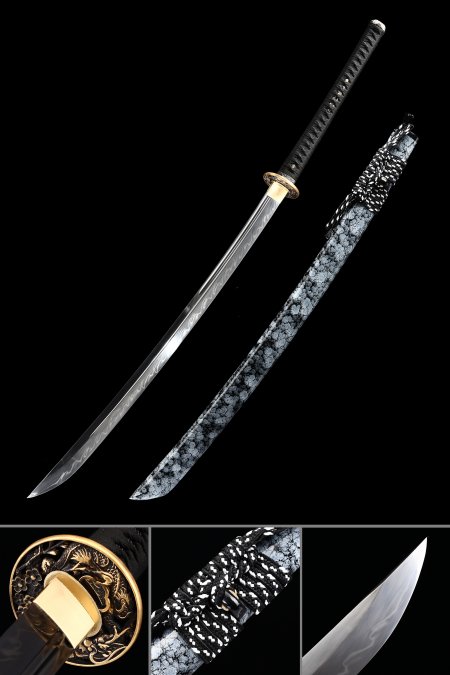
T10 Clay Tempered Naginata - Handcrafted Folded Steel, Real Hamon, Blue Saya, 118cm T10 Clay Tempered Naginata - Handcrafted Folded Steel, Real Hamon, Blue Saya, 118cm
Cart 0 Items

Your cart is empty