Damascus Steel Naginata

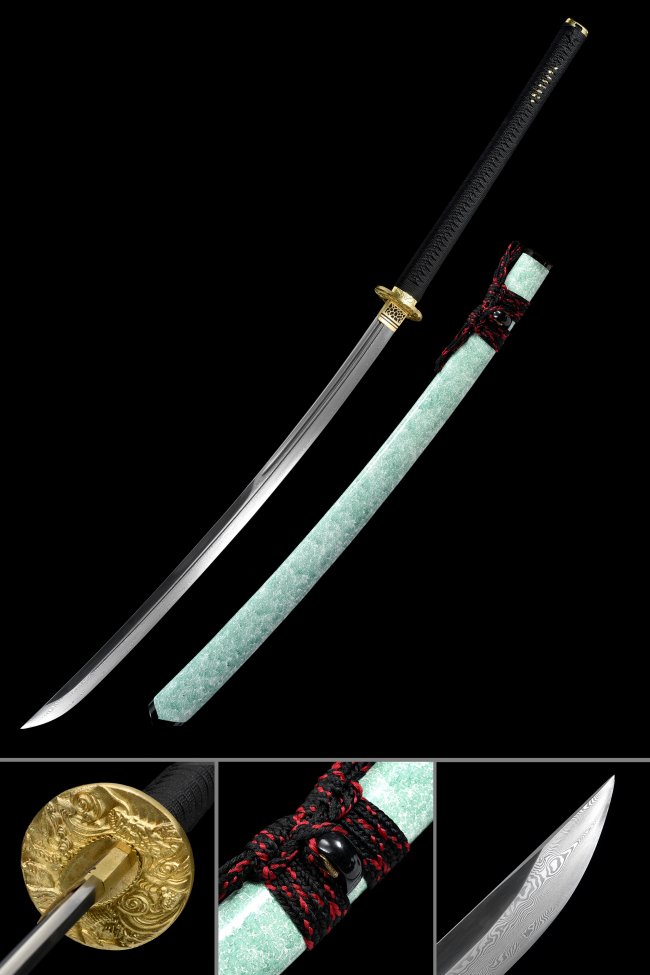
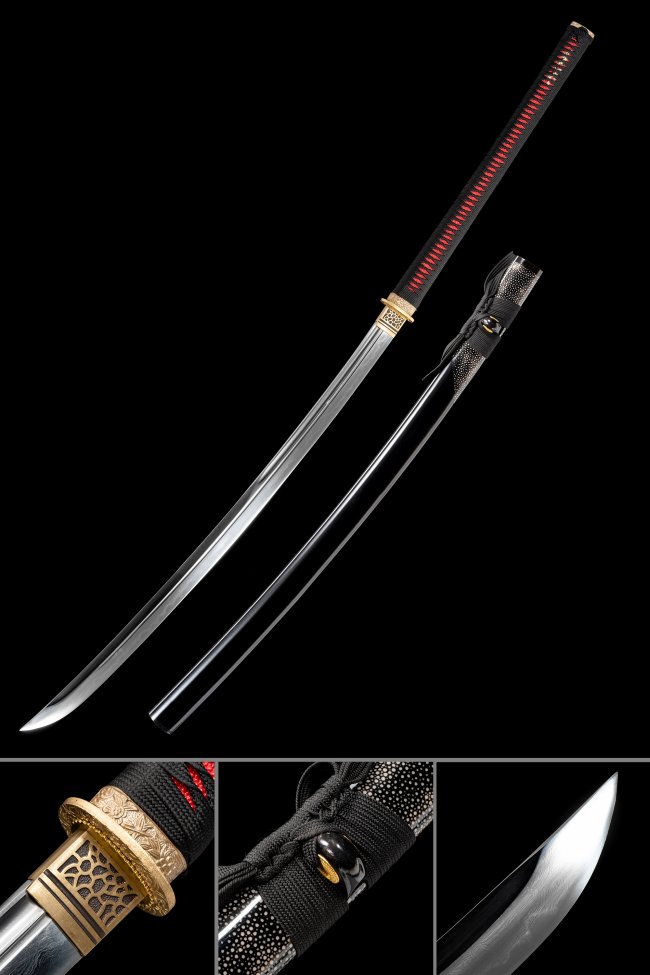
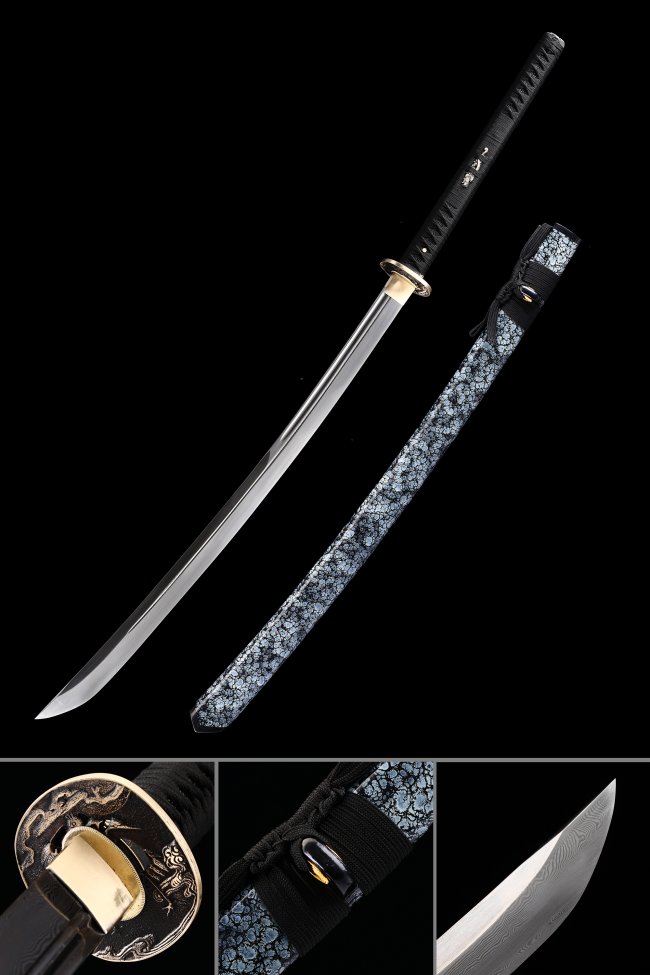
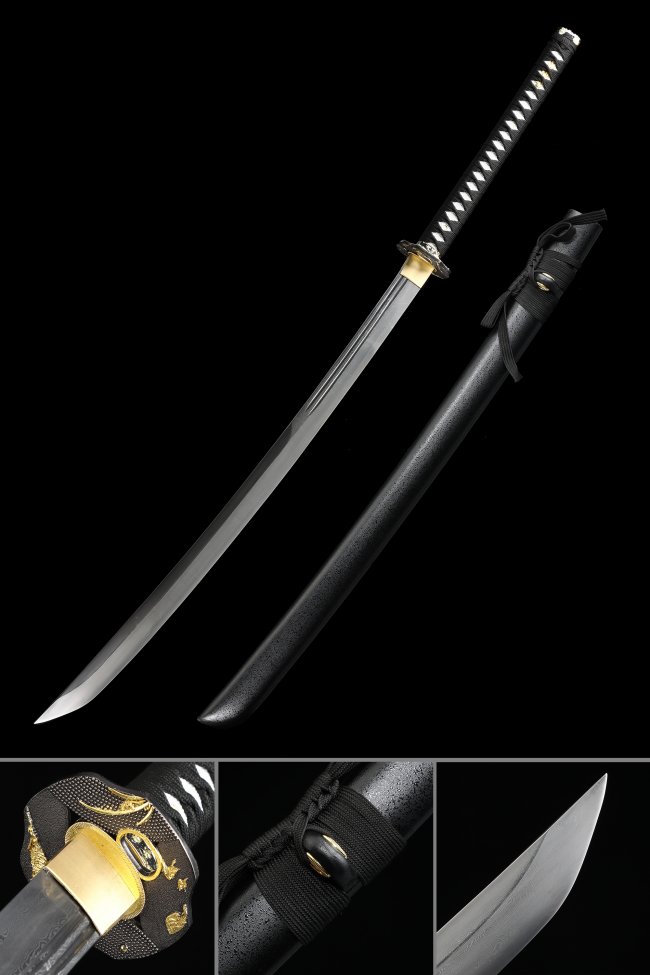
The Damascus Steel Naginata collection brings together hand-forged polearms distinguished by richly layered pattern-welded steel, each blade revealing a one-of-a-kind surface grain born through repeated folding and differential heat treatment. From granite-finished saya to copper tsuba accents, every detail reflects the meticulous craft traditions of classical Japanese sword-making. These full-tang pieces are built for serious display and make a commanding centerpiece in any curated collection. Enjoy free shipping on your order and peace-of-mind returns.

Showing 4 Products

Related Collections

Damascus Tanto46 items


55 Reviews

Damascus Odachi13 items


21 Reviews

Damascus Wakizashi25 items


88 Reviews

Damascus Ninjato19 items


19 Reviews

Frequently Asked Questions

What makes Damascus steel naginata blades look different from regular steel?
Damascus — or pattern-welded — steel is made by forge-welding alternating layers of high-carbon and low-carbon steel, then repeatedly folding, drawing, and twisting the billet. When the finished blade is ground and etched, the two alloys respond differently to acid, revealing a flowing, organic surface grain. Because the layering pattern shifts with every fold and twist, no two blades produce the same visual result. This is fundamentally different from monosteel blades, which have a uniform, featureless surface. For collectors, the uniqueness of the grain pattern is a core part of the piece's identity and display appeal.
What is a real hamon and why does it matter for collectors?
A hamon is the visible temper line that forms along the edge of a blade during differential heat treatment. To produce a genuine hamon, the bladesmith coats the spine with clay before quenching the blade in water or oil. The clay-insulated spine cools slowly and remains relatively soft, while the uncoated edge cools rapidly, forming a harder crystalline structure called martensite. The boundary between these two zones appears as a misty, undulating line. A real, clay-tempered hamon is structurally meaningful — it reflects an actual metallurgical process. An acid-etched simulation can mimic the look but lacks the underlying differential hardness. For serious collectors, the distinction is significant both for authenticity and long-term value.
How should I store a Damascus naginata to protect the blade finish?
Pattern-welded steel is susceptible to oxidation, particularly along the etched surface where the grain is most visible. After handling, wipe the blade with a clean, lint-free cloth to remove fingerprint oils, which are mildly acidic and can initiate surface rust. Apply a thin coat of food-grade mineral oil or traditional choji oil every one to two months, or more frequently in humid climates. Store the naginata horizontally on a dedicated stand in a stable environment — avoid basements or garages with fluctuating humidity. Never store it in a leather-wrapped enclosure for extended periods, as leather can trap moisture against the steel. The lacquered saya should be inspected periodically for chips or cracks, which can allow moisture contact with the tang area.
How does a naginata differ from a nagamaki or yari as a display piece?
These three classical Japanese polearms are sometimes confused but are visually and structurally distinct. A naginata features a curved, single-edged blade mounted on a long hardwood or lacquered shaft, with the blade comprising roughly one-quarter to one-third of the total length. A nagamaki has a proportionally much longer blade with a wrapped handle that closely resembles a katana handle, making the blade-to-shaft ratio nearly equal. A yari is a straight thrusting spear with no curve and minimal edge geometry. On a display wall or stand, the naginata's sweeping blade curve creates the most dramatic silhouette of the three, which is one reason it remains the most popular of the classical polearms among collectors focused on visual impact.
Is a Damascus naginata a good gift for a Japanese sword collector?
It can be an excellent choice, particularly for a collector who already owns katana or tanto and is looking to add dimensional variety to a display. The naginata's scale commands attention in a way that shorter edged pieces cannot, and a Damascus example adds the additional talking point of its unique surface grain. For gifting purposes, pay attention to the saya finish and tsuba material — a collector with a traditionally styled display will likely prefer black lacquer saya and a neutral fitting, while someone with a more eclectic collection may appreciate the contrast of a green or granite saya with copper furniture. Full-tang construction is a feature worth highlighting, as it indicates a higher standard of build quality relative to rat-tail tang display pieces.

Customer Reviews

Michael E Glass Indiana, United States

The swords arrived 7-8 days after they were shipped. I had received an email confirming the order when I placed it, however I did not receive an email when it shipped, so I didn't know to look for them. They may have been outside a day before I noticed the boxes. With that said the boxes arrived in good shape with no obvious shipping damage. I'm not the biggest fan of the all styrofoam containers, due to it being a little messy when opening the packaging, but I can't deny it did an excellent job in protecting the swords as they arrived in perfect condition. I haven't had a chance to cut any water bottles yet, but all of the swords seem reasonably sharp. Everything seems well built with no obvious defects that I can tell at this time.

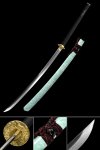
Fuuun Kairyuu Damascus Naginata - Pattern Steel, Green Saya, Copper Tsuba, Full Tang Fuuun Kairyuu Damascus Naginata - Pattern Steel, Green Saya, Copper Tsuba, Full Tang