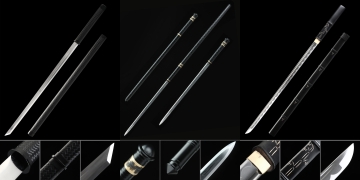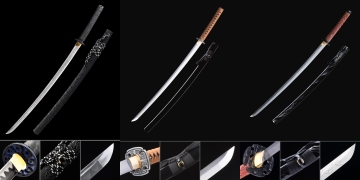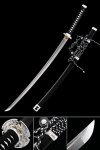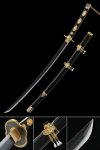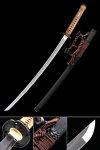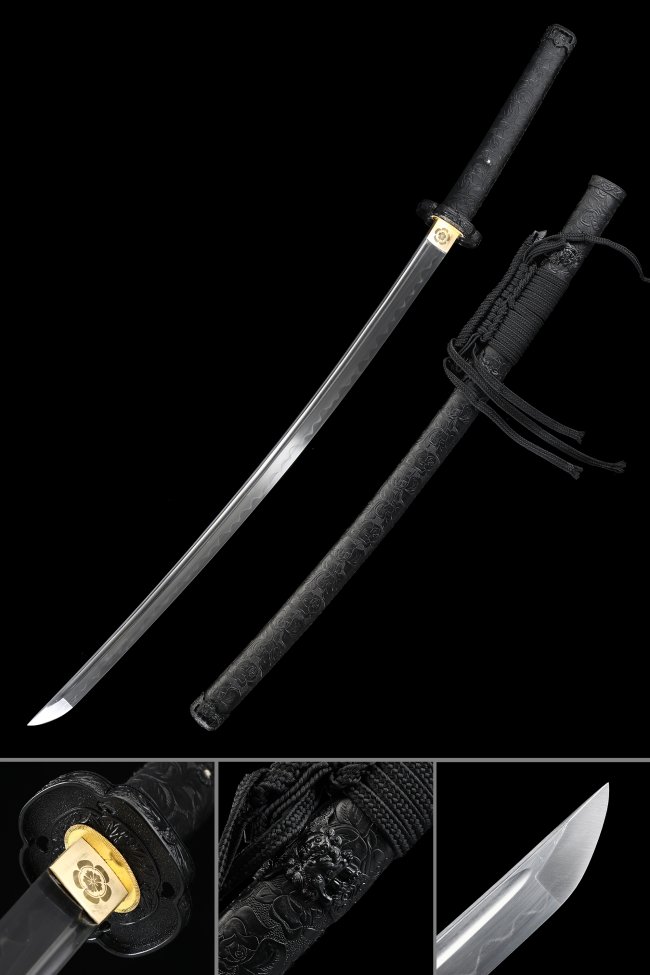
Black Odachi

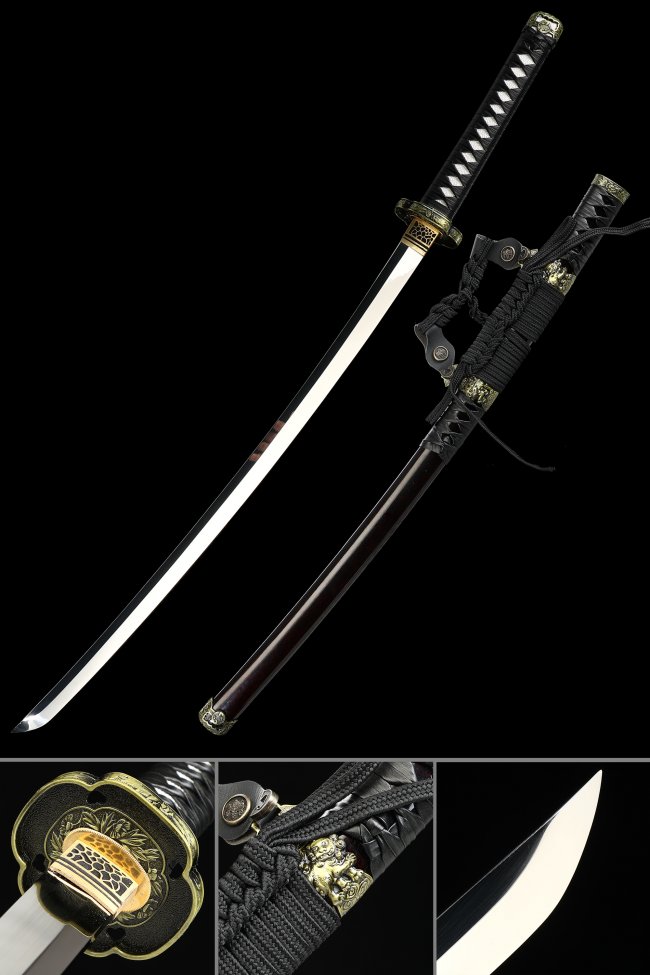
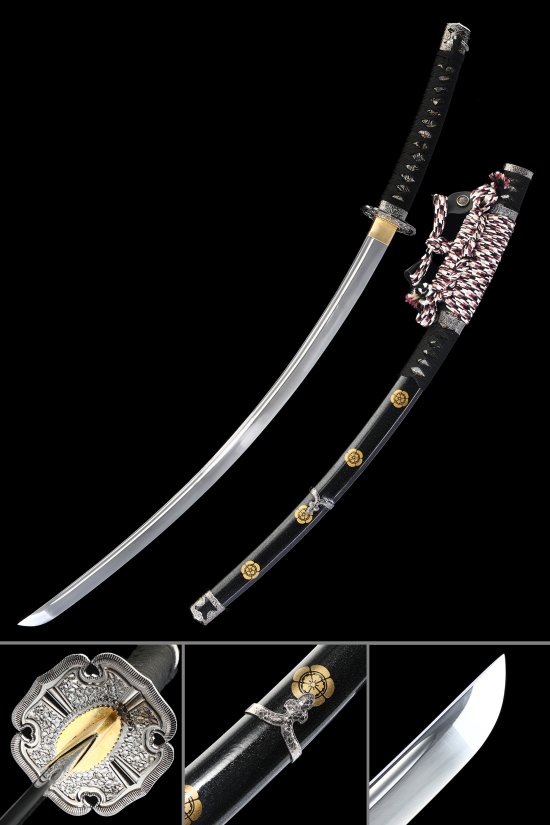
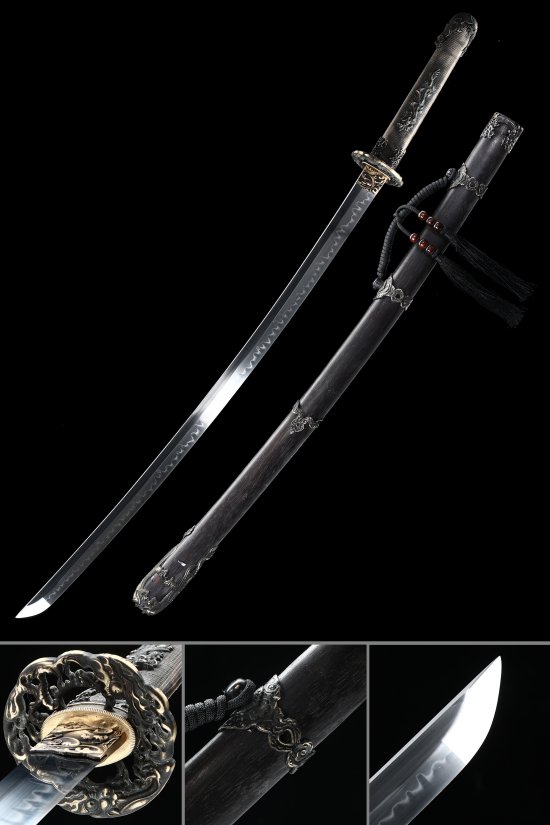
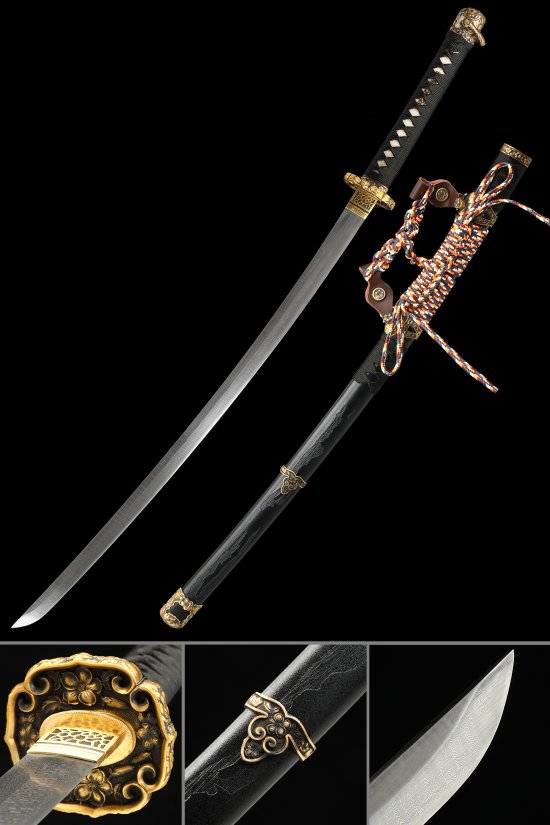
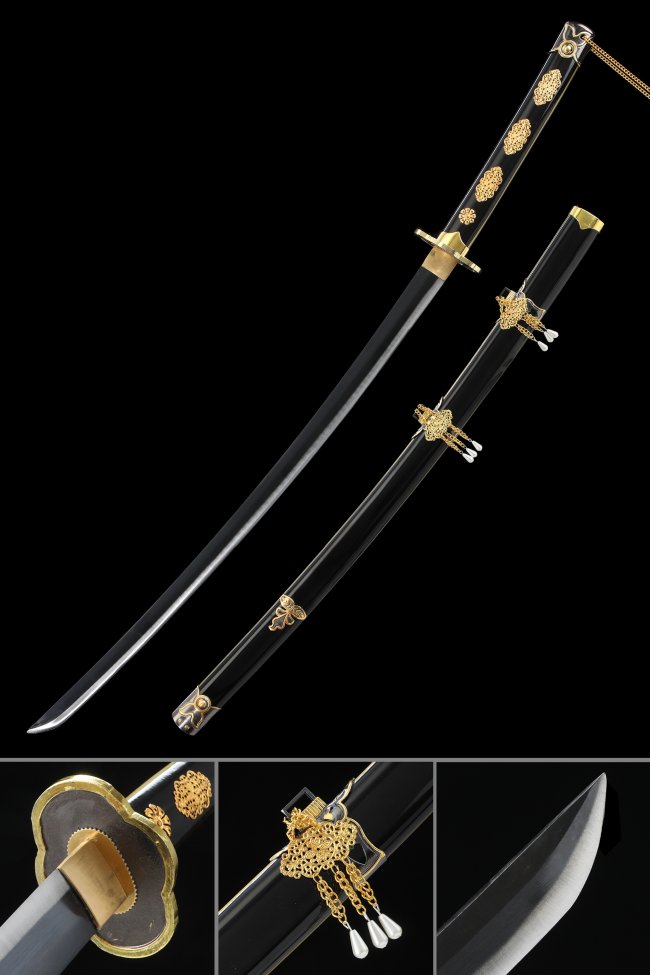
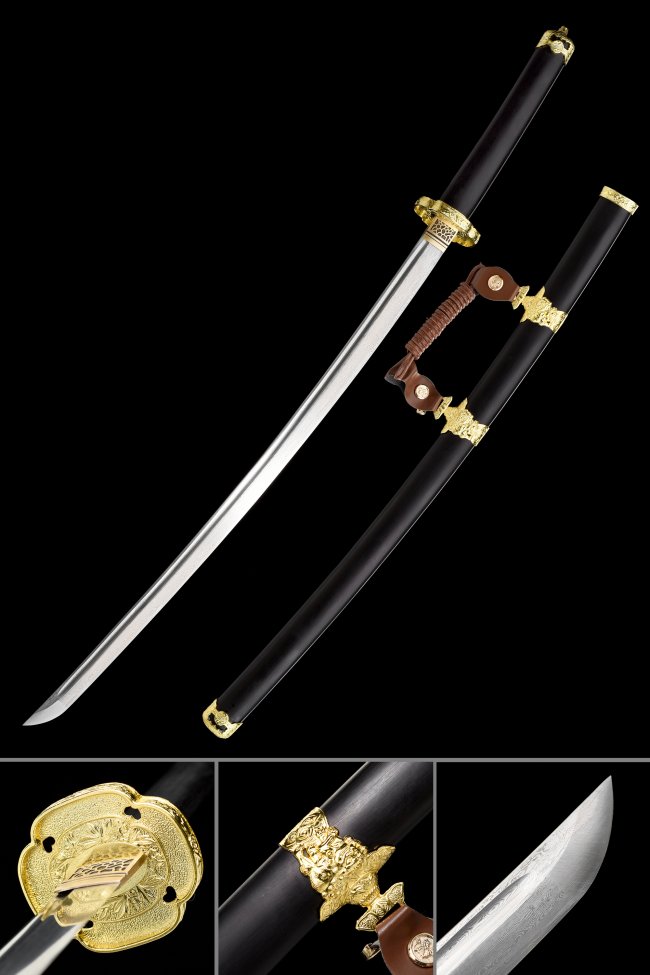
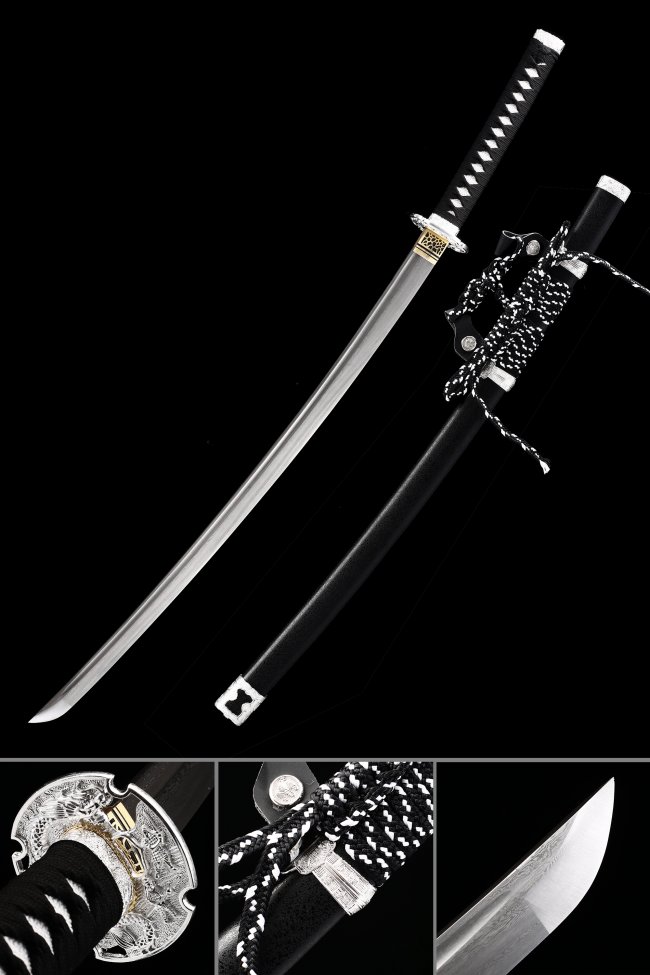
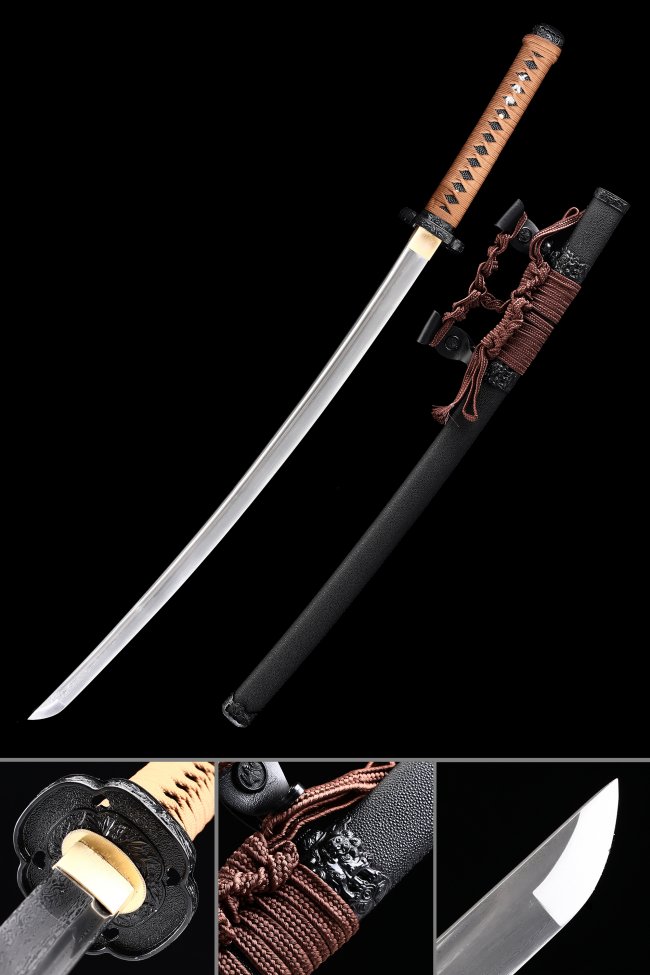
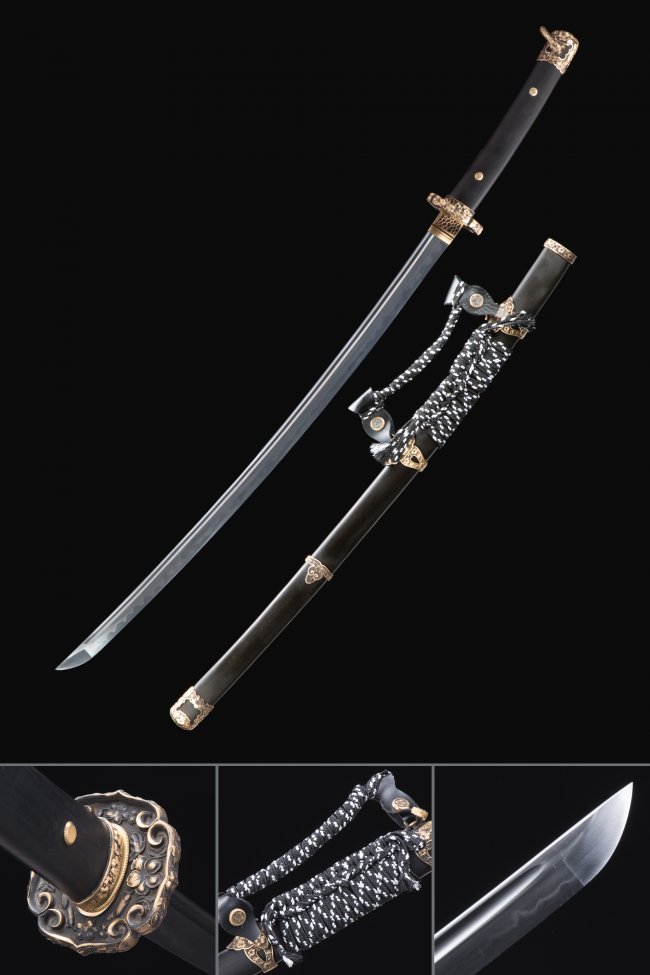
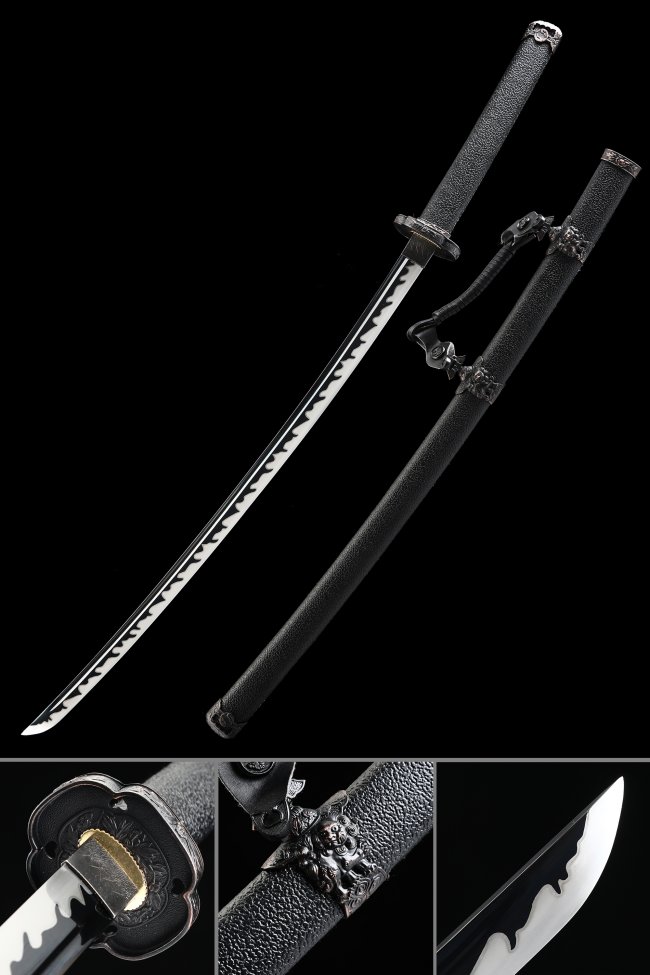
Explore our Black Odachi collection — hand-forged oversized Japanese swords finished in striking blackened blades and dark lacquered saya. Each piece features full-tang construction in T10, Damascus, 1095, or manganese steel, with blades exceeding standard katana length for a commanding display presence. Free U.S. shipping and a 30-day return guarantee on every order.

Showing 11 Products

Related Collections

Black Tanto61 items


365 Reviews

Black Wakizashi40 items


102 Reviews

Black Ninjato57 items


453 Reviews

Black Chokuto39 items


288 Reviews

Frequently Asked Questions

What makes a black odachi different from a standard polished odachi?
The core difference is the blade finish. A standard odachi is polished to a bright mirror or satin surface that reflects light, while a black odachi undergoes additional treatment to darken the steel. This is typically achieved through controlled acid etching, oxidation, or specialized coating processes applied after the blade is ground and shaped. The darkened surface does not change the steel composition or the internal hardness profile — a clay-tempered black odachi still has a genuine hamon line where the differential hardening occurred. In fact, the dark finish often makes the hamon more visible by increasing the contrast between the harder edge steel and the softer spine. The aesthetic effect is dramatic at odachi scale, where the extended blade length amplifies the visual weight of the dark surface.
Which steel type works best for a black-finished odachi?
Each steel brings a different character under a dark finish. T10 tool steel is the most popular choice because it responds well to clay tempering, producing a visible hamon that contrasts beautifully against the blackened surface. Damascus steel — made from multiple folded layers — creates intricate grain patterns that emerge as subtle texture through the dark tone, almost like woodgrain rendered in metal. 1095 high carbon steel offers a cleaner, more uniform appearance when darkened, which appeals to collectors who prefer minimalist aesthetics. High manganese steel provides good structural resilience and takes an even dark patina. For display purposes, the choice often comes down to whether you want visible pattern detail (Damascus), a pronounced hamon line (T10), or a sleek monochrome look (1095 or manganese).
How should I maintain the dark finish on a black odachi blade?
The blackened surface requires slightly different care than a polished blade. Apply a thin layer of choji oil or refined mineral oil every four to six weeks using a soft, lint-free cloth, wiping along the blade length rather than across it. Avoid abrasive polishing compounds or metal polish, as these will strip the dark coating and expose bright steel underneath. Handle the blade with cotton gloves or a clean cloth, since fingerprints deposit moisture and salts that can cause localized corrosion spots that show more prominently on dark finishes. Store the odachi in its saya in a low-humidity environment, and consider adding silica gel packets near your display area if you live in a humid climate. If minor surface rust appears, remove it gently with a soft cloth dampened with oil rather than scraping or sanding.
Is a black odachi suitable as a gift for a sword collector?
An odachi in any finish is a memorable gift, but the black variant has particular appeal because of its visual impact and relative rarity in most collections. The dark aesthetic gives it a modern, dramatic presence that works well in contemporary interiors — it does not require a traditional Japanese-themed room to look impressive. When selecting one as a gift, consider the recipient's existing collection: a Damascus black odachi pairs beautifully alongside polished katanas by providing textural contrast, while a T10 clay-tempered piece with a visible hamon offers an educational conversation piece about differential hardening. The oversized scale also makes it a natural centerpiece, so even someone with an extensive sword collection will find a prominent place for it.
How large is a typical black odachi compared to a katana?
A standard katana blade measures roughly 60 to 73 centimeters (about 24 to 29 inches), while odachi blades in this collection typically exceed 90 centimeters (35 inches) and some extend past 100 centimeters. Including the handle, overall length frequently reaches 130 to 150 centimeters (roughly 51 to 59 inches). This means the complete sword is often taller than many wall-mounted display racks designed for katanas, so collectors should plan their mounting accordingly. The tsuka is also proportionally longer — usually accommodating a three- or four-hand grip — and the tsuba and other fittings are scaled up to match. This added scale is part of the odachi's appeal as a display piece, giving it a commanding presence that standard-length swords simply cannot replicate.

Customer Reviews

Chad Locke Wisconsin, United States

I have purchased these three swords as samples to see if they would be a viable product line to offer in our businesses and martial art centers.

Here are my findings:

All three swords are aesthetically pleasing and the fittings are ornate. I feel these would be a pleasant addition to a display or collection or for a beginning practitioner.

For someone looking for a sword to practice or cut with regularly, the product we received may not be the best products. Here are some reasons for this.

Two of the three blades were noticeable sharpened on a belt grinder and the edge geometry was a bit inconsistent. 2 of the 3 passed a paper cut test.

The two "folded" blades (the katana and naginata) are not folded steel, even under magnification. We have also observed a few imperfections such as chipping, staining and rolled tips but those appear to only be cosmetic. While the folding is not critical with modern steel, the appearance it provides would help sell the product and was a reason we chose them. The unfolded T10 material would be functionally sufficient. Also note that the cost was higher for these "folded" versions.

The hamon on each blade was very light, though looks nice, does not carry the deep gray appearance despite the fine polish. I am concerned how sufficiently heat treated the edge may truly be.

The fitment of the habaki is fairly loose, only fitting the mune and ha properly.

The Tachi shares the same profile and curvature as the katana and is the same length despite being listed as a longer blade.

All three swords show some fitment issues where things are misaligned or roughly ground to fit. The koiguchi and shito-dome are prime examples of this on the naginata as they exhibit grinding or chisel marks of fitting the blade. The naginata Saya sticks at every insertion and retraction of the blade.

The tsuka profiles of each were a bit blocky and the tsuka-ito is fairly wide, adding bulk to the grip. Very much a factory made handle.

Each sword came with manual the states the blades should not be used for cutting. We were able to confirm with customer service that it was ok to perform tameshigiri with the blades. They expressed the manual was a meant to be more of a cautionary document than a disclaimer.

We completed testing the sample products. In short, they do cut but only ok. We performed 6 cuts with each blade on rolled tatami omote, mounted on a regulation stand, in a vertical fashion. The tatami was rolled tight with no center material such as bamboo to ensure consistency in each cut.

We observed some ha (edge) deformation and marks left on the hiraji and shinogi (angled blade body surface) but nothing substantial. This is likely due to the edge and blade geometry being fairly flat (vs more convex) and a maybe the blades not being heat treated as hard as they could be.

We also did notice the fuchi was loose on the katana after completing the cuts. This can be corrected easily but should not happen on a new blade.

For a newer practitioner, these swords would be fine.

I am a bit discouraged with the customer service when we provided similar feedback and asked about the katana and naginate not being folded. They were somewhat accusatory and reluctantly did provide an RMA stating that we could return the blades only if they were still in the original packaging and unused. In short, we opted not to return the swords due to the packaging being discarded and to continue our testing. Our intent is to keep these products as examples for our clients and students and to showcase features that may or may not be satisfactory.

For practitioners seeking a functional sword, there may be some value at investigating True Katana's performance line. My experience may not be inclusive to all their products but the customer service was disconcerting. I will recommend the hanwei product line before True Katana in the future.

Clay Tempered Tachi Odachi Sword in High Manganese Steel with Real Hamon and Black Floral Saya Clay Tempered Tachi Odachi Sword in High Manganese Steel with Real Hamon and Black Floral Saya
Charles D Davidson Virginia, United States

Great product with very nice steel! Probaly should have gotten a less flashy model but this one is very pretty. Long shipping process with an added shipping request that I flatly refused to pay. Thought that might wreck the deal but it still came in. I will buy matching shorter versions at some point.

Damascus Steel Katana with Dragon Tsuba - Black Lacquer Saya, Black-White Ito Wrap Damascus Steel Katana with Dragon Tsuba - Black Lacquer Saya, Black-White Ito Wrap