Long Katana
The long katana — known historically as the odachi or nodachi — is a different class of Japanese sword entirely. Where a standard katana blade runs 24 to 29 inches, an odachi starts at 35 inches and often exceeds 40, producing a sword with commanding visual presence and a completely different physical character in the hand. Every long katana in the TrueKatana collection is hand-forged from carbon steel with full-tang construction — 1060, 1095, and Damascus options across a range of handle and saya configurations built to do justice to the scale of these blades. A sword with genuine historical weight behind it, built to the same material standards as the rest of the collection.
Related Collections
Frequently Asked Questions
What is the difference between an odachi and a nodachi?
How long is a long katana compared to a regular katana?
A standard full-size katana has a blade length of approximately 24 to 29 inches (60 to 73 cm) and an overall length including the handle of around 40 to 42 inches. A long katana — in the odachi or nodachi category — begins where the standard katana ends: to formally qualify as an odachi, the blade must be at least 3 shaku (approximately 35.4 inches or 90 cm), though many examples in both historical and modern production range from 35 to 45 inches of blade length. The overall sword length for an odachi-format piece typically runs from 50 to 65 inches when the proportionally extended handle (tsuka) and saya are included. Some extreme historical examples — like the famous Odachi Norimitsu, forged by Norimitsu Osafune in 1446 and preserved at Yahiko Shrine in Niigata, Japan — measure 377 cm (nearly 148 inches) in total length, though these represent ceremonial pieces forged as offerings to Shinto shrines rather than functional battlefield weapons. For modern collectors and practitioners, the practical long katana range is a blade of 35 to 45 inches, producing an overall sword length that creates dramatic visual presence without the extreme dimensions that would make handling impractical. The difference in visual scale between a standard katana and a long katana displayed side by side is immediately apparent — the odachi's extended proportions are visibly dramatic rather than subtly different. TrueKatana's long katana collection includes the specific blade length, overall length, and handle length for each model in the product specifications, allowing direct comparison before purchase.
How was the long katana used in battle?
The odachi's battlefield application was specifically shaped by its size and weight, and it was quite different from the katana's more versatile combat role. The most frequently documented use is as an anti-cavalry weapon: at blade lengths exceeding 90 cm, a skilled foot soldier could sweep the legs of approaching warhorses from a safer distance than any shorter sword allowed, making the odachi particularly effective against cavalry charges. The Asakura clan made this approach a deliberate tactical choice, equipping a specialized troop with odachi exceeding 5 shaku (approximately 152 cm) specifically to counter mounted opponents at the Battle of Anegawa. Uesugi Kenshin, the legendary daimyo known as the "God of War," reportedly had guards who carried odachi as part of their standard equipment. The swordsmanship techniques developed for the odachi reflect its physical characteristics: historical schools like Enshin-ryu developed drawing techniques specifically for the odachi's extended proportions, with downward cuts being the primary technical emphasis rather than the diagonal and horizontal cuts of standard katana technique. The sword's weight and momentum made it a powerful but slow weapon — extremely effective when a cut connected, but tiring to wield in extended combat and difficult to recover quickly from a missed strike. This made the odachi a specialist's weapon: effective in the hands of physically powerful and technically skilled warriors in specific battlefield contexts (open field, anti-cavalry), but less practical than shorter swords for the varied and mobile combat of individual duels or mountain warfare. Its imposing length also made it impossible to carry at the waist like a standard katana — odachi were carried on the back, in the hand with the sheath, or by an attendant until needed in battle.
How heavy is a long katana and can I handle it?
A long katana in the 35 to 45 inch blade range typically weighs between 3.5 and 5 lbs for the sword alone, with the saya adding another 0.5 to 1 lb for a total packaged weight of approximately 4 to 6 lbs. This is meaningfully heavier than a standard katana (typically 2 to 3 lbs with saya) and produces a noticeably different physical experience when handling. The additional weight is distributed across the extended blade and longer handle, with the balance point sitting further forward than on a standard katana — this forward weighting is intentional and contributes to the powerful downward cutting momentum the odachi is designed for, but it means the sword requires more physical engagement to control than a standard-length blade. For most healthy adults in reasonable physical condition, a long katana is entirely handleable for display, occasional drawing and repositioning, and even supervised cutting practice — it's not the impractical curiosity that some characterizations suggest. What does require adjustment is technique: the biomechanics of controlling an odachi-format blade are genuinely different from standard katana handling, and practitioners who approach it expecting direct transference from their katana training will need to develop the specific muscle engagement and stance adjustments that the longer blade demands. For pure display use — mounting on a wall or stand and handling occasionally for photography or inspection — the weight is a non-issue for most buyers. The visual and physical presence of a long katana when held is significant and is part of what draws serious collectors to the format; the weight communicates the sword's character in a way that photographs don't fully convey. The sword stand options designed for extended-format blades are worth reviewing before purchase to ensure the display solution matches the sword's dimensions.
What steel is best for a long katana?
For a long katana in the odachi format, the steel selection involves considerations that are somewhat different from a standard-length sword purchase, primarily because the heat treatment requirements at extended blade lengths are more technically demanding. 1060 carbon steel is the most commonly recommended starting point for long katana purchases, particularly for buyers whose primary intent is display with the option for occasional handling or cutting practice. At approximately 0.60% carbon content, 1060 achieves reliable hardness (typically 54 to 56 HRC) after heat treatment while maintaining excellent toughness and a lower sensitivity to the warping risks that can accompany imperfectly even quenching of extended blades. It's the forgiving choice that consistently produces a sound, functional long blade across the widest range of production conditions. 1095 high carbon steel at 0.95% carbon achieves higher hardness and better edge retention, making it the preferred choice for serious cutting practitioners who want premium performance from their long blade. The trade-off is higher brittleness at the edge, which at extended blade lengths means off-angle cuts are more consequential than they would be with 1060. Spring steel (9260) is worth considering for practitioners who plan heavy cutting use — its silicon content gives the blade exceptional flexibility and impact resistance that makes the extended proportions more forgiving under the harder mechanical demands of active tameshigiri. Damascus steel long katanas offer the most visually distinctive option in the collection, combining fold-forged grain patterns with the extended odachi proportions for a display piece that stands completely apart from any other sword format. All steel grades in the TrueKatana long samurai sword collection use full-tang construction with hardness specifications listed for each model.
Can I display a long katana on a standard sword stand?
Standard single-sword katana stands are typically designed for swords with overall lengths of 40 to 44 inches — which accommodates the vast majority of standard-format katanas, wakizashi, and tanto combinations. A long katana in the odachi format, with overall lengths typically ranging from 50 to 65 inches, exceeds these dimensions and requires a stand specifically sized for extended-format blades. Using a standard-size stand for a long katana creates two practical problems: the saya will overhang the stand's supports by a significant margin, creating instability; and the weight distribution of an odachi — more forward-heavy than a standard katana — means the sword may not balance correctly on support points designed for shorter blades. The solution is a stand or mounting system specifically designed for long sword formats. Multi-tier stands designed for nagamaki, odachi, or long sword formats are available and typically accommodate blades in the 50 to 70 inch overall length range on at least one tier. For wall mounting, horizontal brackets designed for Japanese swords need to be rated for the weight and spaced to support the full length of the blade without creating unsupported sections that allow flex or bounce. Some collectors display their long katana on the floor in a purpose-made angled floor stand, which creates a particularly dramatic presentation angle that emphasizes the blade's full length against a backdrop wall. For buyers purchasing a long katana from TrueKatana, verifying the stand dimensions against the specific sword model's overall length before completing the order ensures the display solution is ready when the sword arrives. The accessories section of the TrueKatana store includes sword stands with dimension specifications listed for matching to specific sword format requirements.
Is a long katana good for anime cosplay?
Long katana designs appear prominently in some of the most popular anime and manga series, making them a sought-after cosplay item for fans of specific characters. Guts from Berserk carries the Dragonslayer — a sword of extreme length and width that exceeds even odachi proportions and is one of the most recognized oversized blade designs in manga history. Various characters in Demon Slayer, Rurouni Kenshin, Bleach, and One Piece carry extended blades that fall into or near the odachi format. For convention cosplay, the primary practical constraint with a long katana is size: at 50 to 65 inches overall, an odachi-format sword is significantly harder to carry through convention spaces, crowded halls, and bag check than a standard-length sword, and most large conventions restrict or prohibit metal blades of any length in public areas. Foam or wooden long sword replicas are the convention-legal alternative that allows the character silhouette to be completed without policy issues. Carbon steel long katanas from TrueKatana are appropriate for private photoshoots, studio sessions, and home display cosplay where the physical scale, weight, and material quality of a real forged sword produces dramatically better photographs than foam or wooden alternatives — particularly for dramatic posed shots where the sword's length creates sweeping visual lines that read as genuinely impressive rather than prop-ish. The scale of a long katana in photography is immediately distinctive from a standard-format sword, and for characters specifically associated with oversized blades, the dimensional accuracy matters for photographic authenticity. TrueKatana's 30-day return policy gives buyers flexibility to assess the sword in person. The full katana range at TrueKatana covers both standard and extended formats for cosplay comparison.
What is the longest katana I can buy?
For practical purchase and use as a collector or practitioner, the longest katanas available in the TrueKatana long katana collection have blade lengths reaching 40 to 45 inches (approximately 100 to 115 cm) with overall sword lengths of 55 to 65 inches — proportions that represent the functional upper range of the odachi format in modern production. These dimensions are well within historical odachi precedents (many documented battlefield odachi had blade lengths of 90 to 120 cm) while remaining manageable for display and occasional handling by adult collectors in standard ceiling-height rooms. Beyond this practical production range, ceremonial and shrine-dedication odachi from Japanese history reached extreme lengths — the Odachi Norimitsu, forged in 1446 and preserved at Yahiko Shrine, measures 377 cm (nearly 12.4 feet) in total length and is clearly an offering piece rather than a functional weapon. Some modern craftsmen produce extremely large decorative odachi exceeding 6 to 8 feet in total length for shrine-style display, but these are specialized pieces rather than catalog items. For buyers specifically seeking the longest functional sword available in the TrueKatana collection, the product specifications for each long katana model list blade length and overall length precisely — the filtering options on the collection page allow sorting by blade length to identify the longest available models at any given time. For display planning, verifying ceiling clearance for a sword in the 60 to 65 inch overall range is worth doing before purchase, as some display configurations (vertical storage, low ceiling rooms) can make an extended-format sword difficult to manage in certain spaces. The sword stand accessories section includes options scaled for long-format swords alongside standard stand designs.
How does a long katana appear in anime and pop culture?
The long katana format has a prominent and visually impactful presence across some of the most globally influential anime and manga series, which has driven significant collector interest beyond traditional Japanese sword enthusiasts. The most iconic example is Guts' Dragonslayer from Berserk — a sword of extreme length and mass that exceeds even historical odachi proportions, conceptually inspired by the odachi format taken to an absurd extreme and one of the most recognizable oversized sword designs in all of manga. In Inuyasha, Sango's weapon Hiraikotsu is a large bone boomerang rather than a sword, but the series also features extended-format blades that established the aesthetic for subsequent series. Demon Slayer's Kokushibo carries a multiple-bladed sword of extraordinary length, and several other characters across the series wield proportions exceeding standard katana format. The series Rurouni Kenshin, while primarily centered on a reversed-edge short blade, features antagonists and supporting characters with extended swords that reference the nodachi tradition. In the Bleach franchise, several Zanpakuto — particularly in released Bankai forms — take on extended proportions that reference the odachi aesthetic. The popularity of these characters and series has created a collector market specifically for long katana replicas that reflect the cultural moment where traditional Japanese sword history intersects with contemporary anime storytelling. For fans of these series who want a physical object that represents the aesthetic of the characters they follow, the TrueKatana long katana collection provides carbon steel replicas with the scale and material quality to do the format justice. A dedicated display solution — whether wall mount or floor stand — is worth planning from the start, since the visual scale of these swords is central to their appeal. The sword stand selection at TrueKatana includes extended-format options for exactly this purpose.
Customer Reviews
I received my Katana in great condition. Great craftsmanship and packaging. The blade is very sharp and bright. The handle is beautiful and very well wrapped. Now if I can receive my Sword Stand it will be complete.
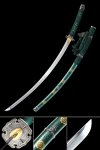 |
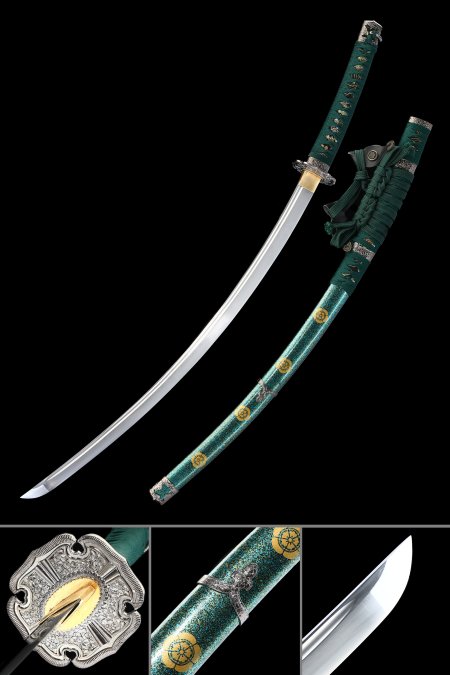
Odachi Sword 1095 Carbon Steel with Teal Lacquer Saya & Green Ito Wrap |
Product is as advertised! Great craftsmanship, build and design. No flaws detected. AWESOME PRODUCT!! THANK YOU!
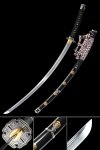 |
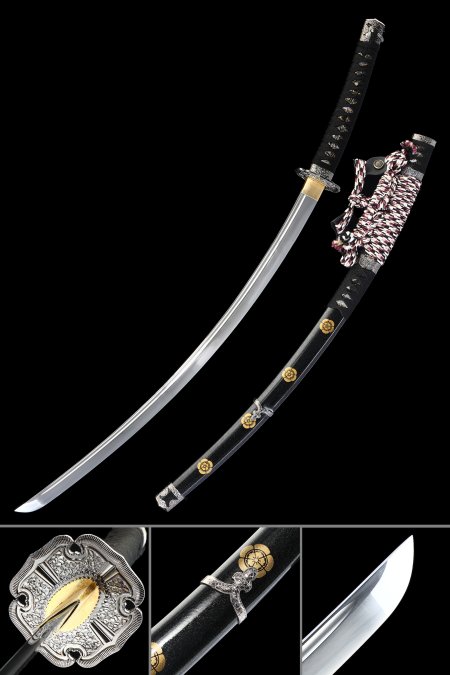
1095 Carbon Steel Odachi Sword Full Tang with Black Lacquer Saya and Silver Scroll Tsuba |
Great sword to have in my collection. The weight is well balanced and the blade is sharp. I recommend this sword
|
Odachi Sword 1095 Carbon Steel with Teal Lacquer Saya & Green Ito Wrap |