Blue Odachi

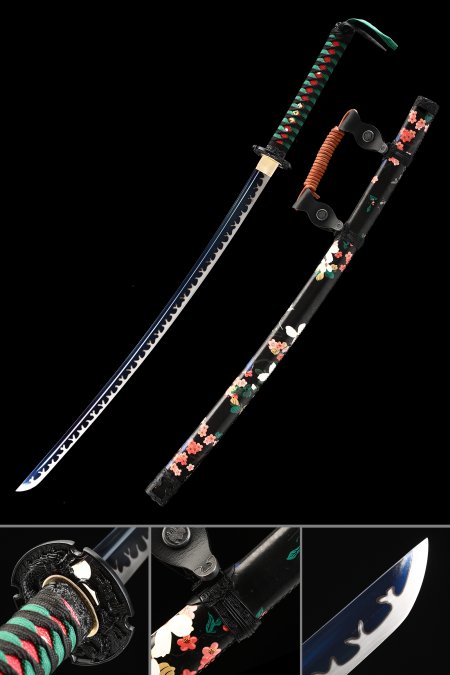
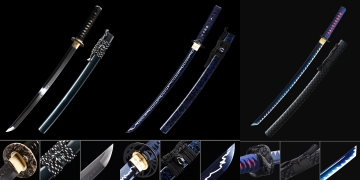
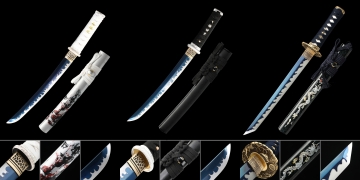
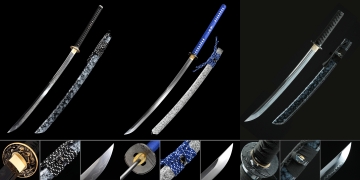
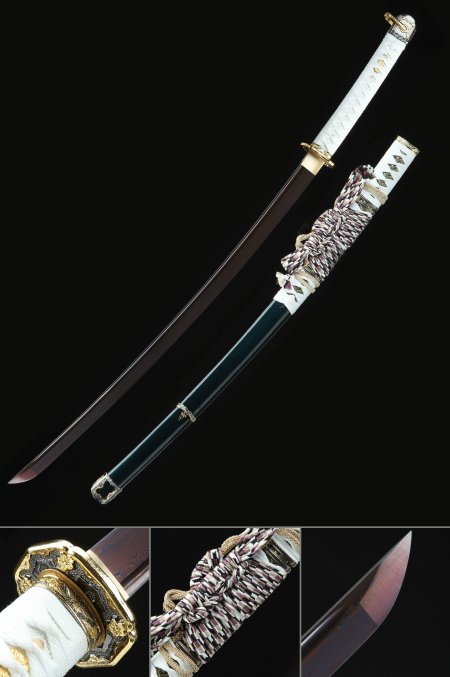
The Blue Odachi collection brings together oversized Japanese field swords distinguished by their vivid blue-finished blades, hand-fitted mountings, and full-tang construction built for lasting display. Each piece draws on traditional forging methods — from Damascus layered steel to high-manganese and 1045 carbon steel — paired with ornate tsuba, lacquered saya, and wrapped tsuka grips that make every sword a centerpiece rather than an afterthought. Free standard shipping is included on all orders, and we offer hassle-free returns so you can collect with complete confidence.
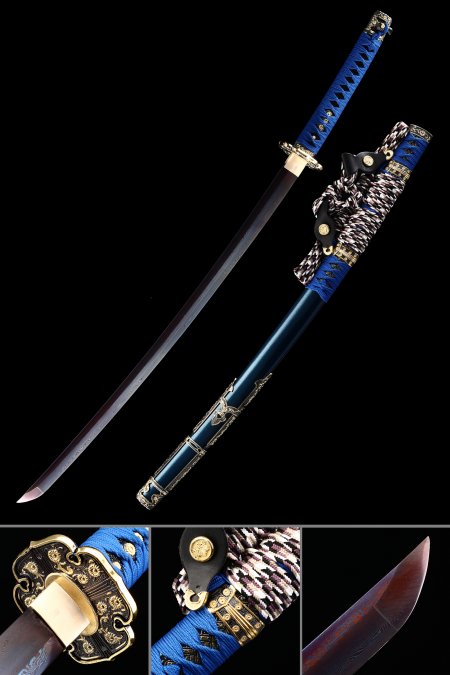
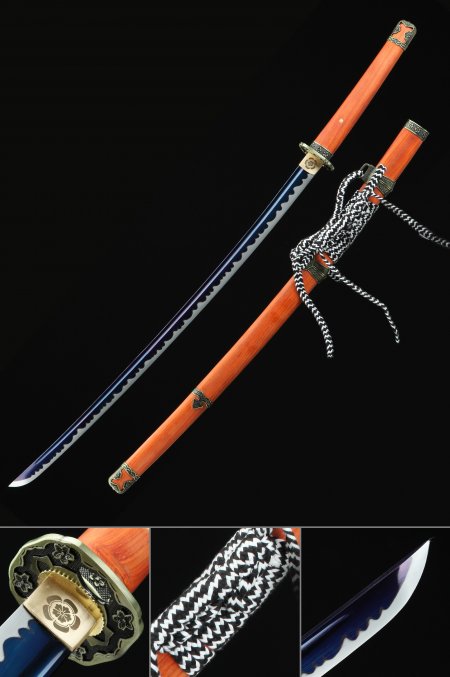
Showing 4 Products

Related Collections

Blue Ninjato14 items


47 Reviews

Blue Wakizashi7 items


19 Reviews

Blue Tanto10 items


68 Reviews

Blue Naginata3 items


7 Reviews

Frequently Asked Questions

What makes an odachi different from a standard katana?
The odachi — sometimes called nodachi — is defined primarily by its exceptional blade length, which historically exceeded 90 cm (roughly 35 inches) and often reached well beyond that. Where a katana was designed for one-handed or close-quarter use by a mounted or standing samurai, the odachi was carried by infantry and required two hands to wield due to its length and weight distribution. For collectors, this means the odachi presents a dramatically different visual scale. The extended blade allows for a broader sweep of hamon line, more surface area to display steel grain patterns like those found in Damascus construction, and an overall presence that commands attention on a display wall in a way that shorter forms simply cannot replicate. The curvature (sori) and tang (nakago) geometry also differ from standard katana proportions, reflecting the sword's origins as a field-use form.
How is the blue finish applied to these odachi blades?
Blue blade finishes on collectible Japanese swords are typically achieved through one of two methods: controlled heat patination or acid-based chemical coloring. Heat patination involves carefully applying concentrated heat to the steel surface until oxidation produces blue and violet tones — the same principle behind the blue coloring seen on firearm barrels and motorcycle exhaust pipes. Acid-based finishing uses ferric chloride or similar compounds to chemically alter the surface layer, producing a more consistent and controllable color depth. Neither method affects the structural integrity of the steel, and both produce a finish that pairs beautifully with ornamental fittings like bronze chrysanthemum tsuba or lacquered saya. For long-term display, a light coat of camellia oil over the blade every few months will preserve the finish and prevent surface oxidation from dulling the color.
Is Damascus steel or carbon steel better for an odachi display piece?
For display-focused collectors, Damascus steel has a clear aesthetic advantage: the forge-welding of alternating steel layers produces a flowing grain pattern — called the hada — that becomes visible under light and reveals itself more fully when the blade is lightly oiled. This visual complexity makes Damascus odachi particularly compelling as art objects. Carbon steel options like 1045, while visually simpler in surface texture, offer their own appeal: they hold heat-treatment characteristics more consistently, which means craftsmen can produce cleaner, more defined hamon (temper lines) along the blade edge. If your primary interest is surface drama and the look of layered steel, Damascus is the natural choice. If you prefer a blade where the hamon is the focal point and the geometry is crisp and classical, a well-finished carbon steel odachi may suit your display goals better.
How should I store and maintain a Blue Odachi long-term?
Long-term storage of an odachi — especially one with a colored blade finish — requires attention to humidity control above all else. Steel is susceptible to oxidation in environments above 50–60% relative humidity, and a blue finish can develop uneven spotting if moisture is allowed to settle on the surface. Store the sword horizontally on a dedicated sword rack, blade edge facing upward in the traditional Japanese manner. Before long-term storage, wipe the blade with a clean, lint-free cloth and apply a thin, even coat of camellia oil or choji oil using a soft applicator. Avoid silicone-based products, which can trap moisture beneath the surface over time. The saya should be inspected periodically to ensure the interior lining has not degraded in a way that could scratch or abrade the blade finish. Direct sunlight should be avoided, as UV exposure can fade lacquered saya finishes and the tsuka wrapping material over time.
Does a Blue Odachi work as a display set with shorter sword forms?
Absolutely — the odachi's scale makes it an ideal anchor piece for a multi-sword display. Its length creates a natural visual hierarchy when paired with a katana or kodachi, and staying within a consistent color palette across pieces produces a cohesive, curated look. A blue-finished odachi pairs naturally with a blue-toned katana or a tanto in a matching blue scabbard, allowing the color story to carry across the display while the size variation provides visual contrast. Wall-mounted displays benefit particularly from this approach: the odachi hung horizontally at the top, with shorter forms arranged beneath it, creates a composition that reads as intentional rather than coincidental. For collectors building a thematic display around Japanese sword forms, the odachi's commanding length makes it the most logical centerpiece.

Customer Reviews

Cart 0 Items

Your cart is empty