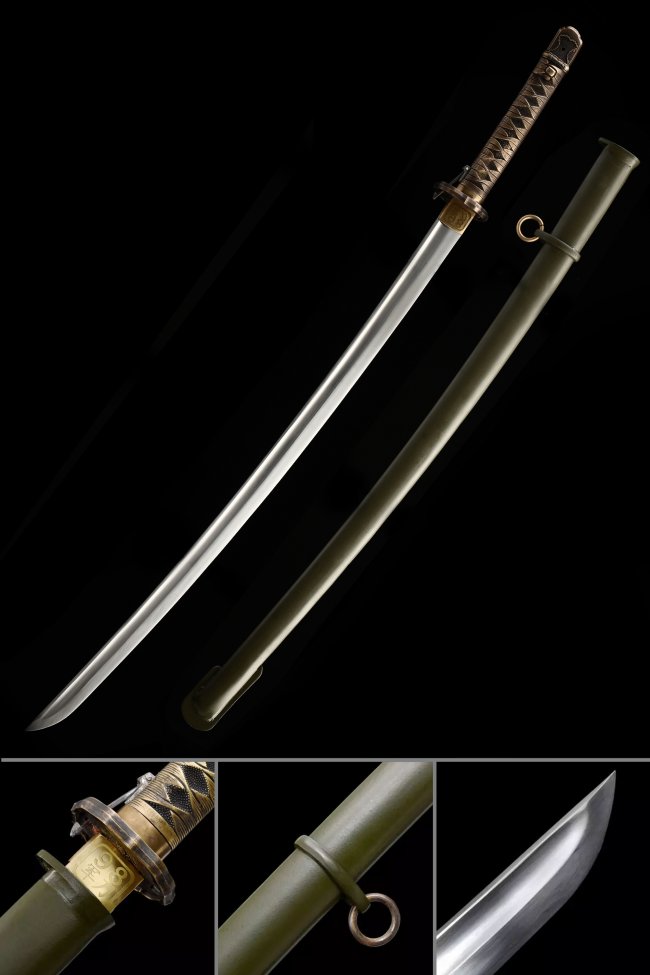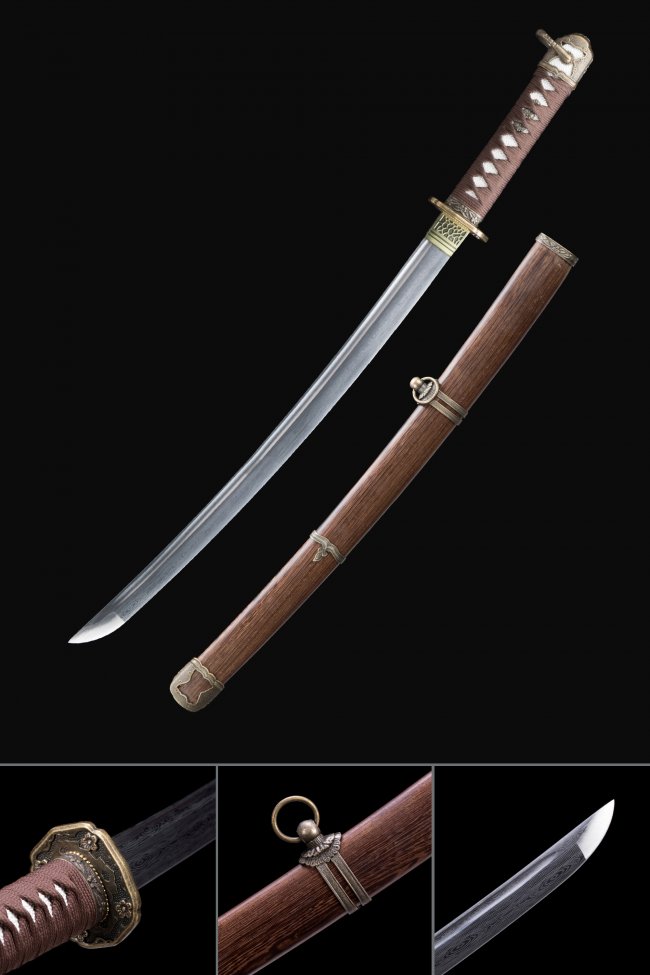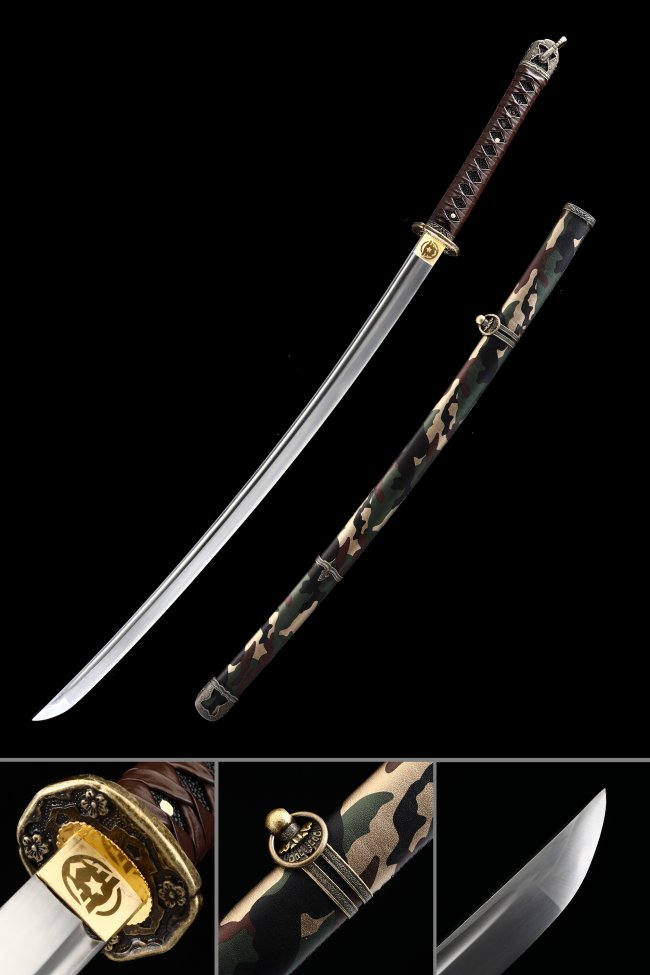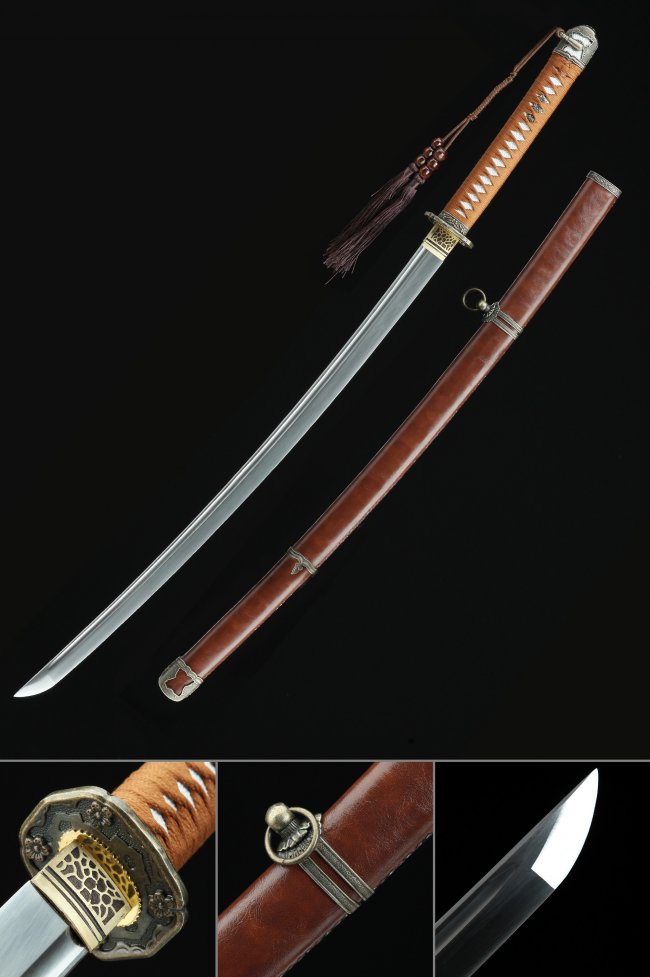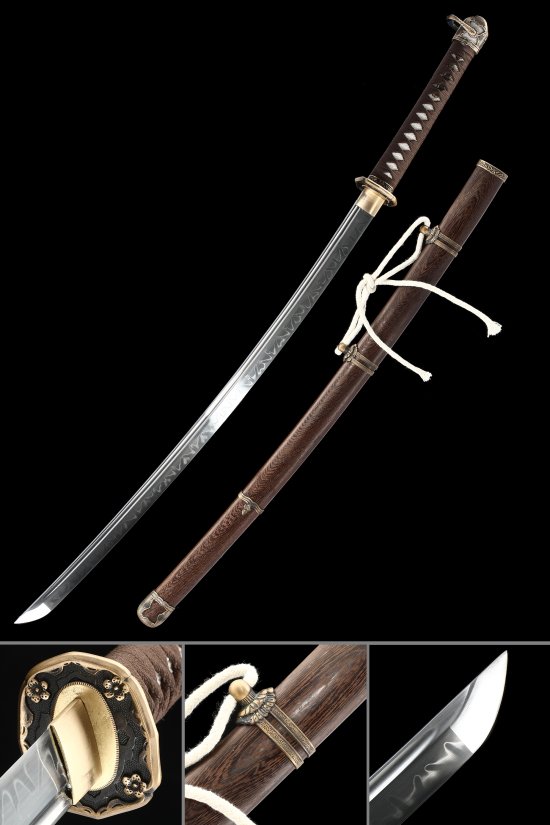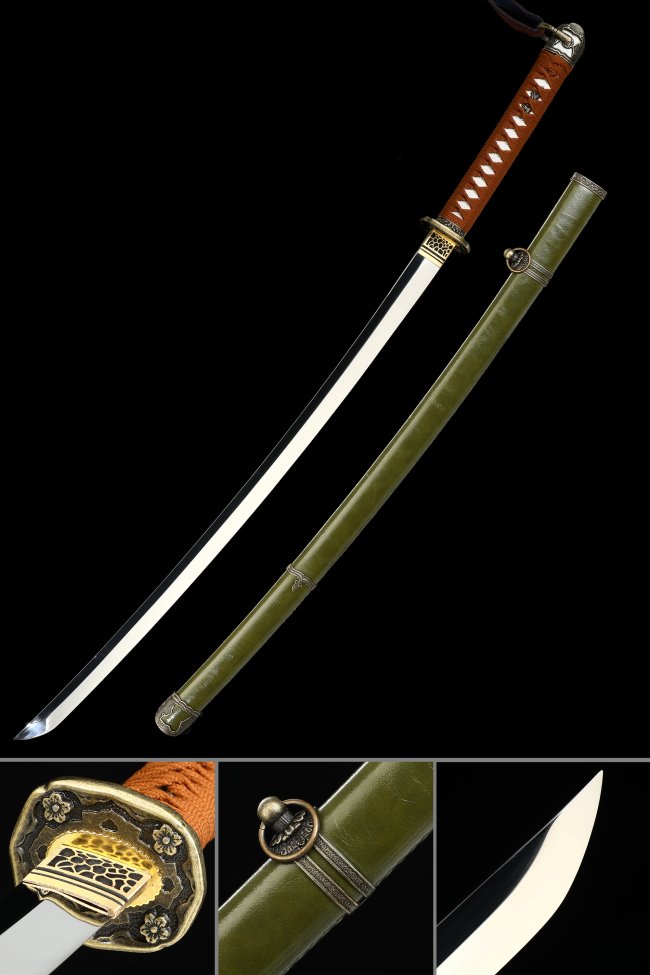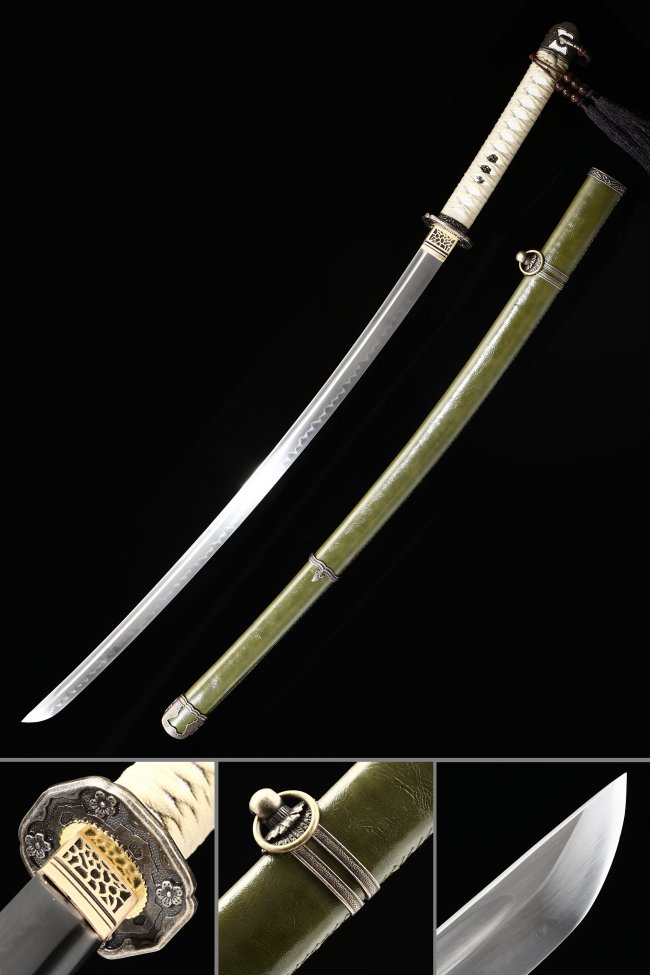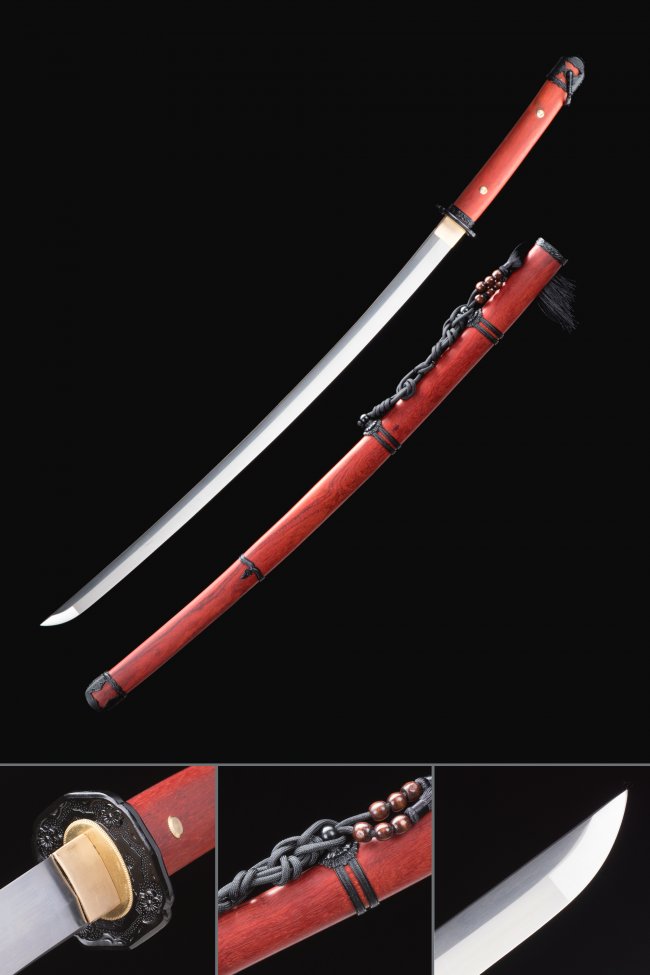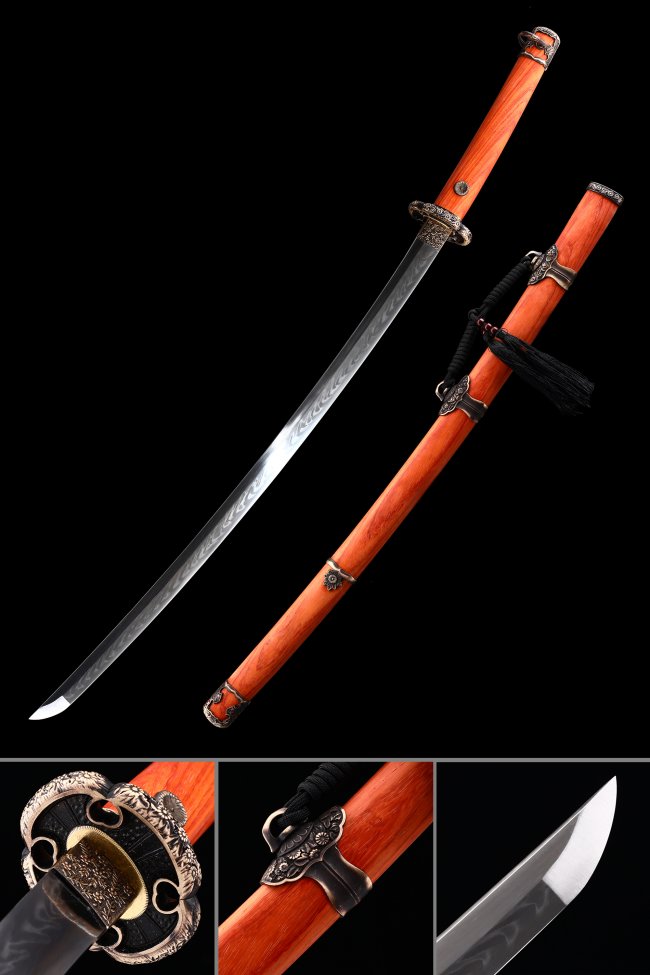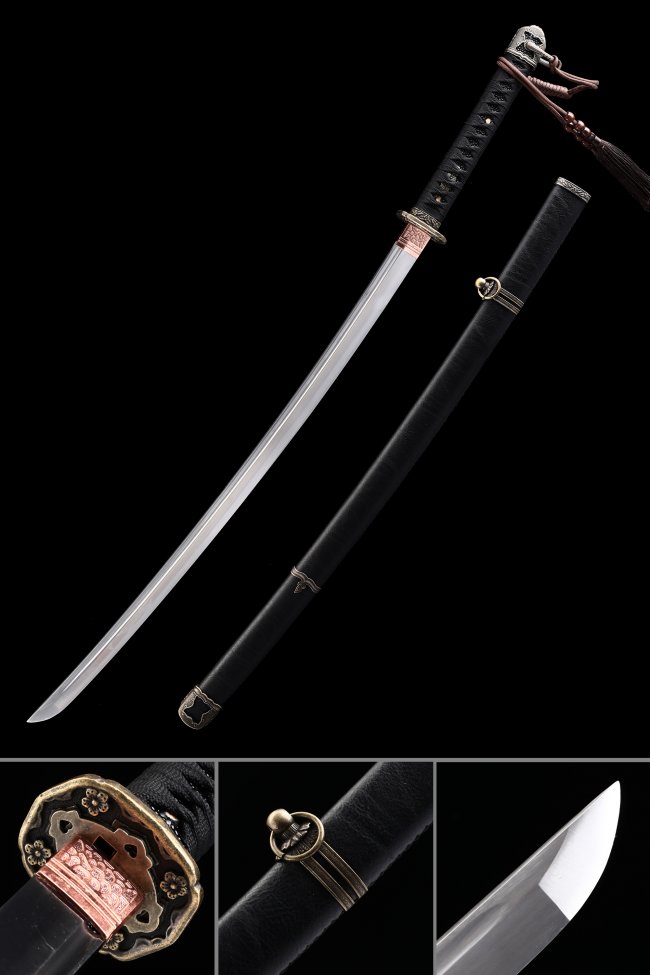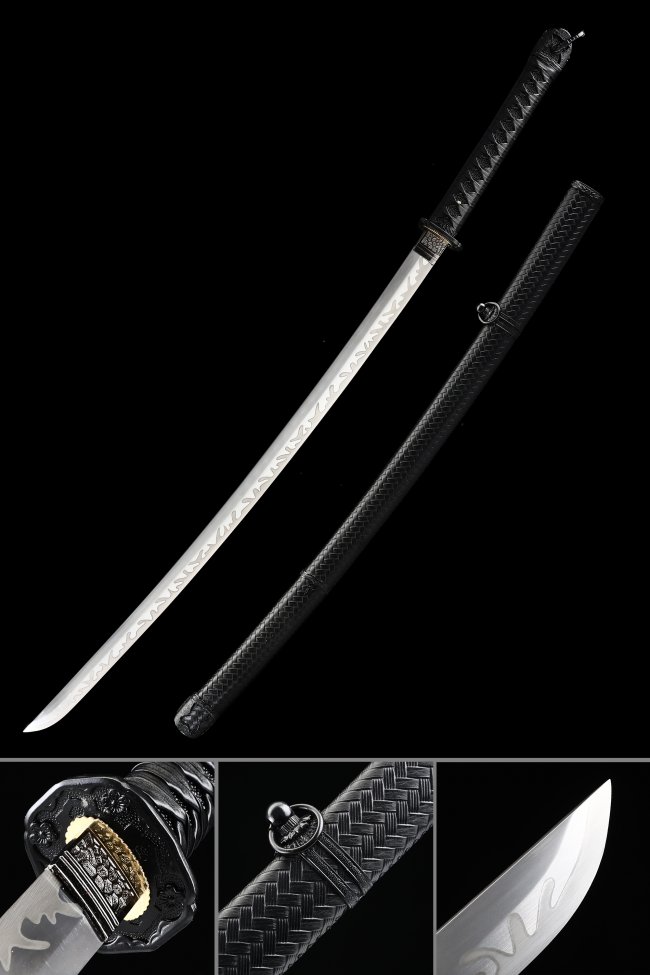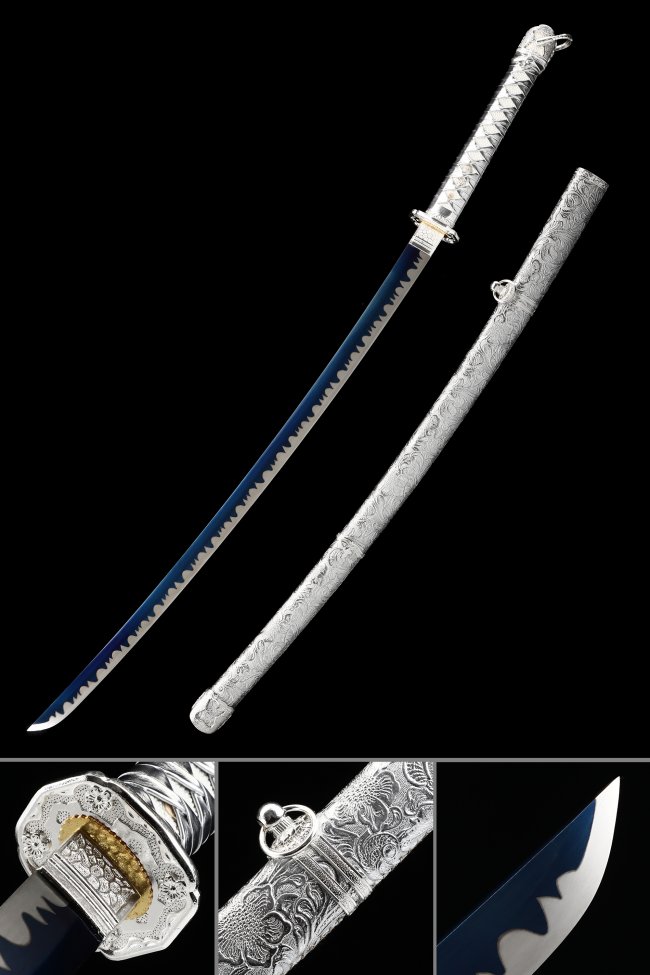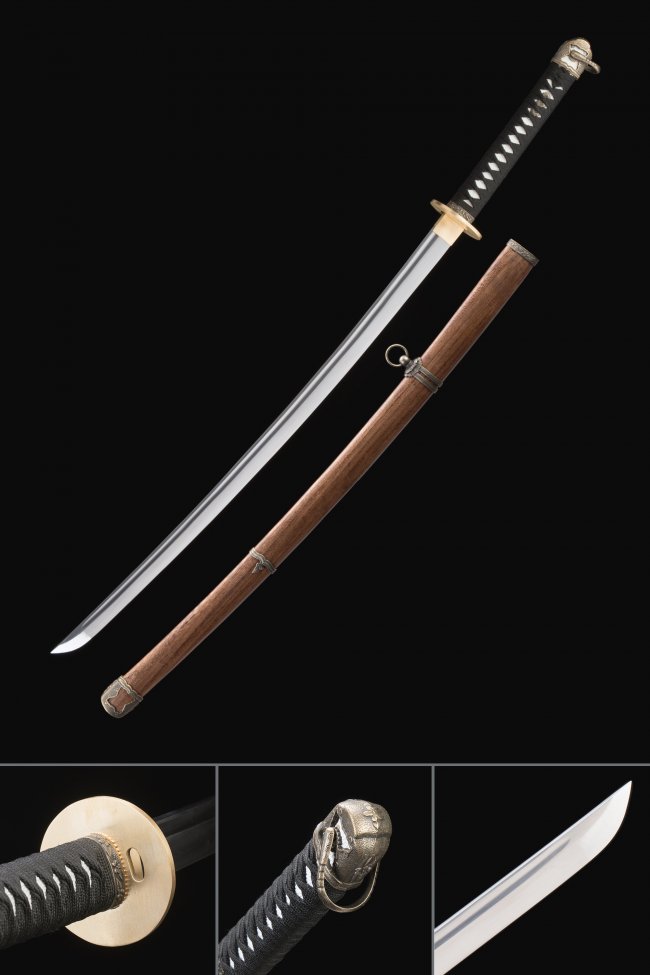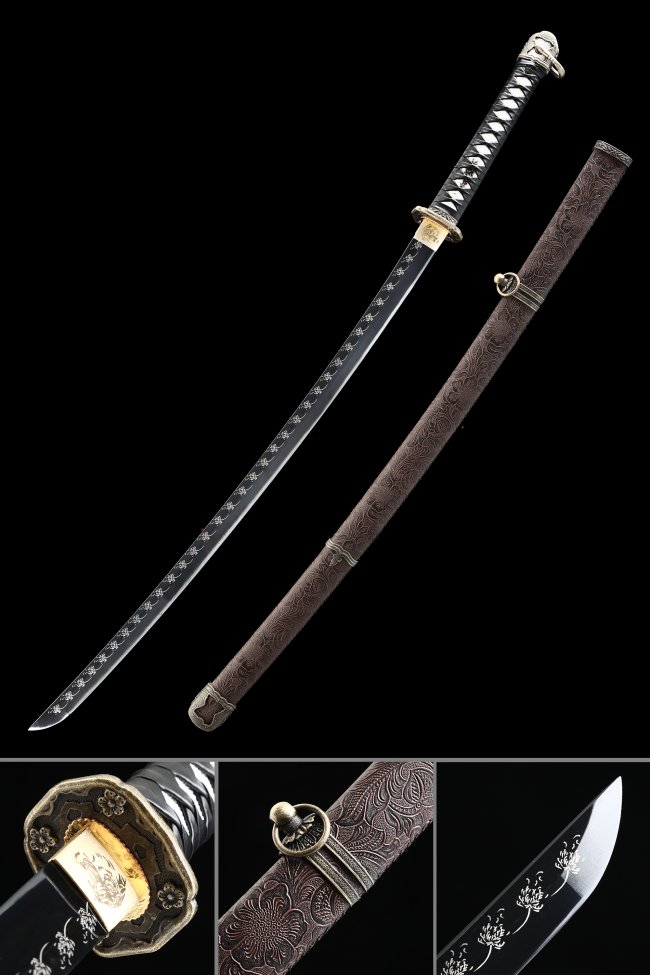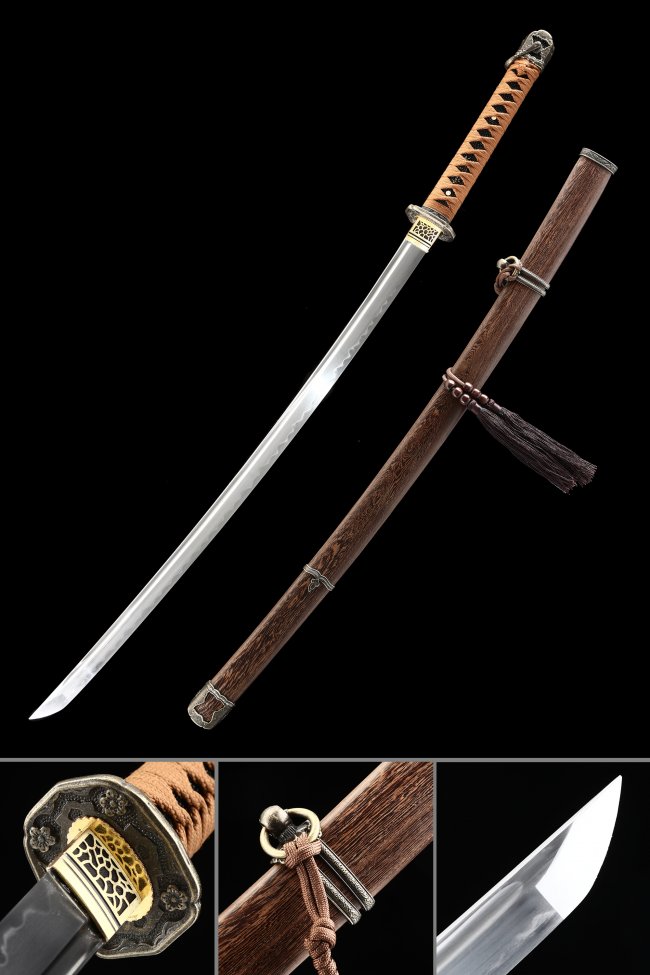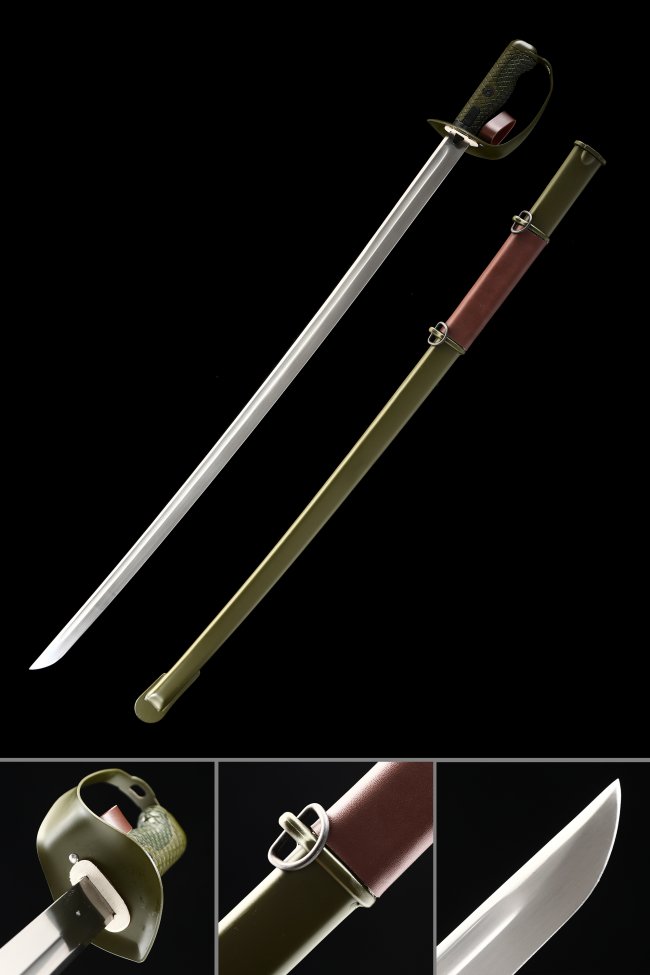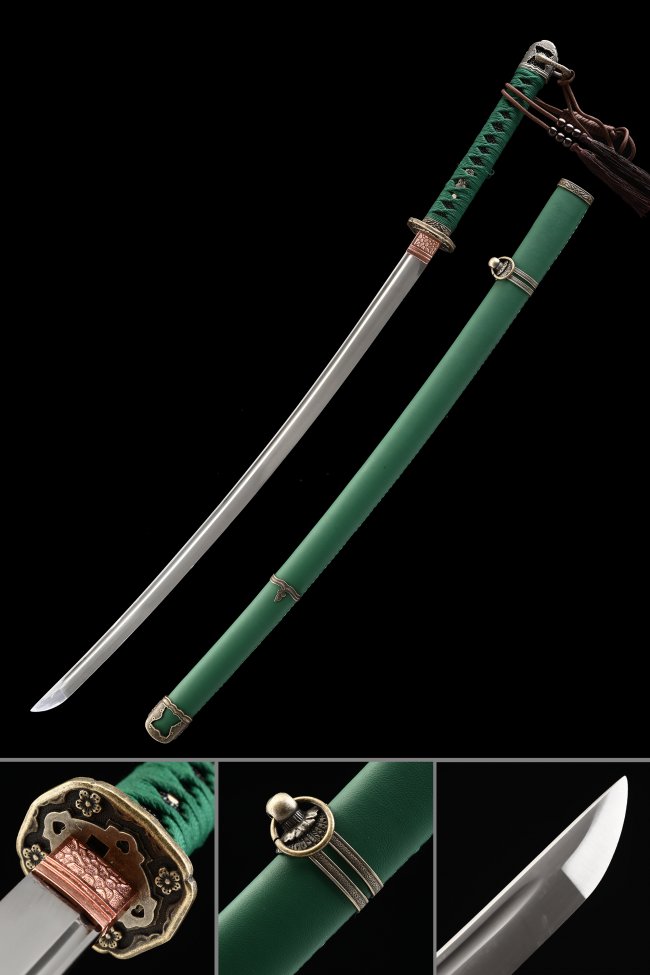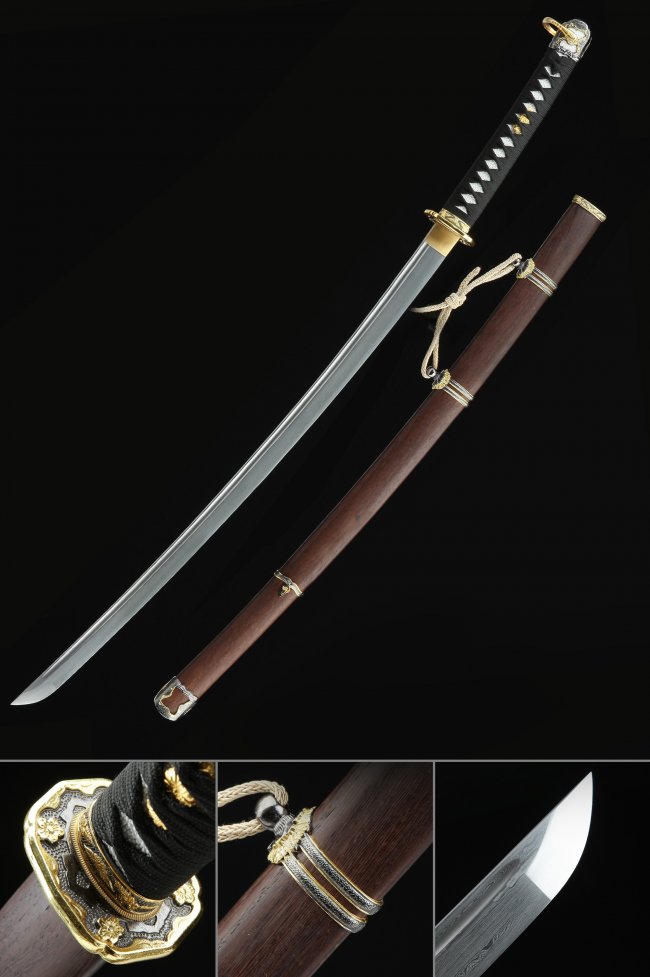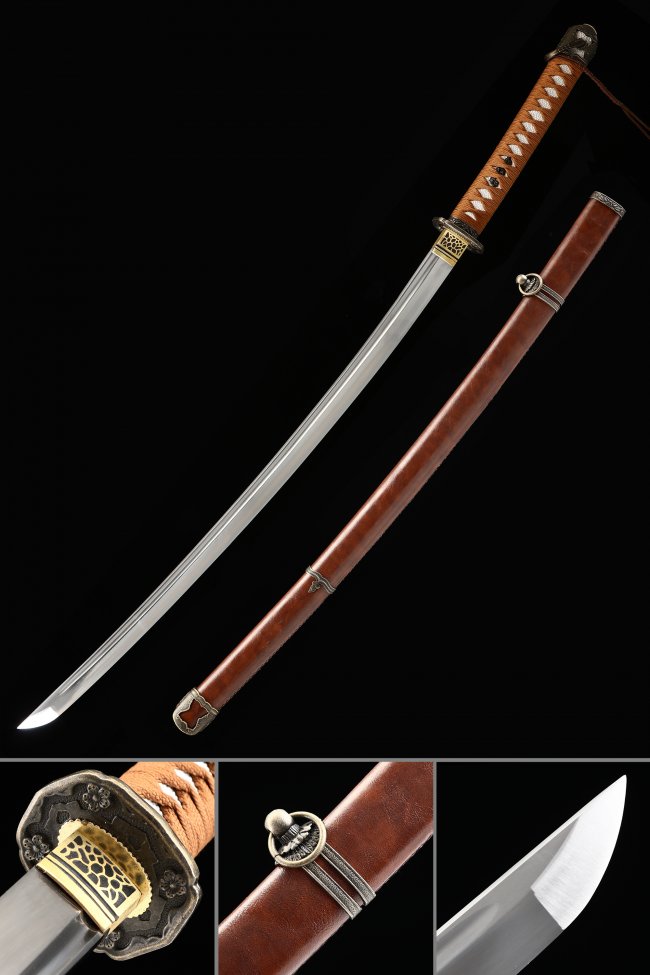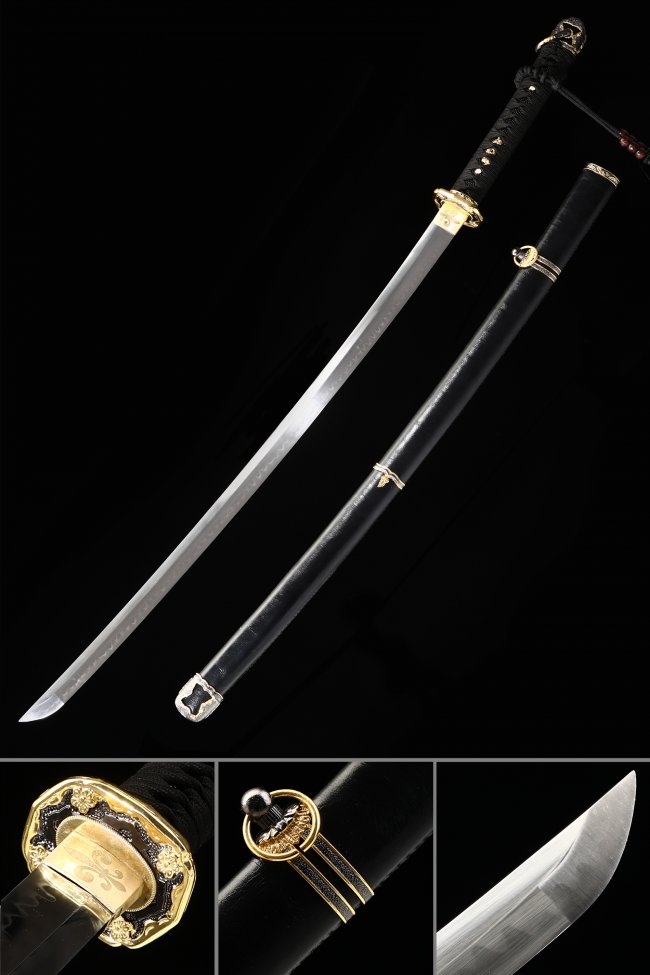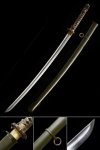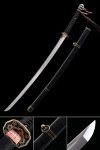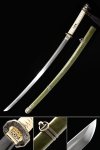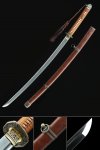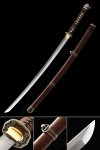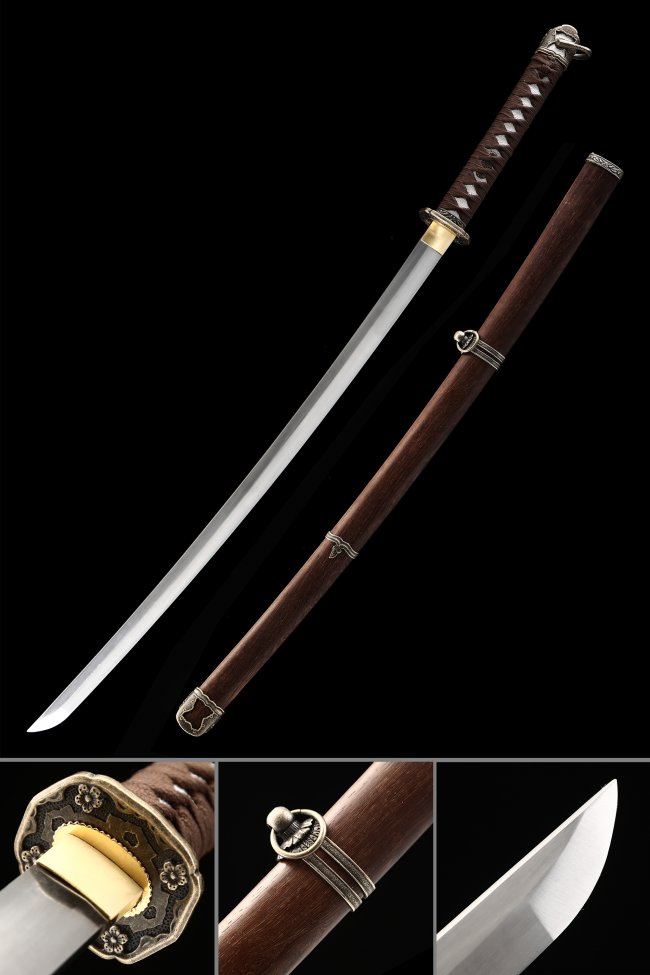
Saber Sword
Looking for a real saber sword? TrueKatana offers a full lineup of hand-forged sabers built with high-carbon steel, full-tang construction, and authentic curved blades — not cheap wall-hanger replicas. Our collection covers the styles collectors actually want: classic cavalry sabers with single-edge curves, Japanese Military Sword models modeled after WWII-era gunto, Japanese Officer Sword designs, and functional Curved Sword options for cutting practice and display. Every blade is individually forged by experienced swordsmiths, heat-treated for real edge retention, and inspected before shipping. Over 100,000 customers trust TrueKatana, backed by 9,800+ verified reviews, a 4.9/5 star rating, a 30-day satisfaction guarantee, and free shipping on all US orders. Whether you are a history enthusiast, reenactor, or collector starting your first military sword display, this is where serious sabers live.


Frequently Asked Questions
What exactly is a saber sword, and how is it different from other swords?
A saber sword is a single-edged, curved blade originally designed as a cavalry weapon. The defining features are its curve, its single cutting edge, and its relatively long reach — typically 30 to 36 inches of blade length, compared to the 28-inch average of a katana or the 32-inch length of a medieval arming sword. The curve is the most important element: it concentrates cutting force along a smaller contact area during a sweeping strike, which is exactly what a mounted rider needs when slashing at targets while galloping past.
Unlike a rapier, which is a thrusting weapon, or a broadsword, which is a hacking weapon, the saber is a slashing specialist. Its handle is built for one-handed use, usually with a full knucklebow or basket hilt that protects the hand from opposing blades. The spine of the blade is thick for strength, tapering toward a sharp edge and a pointed tip capable of thrusting as well as cutting.
Compared to a Japanese sword like a katana, the saber is longer, lighter in the tip, and uses a different forging tradition — European swordsmiths did not fold steel like Japanese smiths did, because the ore they worked with was already of high quality. Compared to a Curved Sword like a scimitar, the saber is usually narrower and straighter, with a more pronounced tip.
Historically, the saber was the sidearm of choice for dragoons, hussars, cuirassiers, and officers from the 1600s through WWI. It became iconic in the Napoleonic Wars, was carried by both sides in the American Civil War, and was the ceremonial dress sword of officers in most modern armies by the early 20th century. Today, sabers are popular with collectors, reenactors, and martial artists because they combine elegant aesthetics with real combat history. TrueKatana's Saber Sword collection includes faithful replicas of these historical patterns along with modern fantasy designs.
One more point worth making: the saber is one of the very few sword types that remained in active military service well into the machine-gun era. Cavalry units in WWI still carried sabers into battle, and some officers wore them in WWII as part of dress uniform. That longevity is a big part of why sabers remain so collectible today — unlike a broadsword or rapier, the saber is recent enough that real antiques and faithful reproductions overlap in the same collector market. For fans of military history, owning a saber is the closest you can get to holding a tool that shaped the last four centuries of warfare.
Are TrueKatana sabers battle-ready or just for display?
Both, depending on which one you pick. TrueKatana offers sabers across the full spectrum — from decorative display pieces to fully battle-ready blades that you can actually swing at tatami mats and bamboo targets. The distinction comes down to three things: steel, tang, and heat treatment.
Our decorative sabers use 1045 carbon steel or stainless steel, are lighter in weight, and are intended for wall mounting, cosplay, and display cases. They look beautiful and capture the historical silhouette, but they are not meant for cutting. If you try to cut with a display-grade blade, you risk chipping the edge, bending the steel, or loosening the fittings.
Our battle-ready sabers step up to 1060 or 1095 high-carbon steel, sometimes with clay tempering for hardened edges. These blades have Full Tang Sword construction, meaning the steel runs the entire length of the handle — the grip is not just glued on. The tang is pinned or riveted, the guard is tightly seated, and the blade is properly heat-treated so the edge stays hard while the spine stays flexible.
If you plan to do actual tameshigiri (test cutting) or backyard cutting practice, look for sabers explicitly marked "battle ready" or "full tang." Our Battle Ready Katana and Sharp Katana collections include several cutting-ready options. For safe practice without a sharp edge, a Training Katana is a better choice.
Every TrueKatana saber is individually inspected before shipping, and each product page lists the steel grade, blade length, weight, and whether the sword is intended for cutting or display. If you have any doubts about which category a specific model falls into, the description on the product page is the place to check — and our customer service team can confirm specs before you buy.
Something else to keep in mind: a "battle-ready" saber is not the same as a bulletproof tool. Even the best-forged blades will eventually chip, dull, or bend if you abuse them on wrong targets — hitting metal, concrete, or hardwood will damage any sword, regardless of price. Stick to the traditional test media (tatami omote, water-filled bottles, green bamboo, pool noodles) if you want your cutting-grade saber to last a lifetime. That way you get the thrill of real steel performance without wrecking your investment on the first swing.
What steel should I look for in a quality saber?
Steel is the single most important factor in saber quality, and the choice depends on what you want the sword to do. Here is the breakdown of the steels TrueKatana uses most often.
1045 carbon steel is the entry-level option. It is soft enough to be safe for display and light practice, holds a basic edge, and is budget-friendly. It is a good pick if you want a historical-looking saber for a wall mount or cosplay and do not plan to cut anything. It will dent and bend under hard use, though, so do not take it into serious practice.
1060 carbon steel is the sweet spot for most collectors. It is hard enough to hold a working edge, tough enough to absorb impact without chipping, and priced in the middle of the range. Most battle-ready sabers in our catalog are forged from 1060, and it is the steel we recommend for first-time cutters. The Handmade Katana line uses this steel extensively.
1095 and T10 tool steel are the premium tier. These steels have higher carbon content, meaning harder edges and better edge retention. When clay-tempered, they also develop a visible hamon line along the blade — a beautiful byproduct of the differential hardening process. T10 in particular is known for its durability under heavy cutting. Expect to pay more for these, but you get a noticeably sharper, longer-lasting blade.
Stainless steel is a separate category. Stainless resists rust with zero maintenance, but most stainless alloys are too brittle for real cutting — they crack instead of flexing. Stainless is only appropriate for display pieces or very short blades. TrueKatana offers a few stainless options in our Stainless Steel European Medieval Swords line for collectors who want zero-maintenance display blades.
If you want maximum value for cutting, pick 1060. If you want to impress, pick T10 clay-tempered. If you only want to display, 1045 or stainless is fine.
One more consideration is heat treatment. Two blades of identical steel can perform very differently depending on how they were hardened and tempered. A well-heat-treated 1060 blade can outperform a poorly treated 1095 blade every time. TrueKatana's forges control the heat treatment on every blade, so the steel grade on the product page is an accurate guide to the sword's actual capabilities — not just a marketing label.
How long is a typical saber, and what length should I choose?
Saber length varies by type, but most historical cavalry sabers have blade lengths between 30 and 36 inches, with an overall length of 36 to 42 inches including the handle. Infantry sabers are shorter — typically 28 to 32 inches of blade — because foot soldiers did not need the extra reach that a mounted rider required. Naval cutlasses are the shortest sabers, often just 24 to 28 inches, designed for tight ship corridors.
For a collector, the right length depends on how you plan to display and use the sword. If you are wall-mounting, the longer cavalry saber looks more dramatic and historically accurate. If you are handling the sword or practicing draws, a shorter length is easier to manage — especially indoors. Height matters too. A taller collector can comfortably handle a 36-inch blade one-handed; a shorter collector might find a 30-inch infantry saber or a samurai sword sized for a smaller stature more comfortable.
If you plan to cut with the saber, length trades off against control. A 36-inch blade has more reach and cuts harder, but it is slower to recover and harder to aim precisely. A 30-inch blade is faster, easier to control, and more forgiving for beginners. This is why light cavalry in history often chose shorter, more agile blades over the heavier, longer patterns.
Weight is just as important as length. A well-balanced saber feels lighter than it actually is, because the point of balance sits closer to the hand. Check each product listing on TrueKatana for the "point of balance" specification if it matters to you. As a rough guide, a good saber weighs between 2 and 3 pounds total, with a balance point 3 to 5 inches in front of the guard.
For most buyers, a 32 to 34-inch cavalry saber hits the sweet spot — long enough to look impressive on display, manageable enough for handling and occasional practice. If you are unsure, start there and expand your collection from that baseline. And do not forget the handle — saber grips range from 4.5 inches for one-handed designs to 6 inches for hand-and-a-half versions, which changes how the sword feels in the hand more than most buyers expect.
Can I legally own a saber sword in my country or state?
In most places, yes — sabers are legal to own as collectible or decorative edged weapons. In the United States, federal law does not restrict sword ownership, and most states allow adults to buy, own, and display sabers without a permit. However, some states and cities have rules about carrying swords in public, concealing them, or taking them to schools and government buildings. Owning a saber at home is almost always fine; walking down the street with one is a different story.
International rules vary more. The United Kingdom allows ownership of most sabers, but the Offensive Weapons Act restricts certain categories of curved blades over 50 cm unless they are hand-forged by traditional methods — which is one reason hand-forged replicas from reputable sellers still ship to the UK while cheap stamped imports do not. Canada and Australia allow saber ownership with few restrictions for display and collection, though transport and concealment rules apply. Germany and most of continental Europe allow saber ownership for adults.
Age matters everywhere. TrueKatana ships only to verified adults (18+), and some jurisdictions require age verification at delivery. If you are buying as a gift for a minor, the sword should be shipped to the adult purchaser's address and handled as a supervised item. Ceremonial and historical sabers are often exempt from restrictions that apply to "tactical" or "zombie" knives, but it is worth checking your local laws before ordering.
For conventions and reenactments, most events allow sheathed sabers as part of a costume or uniform, with the requirement that the blade stay peace-bonded (zip-tied in the scabbard) during the event. Civil War and Napoleonic reenactors routinely carry sabers at sanctioned events. TrueKatana's Historical Katana and Replica Katana lines are popular with reenactors for this reason.
When in doubt, check your state, province, or country's weapons code before ordering. The rules change by jurisdiction, and we cannot give legal advice, but most collectors find that sabers fall into the easiest category of sword ownership. One practical tip: keep your order confirmation and packing slip on file. If you ever need to prove that a saber was purchased for collection or display purposes, that paperwork serves as a simple record of intent and provenance, which can help in the rare case that a local authority asks questions.
How do I take care of my saber and prevent rust?
High-carbon steel rusts — that is the tradeoff for a blade that holds an edge. With basic care, your saber will stay beautiful for decades; without it, you will see orange spots within weeks. Here is the maintenance routine every saber owner should follow.
Step one: wipe down after every handling. Fingerprints contain salt and moisture that will etch the blade overnight. Use a soft cotton cloth, microfiber rag, or dedicated sword wipe, and run it down the blade from the guard to the tip.
Step two: oil the blade regularly. Choose a light mineral oil, camellia oil (the traditional Japanese choice), or a modern synthetic like Ballistol. Put a few drops on a soft cloth and wipe a thin, even coat across the entire blade surface. For a display sword, once every 2–3 months is enough. For a sword you handle weekly, oil it once a week. In humid climates, oil more often.
Step three: check the scabbard. A saber sheath can trap moisture, which accelerates rust. Do not leave the sword sheathed long-term without oiling first. Every month or two, draw the blade, inspect for spots, oil, and re-sheath. If you see rust forming inside the scabbard, air it out and use a desiccant pack in the storage area.
Step four: store properly. Keep your saber horizontally on a wall mount or a dedicated stand, not leaning vertically in a closet where the edge can contact surfaces. Avoid basements, garages, and any location with temperature swings — the condensation cycle is a rust factory. A climate-controlled room between 60-75°F and under 60% humidity is ideal. A Katana Wall Mount display keeps the sword visible and ventilated.
Step five: handle the grip carefully. Cotton wraps, leather grips, and wooden handles can warp from sweat and oils. Wipe the handle with a dry cloth after handling, and avoid using blade oil on leather or cord wraps — it breaks them down.
If rust does appear, treat it early. Light surface rust can be removed with a soft brass brush or a bamboo skewer with a drop of oil. Deeper pitting usually needs professional polishing. The goal is to catch it before it spreads.
What is the best way to display a saber sword?
A saber looks great on display, and the mounting style you choose affects both visual impact and long-term condition. Here are the display options most collectors use.
Horizontal wall mount (most popular). This is the classic museum look — two brackets on the wall cradling the scabbarded saber, edge down. It shows the full curve of the blade, takes up minimal floor space, and lets you step back to see the silhouette. A Katana Wall Mount designed for curved blades works for most sabers, though you may want a wider wall rack for longer cavalry sabers. Mount the sword at eye level or just above, where the curve catches the light.
Vertical wall mount. Some collectors prefer the sword pointing up, especially for ceremonial or dress sabers. Vertical mounts are more dramatic but expose the blade to more dust. This style works best behind glass or in a shadow box.
Tabletop stand. A desk or shelf stand holds the sword horizontally with scabbard attached. Stands are the most flexible option — you can move the sword easily, rotate your collection, and keep it away from walls. The tradeoff is that tabletop displays collect dust faster and can get knocked over.
Shadow box or glass display case. The ultimate preservation method. A sealed case keeps dust, humidity, and curious fingers away from the sword. Shadow boxes are perfect for historically significant sabers, reproduction pieces with high sentimental value, or pairs of matching swords displayed together.
Lighting matters. Avoid direct sunlight — UV light fades lacquer, bleaches wood, and can discolor wrapped handles over time. LED spotlights are safer than halogen or incandescent because they produce very little heat. Warm white LEDs bring out the patina of carbon steel; cool white highlights the polish on mirror-finished blades.
Whatever display method you choose, make sure the mount is anchored securely to studs or heavy furniture. A saber falling off a wall can injure someone and damage the blade. And always unsheathe the sword occasionally, even on display — a long-sheathed blade is a rusting blade. TrueKatana's Display Katana collection and matching wall mount hardware make it easy to put together a professional-looking display from day one.
Are sabers sharp out of the box, or do I need to sharpen them?
Every TrueKatana saber arrives with the edge geometry finished by the smith — there is no option to pick "sharp" versus "unsharp" at checkout. The blade ships the way the maker intended, and the product page lists the sharpness level of that specific model.
Battle-ready sabers, meaning those in 1060, 1095, or T10 steel with full tang construction, come with a functional cutting edge suitable for test cutting on tatami mats, water bottles, and bamboo. These blades are sharp enough to shave paper and slice through soft targets with a clean stroke. They are not razor-honed like a chef's knife, because a saber's edge needs to survive impact — too thin an edge will chip on contact with bone, wood, or another blade.
Decorative sabers in 1045 or stainless steel typically ship with a duller edge, because the steel is not hard enough to hold a cutting edge under load. These are meant for display, so a fully sharpened blade would just invite damage during the first cutting attempt. A blunt display edge is also safer to handle and store.
Over time, any carbon steel blade will dull with use, and you can resharpen it yourself if you know what you are doing. The correct method is a whetstone progression (1000-grit coarse, 3000-grit medium, 6000-grit fine), with the blade held at a consistent 15-20 degree angle to the stone. Do not use a power grinder — the heat will ruin the temper. If you are not confident in sharpening, a professional service can restore the edge for a reasonable fee.
Our dedicated Sharp Katana collection is a good reference if you want to see which models come razor-honed versus lightly sharpened. And our Training Katana line gives you a safe, unsharpened option for iaido practice and kata training, where a sharp edge is not needed or wanted.
Remember, a sharp sword is a more dangerous sword. Even for experienced handlers, the difference between a lightly sharpened and razor-honed blade can matter during drills. Pick the sharpness level that matches how you actually plan to use the sword.
How is a TrueKatana saber made?
Every TrueKatana saber is forged by hand, not stamped out of a machine. The process begins with a bar of high-carbon steel — usually 1045, 1060, 1095, or T10 — which the smith heats in a coal or propane forge until it glows orange. The hot steel is then hammered into the rough shape of the blade, with the curvature gradually set as the metal cools. This rough-forging stage is where the overall geometry of the saber is established, and it can take several hours of hammering before the smith is satisfied with the shape.
Once the blade profile is set, the smith moves to heat treatment. The blade is heated again to critical temperature (around 1500°F) and quenched in oil or water, which hardens the edge by converting the steel to martensite. For premium blades like those in our Handmade Katana line, the smith applies clay to the spine before quenching — a traditional technique that creates a harder edge and softer spine, plus the visible hamon line that collectors prize.
After hardening comes tempering, where the blade is reheated to a lower temperature (around 400°F) to reduce brittleness. Skipping this step would leave the blade hard but fragile; the tempering stage is what gives a saber its combination of edge retention and impact resistance.
Next comes polishing. This is the stage that separates cheap swords from serious ones. A quality polish takes hours of work with progressively finer stones, revealing the grain of the steel and the hamon line. Machine-polished blades look flat and uniform; hand-polished blades show depth and character.
Finally, the smith fits the handle and guard, wraps the grip, and matches the blade to a scabbard. Every Full Tang Swordand Battle Ready Katana in our catalog goes through a similar process, with each step performed by an experienced swordsmith. The result is a sword that a machine simply cannot reproduce.
The difference you can actually feel is in the balance and the finish. A hand-forged saber has a living quality — small variations in the hammer marks, the hamon line, and the polish that remind you it was made by a person, not a CNC mill. Two blades made from the same steel by the same smith will never be 100% identical, and that is part of the appeal. You are not buying a mass-produced product; you are buying a craftsman's interpretation of a historical design, one that has been shaped by hand from raw steel into a finished weapon ready for display or practice.
What is the difference between a saber, a cutlass, and a scimitar?
These three curved swords are often grouped together, but they come from different traditions and serve different roles. Understanding the differences helps you pick the right sword for your collection or your intended use.
Saber. A saber is a European cavalry sword, single-edged and curved, usually with a knucklebow or basket hilt to protect the hand. Blade lengths run 30 to 36 inches. Sabers are optimized for slashing from horseback, which is why the curve is pronounced but not extreme. The European tradition of saber-making spread from the Hungarian hussars westward through the 17th and 18th centuries, reaching its peak during the Napoleonic Wars. Classic examples include the British pattern 1796 light cavalry saber, the American 1860 cavalry saber, and the Japanese military gunto — which, despite its Japanese blade heritage, is technically a saber by hilt and scabbard construction. TrueKatana's Saber Sword collection focuses on this family.
Cutlass. A cutlass is a short, heavy naval saber, usually 24 to 28 inches in blade length. It was designed for close-quarters combat on the crowded decks of sailing ships, where a long cavalry blade would be unwieldy. Cutlasses have thick, wide blades, often with a basket or cup hilt for full hand protection, and they are built more for brute-force chopping than precise slashing. Pirates, privateers, and naval boarding parties from the 17th through 19th centuries all favored cutlasses.
Scimitar. The scimitar is the broad term for curved swords from the Middle East, Central Asia, and North Africa — including the Turkish kilij, Persian shamshir, Arabian saif, and Indian talwar. Scimitars are usually more deeply curved than European sabers, with longer blades and different hilt styles. They share the saber's cavalry heritage, but they predate European sabers by several centuries and developed independently. A classic scimitar has almost no knucklebow, relying instead on a pommel cap and disc guard.
TrueKatana's Curved Sword collection includes scimitar-style blades for collectors who want something outside the Western military tradition, and our samurai sword catalog covers the Japanese curved-blade family. Owning one of each is a great way to see how different cultures solved the same problem — how to cut efficiently with a curved edge.
Customer Reviews
Excellent workmanship very authentic reproduction of the real sword. Thank yo
![]() |
WWII Type 98 Shin Gunto Officer Katana in 1095 Carbon Steel with Brown Leather Saya and Flower Tsuba |
The item arrived well packaged and in a timely manner. I am pleased with this item but have made several minor alterations to improve appearance. the price was not too bad. I would buy again from this company if I found an item I liked and was priced right
![]() |
WWII Type 98 Shin Gunto Officer Katana - 1065 Carbon Steel with Brown Rosewood Saya and Alloy Flower Tsuba |
Excellent. As described. Another great piece for my son and I's collection. Certainly not a cheap toy. Battle Ready.
![]() |
WWII Type 98 Shin-Gunto NCO Sword - 1095 Carbon Steel with Olive Iron Saya and Copper Fittings |
My order came in pretty quickly and the quality seems pretty good! It’s a gift so I have to wait till it’s opened to see how durable it is but it’s got good weight to it :D
![]() |
WWII Type 98 Shin Gunto Officer Katana - 1065 Carbon Steel with Brown Rosewood Saya and Alloy Flower Tsuba |
Amazing quality. Everything is snug, tight, and very well-built. The tang is tightly wound with durable ray skin underneath. The end cap of the tang is snuggly fitted. The blade itself, while this will be used for display, is extremely sturdy. r
r
My main purchasing factor was that True Katana was the only company selling WWII katanas (olive color, rosewood, etc.), and all of the designs and effects are 100% accurate, with the reasonable exception that there is no stamp on the blade (but that's expected, because those forges did not make the blade). With that being said, for what this is, it's well worth the price. r
r
Also, shipping was very fast considering it came from China to America.
![]() |
WWII Type 98 Shin Gunto Officer Katana - 1065 Carbon Steel with Brown Rosewood Saya and Alloy Flower Tsuba |
OUR 22 YR OLD ABSOLUTE LOVED IT!! THANK YOU FOR. A TRUE KATANA!!!
![]() |
WWII Type 98 Shin Gunto Officer Katana - 1065 Carbon Steel with Brown Rosewood Saya and Alloy Flower Tsuba |
Great sword for the price. Could have been a bit sharper. But, I bought it mostly for display. It arrived much faster than I thought. I’ll definitely buy from True Katana again.
![]() |
WWII Type 98 Shin Gunto Officer Katana - 1065 Carbon Steel with Brown Rosewood Saya and Alloy Flower Tsuba |
Sword arrived faster than expected. Great delivery time, great blade.
![]() |
Shin Gunto Type 98 Officer Saber in Damascus Steel with Brown Hardwood Saya and Gold Alloy Fittings |