Why do some ninjato in this collection feature blackened blades?
Updated Mar 2026
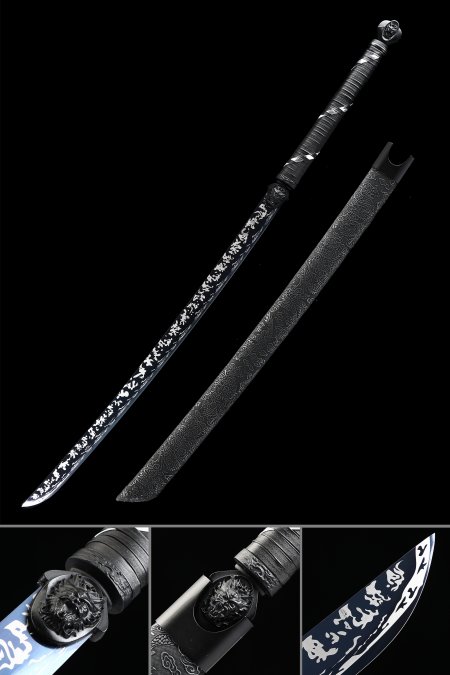
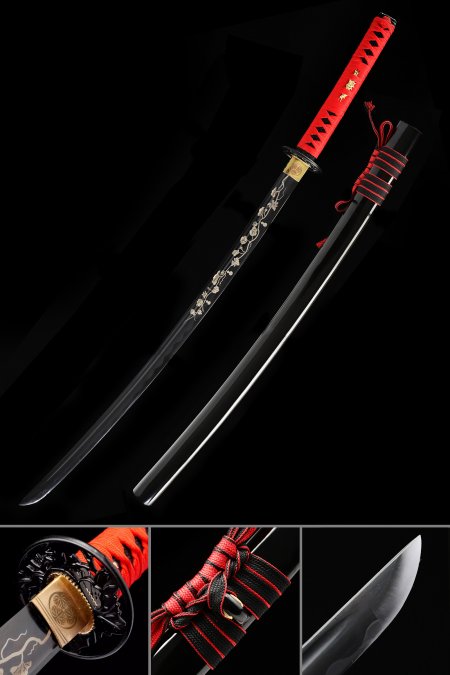
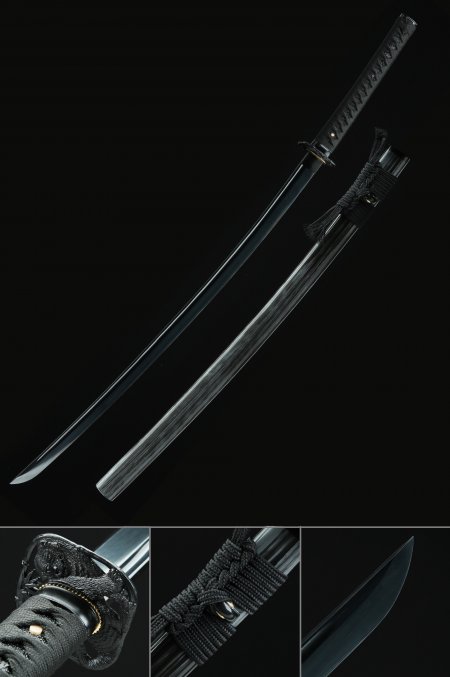
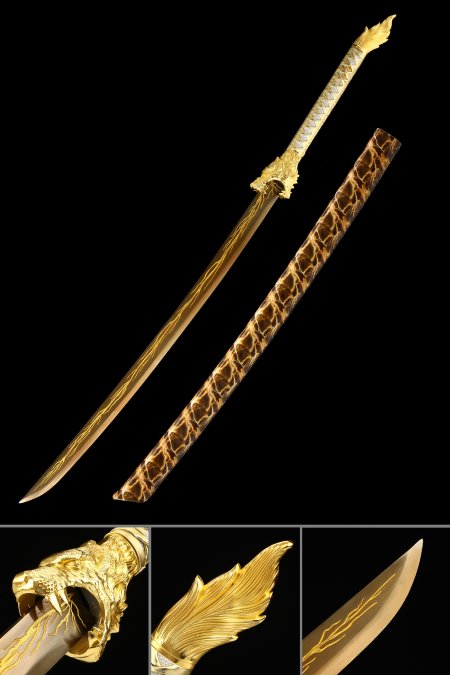
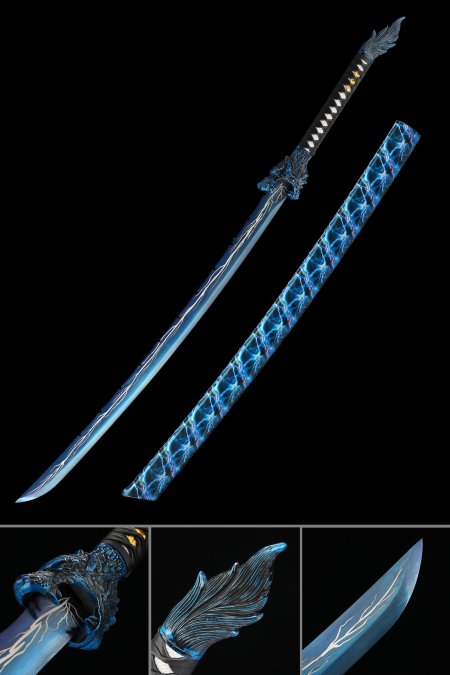
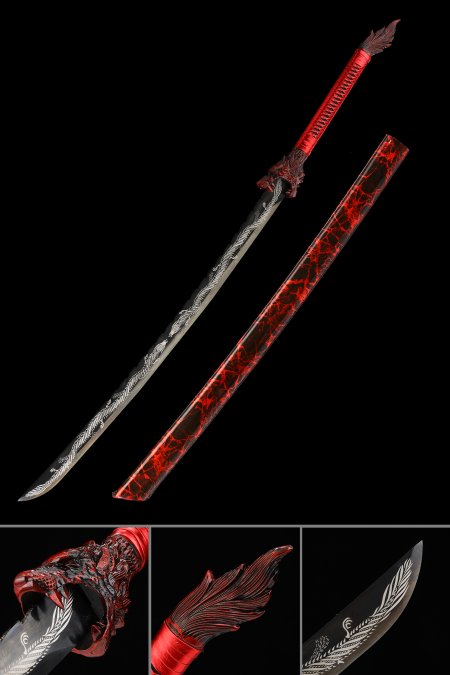
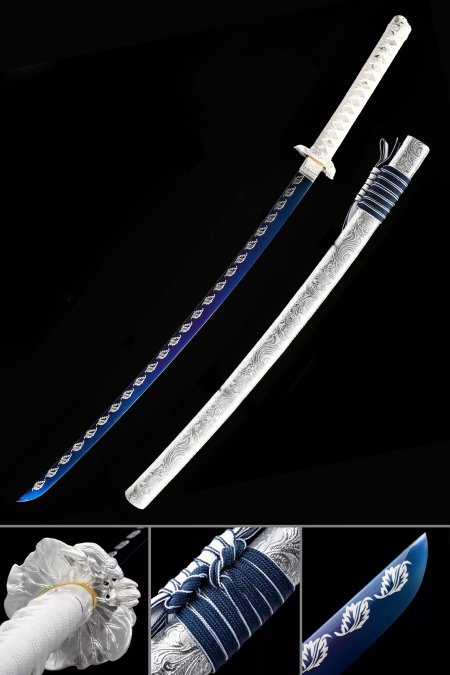
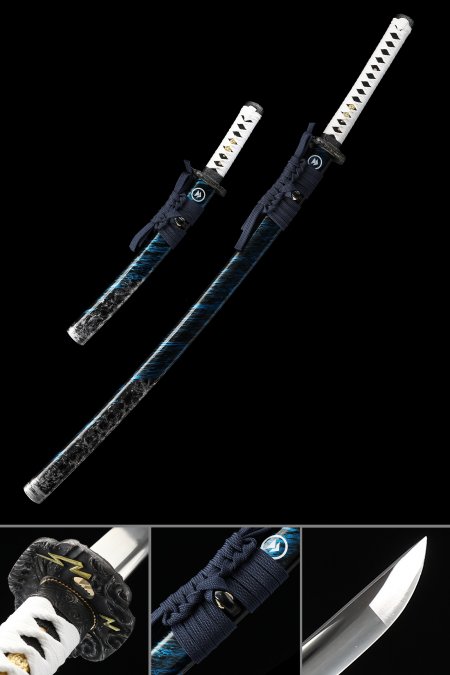
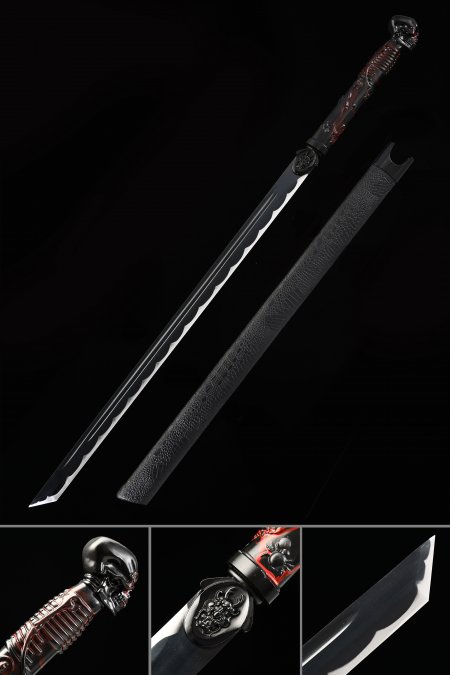
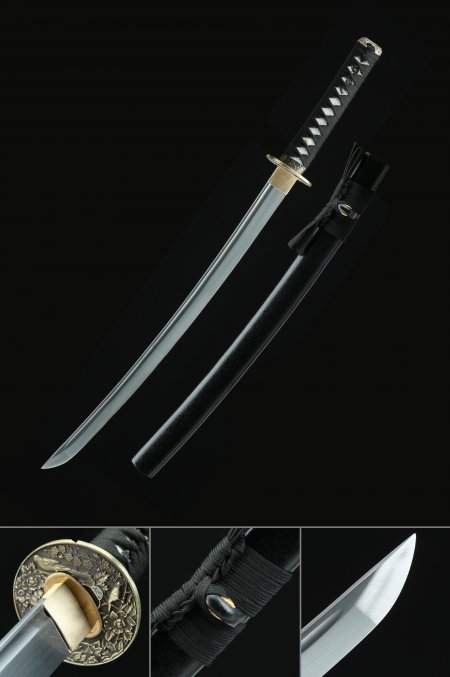
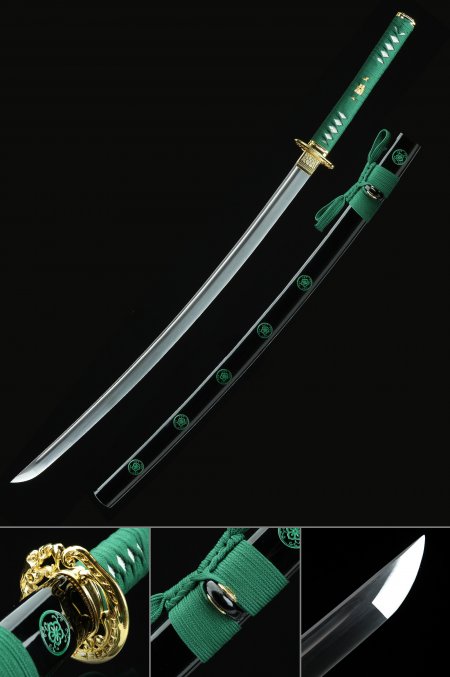
Blackened blades — achieved through controlled oxidation, kurouchi finishing, or acid-patina treatments — serve both an aesthetic and a practical function on collectible ninjato. Visually, a dark blade creates a high-contrast pairing with gold hardware and brightly painted or lacquered floral sayas, a combination that reads as dramatically intentional rather than incidental. The dark surface also reduces light reflection during display, drawing the viewer's eye toward the ornate fittings and scabbard decoration rather than the blade geometry itself. From a preservation standpoint, a properly applied oxidized finish adds a modest layer of surface protection against minor humidity exposure, though it does not eliminate the need for periodic light oiling. The blackened finish is particularly well-suited to manganese steel pieces, where the base metal's natural coloring complements the treatment.