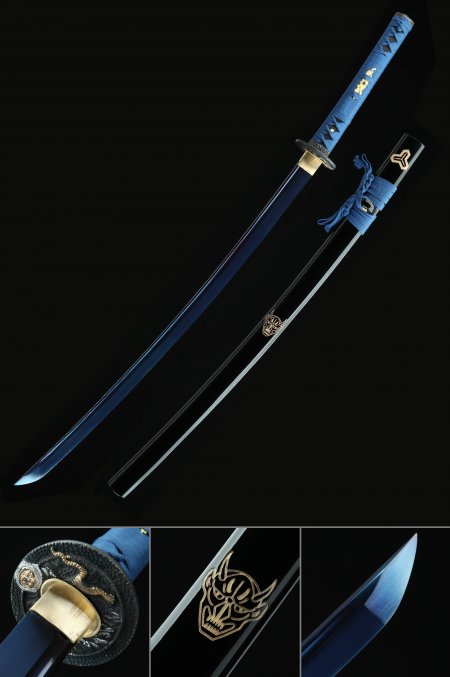
Both are iconic red Japanese mask types, but their origins and visual language are distinct. The Hannya is rooted in Noh theater and depicts a human woman transformed by jealousy into a demon - her face carries two sharp horns, metallic eyes, and a grimacing mouth that can appear sorrowful or menacing depending on the viewing angle, a deliberate design choice by Noh craftsmen. The Oni, by contrast, comes from Japanese folklore as a supernatural ogre-like being, typically depicted with bold horns, tusks, wild hair, and an overtly ferocious expression. Hannya masks lean toward psychological and theatrical nuance; Oni masks lean toward raw, exaggerated power. For collectors, this distinction matters when building a thematically coherent display - the two types complement each other well when shown together precisely because they represent different registers of supernatural expression.