Is full-tang construction important for a display katana?
Updated Mar 2026
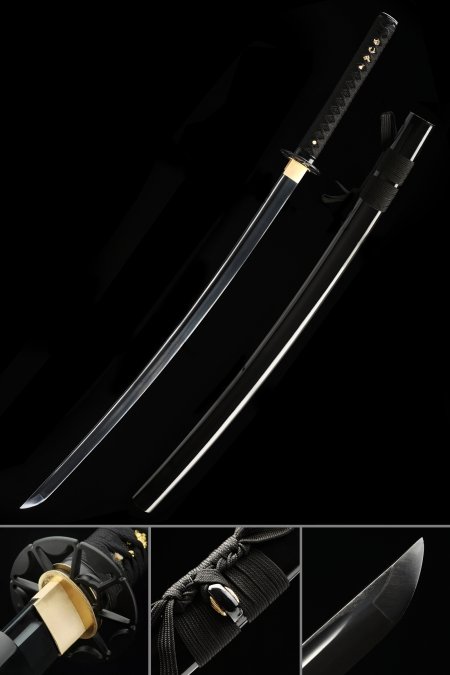
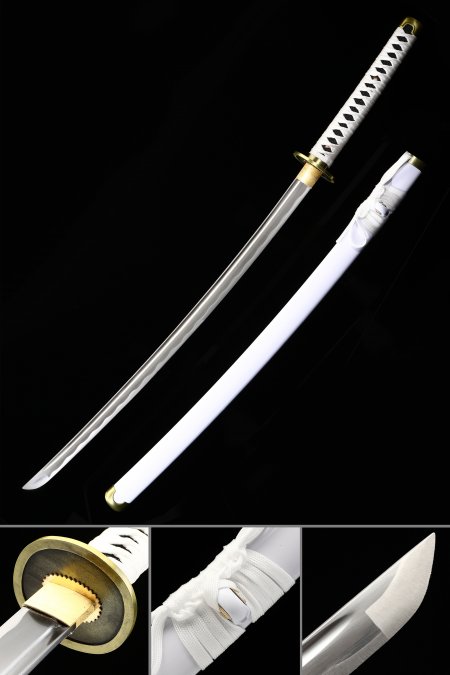
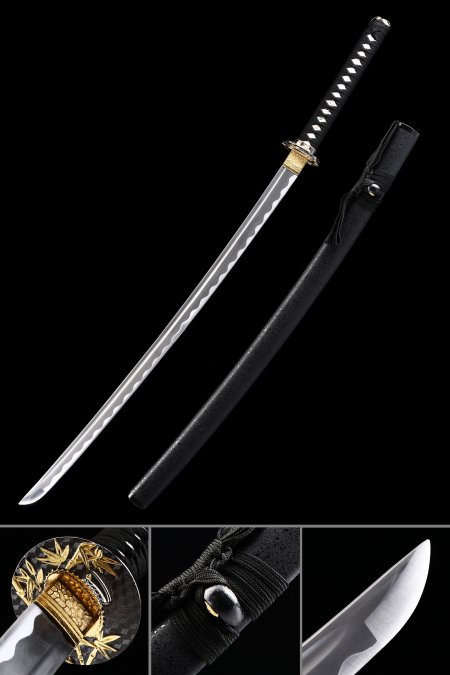
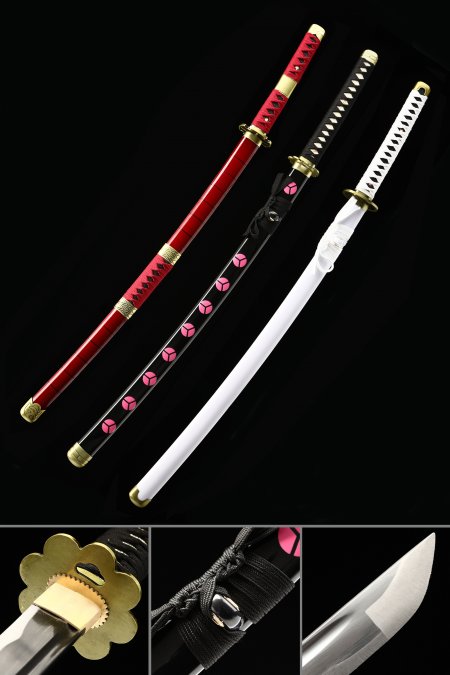
For a collectible sword intended for handling, rotation on a display stand, and close examination, full-tang construction matters considerably. A full-tang blade means the steel extends through the entire length of the tsuka (handle), secured by one or more mekugi (bamboo or steel pins) passing through both the tang and the handle core. This creates a unified structure with no mechanical joint between blade and handle - the point of failure common in rat-tail or partial-tang construction. When a collector lifts the sword, adjusts its angle, or removes it from a wall mount, the full-tang assembly ensures the blade and handle respond as a single rigid unit. Over years of display and occasional handling, this structural integrity preserves the alignment between blade, habaki, and saya, which also protects the engraved surface from incidental contact damage.