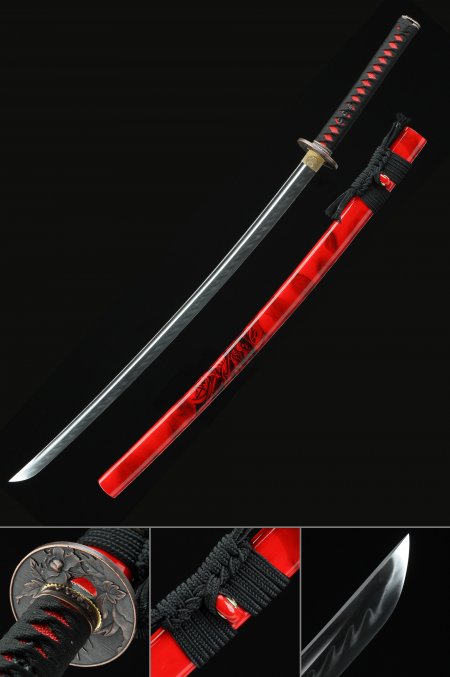
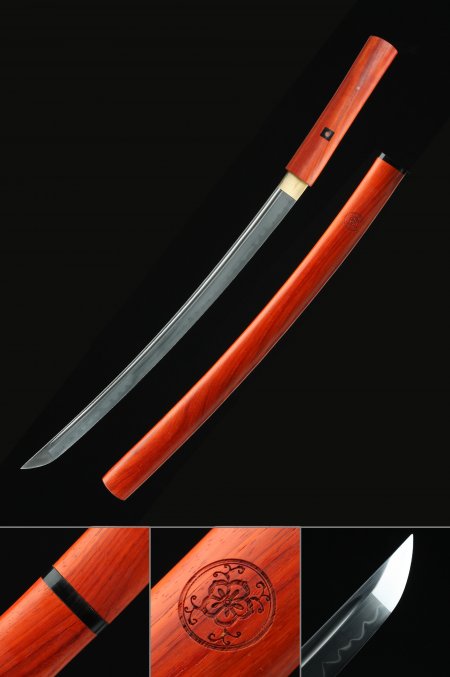
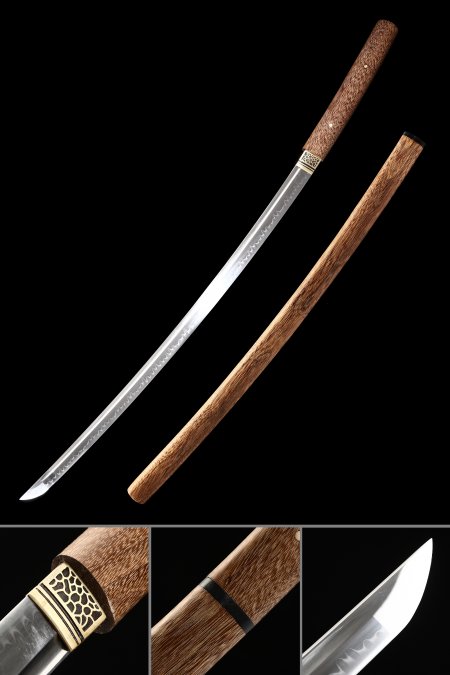
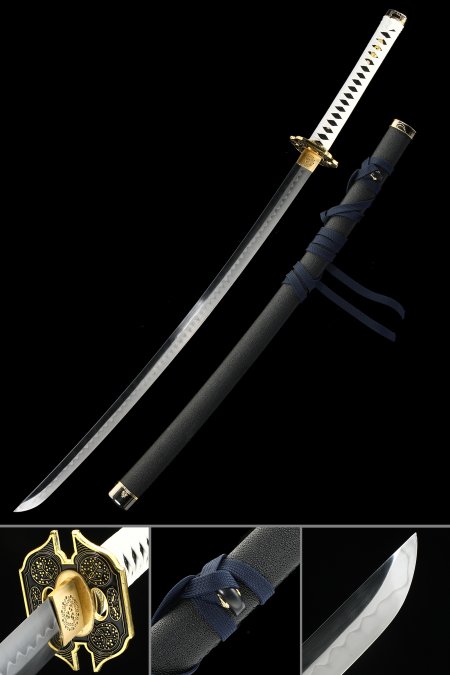
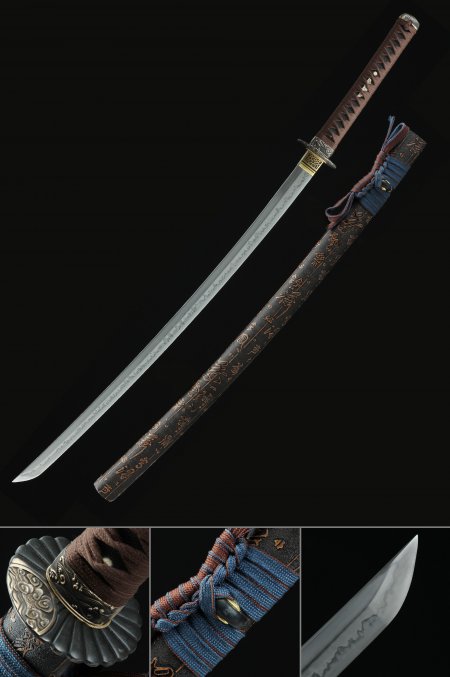
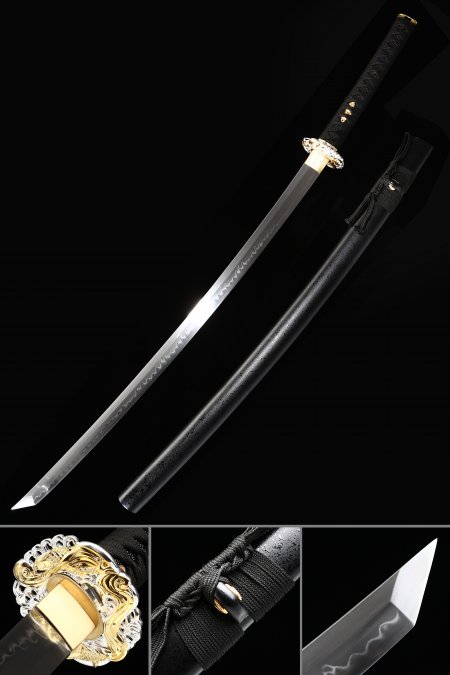
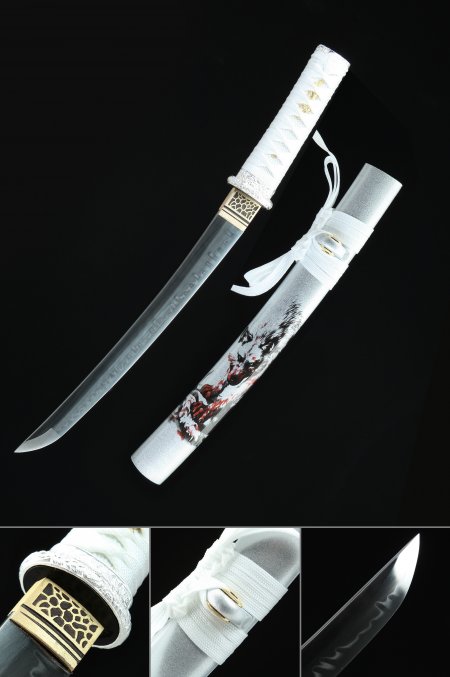
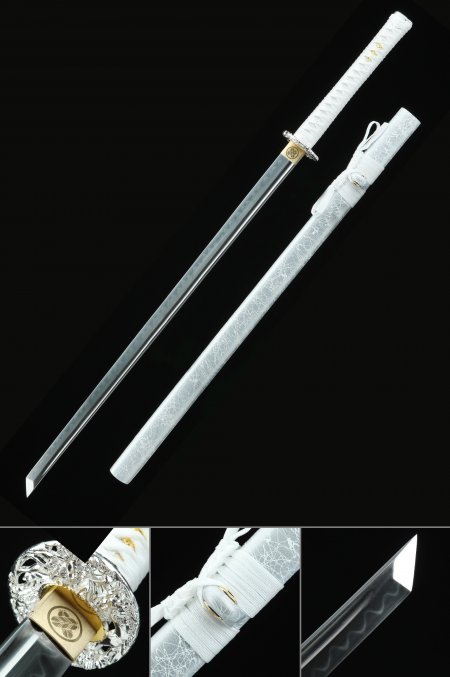
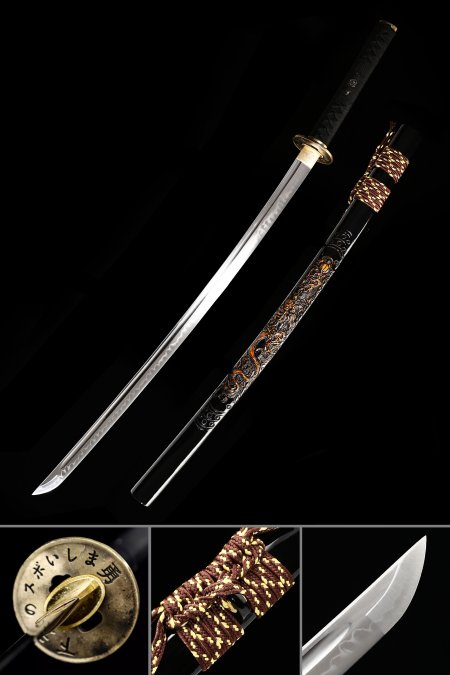
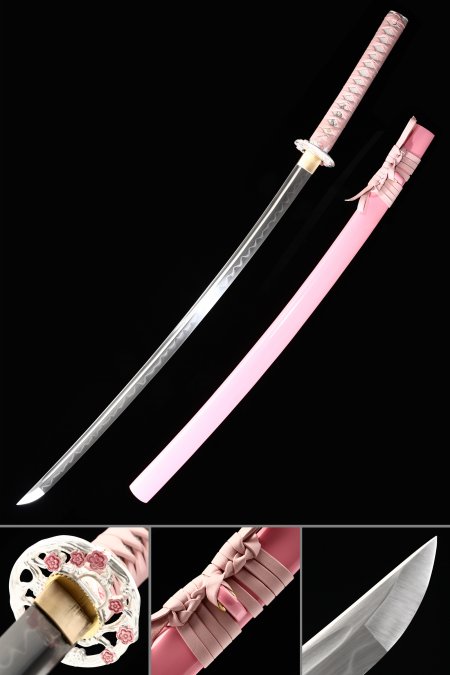
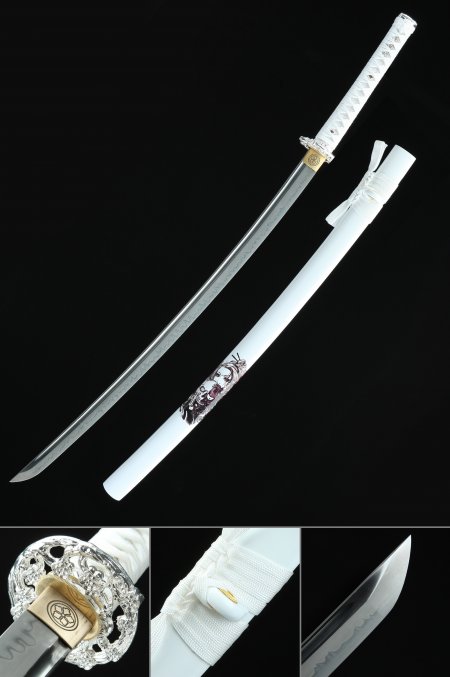
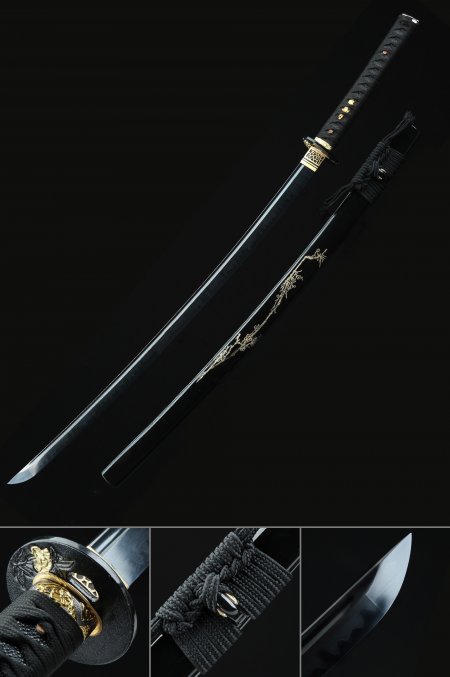
Is the hamon on these tantos real or cosmetically applied?
Updated Mar 2026
The hamon on these T10 tanto blades is genuine, produced through traditional clay-tempered differential hardening rather than acid etching or grinding. During the hardening process, a layer of clay is applied along the spine of the blade before the quench. The clay insulates that portion, causing it to cool more slowly and remain in a softer pearlitic state, while the exposed edge cools rapidly and converts to a hard martensitic structure. The boundary between these two zones is the hamon. Because it results from actual crystalline changes within the steel, it shifts in character and brightness depending on the angle and quality of light - something a cosmetically applied line cannot replicate. This is a key detail that distinguishes a serious collectible from a decorative replica.