What makes an aikuchi tanto different from a standard tanto?
Updated Mar 2026
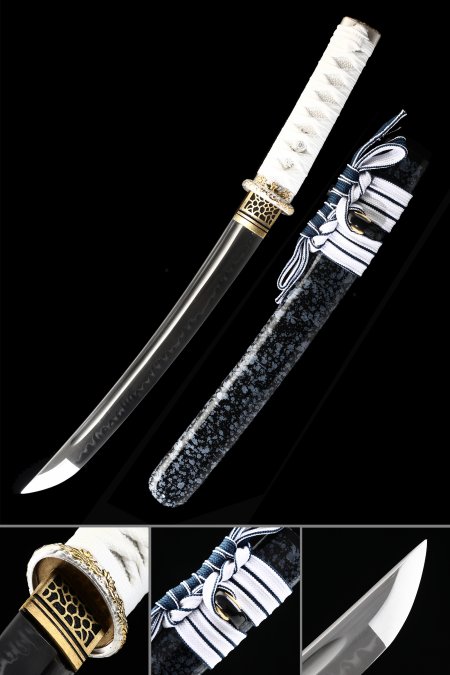
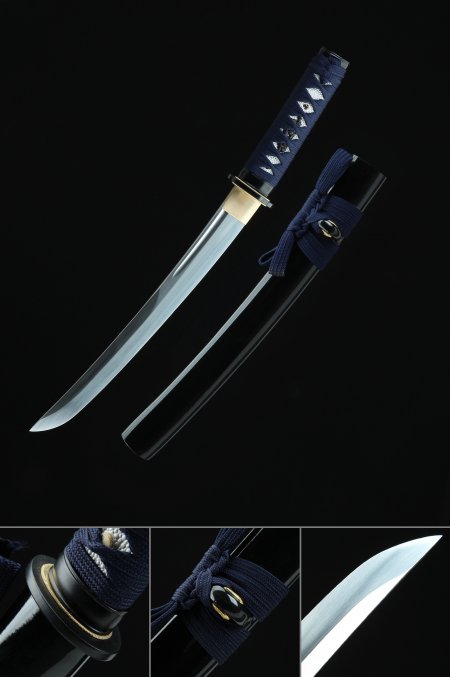
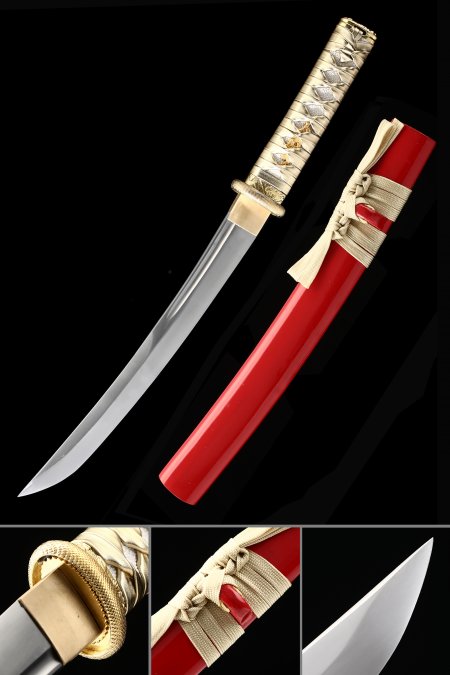
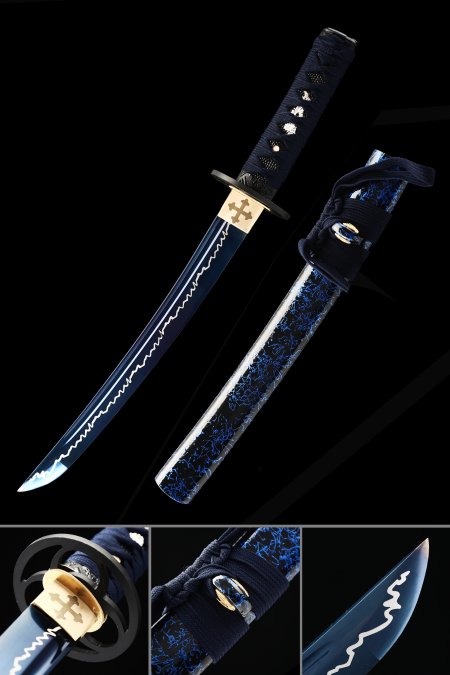
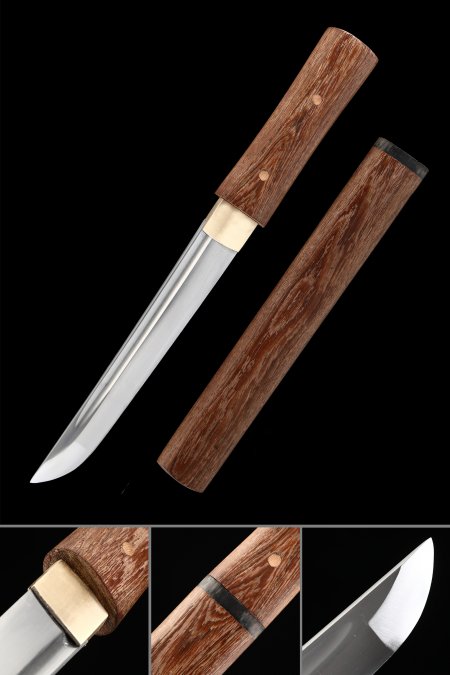
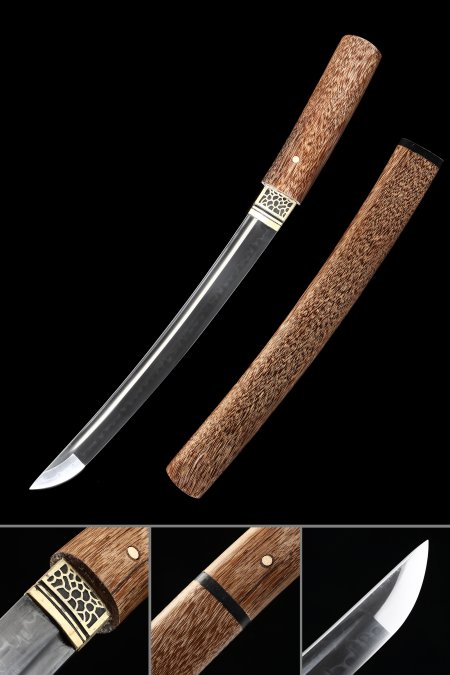
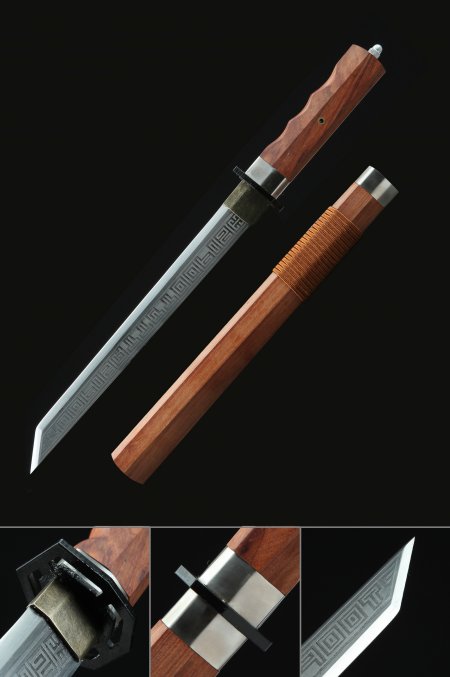
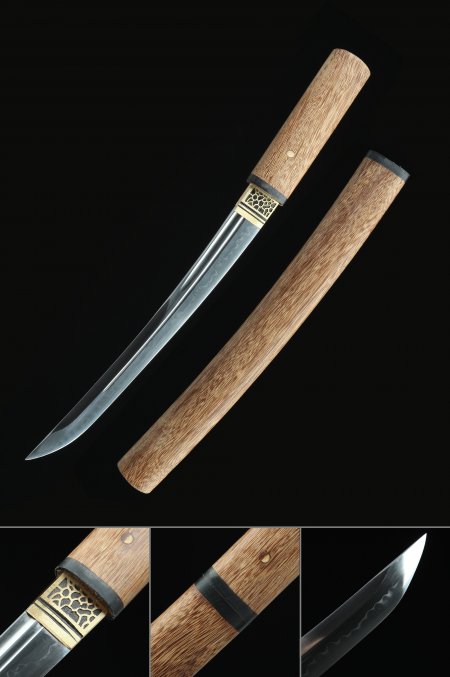
The defining characteristic of the aikuchi style is the absence of a tsuba — the circular hand guard found on most Japanese blade mountings. Without it, the fuchi (collar) of the handle meets the koiguchi (mouth) of the scabbard in a flush, unbroken line. This guardless configuration was historically associated with civilian formal dress rather than martial equipment, favored by court nobility and officials for whom a concealed, elegantly mounted blade was a status marker. On a display stand, the clean profile of an aikuchi reads as distinctly more architectural and minimalist than its tsuba-fitted counterparts.