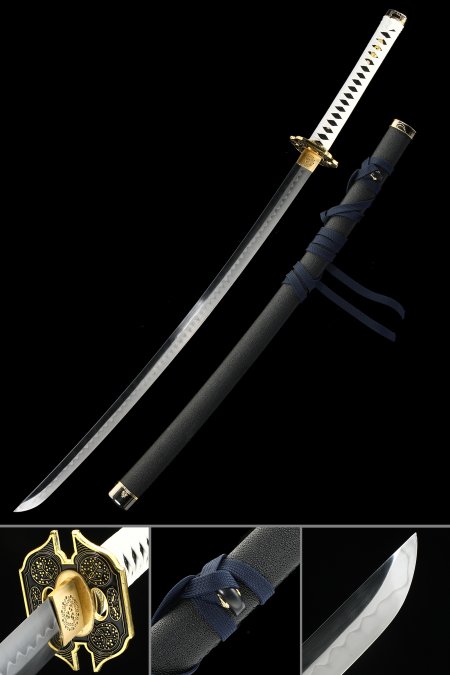
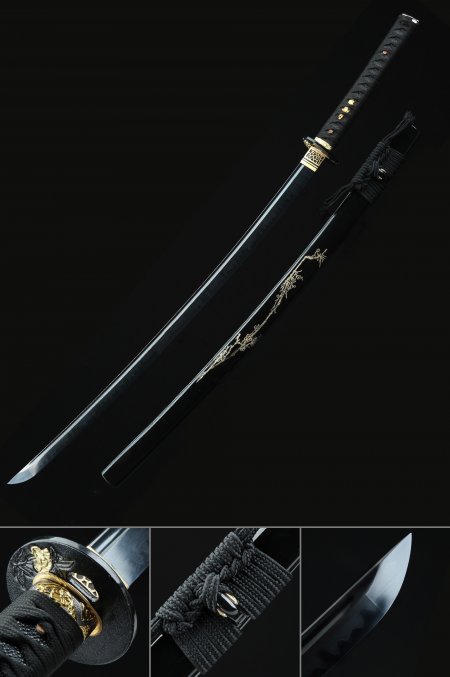
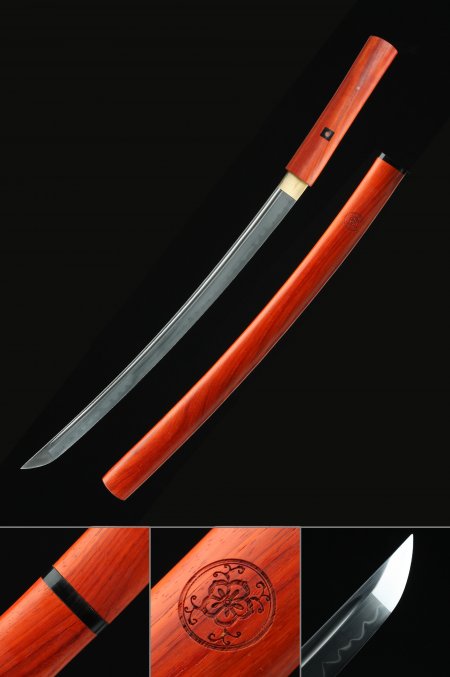
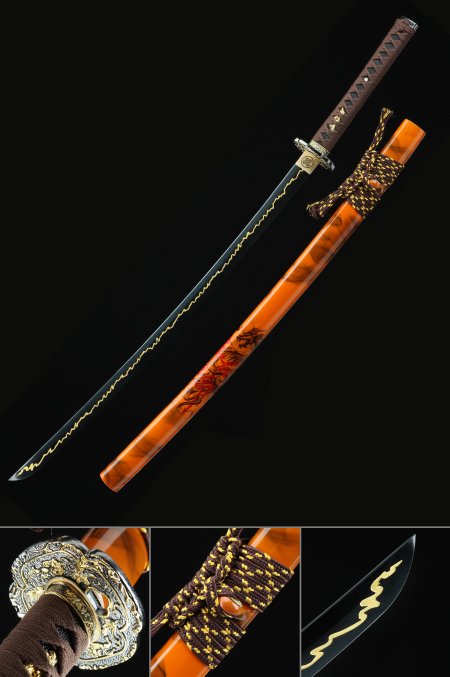
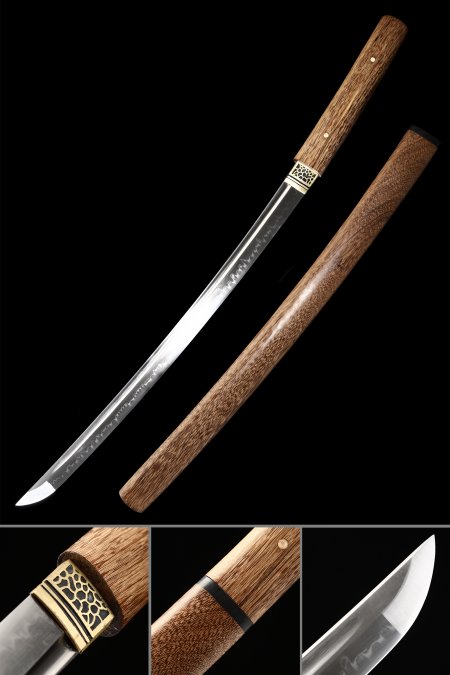
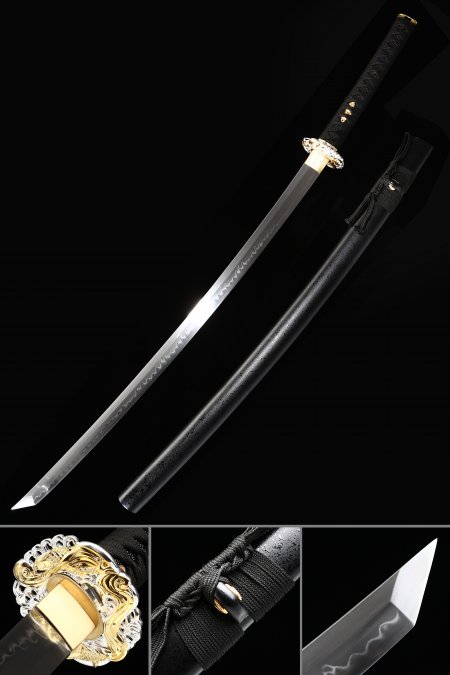
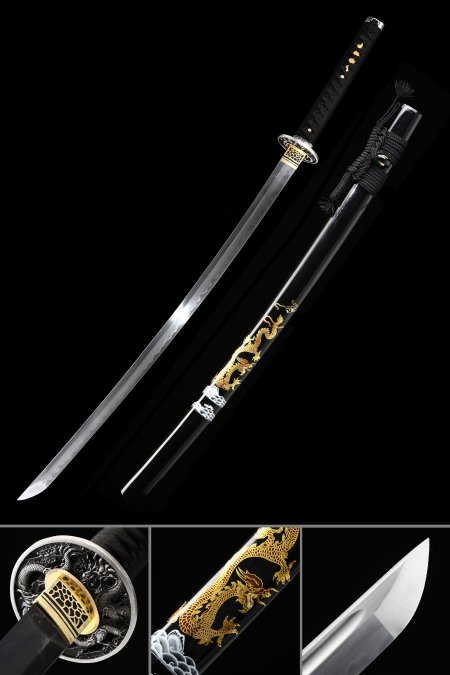
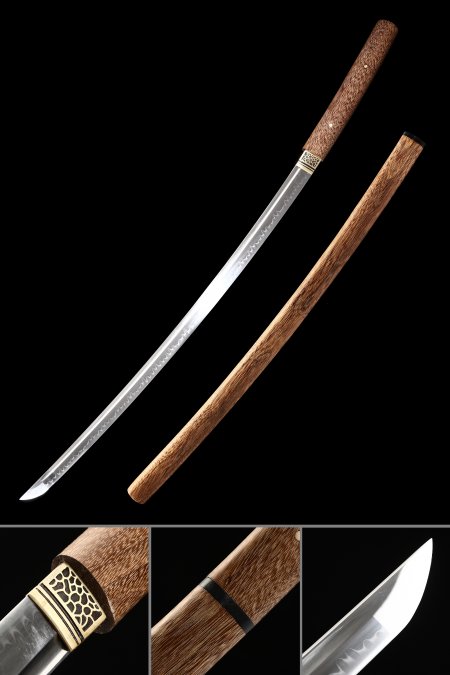
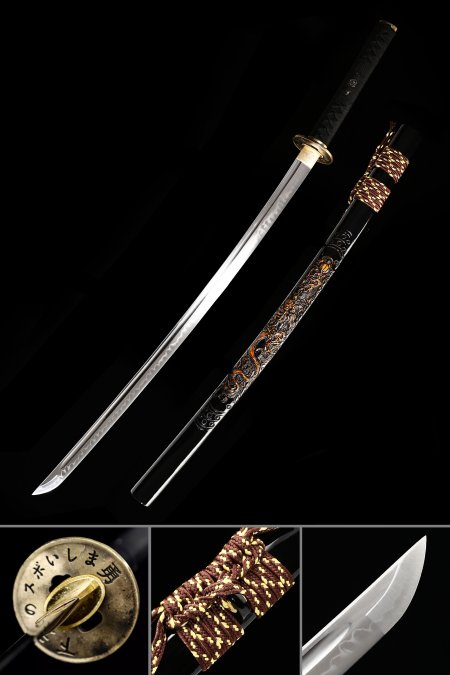
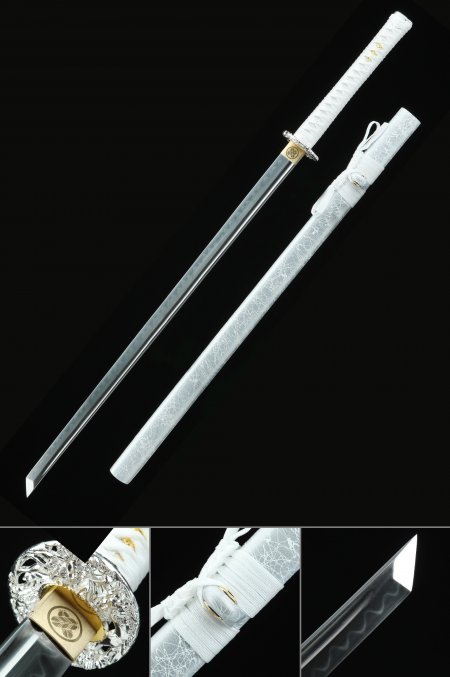
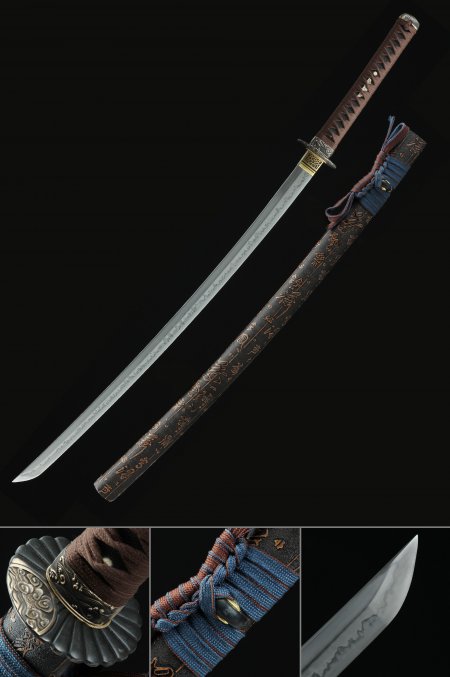
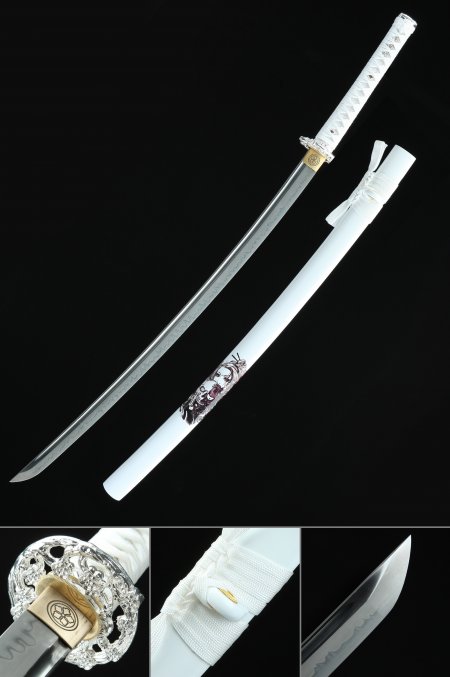
Is the hamon on these tanto real or decorative etching?
Updated Mar 2026
The hamon on these T10 tanto is a genuine metallurgical feature, not an acid-etched or polished-in pattern. It forms at the boundary between the clay-coated spine - which cools slowly during quenching - and the exposed edge zone, which hardens rapidly. This thermal boundary creates the characteristic misty or wavy line collectors call the hamon. You can verify authenticity by examining the line under angled light: a real hamon has depth and variation in texture, while an etched imitation appears flat and uniform. For display collectors, a genuine hamon is one of the clearest indicators of authentic craft investment.