How do I identify a quality clay tempered katana from a lower-quality piece?
Updated Feb 2026
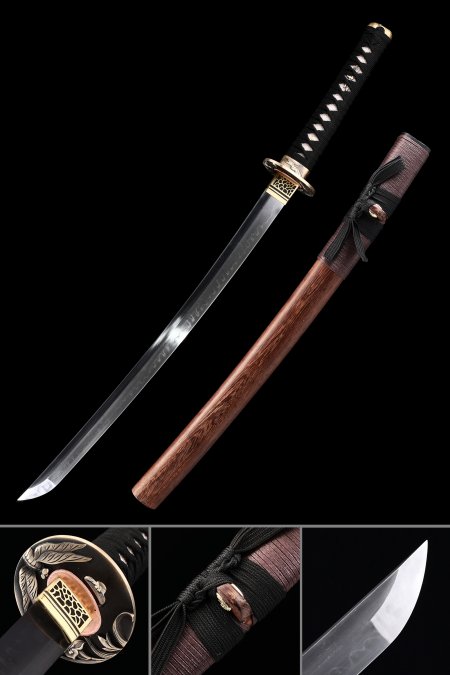
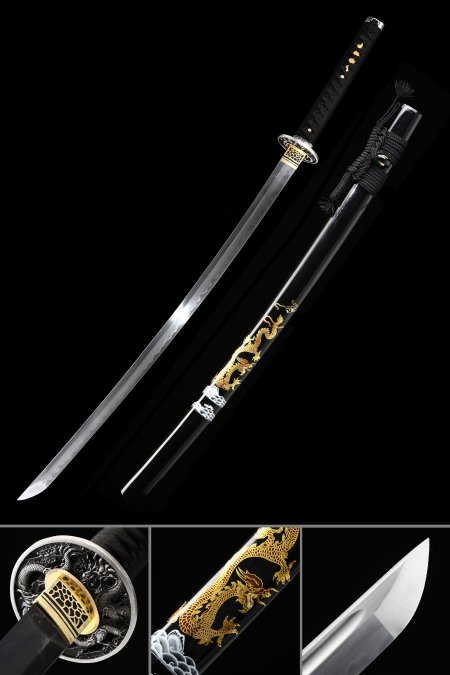
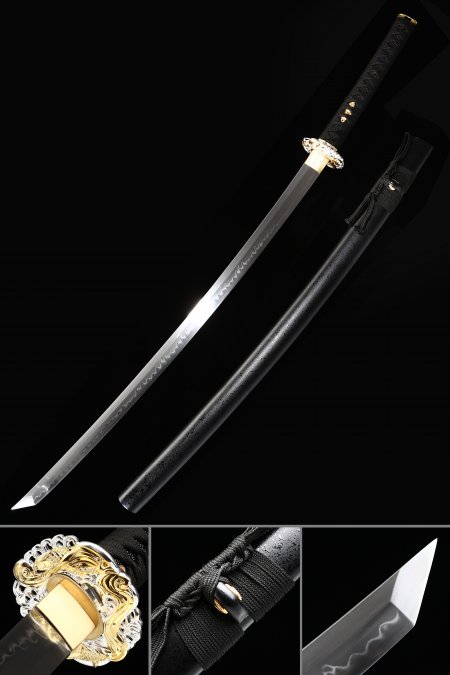
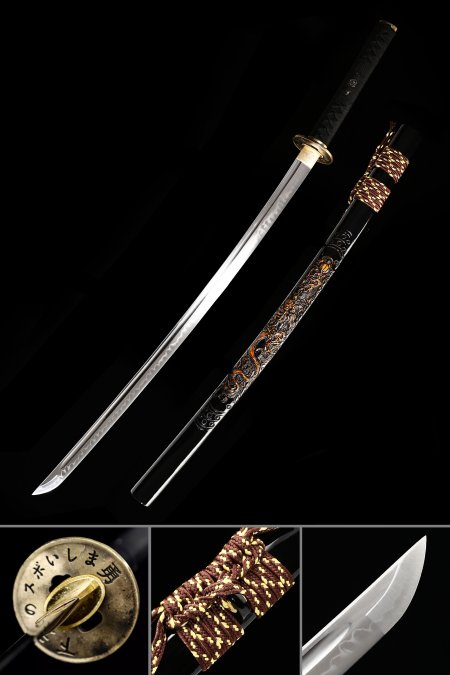
Several specific indicators help distinguish a genuinely clay tempered, quality katana from a lower-grade piece that merely claims the term. The most reliable indicator is the hamon itself: a genuine clay tempered hamon will show irregular, organic variation in its line - no two sections of the hamon will be perfectly identical, and close inspection will reveal visible activity in the transition zone between the hardened edge and the blade body. A fake or surface-treated hamon applied with acid alone rather than genuine clay tempering will tend to look more uniform and mechanical, with a cleaner and less visually active transition line. Steel grade matters as well: genuine clay tempering produces its best results on T10 carbon steel or other high-carbon grades, so a piece claiming clay tempering on stainless steel is not credible - stainless steel cannot be differentially heat-treated to produce a genuine hamon. Full-tang construction is a necessary baseline: a quality clay tempered katana will have the blade steel running through the complete handle, not a shortened or glued stub. Each piece in this collection meets these standards.